Birds of The world in taxonomic hierarchy

Schellente, Altnau. 2024-12-07 13:28:47
First observed in 🇨🇭 on 2021-01-26.
Description
Geography: This bird appears across the great seas in the following continents: Europe, North America.General: Deutschland: Brut-, Zugvogel, Wintergast RL R
Etymology: Nabu: Schellenten verdanken ihren Namen dem pfeifenden und wie ein Klingeln («Schellen») tönenden Fluggeräusch. [Vogelwarte.ch erklärt: ]
Appearance and identification: Grüner Kopf mit gelbem Auge (Goldeneye), weisser Kreis zwischen Auge und (schwarzem) Schnabel, weisser Bauch und Seiten mit etwa 5 dünnen schwarzen Streifen, schwarzer Rücken. In Island gibt's eine sehr ähnliche Ente und in kleineren Mengen auch diese.
Seasonal Behavior: Wintergast am Pfäffikersee.
Vocalization:
 Male display sound a dry nasal disyllabic "Ka-weerr". First note introductory and second longer and descending. Usually accompanied by back-throwing head motion. Female: dry harsh "aahrrrr aahrrrr aahrrrr ". Wings make a characteristic whistling sound. [Link]
Seasonal behavior
Year-round bird Migration in: 01-01 - 05-21 Migration out: 10-07 - 12-31 More details at Vogelwarte.ch
Other Details
Physical details
Physical details: length=42-50 cm, wingspan=65-80 cm, weight=650-1200 gHabitats: River and lake Details

Wikipedia: Bufflehead Source: WIKIPEDIA
1200px-Bucephala-albeola-007.jpg
🔍
Never observed (yet!)
Description
Geography: This bird appears across the great seas in the following continents: Europe, North America.General:
 The bufflehead (Bucephala albeola) is a small sea duck of the genus Bucephala, the goldeneyes. This species was first described by Carl Linnaeus in his landmark 1758 10th edition of Systema Naturae as Anas albeola.[2]
[more]
The bufflehead (Bucephala albeola) is a small sea duck of the genus Bucephala, the goldeneyes. This species was first described by Carl Linnaeus in his landmark 1758 10th edition of Systema Naturae as Anas albeola.[2]
[more]
Details

Spatelenten, Myvatn, Iceland. 2015-06-05 11:20:16
First observed in Iceland on 2015-06-05.
Description
Geography: This bird appears across the great seas in the following continents: Europe, North America.General:
Barrow's goldeneye (Bucephala islandica) is a medium-sized sea duck of the genus Bucephala, the goldeneyes. This bird was named after Sir John Barrow. The genus name is derived from Ancient Greek boukephalos, "bullheaded", from bous, "bull " and kephale, "head", a reference to the bulbous head shape of the bufflehead. The species name islandica means Iceland.[2]
[more]
Details
Profile Wikipedia Vogelwarte BirdLife ZH ornitho.ch Audubon AllAboutBirds Xeno-Canto BirdID NABU YouTube

Mittelsäger-Paar im Luppmen in Fehraltorf. 2025-02-03 16:58:13 Luppmen
First observed in 🇨🇭 on 2021-04-06.
Description
Geography: This bird appears across the great seas in the following continents: Europe, North America, South America, Asia.General: Deutschland: Brut-, Zugvogel, Wintergast RL R
Personal notes:
 Zuerst gesehen in Lago Maggiore in Locarno. Jan 2022 auch als Wintergast am Pfäffikersee. [Link]
Appearance and identification:
In winter you can admire a few of these birds with the straggly tuft. [Link]
Seasonal behavior
Year-round bird Breeding: 05-01 - 07-29 Migration in: 10-18 - 12-31 Migration out: 02-20 - 05-21More details at Vogelwarte.ch
Other Details
Physical details
Physical details: length=52-58 cm, wingspan=70-86 cm, weight=900-1350 gHabitats: River and lake
Similar species
Looks similar to: Greater scaup. Details

Gänsesäger Weibchen mit dem Punk-Look, Locarno. 2024-09-02 15:51:02 Locarno
First observed in 🇨🇭 on 2021-01-26.
Description
Geography: This bird appears across the great seas in the following continents: Europe, North America.General: Zuerst gesehen am Pfäffikersee.
General: Deutschland: Brut-, Zugvogel, Wintergast RL 2
Vocalization:
Male: Mostly heard when courting. A twanging, disyllabic "whip-ooooo", first syllable ascending and second whistle-like and rapidly falling. Female: A coarse "ahrrr ahrrrr", or a raspy drawn "ah-ahrrrrrr ah-ahrrrrr", slightly rising, then falling in pitch. Also various cackling sounds. [Link]
Seasonal behavior
Year-round bird Breeding: 03-23 - 07-20 Migration in: 01-01 - 04-11 Migration out: 10-27 - 12-31More details at Vogelwarte.ch
Other Details
Physical details
Physical details: length=58-66 cm, wingspan=82-97 cm, weight=900-2100 gHabitats: River and lake
Vocalisation
Song: No details but a Xeno-Canto recording. Song attributes: Frequency:♫ 2021-05-10 09:09:39 Source: BirdNet 20210510_090939 birdnet 1539 - Common Merganser plus Golden Oriole - = - Common Merganser - Locarno.mp3 Locarno (song)
Details

Eiderente Männchen am Zürichsee bei Rapperswil. 2022-11-06 14:14:32 Rapperswil
First observed in Iceland on 2015-06-09.
Description
Geography: This bird appears across the great seas in the following continents: Europe, North America.General: Deutschland: Brut-, Jahres-, Zugvogel, Wintergast
Etymology: Nabu: Auch heute noch erinnert ihr wissenschaftlicher Name an die Bedeutung ihrer isolierenden Daunen für die Menschen. Übersetzt bedeutet ihr Name nämlich „die Allerweichste mit dem schwarzen Körper“. [Link]
Ihr Ruf klingt heiserer und ist lautmalerisch mit gro-gro-ó umschrieben. [Link]
Geography:
Die im Norden Europas häufige und wegen ihren Daunenfedern bekannte Eiderente war in der Schweiz früher ein seltener Gast. Doch in der zweiten Hälfte des 20. Jahrhunderts erfolgten mehrere grosse Einflüge. Dank der Wandermuschelvermehrung war das Nahrungsangebot ausreichend und die Vögel verbrachten zunehmend den Sommer bei uns. Mittlerweile gehört die Eiderente sogar zu den Brutvögeln, was für einen ans Meer angepassten Vogel bemerkenswert ist. [Link]
Other Details
Physical details
Physical details: length=50-71 cm, wingspan=80-108 cm, weight=1500-2800 gHabitats: River and lake Details
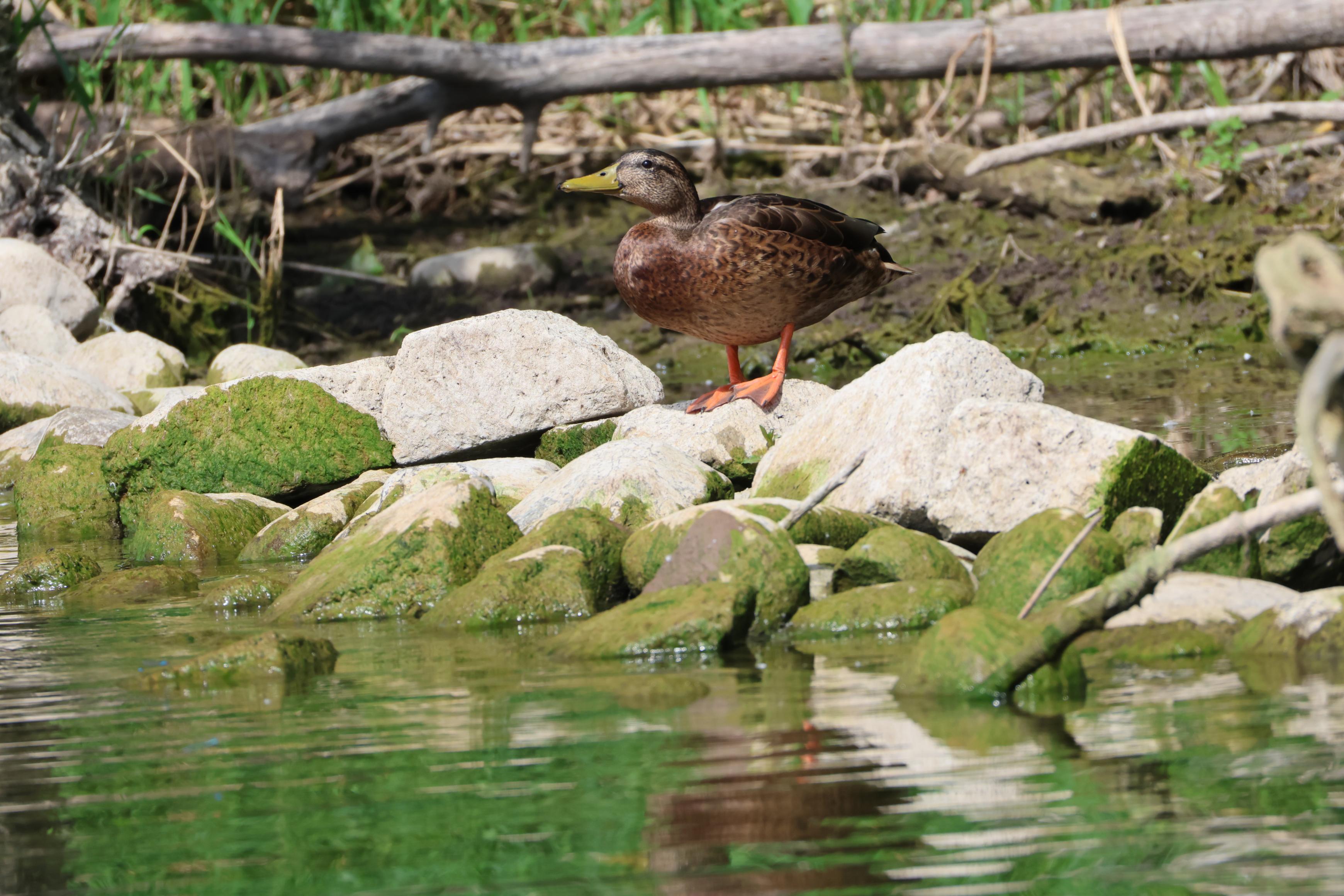
Stockente Weibchen. 2024-08-02 15:56:02 Greifensee
First observed in 🇨🇭 on 2020-05-20.
Description
This bird appears across the great seas in the following continents: Europe, North America, South America, Africa, Asia.General: Common waterbird at Pfäffikersee
General: Deutschland: Brut-, Jahres-, Zugvogel, Wintergast
Etymology:
Der heutige Name kann als Hinweis auf ihre Brutplätze verstanden werden, zu denen auf Stock gesetzte Weiden, Weidengebüsch oder auch Reisighaufen gehören.
['Stock' wird weiter erklärt: Als Stockausschlag bezeichnet man bei Bäumen und Sträuchern Triebe, die nach dem Verlust der primären Sprossachse
neu aus dem Stumpf oder Stubben (der dann „Stock“ genannt wird) austreiben.] [Link]
The name 'was derived from the Old French malart or mallart for "wild drake"' [Link]
Dazu zählt der charakteristische Grunzpfiff der Männchen, der lautmalerisch mit „gerijib“ oder „fihb“ umschrieben wird. [Link]
Vocalization:
Female: A distinct coarse, laughing quacking; "haaa ha ha ha ha ha", with first note accented and then descending in pitch. Male: a more silent, very nasal "rriib". [Link]
Seasonal behavior
Year-round bird Breeding: 03-12 - 07-29 Migration in: 02-01 - 05-01 Migration out: 07-29 - 12-31More details at Vogelwarte.ch
Other Details
Physical details
Physical details: length=50-65 cm, wingspan=81-98 cm, weight=750-1450 gHabitats: River and lake Details

Krickente Männchen, Klingnauerstausee. 2022-02-05 12:51:34 Klingnauer Stausee (man-made lake)
First observed in 🇨🇭 on 2021-01-26.
Description
Geography: This bird appears across the great seas in the following continents: Europe, North America, South America, Africa, Asia.General: Wintergast am Teich am Aa-Bach beim Südende des Pfäffikersee
General: Deutschland: Brut-, Jahres-, Zugvogel, Wintergast RL 3
Etymology:
Die hellen «krrik»-Rufe der stimmfreudigen Erpel verhalfen dieser Art zu ihrem deutschen Namen. [Link]
Vocalization:
Male: characteristic, short, highly resonant and metallic "plytt". A bit similar to Pintail, but higher pitched and lacking accompanying whistling sound. Female: various quacking sounds generally quicker paced, more nasal and noticeably higher pitched than Mallard. [Link]
Other Details
Physical details
Physical details: length=34-38 cm, wingspan=58-64 cm, weight=200-450 gHabitats: River and lake
Vocalisation
Song: No details but a Xeno-Canto recording. Song attributes: Frequency:♫ Source: XENOCANTO XC619133-Krickente von Peter Bosman, Belgium.mp3 (song)

Blup blup, fast wie vom Computer generiert, fur mich nohe Noten (obwohl Sonogram nur 2.5 KHz zeigt)
Call attributes: Call melody: simple rhythmic, slow, Frequency: low (1-3 KHz),
Details

Löffelente am Klingnauerstausee. 2022-02-06 08:47:36 Klingnauer Stausee (man-made lake)
First observed in 🇨🇭 on 2021-02-08.
Description
Geography: This bird appears across the great seas in the following continents: Europe, North America, South America, Africa, Asia.General: Wintergast am Greifensee.
General: Deutschland: Brut-, Jahres-, Zugvogel, Wintergast RL 3
Appearance and identification: PK: white, black, rust-brown, yellow eyes, black spoonbill, red legs.
Vocalization:
Male is characteristic and most often heard: A hoarse nasal knocking sound "took took", often staccato or disyllabic. Female similar to Mallard but flatter and more creaking. [Link]
Seasonal behavior
Year-round birdOther Details
Physical details
Physical details: length=44-52 cm, wingspan=70-84 cm, weight=470-800 gHabitats: River and lake Details
Profile Wikipedia Vogelwarte BirdLife ZH ornitho.ch Audubon AllAboutBirds Xeno-Canto NABU YouTube

Spiessente plus 2 Hockerschwäne. 2024-12-07 12:01:46
First observed in 🇨🇭 on 2022-01-27.
Description
Geography: This bird appears across the great seas in the following continents: Europe, North America, South America, Africa, Asia.General: Long tailfeathers make the name obvious, also a thin white stripe from the white neck up the back of the head.
General: Deutschland: Brut-, Jahres-, Zugvogel, Wintergast RL 3
Vocalization:
Female: similar to Mallards coarse laughing sound, but with a more emphasized first "haaa", and a more silent accelerating subsequent "laugh". Male: Pleasant, resonant "plop" similar to Teal, but lower pitched, richer, mellower and not so metallic. Accompanied by a higher pitched, slightly raspy whistling "aiiooo" rising and falling in pitch. [Link]
Seasonal behavior
Year-round bird Migration in: 02-01 - 05-10 Migration out: 08-18 - 12-07More details at Vogelwarte.ch
Other Details
Physical details
Physical details: length=51-66 cm, wingspan=51-66 cm, weight=500-1100 gHabitats: River and lake Details
Profile Wikipedia eBird Audubon AllAboutBirds Xeno-Canto YouTube

Wikipedia: Pacific black duck Source: WIKIPEDIA
1200px-Pacific_Black_Duck_%28Anas_superciliosa%29_RWD2.jpg
🔍
Never observed (yet!)
Description
Geography: This bird appears across the great seas in the following continents: North America, Australia.General:
The Pacific black duck (Anas superciliosa), commonly known as the PBD, is a dabbling duck found in much of Indonesia, New Guinea, Australia, New Zealand, and many islands in the southwestern Pacific, reaching to the Caroline Islands in the north and French Polynesia in the east. It is usually called the grey duck in New Zealand, where it is also known by its Maori name, pārera.
[more]
Details

The big gull is a Mittelmeermoewe then there's a Lachmoewe and two Pfeifenten. 2025-09-13 14:11:02 Klingnauer Stausee (man-made lake)
First observed in 🇨🇭 on 2021-02-24.
Description
Geography: This bird appears across the great seas in the following continents: Europe, North America, Africa, Asia.General: Deutschland: Zugvogel, Wintergast
Etymology:
Es ist der Ruf des Männchens, der zu dem deutschen Namen der Art geführt hat. Das Männchen leitet seine kurzen, scharfen, zwei- bis dreisilbigen pfeifenden wiu-Rufe häufig mit einem krr krkrkrr ein. [Link]
Appearance and identification: Funny red head (made me confused it with the Kolbente) that's brown with a golden forehead (Kolbente is brown, a bit lighter at the back of the head) is the obvious characteristic. Also has a nice black and white pattern on its back and wings with white-rimmed black feathers at the end of the wing, a bit of white before a black butt.
Vocalization:
Male: a pleasant high pitched whistle "piiiiuuu", rapidly rising in pitch and then falling. Quite vocal. Female: a harsh "kraaa kraaa kraa" more like female diving-ducks than other dabbling-ducks. [Link]
Seasonal behavior
Year-round bird Migration in: 02-20 - 05-10 Migration out: 09-07 - 12-31More details at Vogelwarte.ch
Other Details
Physical details
Physical details: length=45-51 cm, wingspan=75-86 cm, weight=500-1000 gHabitats: River and lake
Vocalisation
Song: No details but a Xeno-Canto recording. Song attributes: Frequency:♫ Source: XENOCANTO XC613742-Pfeifente von Adrien Mauss.mp3 (song)

Pfeifen, fast wie ein Rotmilan oder Mäusebussard. Ton steigt und fällt!
Call attributes: Call melody: simple rhythmic, slow, Frequency: low (1-3 KHz),
Details

MerlinBirdID meint Schnatterente - ich habe gehofft herauszufinden welche Ente das typische Gelbe da hinten hat. 2022-02-05 14:34:58 Klingnauer Stausee (man-made lake)
First observed in 🇨🇭 on 2021-02-08.
Description
Geography: This bird appears across the great seas in the following continents: Europe, North America, South America, Africa, Asia.General: In my mind this is the chocolate duck.
General: Deutschland: Brutvogel im 19. Jahrhundert aus Osteuropa und Asien zugewandert
Etymology:
The etymology of the word gadwall is not known, but the name has been in use since 1666.[9] [Link]
Nabu: Die Schnatterente fällt aber – wie ihr Name schon vermuten lässt – durch ihre Art der Nahrungssuche auf. Sie durchschnattert das Wasser mit ihrem Schnabel. [Link]
Appearance and identification: Chocolate bill, black-and-white pattern on head, shoulders, belly, sides of wings, chocolate patterned wings, black butt, a bit of white before the butt.
Appearance and identification: Nabu: Die Schnatterente ähnelt auf den ersten Blick so sehr der weiblichen Stockente, dass man diese schnell verwechseln kann. [Link]
Seasonal Behavior: Wintergast am Greifensee.
Seasonal behavior
Year-round bird Breeding: 04-20 - 07-20 Migration in: 02-20 - 05-21 Migration out: 07-20 - 12-31More details at Vogelwarte.ch
Other Details
Physical details
Physical details: length=46-56 cm, wingspan=84-95 cm, weight=550-1000 gHabitats: River and lake
Vocalisation
Song: No details but a Xeno-Canto recording. Song attributes: Frequency:♫ 2021-10-24 13:12:46
 Source: Zoom H6/H2n Neeracherried (song)
Details

Wikipedia: American wigeon Source: WIKIPEDIA
1200px-Anas_americana_-_drake.jpg
🔍
Never observed (yet!)
Description
Geography: This bird appears across the great seas in the following continents: Europe, North America, South America.General:
The American wigeon (Mareca americana), also known as the baldpate, is a species of dabbling duck found in North America. Formerly assigned to Anas, this species is classified with the other wigeons in the dabbling duck genus Mareca. It is the New World counterpart of the Eurasian wigeon. Mareca is from the Brazilian-Portuguese word Marréco for a small duck and americana refers to America.[2][3]
[more]
Details
Profile Wikipedia Xeno-Canto YouTube

Wikipedia: Southern pochard Source: WIKIPEDIA
1200px-Southern_Pochard_%28Netta_erythrophthalma%29_RWD1.jpg
🔍
Never observed (yet!)
Description
Geography: This bird appears across the great seas in the following continents: South America, Africa.General:
The southern pochard (Netta erythrophthalma) is a species of duck, and a member of the genus Netta. There are two subspecies, the South American (southern) pochard N. e. erythrophthalma (Wied-Neuwied, 1833) and the African (southern) pochard N. e. brunnea (Eyton, 1838).
[more]
Details

Tafelente mit roten Augen, braunem Kopf, Schnabel schwarz plus silber, fein und schön gemusterte Feder am Rücken. 2022-02-05 13:09:16 Klingnauer Stausee (man-made lake)
First observed in 🇨🇭 on 2021-02-08.
Description
Geography: This bird appears across the great seas in the following continents: Europe, North America, Africa, Asia.General: Wintergast am Greifensee.
General: Deutschland: Brut-, Jahres-, Zugvogel, Wintergast in den westl. Bundesl. erst seit den 1920/1930er heimisch
Etymology:
Die in der deutschen Sprache übliche Bezeichnung Tafelente ist ein Hinweis auf das als schmackhaft angesehene Fleisch dieses Entenvogels. [Link]
Appearance and identification: Tafelente: Wiederspruch: wer isst ein Tier mit roten Augen?Rostbraun, schwarz, schwarz-weiss-gemustert, Schnabel schwarz UND weiss.
Vocalization:
Female: a coarse "ahrrrrrrr-ahrrrrr-ahrrrr" with a vibrating quality. [Link]
Seasonal behavior
Year-round bird Breeding: 05-01 - 07-29 Migration in: 01-01 - 05-10 Migration out: 07-20 - 12-31More details at Vogelwarte.ch
Other Details
Physical details
Physical details: length=42-49 cm, wingspan=72-82 cm, weight=650-1200 gHabitats: River and lake Details

Wikipedia: Greater scaup Source: WIKIPEDIA
1200px-Greater-scaup-male2.jpg
🔍
Never observed (yet!)
Description
Geography: This bird appears across the great seas in the following continents: Europe, North America, Asia.General: Deutschland: Zugvogel, Wintergast RL R
Seasonal behavior
Year-round bird Migration in: 01-21 - 01-29 Migration out: 01-21 - 02-20More details at Vogelwarte.ch
Other Details
Physical details
Physical details: length=42-51 cm, wingspan=72-84 cm, weight=700-1300 gHabitats: River and lake
Similar species
Looks similar to: Red-breasted merganser. Details

Nilgans bei Pfäffikon SZ. 2022-11-06 14:41:44 Pfaeffikon SZ
First observed in Botswana on 2016-09-24.
Description
Geography: This bird appears across the great seas in the following continents: Europe, North America, Africa.General: Wintergast am Greifensee. Invasiv. Nach Vogelwarte.ch: 'als Ziervogel im 18. Jahrhundert in Europa eingeführt... Ausgehend von einer in den 1970er Jahren in den Niederlanden und Belgien gebildeten Population breitete sich die Nilgans rasant dem Rhein und seinen Nebenflüssen entlang aus und hat inzwischen auch die Schweiz erreicht.
General: Deutschland: etabliertes Neozoon, Brut-, Jahresvogel
Etymology:
Es wird lautmalerisch mit honk-hää-hää-hää umschrieben. [Link]
Vocalization:
Quite vocal when interacting. [Link]
Other Details
Physical details
Physical details: length=63-73 cm, wingspan=134-154 cm, weight=1500-2250 gDetails

Wikipedia: Mandarin duck Source: WIKIPEDIA
1200px-Pair_of_mandarin_ducks.jpg
🔍
Never observed (yet!)
Description
Geography: This bird appears across the great seas in the following continents: Europe, North America, Africa, Asia.General: Deutschland: etabliertes Neozoon, Brut-, Jahresvogel
Vocalization:
Other sounds include a short and sharp, coot-like "ket", and a short "ack". [Link]
Seasonal behavior
Year-round bird Breeding: 04-11 - 06-29More details at Vogelwarte.ch
Other Details
Physical details
Physical details: length=41-49 cm, wingspan=68-74 cm, weight=571-608 gHabitats: River and lake Details

Wikipedia: Wood duck Source: WIKIPEDIA
1200px-Wood_Duck_%28Aix_sponsa%29%2C_Parc_du_Rouge-Clo%C3%AEtre%2C_Brussels.jpg
🔍
Never observed (yet!)
Description
Geography: This bird appears across the great seas in the following continents: Europe, North America.General:
The wood duck or Carolina duck (Aix sponsa) is a species of perching duck found in North America. It is one of the most colorful North American waterfowl.[2][3]
[more]
Seasonal behavior
Year-round bird Breeding: 04-11 - 06-29More details at Vogelwarte.ch
Details

These Muscovy ducks are the ones that gather by the parking area. 2025-02-14 18:00:39 Fuerteventura
First observed in Fuerteventura on 2025-02-14.
Description
Geography: This bird appears across the great seas in the following continents: Europe, North America, South America.General:
The Muscovy duck (Cairina moschata) is a large duck native to Mexico and Central and South America. Small wild and feral breeding populations have established themselves in the United States, particularly in Florida, Louisiana, Massachusetts, and the lower Rio Grande Valley of Texas, the Big Island of Hawaii, as well as in many other parts of North America, including southern Canada. Feral Muscovy ducks are found in New Zealand, Australia, and in parts of Europe.
[more]
Details
Profile Wikipedia Vogelwarte BirdLife ZH ornitho.ch Audubon AllAboutBirds Xeno-Canto BirdID NABU YouTube
Wikipedia: Ruddy duck Source: WIKIPEDIA
Oxyura_jamaicensis_FWS.jpg
🔍
Never observed (yet!)
Description
Geography: This bird appears across the great seas in the following continents: Europe, North America, South America.General: Deutschland: eingebürgertes Neozoon, ausnahmsweise Brutvogel
Details
Profile Wikipedia Audubon AllAboutBirds Xeno-Canto BirdID NABU YouTube

Wikipedia: Harlequin duck Source: WIKIPEDIA
1200px-Histrionicus_histrionicus_drake_Barnegat.jpg
🔍
Never observed (yet!)
Description
Geography: This bird appears across the great seas in the following continents: Europe, North America.General:
The harlequin duck (Histrionicus histrionicus) is a small sea duck. It takes its name from Harlequin (French Arlequin, Italian Arlecchino), a colourfully dressed character in Commedia dell'arte. The species name comes from the Latin word "histrio", meaning "actor".[2] In North America it is also known as lords and ladies. Other names include painted duck, totem pole duck, rock duck, glacier duck, mountain duck, white-eyed diver, squeaker and blue streak.
[more]
Details
Profile Wikipedia Vogelwarte BirdLife ZH ornitho.ch Audubon AllAboutBirds Xeno-Canto BirdID NABU YouTube

Wikipedia: Long-tailed duck Source: WIKIPEDIA
Long-tailed-duck.jpg
🔍
Never observed (yet!)
Description
Geography: This bird appears across the great seas in the following continents: Europe, North America, Asia.General: Deutschland: Zugvogel, Wintergast
Vocalization:
Very vocal and distinct. Male: a pleasant resonant melodic "ahh-aaooee" in a yodeling, breaking triad. Starting with an accented first note (ahh), then gliding from first through second and third note (-aaoooeee). Far carrying. [Link]
Seasonal behavior
Year-round bird Migration in: 03-15 - 03-23 Migration out: 03-01 - 03-23More details at Vogelwarte.ch
Other Details
Physical details
Physical details: length=40-47 cm, wingspan=40-47 cm, weight=550-900 gHabitats: River and lake Details
Profile Wikipedia Audubon AllAboutBirds Xeno-Canto NABU YouTube

Wikipedia: White-winged scoter Source: WIKIPEDIA
White-winged_Scoter.jpg
🔍
Never observed (yet!)
Description
Geography: This bird appears across the great seas in the following continents: Europe, North America.General:
Melanitta fusca deglandi
[more]
Details

Wikipedia: Common scoter Source: WIKIPEDIA
1200px-Eurasian_common_scoter.jpg
🔍
Never observed (yet!)
Description
Geography: This bird appears across the great seas in the following continents: Europe, North America, Africa.General:
Anas nigra Linnaeus, 1758
[more]
Vocalization:
More vocal than other Scoters. Short, whistling sounds, sometimes reminiscent of a male teal, but a little bit deeper in pitch. [Link]
Seasonal behavior
Year-round bird Migration in: 03-15 - 03-23 Migration out: 03-01 - 03-23More details at Vogelwarte.ch
Other Details
Physical details
Physical details: length=44-54 cm, wingspan=79-90 cm, weight=650-1300 gHabitats: River and lake Details

Sieben Samtenten, Durchzügler die nicht in der Schweiz bleiben. 2023-02-09 16:15:58 Switzerland
First observed in 🇨🇭 on 2023-02-09.
Description
Geography: This bird appears across the great seas in the following continents: Europe, North America.General: Deutschland: Zugvogel, Wintergast
Vocalization:
Seldom heard. [Link]
Other Details
Physical details
Physical details: length=51-58 cm, wingspan=90-99 cm, weight=1100-2000 gHabitats: River and lake Details

Wikipedia: Tundra bean goose Source: WIKIPEDIA
Tundra_Bean_Goose.jpg
🔍
Never observed (yet!)
Description
Geography: This bird appears across the great seas in the following continents: Europe, North America.General:
The tundra bean goose (Anser serrirostris) is a goose that breeds in northern Siberia. This and the taiga bean goose are recognised as separate species by the American Ornithological Society and International Ornithologists' Union, but are considered a single species by other authorities (collectively called bean goose). It is migratory and winters further south in Asia. The taiga and tundra bean goose diverged about 2.5 million years ago and established secondary contact ca. 60,000 years ago, resulting in extensive gene flow.[1]
[more]
Details

Wikipedia: Snow goose Source: WIKIPEDIA
1200px-Snow_goose_in_Central_Park_%2833138%29.jpg
🔍
Never observed (yet!)
Description
Geography: This bird appears across the great seas in the following continents: Europe, North America.General:
Die Schneegans (Anser caerulescens) ist eine den Feldgänsen zugehörige Echte Gans und gehört somit zur Familie der Entenvögel. Nach neueren molekulargenetischen Untersuchungen wird sie manchmal auch in eine eigene Gattung (Chen) gestellt.[1] Die Art wurde erstmals 1758 von Carl von Linné in seinem Werk Systema Naturae beschrieben. Es werden mit der Kleinen Schneegans (A. c. caerulescens) und der Großen Schneegans (A. c. atlanticus) zwei Unterarten unterschieden. Bei der Kleinen Schneegans tritt außerdem eine Farbvariante mit bläulich graubraunem Gefieder auf.
[more]
Details

Wikipedia: Taiga bean goose Source: WIKIPEDIA
Bean.goose.600pix.jpg
🔍
Never observed (yet!)
Description
Geography: This bird appears across the great seas in the following continents: Europe, North America, Africa.General: Deutschland: Zugvogel, Wintergast Bruten gehen auf entflogene Tiere zurück
Other Details
Physical details
Physical details: length=66-84 cm, wingspan=142-175 cm, weight=2220-4060 gHabitats: River and lake Details

White-fronted goose closeup, on the way home from Laphroiag? 2023-08-11 13:38:38 Scotland
First observed in Scotland on 2023-08-11.
Description
Geography: This bird appears across the great seas in the following continents: Europe, North America, Africa, Asia.General: Deutschland: Zugvogel, Wintergast Bruten gehen auf entflogene Tiere zurück
Vocalization:
Similar to Bean- and Greylag Goose, but higher pitched, more musical, often disyllabic and with a laughing quality. Far from as high pitched as Lesser White-fronted Goose. [Link]
Other Details
Physical details
Physical details: length=65-78 cm, wingspan=130-165 cm, weight=1800-3100 gHabitats: River and lake Details

The crowd hanging out at the one island by La Sauge - mute swans, a carrion crow, cormorants, yellow-legged gulls, and two Eurasian curlews at the left. 2025-04-21 14:04:37 Fanel/Chablais de Cudrefin und La Sauge
First observed in 🇨🇭 on 2021-02-12.
Description
Geography: This bird appears across the great seas in the following continents: Europe, North America, Africa.General: Common waterbird at Pfäffikersee, very common on Lake Zurich.
General: Deutschland: Brut-, Jahres-, Zugvogel, Wintergast
Etymology:
Ein Schwanenweibchen, das Junge führt, lässt bei Annäherung eines fliegenden Fressfeindes mehrsilbige ächzende Laute hören, die lautmalerisch mit krrr-wip-wip, chh oder einem tiefen chorr umschrieben werden können. [Link]
Vocalization:
Silent compared to other swans. A repertoire of snorting, grunting and hissing sound when interacting. No far carrying sounds. [Link]
Seasonal behavior
Year-round birdOther Details
Physical details
Physical details: length=145-160 cm, wingspan=208-238 cm, weight=7000-14000 gHabitats: River and lake Details

Whooper swan, Iceland. 2015-06-03 16:01:16
First observed in Iceland on 2015-06-03.
Description
Geography: This bird appears across the great seas in the following continents: Europe, North America.General: Deutschland: Zugvogel, Wintergast RL R
Vocalization:
Quite vocal. Trumpet-like clear honks of half a second length most frequent in flight and take-off/landing. Often voiced with a register break. [Link]
Seasonal behavior
Year-round bird Migration in: 03-12 - 03-19 Migration out: 02-20 - 03-12More details at Vogelwarte.ch
Other Details
Physical details
Physical details: length=145-160 cm, wingspan=218-243 cm, weight=8500-10000 gHabitats: River and lake
Vocalisation
Song: No details but a Xeno-Canto recording. Song attributes: Frequency:♫ 2024-12-07 10:28:00 (song)
Details

Wikipedia: Tundra swan Source: WIKIPEDIA
1200px-Cygnus-columbianus-columbianus-001.jpg
First observed in 🇨🇭 on 2024-12-07.
Description
Geography: This bird appears across the great seas in the following continents: Europe, North America.General: Deutschland: Zugvogel, Wintergast
Vocalization:
More vocal than other swans. Both higher pitched and deeper sounds. Birds on the water often gives crooning, crane-like notes with less defined pitch. [Link]
Seasonal behavior
Seldom seen hereMore details at Vogelwarte.ch
Other Details
Physical details
Physical details: length=115-127 cm, wingspan=180-211 cm, weight=3400-7800 gHabitats: River and lake Details
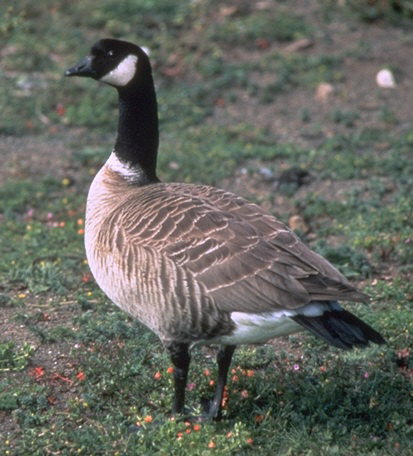
Wikipedia: Cackling goose Source: WIKIPEDIA
AleutianCanadaGoose2.jpg
🔍
Never observed (yet!)
Description
Geography: This bird appears across the great seas in the following continents: Europe, North America.General:
The cackling goose (Branta hutchinsii) is a North American bird of the genus Branta of black geese, which contains species with largely black plumage, distinguishing them from the grey Anser species.
[more]
Details

Canada goose. 2022-05-01 09:55:20
First observed in Maryland on 2022-05-01.
Description
Geography: This bird appears across the great seas in the following continents: Europe, North America.General: Deutschland: etabliertes Neozoon, Brut-, Jahresvogel, Wintergast
Vocalization:
Trumpet like, resonant, honking sounds. Closer to Whooper Swans than many of the other geese. [Link]
Other Details
Physical details
Physical details: length=80-105 cm, wingspan=160-175 cm, weight=3670-5410 gVocalisation
Song: No details but a Xeno-Canto recording. Song attributes: Frequency:♫ 2022-05-03 10:44:14 Source: BirdNet 20220503_104414 birdnet - Canada Goose - 2022-05-03 10:44:14 - Canada Goose - Cockeysville.mp3 Cockeysville (song)
Details

Wikipedia: Brant Source: WIKIPEDIA
Brent-Goose.jpg
🔍
Never observed (yet!)
Description
Geography: This bird appears across the great seas in the following continents: Europe, North America.General: Deutschland: Zugvogel, Wintergast
Vocalization:
A bubbling, trembling, ascending, three syllable "ahrahrrhit", quite different from other geese. [Link]
Seasonal behavior
Year-round bird Migration in: 11-26 - 12-31 Migration out: 03-12 - 04-20More details at Vogelwarte.ch
Other Details
Physical details
Physical details: length=56-61 cm, wingspan=110-120 cm, weight=1300-1600 gDetails
Cinnamon teal / Zimtente (Spatula cyanoptera)
Profile Wikipedia Audubon AllAboutBirds Xeno-Canto NABU YouTube

Wikipedia: Cinnamon teal Source: WIKIPEDIA
1200px-Sarcelle_cannelle_%28Spatula_cyanoptera%29.jpg
🔍
Never observed (yet!)
Description
Geography: This bird appears across the great seas in the following continents: Europe, North America, South America.General:
 [more]
Details

Wikipedia: Fulvous whistling-duck Source: WIKIPEDIA
1200px-Dendrocygna_bicolor_wilhelma.jpg
🔍
Never observed (yet!)
Description
Geography: This bird appears across the great seas in the following continents: North America, South America, Africa, Asia.Details
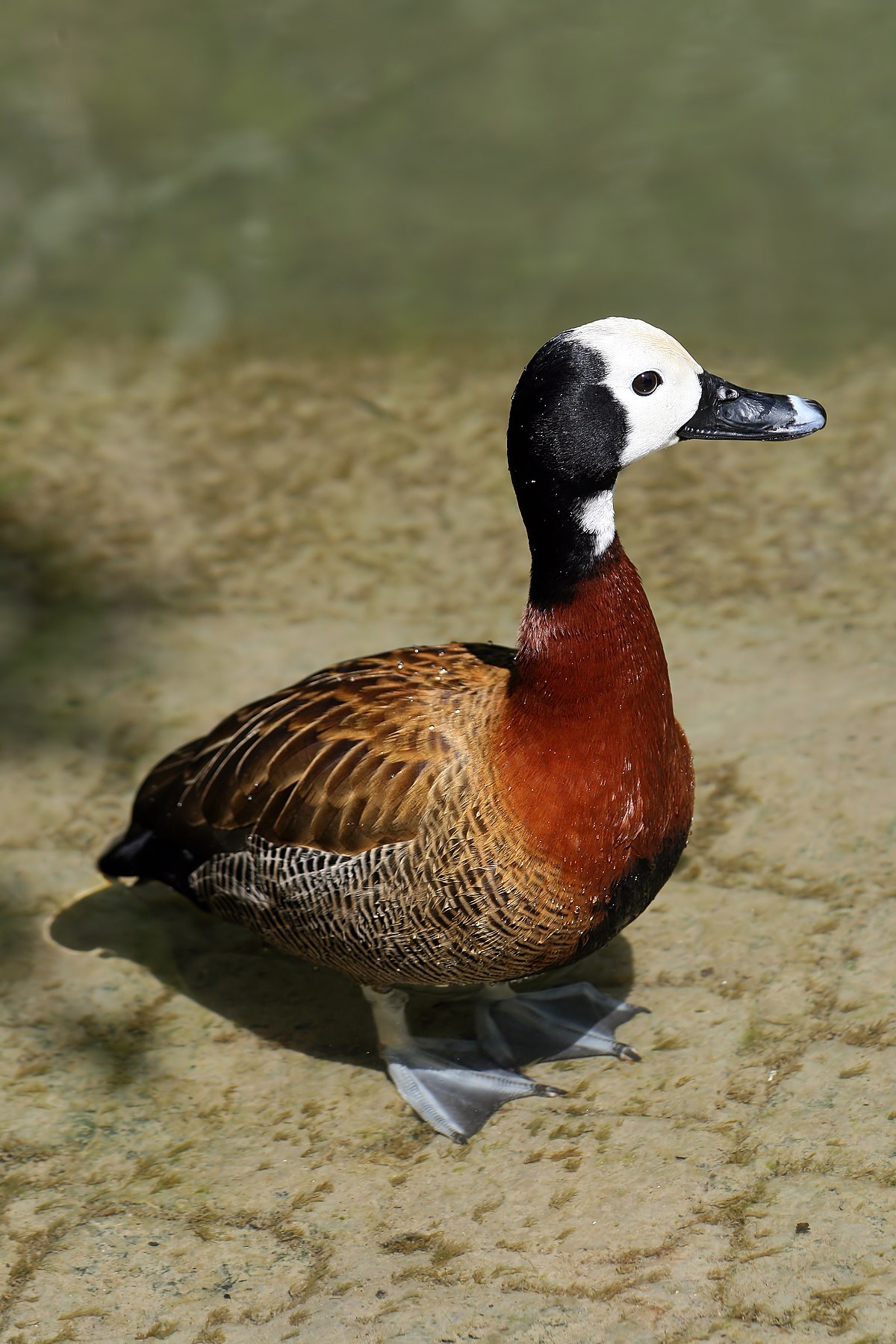
Wikipedia: White-faced whistling-duck Source: WIKIPEDIA
1200px-Dendrocygna_viduata_upright.jpg
🔍
Never observed (yet!)
Description
Geography: This bird appears across the great seas in the following continents: South America, Africa.General:
Anas viduata Linnaeus, 1766
[more]
Details
Great cormorant / Kormoran (Phalacrocorax carbo)
Profile Wikipedia Vogelwarte BirdLife ZH ornitho.ch Audubon AllAboutBirds Xeno-Canto NABU YouTube

Kormoran im Profil. 2024-05-22 17:14:35 Fanel/Chablais de Cudrefin und La Sauge
First observed in 🇨🇭 on 2021-01-26.
Description
Geography: This bird appears across the great seas in the following continents: Europe, North America, Africa, Asia.General: Deutschland: Brut-, Jahres-, Zugvogel, Wintergast
Seasonal Behavior:
Lokaler Brutvogel, regelmässiger, häufiger Durchzügler und Wintergast.[Brutpaare am Zürichsee und Greifensee bei Mönchaltorf] [Link]
Vocalization:
Mostly heard at breeding ground. Also deep, rattling and creaking sounds. [Link]
Seasonal behavior
Year-round birdOther Details
Physical details
Physical details: length=80-100 cm, wingspan=130-160 cm, weight=1700-3000 gHabitats: River and lake
Vocalisation
Song: No details but a Xeno-Canto recording. Song attributes: Frequency:♫ 2021-05-19 07:39:23 Source: BirdNet 20210519_073923 birdnet 1559 - Great Cormorant - 2021-05-19 07:39:23 - Great Cormorant - Cudrefin.mp3 Fanel/Chablais de Cudrefin und La Sauge (song)
Calls:
Coarse, vibrating calls "hahahahaharo". [Link]
No details but a Xeno-Canto recording.
XC770245 - Great Cormorant call - Phalacrocorax carbo.
♫ Source: XENOCANTO XC770245 - Great Cormorant call - Phalacrocorax carbo.mp3 (call)

Call attributes: song Frequency: ,
Details
Double-crested cormorant / Ohrenscharbe (Phalacrocorax auritus)
Profile Wikipedia Audubon AllAboutBirds Xeno-Canto NABU YouTube

Double-crested cormorants hang out on the lightpost in Campeche. 2023-04-06 16:59:40 Yucatan
First observed in Yucatan on 2023-04-06.
Description
Geography: This bird appears across the great seas in the following continents: Europe, North America, South America.General:
The double-crested cormorant (Phalacrocorax auritus) is a member of the cormorant family of water birds. Its habitat is near rivers and lakes as well as in coastal areas, and is widely distributed across North America, from the Aleutian Islands in Alaska down to Florida and Mexico. Measuring 70–90 cm (28–35 in) in length, it is an all-black bird which gains a small double crest of black and white feathers in breeding season. It has a bare patch of orange-yellow facial skin. Five subspecies are recognized. It mainly eats fish and hunts by swimming and diving. Its feathers, like those of all cormorants, are not waterproof and it must spend time drying them out after spending time in the water. Once threatened by the use of DDT, the numbers of this bird have increased markedly in recent years.
[more]
Details
Great egret / Silberreiher (Ardea alba)

Silberreiher in Deutschland, von WikiCommons Von Andreas Eichler, CC BY-SA 4.0, https://commons.wikimedia.org/w/index.php?curid=59954907 Source: OTHER
Wikicommons 2016.10.30--Silberreiher.jpg
First observed in 🇨🇭 on 2021-02-24.
Description
Geography: This bird appears across the great seas in the following continents: Europe, North America, South America, Africa, Asia.General: Auf dem Heimweg von Schwanden haben wir bei Benken ganz weisse Reiher gesehen. Laut ornitho.ch waren sie Silberreiher.
General: Bei den meisten Quellen heisst es, sie sind in der Schweiz nur Durchzüger oder Wintergäste. Aber laut Balzari und Gygax, brüten auch einige Vögel am Lac Neuchatel seit 2013.
General: Deutschland: Zugvogel, Wintergast
Vocalization:
Silent outside breeding ground. [Link]
Seasonal behavior
Year-round bird Migration in: 03-01 - 05-31 Migration out: 08-09 - 11-15More details at Vogelwarte.ch
Other Details
Physical details
Physical details: length=85-102 cm, wingspan=140-170 cm, weight=960-1030 gHabitats: Wetland
Vocalisation
Calls:In colonies various harsh calls like a dry, and mechanical "kerrrrrrr", and a very nasal "geet" or "ga-geet ga-geet" are heard. [Link]
1:
Partly an awkward quack: uck uck. Rattles. Deep-toned urrr. Higher-toned trill.
2: No details but a Xeno-Canto recording.
XC751146 - Great Egret - Ardea alba - call and flight call - Shanghai, China.
♫ Source: XENOCANTO XC751146 - Great Egret - Ardea alba - call and flight call - Shanghai, China.mp3 (flight call)

Call attributes: Call melody: non-musical, slow, Frequency: low (1-3 KHz),
Details
Western cattle egret / Kuhreiher (Ardea ibis)
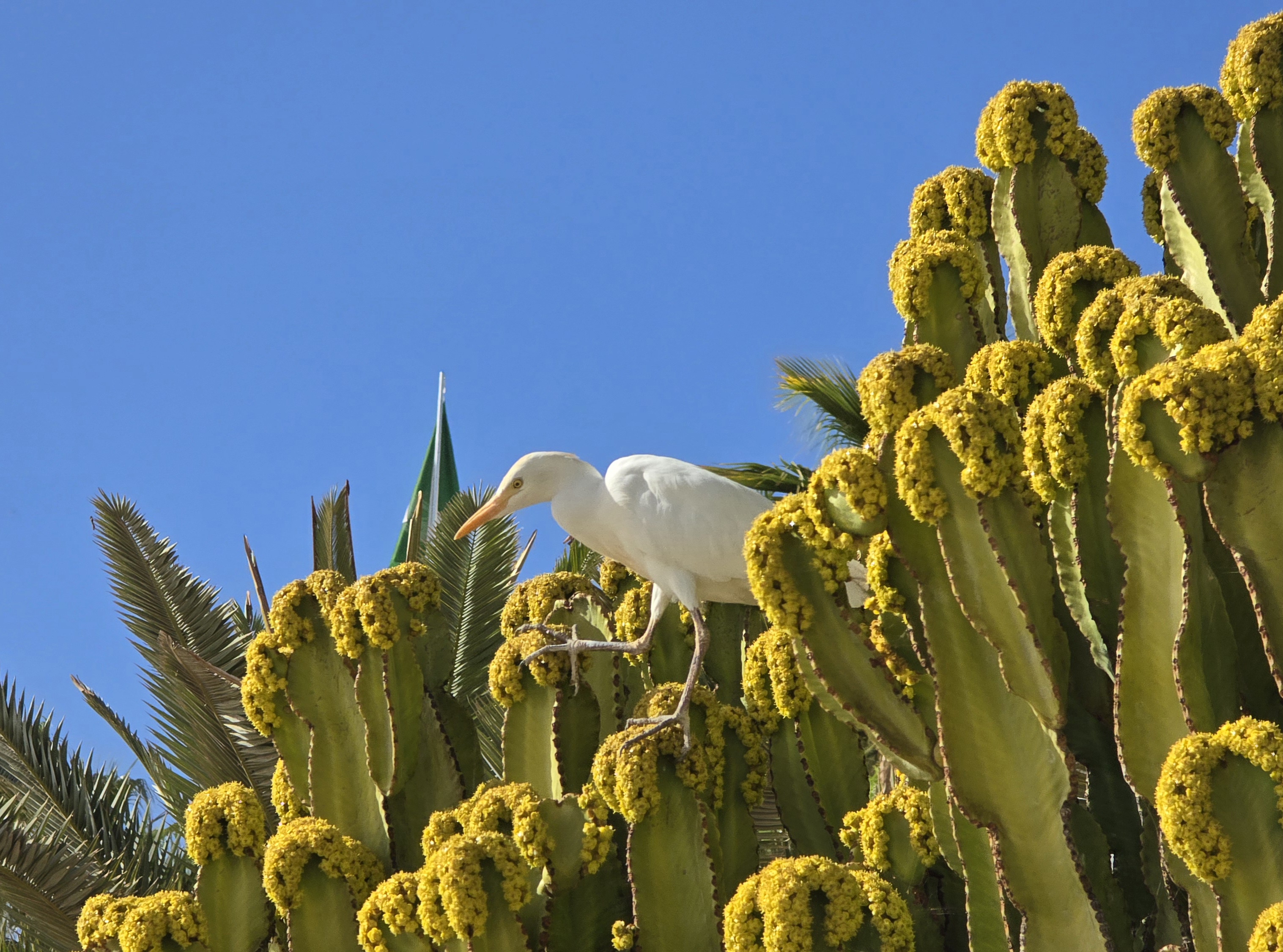
Cattle egret. 2025-02-19 16:04:27 Fuerteventura
First observed in Costa Rica on 2018-02-27.
Description
Geography: This bird appears across the great seas in the following continents: Europe, North America, South America, Africa, Asia.Vocalisation
Song: No details but a Xeno-Canto recording. Song attributes: Frequency:♫ Source: XENOCANTO XC794287 - Eastern Cattle Egret - Bubulcus coromandus - call - Hong Kong, China.mp3 (call)

1: No details but a Xeno-Canto recording.
2: No details but a Xeno-Canto recording.
XC353848 - Western Cattle Egret - Bubulcus ibis - flight call - sevilla, andalucía, Spain.
♫ Source: XENOCANTO XC353848 - Western Cattle Egret - Bubulcus ibis - flight call - sevilla, andalucía, Spain.mp3 Spain (flight call)

Call attributes: song Frequency: ,
Details
Black-crowned night-heron / Nachtreiher (Nycticorax nycticorax)

Nachtreiher in Camargue - the only bird I've been able to identify so far looking back on those old photos. 1991-07-15 12:41:47 Camargue
First observed in Camargue on 1991-07-15.
Description
Geography: This bird appears across the great seas in the following continents: Europe, North America, South America, Africa, Asia.General: Deutschland: Brutvogel, seltener Zugvogel RL 1
Seasonal behavior
Presence: 03-23 - 09-28 Migration in: 09-07 - 09-14 Migration out: 09-07 - 09-28More details at Vogelwarte.ch
Other Details
Physical details
Physical details: length=58-65 cm, wingspan=105-112 cm, weight=500-800 gHabitats: Wetland Details
Snowy egret / Schmuckreiher (Egretta thula)
Profile Wikipedia Audubon AllAboutBirds Xeno-Canto YouTube

MerlinBirdID suggests snowy egret, but not so sure. 2023-04-15 08:34:40 Yucatan
First observed in Yucatan on 2023-04-15.
Description
Geography: This bird appears across the great seas in the following continents: North America, South America, Africa.General:
The snowy egret (Egretta thula) is a small white heron. The genus name comes from Provençal French for the little egret, aigrette, which is a diminutive of aigron, 'heron'. The species name thula is the Araucano term for the black-necked swan, applied to this species in error by Chilean naturalist Juan Ignacio Molina in 1782.[3]
[more]
Details
Little blue heron / Blaureiher (Egretta caerulea)
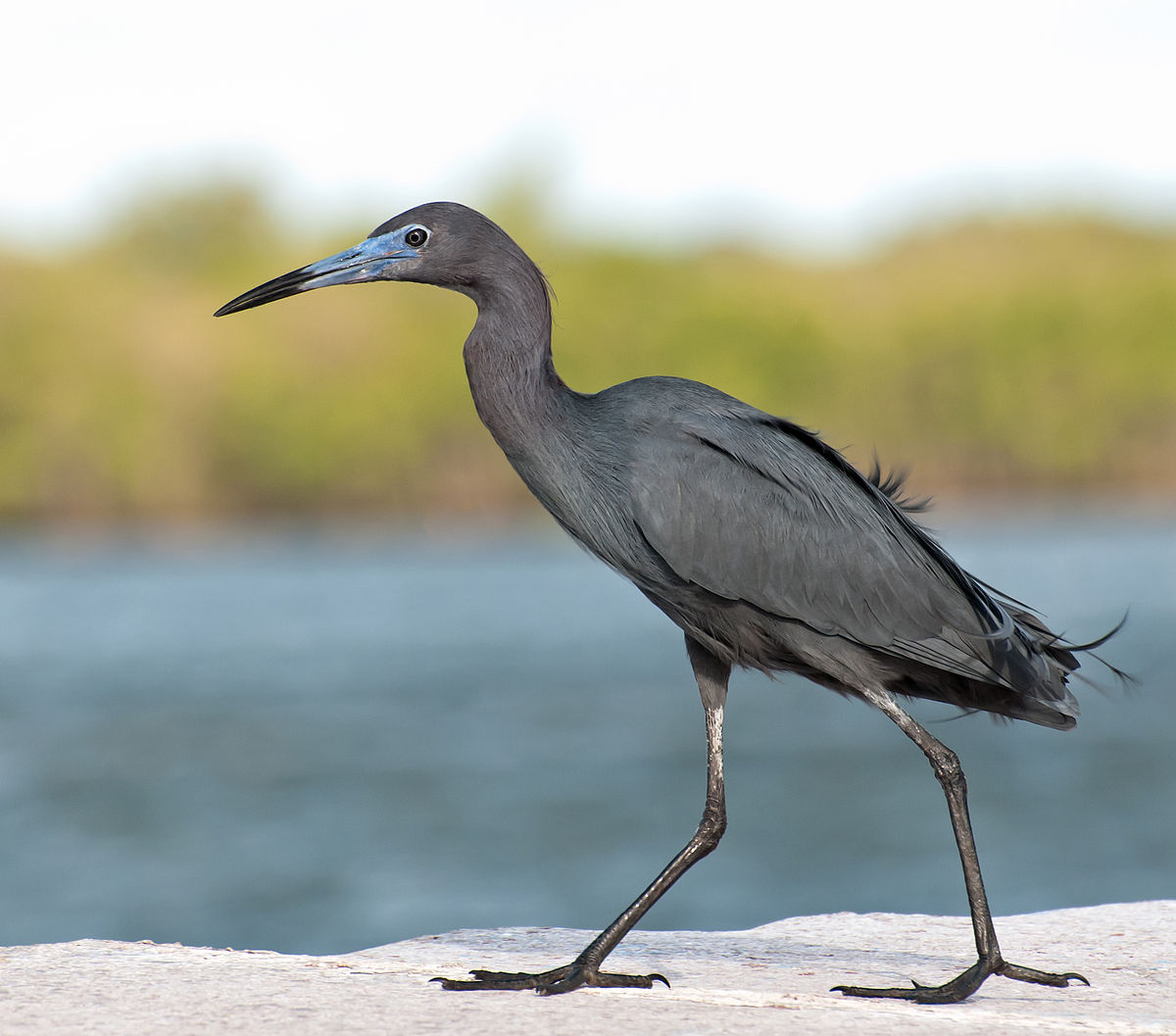
Wikipedia: Little blue heron Source: WIKIPEDIA
1200px-Egretta_caerulea_-Cananeia%2C_Sao_Paulo%2C_Brasil-8.jpg
🔍
Never observed (yet!)
Description
Geography: This bird appears across the great seas in the following continents: North America, South America, Africa.General:
The little blue heron (Egretta caerulea) is a small heron belonging to the family Ardeidae.
[more]
Details
Pacific reef-egret / Riffreiher (Egretta sacra)

Wikipedia: Pacific reef-egret Source: WIKIPEDIA
1200px-Egretta_sacra.jpg
🔍
Never observed (yet!)
Description
Geography: This bird appears across the great seas in the following continents: North America, Asia.Details
American bittern / Nordamerikanische Rohrdommel (Botaurus lentiginosus)

Wikipedia: American bittern Source: WIKIPEDIA
1200px-Botaurus_lentiginosus_28079.JPG
🔍
Never observed (yet!)
Description
Geography: This bird appears across the great seas in the following continents: North America, South America, Africa.General:
The American bittern (Botaurus lentiginosus) is a species of wading bird in the heron family. It has a Nearctic distribution, breeding in Canada and the northern and central parts of the United States, and wintering in the U.S. Gulf Coast states, all of Florida into the Everglades, the Caribbean islands and parts of Central America.
[more]
Details
Green-backed heron / Mangrovereiher (Butorides striata)

Striated heron. 2024-02-22 11:31:30 Laos
First observed in Laos on 2024-02-22.
Description
Geography: This bird appears across the great seas in the following continents: Europe, South America, Africa, Asia.Vocalisation
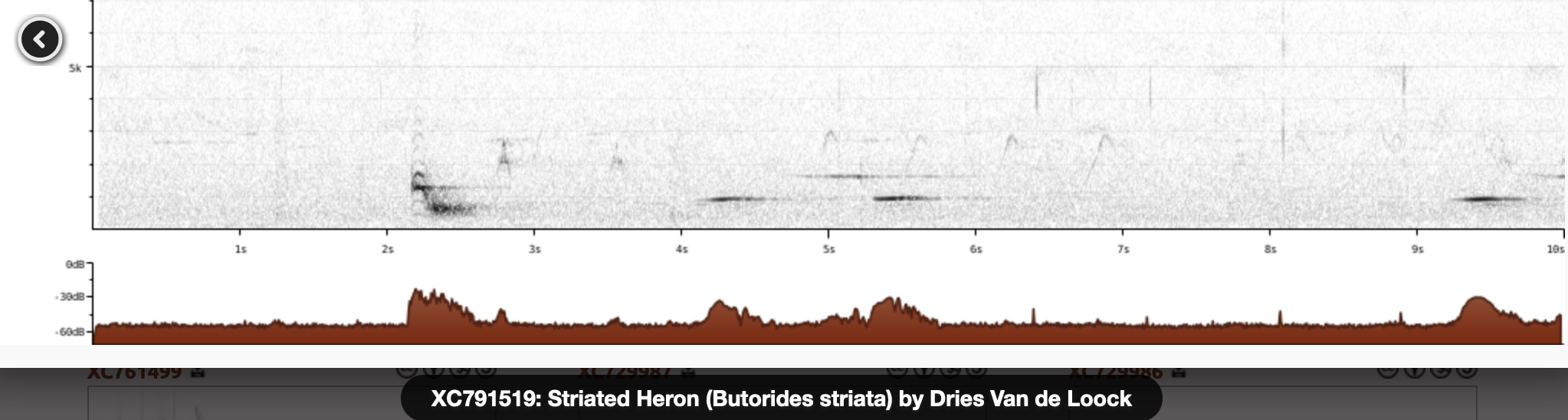
Song: No details but a Xeno-Canto recording. Song attributes: Frequency:♫ Source: XENOCANTO XC791519 - Striated Heron - Butorides striata - song, sounds like Ow plus pi-rol lhl, Copperbelt Province, Zambia.mp3 (song)
Details
Great frigatebird / Bindenfregattvogel (Fregata minor)
Profile Wikipedia Audubon AllAboutBirds Xeno-Canto YouTube
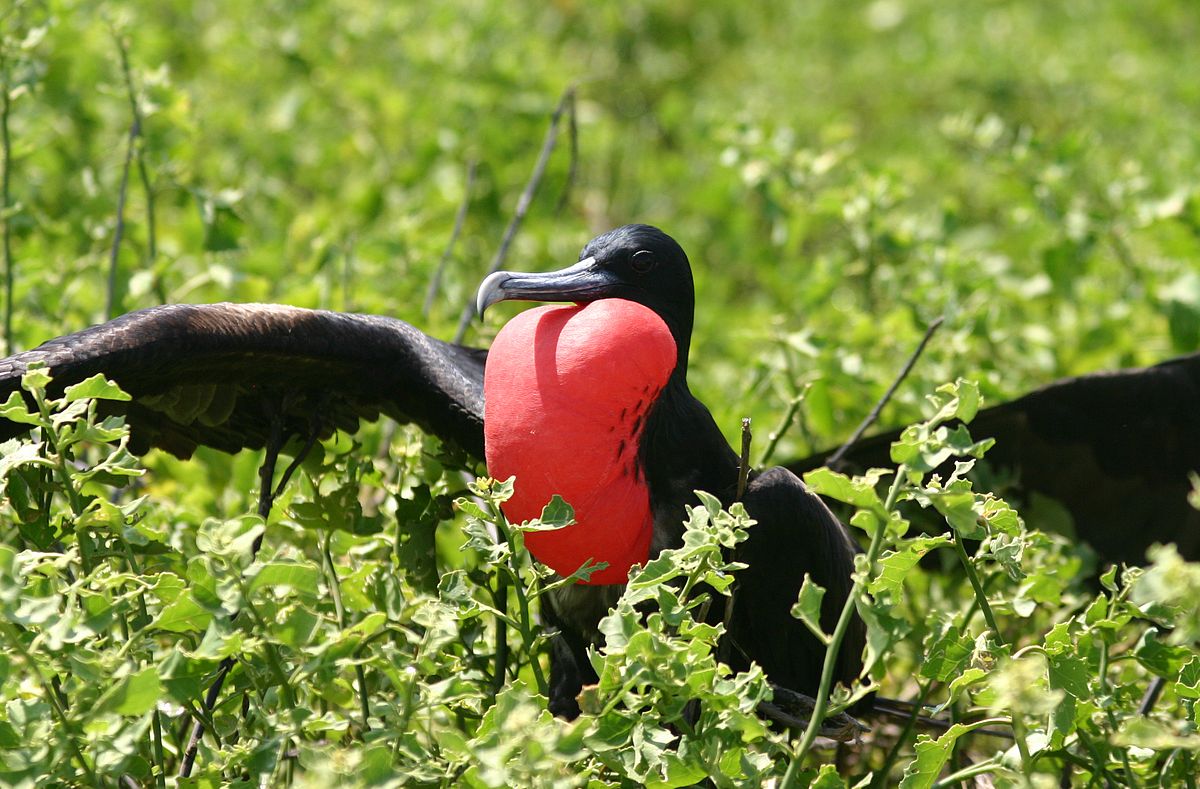
Wikipedia: Great frigatebird Source: WIKIPEDIA
1200px-Male_greater_frigate_bird_displaying.jpg
🔍
Never observed (yet!)
Description
Geography: This bird appears across the great seas in the following continents: North America, South America, Africa, Asia.Details
Magnificent frigatebird / Prachtfregattvogel (Fregata magnificens)
Profile Wikipedia Audubon AllAboutBirds Xeno-Canto YouTube

Magnificent frigatebirds in Puerto Morelos. 2023-03-26 13:47:02 Yucatan
First observed in Yucatan on 2023-03-26.
Description
Geography: This bird appears across the great seas in the following continents: North America, South America, Africa.General:
The magnificent frigatebird (Fregata magnificens) or man o' war is a seabird of the frigatebird family Fregatidae. With a length of 89–114 centimetres (35–45 in) and wingspan of 2.17–2.44 m (7.1–8.0 ft) it is the largest species of frigatebird. It occurs over tropical and subtropical waters off America, between northern Mexico and Perú on the Pacific coast and between Florida and southern Brazil along the Atlantic coast.[1] There are also populations on the Galápagos Islands in the Pacific and the Cape Verde islands in the Atlantic.
[more]
Details
White-tailed tropicbird / Weißschwanz-Tropikvogel (Phaethon lepturus)
Profile Wikipedia Audubon AllAboutBirds Xeno-Canto YouTube
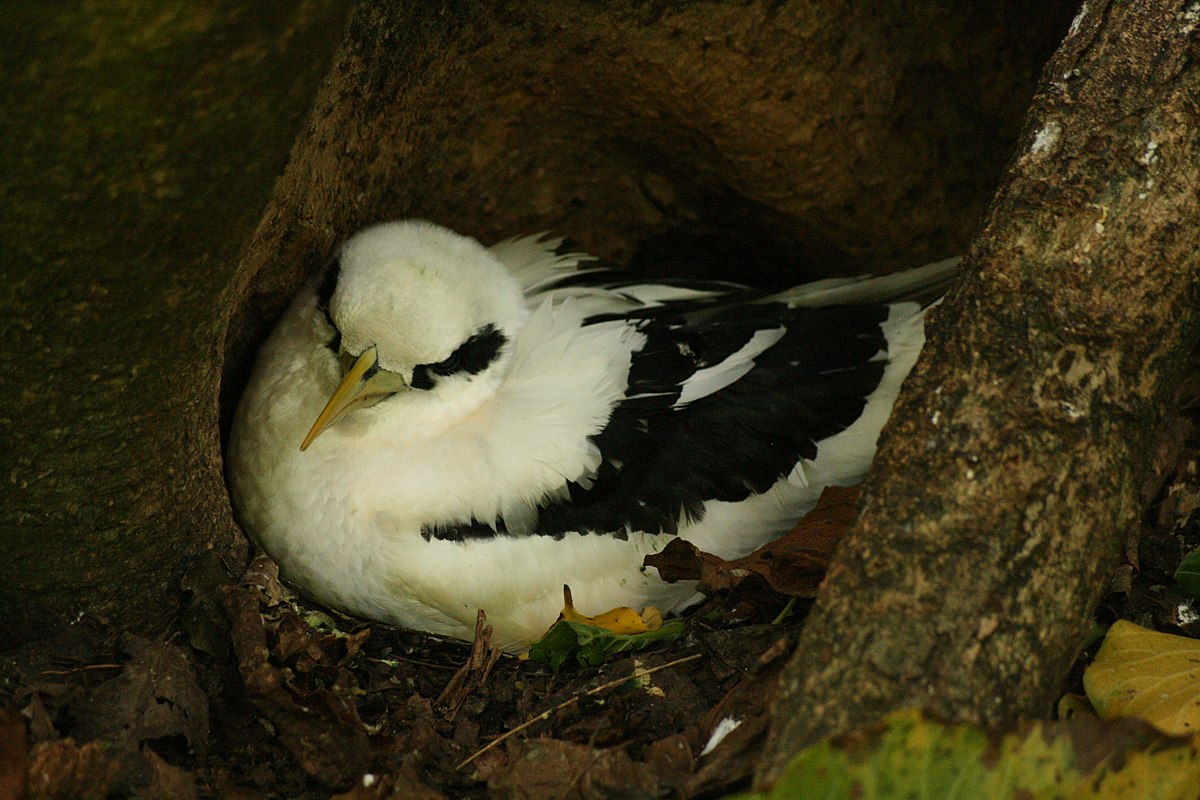
Wikipedia: White-tailed tropicbird Source: WIKIPEDIA
1200px-White-tailed_Tropicbird_-_Phaeton_lepturus.jpg
🔍
Never observed (yet!)
Description
Geography: This bird appears across the great seas in the following continents: North America, Africa, Asia.Details
Red-billed tropicbird / Rotschnabel-Tropikvogel (Phaethon aethereus)
Profile Wikipedia Audubon AllAboutBirds Xeno-Canto YouTube

Wikipedia: Red-billed tropicbird Source: WIKIPEDIA
1200px-Red-billed_tropicbird.jpg
🔍
Never observed (yet!)
Description
Geography: This bird appears across the great seas in the following continents: North America, South America, Africa, Asia.Details
Red-tailed tropicbird / Rotschwanz-Tropikvogel (Phaethon rubricauda)
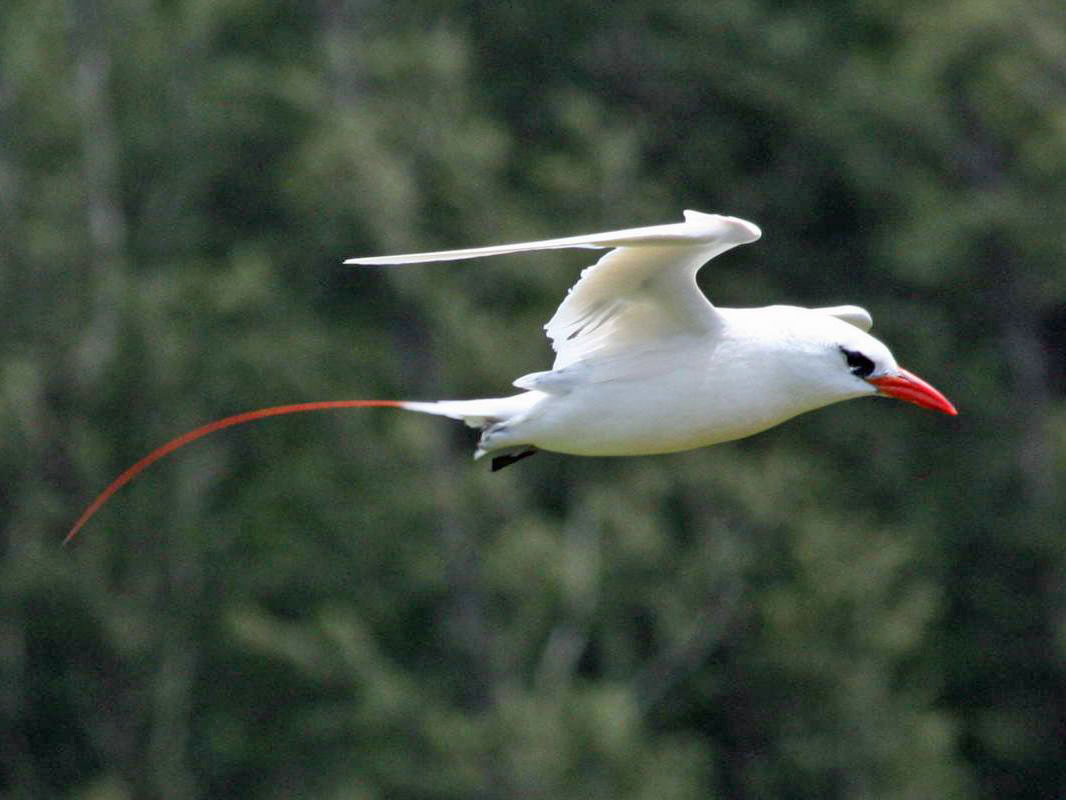
Wikipedia: Red-tailed tropicbird Source: WIKIPEDIA
Red-tailed_Tropicbird_RWD2.jpg
🔍
Never observed (yet!)
Description
Geography: This bird appears across the great seas in the following continents: North America, Africa, Asia.Details
Red-footed booby / Rotfußtölpel (Sula sula)
Profile Wikipedia Audubon AllAboutBirds Xeno-Canto YouTube
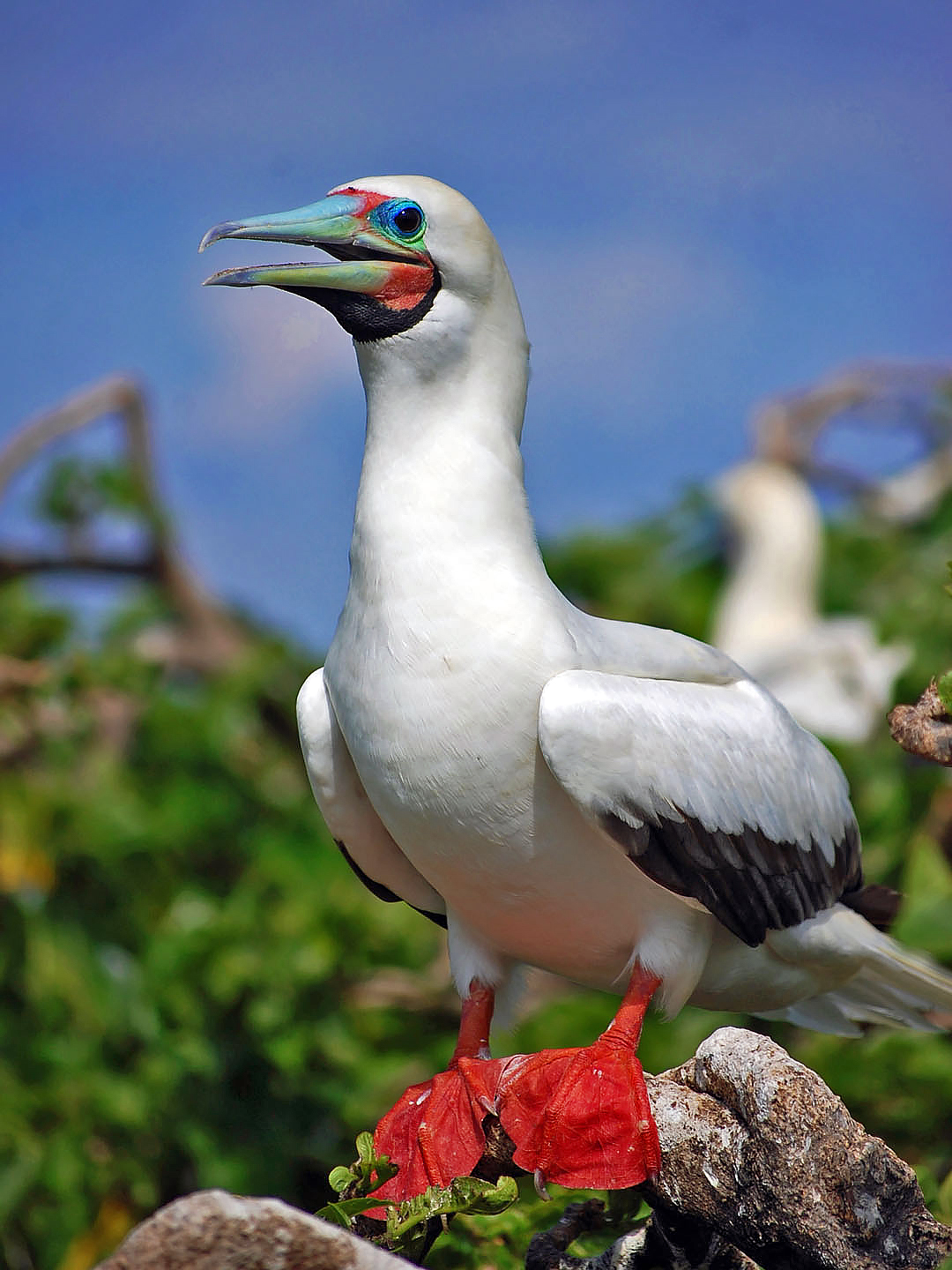
Wikipedia: Red-footed booby Source: WIKIPEDIA
Sula_sula_by_Gregg_Yan_01.jpg
🔍
Never observed (yet!)
Description
Geography: This bird appears across the great seas in the following continents: North America, South America, Asia.Details
Brown booby / Weißbauchtölpel (Sula leucogaster)
Profile Wikipedia Audubon AllAboutBirds Xeno-Canto YouTube

Wikipedia: Brown booby Source: WIKIPEDIA
1200px-Atob%C3%A1-pardo.jpg
🔍
Never observed (yet!)
Description
Geography: This bird appears across the great seas in the following continents: North America, South America, Africa, Asia.Details
Masked booby / Maskentölpel (Sula dactylatra)

Wikipedia: Masked booby Source: WIKIPEDIA
1200px-Starr_080606-6808_Coronopus_didymus.jpg
🔍
Never observed (yet!)
Description
Geography: This bird appears across the great seas in the following continents: North America, South America, Africa, Asia.Details
Northern gannet / Basstölpel (Morus bassanus)

Wikipedia: Northern gannet Source: WIKIPEDIA
1200px-Morus_bassanus_adu.jpg
🔍
Never observed (yet!)
Description
Geography: This bird appears across the great seas in the following continents: Europe, North America, Africa.General: Deutschland: Brut-, Jahres-, Zugvogel, Wintergast RL R
Vocalization:
Heard mostly at breeding ground. Even, rhythmical series of harsh "harrr, harrr, harrr,". [Link]
Other Details
Physical details
Physical details: length=87-100 cm, wingspan=165-180 cm, weight=2400-3600 gDetails
Glossy ibis / Brauner Sichler (Plegadis falcinellus)

Sichler nach ornitho, Brauner Sichler nach Wikipedia oder Plegadis falcinellus, Neeracherried. 2022-09-04 07:11:46 Source: WIKIPEDIA
20220904_071146-DSC_0059 Sichler nach ornitho, Brauner Sichler nach Wikipedia oder Plegadis falcinellus, Neeracherried.JPG
Neeracherried
First observed in 🇨🇭 on 2022-09-04.
Description
Geography: This bird appears across the great seas in the following continents: Europe, North America, South America, Africa, Asia.Vocalization:
Generally silent away from breeding ground. Dry, crow-like "garr garr", may be heard occasionally in flight. At breeding ground various guttural grunts, and piping, hissing sounds. [Link]
Other Details
Physical details
Physical details: length=55-65 cm, wingspan=80-95 cm, weight=530-768 gDetails
Profile Wikipedia Audubon AllAboutBirds Xeno-Canto YouTube

Red-whiskered bulbul, Chiang Mai. 2024-01-21 14:42:26 Thailand
First observed in Thailand on 2024-01-21.
Description
Geography: This bird appears across the great seas in the following continents: North America, Asia.General: introduced
Vocalisation
Song: No details but a Xeno-Canto recording. Song attributes: Frequency:♫ Source: XENOCANTO XC776525 - Red-whiskered Bulbul - Pycnonotus jocosus pattani.mp3 (song)

Details
Profile Wikipedia Audubon AllAboutBirds Xeno-Canto YouTube

Wikipedia: Red-vented bulbul Source: WIKIPEDIA
Red_Vented_Bulbul_India.jpg
🔍
Never observed (yet!)
Description
Geography: This bird appears across the great seas in the following continents: North America, Asia.General: Accidental
Details
Profile Wikipedia A-Z Animals Vogelwarte BirdLife ZH ornitho.ch bird-song.ch Audubon AllAboutBirds Xeno-Canto BirdID NABU YouTube
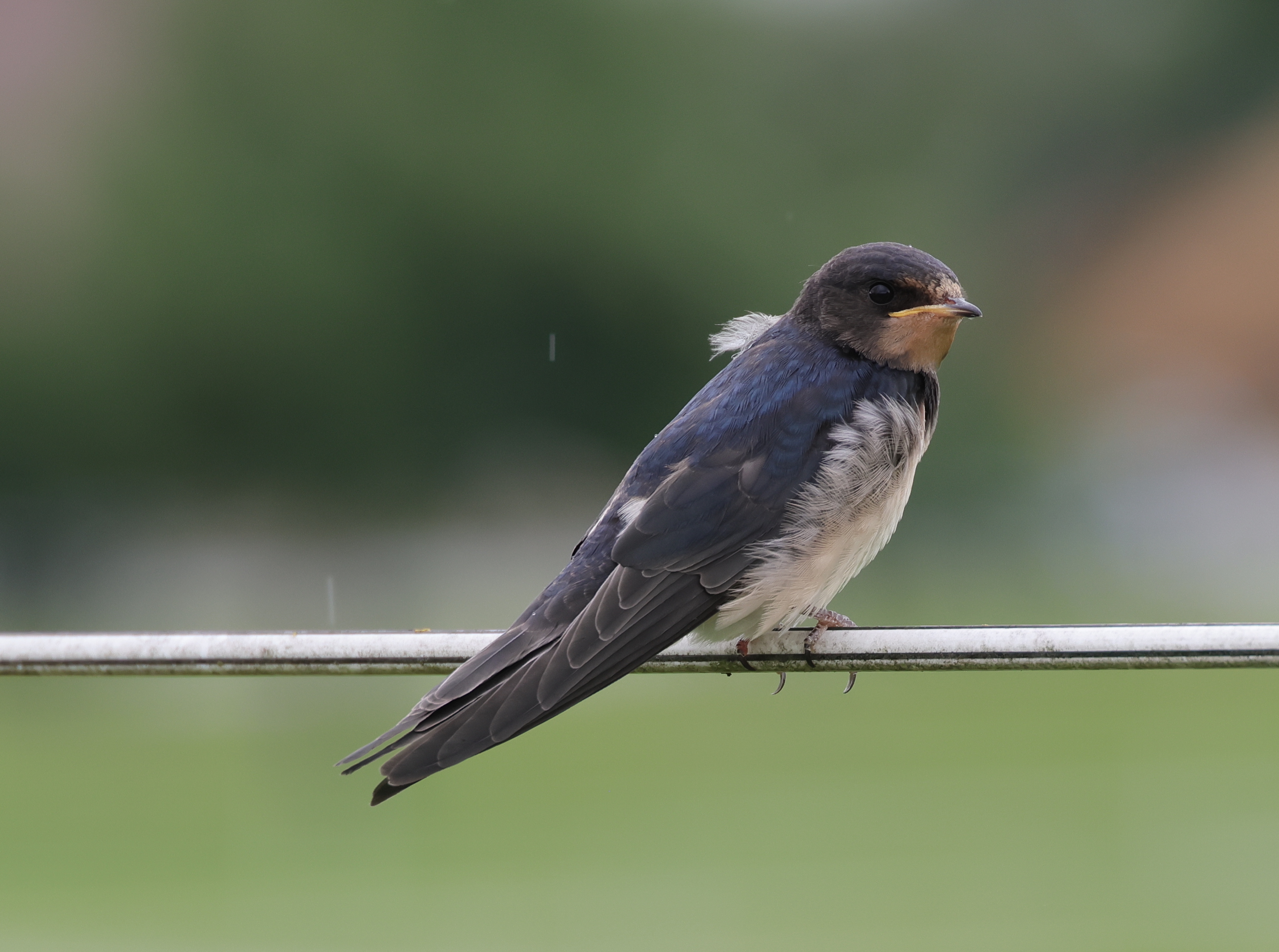
Rauchschwalbe braucht eine Coiffeuse. 2025-08-03 16:54:17 Fehraltorf
First observed in 🇨🇭 on 2020-04-16.
Description
Geography: This bird appears across the great seas in the following continents: Europe, North America, South America, Africa, Asia.General: Deutschland: Brut-, Zugvogel RL V
Good to know: Die langen Schwanzfedern vom Rauchschwalbe und anderen geben auch dem Schmetterling Schwalbenschwanz seine deutschen Namen.
Etymology:
In früheren Jahrhunderten flogen sie vielfach durch die Öffnungen im Giebel ein und aus, durch die auch der Rauch des Herdfeuers abzog. So erhielten sie den Namen Rauchschwalben. [Link]
Appearance and identification:
Rauchschwalbes Bauch ist etwas braun rot, nicht weiss wie der von der Mehlschwalbe - was wahrscheinlich Quelle der zwei Namen ist. [Link]
Seasonal behavior
Presence: 03-01 - 10-27 Breeding: 04-20 - 09-17 Migration in: 03-01 - 05-31 Migration out: 08-18 - 10-27More details at Vogelwarte.ch
Other Details
Physical details
Physical details: length=17-19 cm, wingspan=32-34 cm, weight=16-22 gHabitats: Settlement
Similar species
Looks similar to: Common house martin.Vocalisation
Song: General: Squeaky with occasional buzzes, usually heard in flock.Song:
Kann melodisch sein wenn einzeln gehört statt viele zusammen. [Link]
Song: Characteristic calls and song. Song a sparkling, squeaky energetic improvisation with interspersed contact calls, often with diagnostic ending; an electric and drawn-out "su-eerrrrrrrrrrrrrrr". [Link]
Song attributes:
Melody: stereotype melodic, fast, Frequency: 2-6 KHz
Calls:
Contact call a short and sharp "weet" or "kee-weet". [Link]
XC898815 - Barn Swallow - Hirundo rustica - flight call.
♫ Source: XENOCANTO XC898815 - Barn Swallow - Hirundo rustica - flight call.mp3 (flight call)

Call attributes: flight call Call melody: one note, slow, Frequency: medium (1-5 KHz),
Details

Bank swallow. 2024-01-26 15:58:58 Thailand
First observed in Thailand on 2024-01-26.
Description
Geography: This bird appears across the great seas in the following continents: Europe, North America, South America, Africa, Asia.General:
The sand martin (Riparia riparia) or European sand martin, bank swallow, and collared sand martin in India, is a migratory passerine bird in the swallow family. It has a wide range in summer, embracing practically the whole of Europe and the Mediterranean countries and across the Palearctic to the Pacific Ocean. It is a Holarctic species also found in North America. It winters in eastern and southern Africa, South America, and the Indian Subcontinent.
[more]
Deutschland: Brut-, Zugvogel RL V
Seasonal behavior
Presence: 03-23 - 10-18 Breeding: 05-01 - 09-07 Migration in: 03-23 - 06-09 Migration out: 07-10 - 10-18More details at Vogelwarte.ch
Other Details
Physical details
Physical details: length=12 cm, wingspan=26-29 cm, weight=11-16 gHabitats: Wetland
Vocalisation
Song: Fast raspy one-noter. Song:Song a primitive improvisation on the contact call. [Link]
Song attributes:
Melody: non-musical, fast, Frequency: 1-7 KHz Special sounds: rasp
♫ Source: XENOCANTO XC344092 - Sand Martin - Riparia riparia - raspy song but note, does not sing often.mp3 (song)

Calls:
Contact call a mono- or disyllabic "trrrrt". Similar to House Martin but more raucous and less crisp, with less rolling r's, and with stable pitch throughout. Alarm call similar to House Martin; a sharp plaintive "tseep", but somewhat purer and more drawn. [Link]
No details but a Xeno-Canto recording.
XC659747 - Sand Martin - Riparia riparia - noisy call recorded in Sweden.
♫ Source: XENOCANTO XC659747 - Sand Martin - Riparia riparia - noisy call recorded in Sweden.mp3 (call)

Call attributes: song Frequency: ,
Details

Wikipedia: Cliff swallow Source: WIKIPEDIA
Petrochelidon_pyrrhonota_-flight_-Palo_Alto_Baylands-8.jpg
🔍
Never observed (yet!)
Description
Geography: This bird appears across the great seas in the following continents: Europe, North America, South America.General:
The cliff swallow or American cliff swallow (Petrochelidon pyrrhonota) is a member of the passerine bird family Hirundinidae, the swallows and martins.[2] The scientific name is derived from Ancient Greek; Petrochelidon originates from the petros meaning "rock" and khelidon "swallow", pyrrhonota comes from purrhos meaning "flame-coloured" and -notos "-backed".[3]
[more]
Details

Feldlerche auf einer Sonnenblume, Neunkirch. 2023-07-16 10:19:38 Neunkirch, Schaffhausen
First observed in 🇨🇭 on 2022-06-25.
Description
Geography: This bird appears across the great seas in the following continents: Europe, North America (introduced), Africa, Australia.General: Deutschland: Brut-, Jahres-, Zugvogel, Wintergast RL 3
Good to know:
 Aus dem Kurzjahresbericht BirdLife Schweiz 2022: Die Feldlerche, Vogel des Jahres 2022..., ist eihne dieser bredrohten Arten, welche durch die Industrialisierung der Landwirtschaft ausgerottet wird. [Link]
Appearance and identification:
Somewhat like a house sparrow but 18-19 cm long, not 14-15, kleiner als Star. Ruffled head feathers. NABU says streaks on breast contrast with white belly. [Link]
Geography:
 Introduced population in North America is gradually declining. [Link]
Habitat: Stark gefährdet durch Verlust von geeignetem Lebensraum. Eine Massnahme ist die Erstellung von Lerchenfenstern auf den Feldern - eine kleine Fläche mitten im Feld, die nicht bepflanzt oder gemäht wird. So was sieht man bei uns, z.B. zwischen Freudwil und Gutenswil, wobei ich nicht genau weiss, ob Feldlerchen das Ziel davon sind. Die Infos habe ich vom FOK Kurs 2021-2022 von Christina Ebneter.
Seasonal behavior
Year-round bird Breeding: 04-11 - 08-18 Migration in: 02-01 - 04-01 Migration out: 09-17 - 11-15More details at Vogelwarte.ch
Other Details
Physical details
Physical details: length=18-19 cm, wingspan=30-36 cm, weight=26-50 gHabitats: Agricultural
Vocalisation
Song: Fast chirpy improvization without a break, not very high, reminds me of a nightingale or a Eurasian reed warbler/Teichrohrsänger with the exact rhythm, but most likely sung in a cornfield. Or a Singdrossel that repeats its elements longer that that guy. Repeats elements 1-8 times. Sometimes buzzy/trilly. Can go on for minutes at a time. Ich habe es auch mit einem Amsel verwechselt, da er lang und melodisch, fast wie Amsel aber hört nicht auf. Song:Song a pleasing energetic stream of chirping, merry trills, interspersed with mimicry. Trills quite resonant with fairly full tone. Song usually given in flight high in the air. Less characteristic, shorter, weaker and more varied song when given from ground. [Link]
Song attributes:
Melody: sings 30 seconds or longer, slow, Frequency: 2-6 KHz Special sounds: mimicry
♫ Source: XENOCANTO XC685846 - Eurasian Skylark - Alauda arvensis - song, recorded in France.mp3 (song)

Calls:
Most typical flight call a short trilling "chirrup", with the end note noticeably lower pitched than the start. Also several other more cryptic calls. [Link]
This quickly-written call archetype may need review/enhancement.
♫ Source: XENOCANTO XC772869 - Eurasian Skylark - Alauda arvensis - flight call.mp3 (flight call)
 XC772869 - Eurasian Skylark - Alauda arvensis - flight call.
♫ Source: XENOCANTO XC772869 - Eurasian Skylark - Alauda arvensis - flight call.mp3 (flight call)
XC946652 - Eurasian Skylark one-note swooping flight call - Alauda arvensis.
♫ Source: XENOCANTO XC946652 - Eurasian Skylark one-note swooping flight call - Alauda arvensis.mp3 (flight call)

Call attributes: flight call Frequency: ,
Details
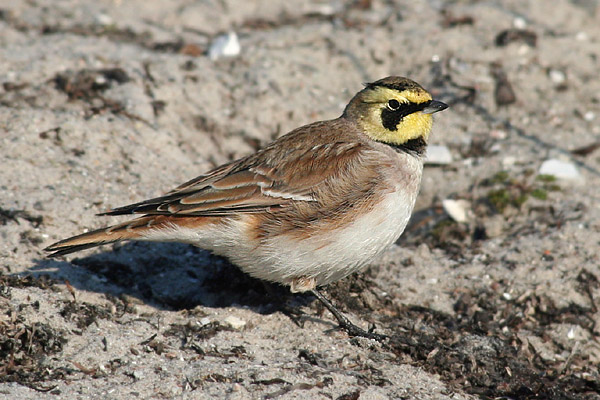
Wikipedia: Horned lark Source: WIKIPEDIA
Eremophila_alpestris2.jpg
🔍
Never observed (yet!)
Description
Geography: This bird appears across the great seas in the following continents: Europe, North America, South America, Africa.General: Deutschland: Wintergast
Seasonal behavior
Presence: 09-28 - 11-26 Migration in: 09-28 - 11-26More details at Vogelwarte.ch
Other Details
Physical details
Physical details: length=14-17 cm, wingspan=30-35 cm, weight=26-46 gDetails

Wikipedia: Arctic warbler Source: WIKIPEDIA
Arctic_Warbler_4683b.jpg
🔍
Never observed (yet!)
Description
Geography: This bird appears across the great seas in the following continents: Europe, North America, Asia.General: Winter and passage visitor
Other Details
Physical details
Physical details: length=10-11 cm, wingspan=16-22 cm, weight=8-12 gDetails
Profile Wikipedia Audubon AllAboutBirds Xeno-Canto BirdID NABU YouTube
, surprisingly good photo considering I shot it through the screen.JPG)
A red-billed leiothrix (Leiothrix lutea), surprisingly good photo considering I shot it through the screen. 2025-10-11 07:58:34 Levanto
First observed in 🇨🇭 on 2025-10-06.
Description
Geography: This bird appears across the great seas in the following continents: Europe, North America.Etymology:
In Italian, it's Usignolo del Giappone [Link]
Appearance and identification:
It doesn't fly frequently, except in open habitats. This bird is very active and an excellent singer but very secretive and difficult to see. [Link]
Geography:
It has become a common cagebird and amongst aviculturists it goes by various names: Pekin robin, Pekin nightingale, Japanese nightingale, and Japanese (hill) robin, the last two being misnomers as it is not native to Japan (although it has been introduced and naturalised there).[ [Link]
Vocalisation
Song: No details but a Xeno-Canto recording. Song attributes: Frequency:♫ 2025-10-06 15:53:00 Switzerland (song)
Details
Profile Wikipedia eBird Vogelwarte BirdLife ZH ornitho.ch bird-song.ch Audubon AllAboutBirds Xeno-Canto BirdID NABU YouTube

MerlinBirdID suggests a Spanish sparrow, Italian sparrow or House sparrow. 2022-04-12 15:18:40
First observed in 🇨🇭 on 2019-05-14.
Description
This bird appears across the great seas in the following continents: Europe, North America (introduced), South America, Africa, Asia.General: One of the most common birds anywhere in Europe and North America. In Fehraltorf there are 5 house sparrows for every one tree sparrow. Eugene Schieffelin brought house sparrows and starlings to North Ameria. As a Shakespeare fan, it is often claimed that he wanted to introduce all species to North America that are mentioned in Shakespeare, but apparently this is not supported by any records
General: Found practically everywhere. Often on the ground or on your table in a cafe (they're very bold) or in groups in bushes and hedges
General: Deutschland: Brut-, Jahresvogel RL V
Seasonal behavior
Year-round birdOther Details
Physical details
Physical details: length=14-15 cm, wingspan=21-25 cm, weight=24-38 gnot sexually dimporphic. No breeding plumage Identifying characteristics: Youth: beak = yellow (Makes it look like a finch) Habitats: Settlement
Similar species
Looks similar to: Common reed bunting.Vocalisation
Song: An monotone chirping. Mainly 2-5 KHz with higher overtones. Song:Song a primitive, monosyllabic, or slightly disyllabic "chilp", hard to distinguish from Tree Sparrow. [Link]
Song attributes:
Melody: simple rhythmic (mh mh mh), slow, Frequency: 2-5 KHz Singing season: 01-01 - 08-31 Dawn chorus start: 30 minutes before dawn.
♫ 2024-06-18 08:35:00 Fehraltorf (call)
Calls:
Most calls very similar to Tree Sparrow, but lacks said species' distinct high pitched call (chew-itt), and alarm call is less dry and raucous. [Link]
1:
XC943040 - House Sparrow one-note swoop call - Passer domesticus.
♫ Source: XENOCANTO XC943040 - House Sparrow one-note swoop call - Passer domesticus.mp3 (call)

2: No details but a Xeno-Canto recording. - but really OWN_VIA_BIRDNET
Birdnet 825 chittering could be alarm call, - House sparrow.
♫ 2020-07-25 09:18:27 Source: BirdNet 20200725_091827 birdnet 825 chittering could be alarm call, - House sparrow.mp3 Luppmen (alarm call)
3: No details but a Xeno-Canto recording. - but really OWN_VIA_BIRDNET
Birdnet 853 typical chirping - contact calls? 2-5 KHz - House sparrow.
♫ 2020-08-06 09:04:55 Source: BirdNet 20200806_090455 birdnet 853 typical chirping - contact calls? 2-5 KHz - House sparrow.mp3 Luppmen (contact call)
Call attributes: Call melody: one note, slow, Frequency: medium (1-5 KHz), Special sounds: swoop.
Details
Profile Wikipedia Vogelwarte BirdLife ZH ornitho.ch bird-song.ch Audubon AllAboutBirds Xeno-Canto BirdID NABU YouTube

Rekordbeobachtung - 8 Vögel an der Futterstelle, hinten links ein ungewöhnlicher Besuch von einem Buchfink, und sonst Feldsperlinge und eine Kohlmeise. 2024-12-15 13:40:22 Greater Fehraltorf
First observed in 🇨🇭 on 2020-04-10.
Description
Geography: This bird appears across the great seas in the following continents: Europe, North America (introduced), Africa, Asia.General: Similar to the house sparrow, but with the black cheek patch seen here. in Fehraltorf there are 5 times as many house sparrows as tree sparrows.
General: Deutschland: Brut-, Jahresvogel RL V
Etymology:
Der Gesang ist ein rhythmisches Tschilpen, das lautmalerisch mit tsche tsche umschrieben wird. [Link]
Geography:
Brought from Germany, about 20 of these birds were released in St. Louis in 1870. The population took hold there, and they might have spread except that the House Sparrow, seemingly more aggressive and adaptable, reached the St. Louis area at about the same time. Eurasian Tree Sparrows are still found in parts of Missouri and Illinois, and have reached southeastern Iowa, but they are fairly local in farmland and suburbs. The tougher House Sparrow may keep them out of other areas. [Link]
Vocalization:
Most other sounds similar to House Sparrow, and may be difficult to identify. [Link]
Seasonal behavior
Year-round birdOther Details
Physical details
Physical details: length=14 cm, wingspan=20-22 cm, weight=18-29 gHabitats: Settlement
Vocalisation
Song: Monotone chirping, rougher than that of the house sparrow. Most 2-7 KHz mit many overtones, i.e. somewhat higher than the house sparrow. Song:Chattering sounds are generally harder, and song slightly higher pitched than House Sparrow. [Link]
Song attributes:
Melody: simple rhythmic, slow, Frequency: 2-7 KHz
Calls:
Distinct, high-pitched and explosive contact-call; "che-witt" typically given in flight. Second syllable rising rapidly in pitch. [Link]
Rough sounding voice
XC926073 - Eurasian Tree Sparrow - Passer montanus - call.
♫ Source: XENOCANTO XC926073 - Eurasian Tree Sparrow - Passer montanus - call.mp3 (call)

Call attributes: Call melody: one note, slow, Frequency: medium (1-5 KHz),
Details

Wikipedia: Java sparrow Source: WIKIPEDIA
Buberel_Lonchura_oryzivora_3.jpg
🔍
Never observed (yet!)
Description
Geography: This bird appears across the great seas in the following continents: North America, South America, Africa, Asia.General: introduced, Christmas Island
Details

Bergfink bei Bahnhof Fehraltorf. 2023-02-01 12:50:26 Fehraltorf
First observed in 🇨🇭 on 2023-02-01.
Description
Geography: This bird appears across the great seas in the following continents: Europe, North America, Africa, Asia.General: Deutschland: Zugvogel, Wintergast
Geography:
the Brambling appears regularly in small numbers in Alaska during migration, straying the short distance across the Bering Sea. Some of those that stray across in autumn apparently then continue south on the American side, and there have been winter records for numerous states and provinces east to the Atlantic Coast and south to Colorado. Many of these vagrant Bramblings have been found visiting bird feeders. [Link]
Vocalization:
Large repertoire of mostly characteristic sounds. [Link]
Seasonal behavior
Year-round bird Migration in: 02-20 - 04-20 Migration out: 09-17 - 12-07More details at Vogelwarte.ch
Other Details
Physical details
Physical details: length=14 cm, wingspan=25-26 cm, weight=17-30 gHabitats: Forest
Vocalisation
Song: General: Bergfink - call cheep plus two ascending Grünfink squawks. Song? Grünfink squawk but not descending, every 3-4 seconds. Song:Song very distinct; a soft, wheezing, drawn-out single note. Repeated at the same pitch in a monotonous manner. [Link]
Song attributes:
Melody: simple rhythmic, slow, Frequency: medium (1-5 KHz) Special sounds: rasp Singing season: 04-14 - 09-15
♫ Source: XENOCANTO XC731031 - Brambling song - Fringilla montifringilla.mp3 (song)

Calls:
Contact calls include a short, nasal, ascending "keeaa", a short high-pitched, piercing "tzeet" and a linnet-like "chepp". May be mistaken for Greenfinch, but note softer timbre and stable pitch throughout the call. [Link]
call cheep plus two ascending greenfinch (Grünfink) squawks
XC900455 - Brambling call - Fringilla montifringilla.
♫ Source: XENOCANTO XC900455 - Brambling call - Fringilla montifringilla.mp3 (call)

Call attributes: Call melody: one note, slow, Frequency: 2-6 KHz,
Details

Kanarengirlitz, Ponta de Sao Laurenco. 2023-03-10 15:20:00 Madeira
First observed in La Palma on 2022-03-08.
Description
Geography: This bird appears across the great seas in the following continents: Europe, North America, Africa.General: It's unusual that the name of a bird refers to dogs. Wikipedia writes: The name Islas Canarias is likely derived from the Latin name Canariae Insulae, meaning "Islands of the Dogs", a name that was evidently generalized from the ancient name of one of these islands, Canaria – presumably Gran Canaria. According to the historian Pliny the Elder, the island Canaria contained "vast multitudes of dogs of very large size".
General: The common canary kept as a pet is subspecies Serinus canaria forma domestica.
Vocalisation
Song: No details but a Xeno-Canto recording. Song attributes: Frequency:♫ 2023-03-11 11:58:22
Source: Zoom H6/H2n Madeira (song)Details

Eine Seltenheit - ein Birkenzeisig im Baum bei Binario 3 in Fehraltorf. 2025-12-04 12:09:03 Ich habe den Vogel weit weg im Baum bei Binario 3 gesehen, und war neugierig (wie immer) und habe mein 200-800mm Telefoto geschnappt. Ohne das hätte ich es nicht identifizieren können. Beim ersten Blick auf die Fotos habe ich gedacht, es könnte ein Sperling sein, aber sie sind meistens sehr sozial, und hier war nur ein Vogel hoch in dem Baum. Und vor allen die kleinen Streifen auf dem Bauch haben nicht gepasst. Das wäre eher ein Drossel. "Die Vogel App!" hat 18 Möglichkeit gefunden, aber ich bin nicht schlauer geworden. Dann habe ich MerlinBirdID gefragt, was im besten Foto erscheint, und es hat gesagt Birkenzeisig. Das war (weil es alphabetisch geordnet ist) die erste Art in der Vogel App Liste. Und bisher hatte ich einen nur einmal einen Birkenzeisig gesehen in Andermatt auf einem FOK3 Ausflug. Übrigens, bei ornitho.ch wird es Alpenbirkenzeisig genannt. Ich habe dort geschaut, ob andere in Kanton Zürich einen Birkenzeisig gesehen haben, und in den letzen Tagen ja in Winterthur, Chatzenseen und Wädenswil. Fehraltorf
First observed in 🇨🇭 on 2025-06-14.
Description
Geography: This bird appears across the great seas in the following continents: Europe, North America, Australia.General: Es gibt Streit um den Namen, vor allem ob der Alpenbirkenzeisig eine Underart oder eingene Art ist. Wikipedia sagt das erste, ornitho das zweite, usw. Ich habe das Problem für mich gelöst, indem ich die Mehrheit respektiere; wenn Alpenbirkenzeisig erwähnt wird, wird es hier as Birkenzeisig gezeigt.
General: Deutschland: Zugvogel, Wintergast
Etymology: Nachdem ich bei uns in 2025 einen Birkenzeisig gesehen, wurde ich neugierig wegen dem Namen. Der deutsche Name kommt von westschlavischen Sprachen. Google AI fasst so zusammen: Der Name "Zeisig" stammt aus dem Westslawischen abäleitet von Wörtern wie tschechisch "čížek" oder polnisch "czyżyk" (kleiner Zeisig) und wurde im 13./14. Jahrhundert ins Deutsche entlehnt, ursprünglich als "zīse" im Mittelhochdeutschen. ... Die ursprüngliche slawische Form "čižb" (Zeisig) und die Diminutivform "čižbkb" (kleiner Zeisig) sind lautmalerischen Ursprungs und spiegeln möglicherweise den Ruf des Vogels wider ähnlich dem ukrainischen "unù Bu?" (wer seid ihr?).
Etymology: The ‘poll’ part of the English name ‘Redpoll’ refers to a old word for ‘head’. [Link]
Appearance and identification: roter Punkt auf Kopf, sonst weiss+braun, teilweise hell-rot auf brust.
Behavior:
Trotz Ihrer roten Abzeichen sind die bräunlich-weiss gestreiften Vögel wenig auffällig, und wenn sie nicht gerade rufen, bleiben sie meist unentdeckt. Oft fliegen sie unvermittelt auf, drehen im Schwarm eine Runde und fallen wieder ein. [Link]
Seasonal behavior
Seldom seen here Year-round bird Breeding: 05-21 - 08-18 Migration in: 03-01 - 05-01 Migration out: 08-29 - 10-27More details at Vogelwarte.ch
Other Details
Physical details
Physical details: length=11-14 cm, wingspan=20-25 cm, weight=9-16 gHabitats: Mountain
Vocalisation
Song: A few chirps and a trill, then repeat. Song:Song an improvised chattering on various contact calls with no apparent phrasing. [Link]
Song attributes:
Melody: simple rhythmic, fast, Frequency: 2-6 KHz Special sounds: trill
Details

Wikipedia: Hoary redpoll Source: WIKIPEDIA
1200px-Arctic_Redpoll_%28Acanthis_hornemanni%29_%2813667519855%29.jpg
🔍
Never observed (yet!)
Description
Geography: This bird appears across the great seas in the following continents: Europe, North America.General:
The Arctic redpoll or hoary redpoll (Acanthis hornemanni) is a bird species in the finch family Fringillidae. It breeds in tundra birch forest. It has two subspecies, A. h. hornemanni (Greenland or Hornemann's Arctic redpoll) of Greenland and neighbouring parts of Canada, and A. h. exilipes (Coues' Arctic redpoll), which breeds in the tundra of northern North America and the Palearctic. Many birds remain in the far north; some birds migrate short distances south in winter, sometimes travelling with common redpolls.
[more]
Vocalization:
Very similar to Common Redpoll, but possibly with a softer tone and slightly longer pauses between each syllable. See Common Redpoll. [Link]
Other Details
Physical details
Physical details: length=13-15 cm, wingspan=21-27 cm, weight=10-16 gDetails

Fichtenkreuzschnabel. 2025-10-16 14:46:49 Engadin
First observed in 🇨🇭 on 2020-06-13.
Description
Geography: This bird appears across the great seas in the following continents: Europe, North America, Africa.General: Forests with conifers. Some spend the winter in Switzerland, others are here year-round.
General: Deutschland: Brut-, Jahres-, Zugvogel, Wintergast
Appearance and identification:
Nabu.de: das Männchen schon von weitem durch seine ziegelrote Farbe auf. Das Weibchen dagegen ist unscheinbar graugrün gefärbt.Größe: 15 bis 17 Zentimeter
Zugtyp: Teilzieher
Beobachtungszeitraum: Oktober bis April, im Mittelgebirge und Alpenraum ganzjährig. [Link]
New research suggests that there may be as many as eight different full species of Red Crossbills on [North America]. [Link]
Behavior:
Wikipedia: a small passerine bird in the finch family Fringillidae, also known as the Common Crossbill in Eurasia. Crossbills have distinctive mandibles, crossed at the tips, which enable them to extract seeds from conifer cones and other fruits. [Link]
Seasonal behavior
Year-round bird Breeding: 01-01 - 12-31 Migration in: 01-01 - 12-31More details at Vogelwarte.ch
Other Details
Physical details
Physical details: length=16 cm, wingspan=27-30 cm, weight=35-50 gHabitats: Forest
Vocalisation
Song: Repeated hi-low pattern...well, doesn't always sound like that. The very short beginning of my Stazersee recording before the static sets in does, as well as a song found online. One recording reminds me of cicada sounds. Song:The song consist of improvised, resonant twittering, and series of contact calls with no apparent phrases. It is generally faster, with less marked pauses than in Parrot Crossbill, and the phrasing seems more random. [Link]
Song attributes:
Melody: stereotype melodic, slow, Frequency: 2-10 KHz
Calls:
Contact call similar to Parroy Crossbill's "tupp", but is on average higher and less powerful, with a "cut-off" ending. In sum: Parrot Crossbill; hard attack, soft ending, Crossbill: softer attack, cut-off ending. Beware regional variations and overlap in pitch of calls with Parrot. [Link]
No details but a Xeno-Canto recording.
- but really
OWN
Fichtenkreuzschnabel Rufe bei Bever.
♫ 2025-10-16 14:45:00 Switzerland (call)
Call attributes: song Frequency: ,
Details
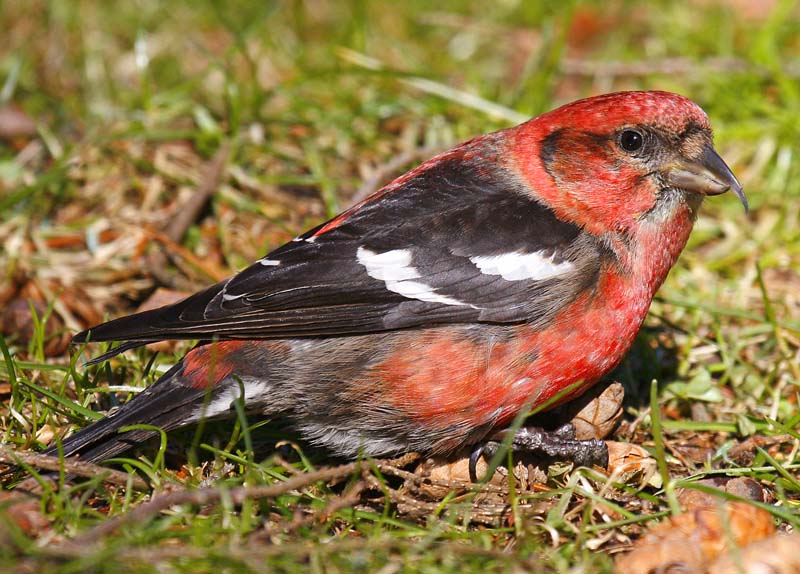
Wikipedia: White-winged crossbill Source: WIKIPEDIA
Whitewingedcrossbillmale09.jpg
🔍
Never observed (yet!)
Description
Geography: This bird appears across the great seas in the following continents: Europe, North America.General:
The two-barred crossbill or white-winged crossbill (Loxia leucoptera) is a small passerine bird in the finch family Fringillidae.
[more]
Other Details
Physical details
Physical details: length=15 cm, wingspan=26-29 cm, weight=25-38 gDetails
Profile Wikipedia Audubon AllAboutBirds Xeno-Canto NABU YouTube

Wikipedia: Pine grosbeak Source: WIKIPEDIA
1200px-Pine_Grosbeak_%28Pinicola_enucleator%29_%2813667564073%29.jpg
🔍
Never observed (yet!)
Description
Geography: This bird appears across the great seas in the following continents: Europe, North America.General:
The pine grosbeak (Pinicola enucleator) (this scientific name roughly translates to "the bird that lives in the pines and shells the seeds") is a large member of the true finch family, Fringillidae. It is the only species in the genus Pinicola. It is found in coniferous woods across Alaska, the western mountains of the United States, Canada, and in subarctic Fennoscandia and across the Palearctic to Siberia. The species is a frugivore, especially in winter, favoring small fruits, such as rowans (mountain-ashes in the New World). With fruit-crop abundance varying from year to year, pine grosbeak is one of many subarctic-resident bird species that exhibit irruptive behavior. In irruption years, individuals can move long distances in search of suitable food supplies, bringing them farther south and/or downslope than is typical of years with large fruit crops.
[more]
Other Details
Physical details
Physical details: length=18 cm, wingspan=30-35 cm, weight=47-64 gDetails

Wikipedia: Grey-crowned rosy-finch Source: WIKIPEDIA
Gray-Crowned_Rosy-Finch.jpg
🔍
Never observed (yet!)
Description
Geography: This bird appears across the great seas in the following continents: Europe, North America.General:
The gray-crowned rosy finch, or gray-crowned rosy-finch, (Leucosticte tephrocotis) is a species of passerine bird in the family Fringillidae native to Alaska, western Canada, and the north-western United States. Due to its remote and rocky alpine habitat it is rarely seen. There are currently six recognized subspecies. It is one of four species of rosy finches.
[more]
Details
Profile Wikipedia Vogelwarte BirdLife ZH ornitho.ch Audubon AllAboutBirds Xeno-Canto BirdID NABU YouTube

Wikipedia: Lapland longspur Source: WIKIPEDIA
Lapland_Longspur_-_Calcarius_lapponicus_-_Sportittlingur_1.jpg
🔍
Never observed (yet!)
Description
Geography: This bird appears across the great seas in the following continents: Europe, North America, Asia.General: Deutschland: Zugvogel, Wintergast
Seasonal behavior
Presence: 03-23 - 11-06 Migration in: 03-23 - 05-01 Migration out: 09-28 - 11-06More details at Vogelwarte.ch
Other Details
Physical details
Physical details: length=15-16 cm, wingspan=25-28 cm, weight=20-28 gDetails
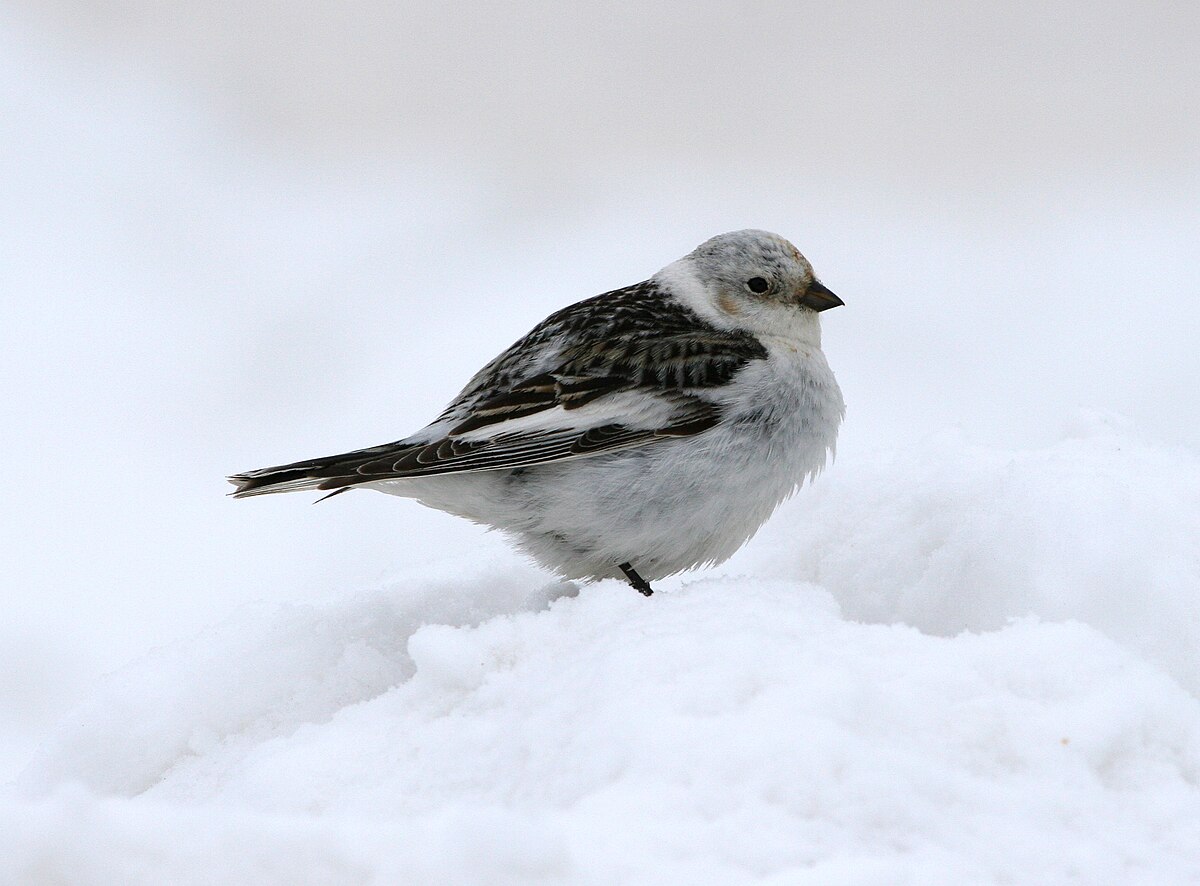
Wikipedia: Snow bunting Source: WIKIPEDIA
1200px-Plectrophenax_nivalis1.jpg
🔍
Never observed (yet!)
Description
Geography: This bird appears across the great seas in the following continents: Europe, North America.General: Deutschland: Wintergast
Seasonal behavior
Seldom seen here Presence: 02-01 - 12-16 Migration in: 11-26 - 12-16 Migration out: 11-26 - 12-03More details at Vogelwarte.ch
Other Details
Physical details
Physical details: length=16-17 cm, wingspan=32-38 cm, weight=28-50 gDetails
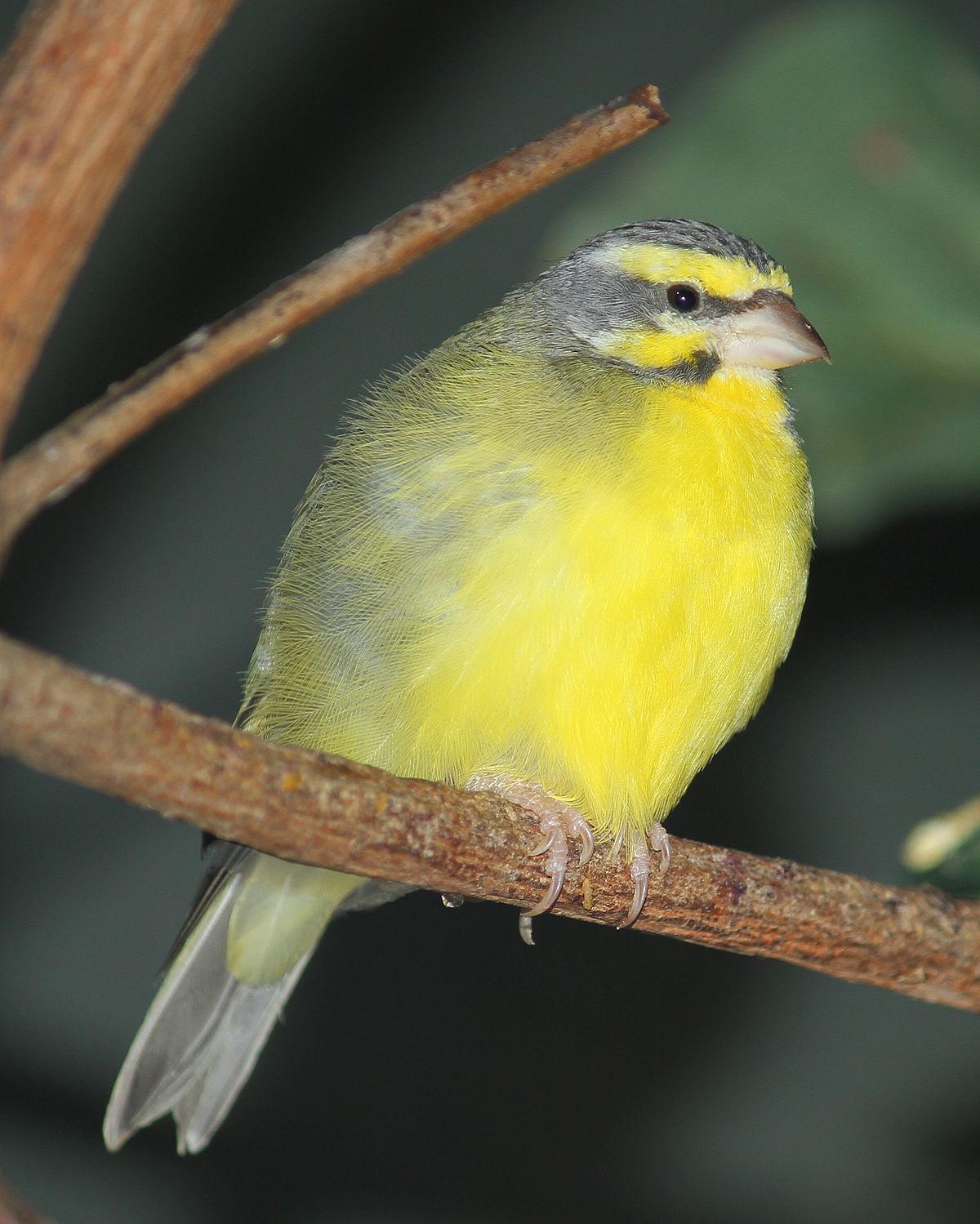
Wikipedia: Yellow-fronted canary Source: WIKIPEDIA
1200px-Serinus_masambicus_25.jpg
🔍
Never observed (yet!)
Description
Geography: This bird appears across the great seas in the following continents: North America, Africa.General:
The yellow-fronted canary (Crithagra mozambica), also called the yellow-eyed canary, is a small passerine bird in the finch family. It is known elsewhere and in aviculture as the green singing finch.
[more]
Details

Olive-backed pipit. 2024-01-29 11:44:04 Laos
First observed in Laos on 2024-01-29.
Description
Geography: This bird appears across the great seas in the following continents: North America, Africa, Asia.General: Winter visitor
Other Details
Physical details
Physical details: length=14 cm, wingspan=24-27 cm, weight=17-25 gVocalisation
Song: No details but a Xeno-Canto recording. Song:Song similar to Tree Pipit, but tempo more even and with a timbre resembling Dunnock. [Link]
Song attributes:
Frequency:
♫ Source: XENOCANTO XC832521 - Olive-backed Pipit - Anthus hodgsoni - song, Ulaanbaatar, Mongolia.mp3 (song)

Details
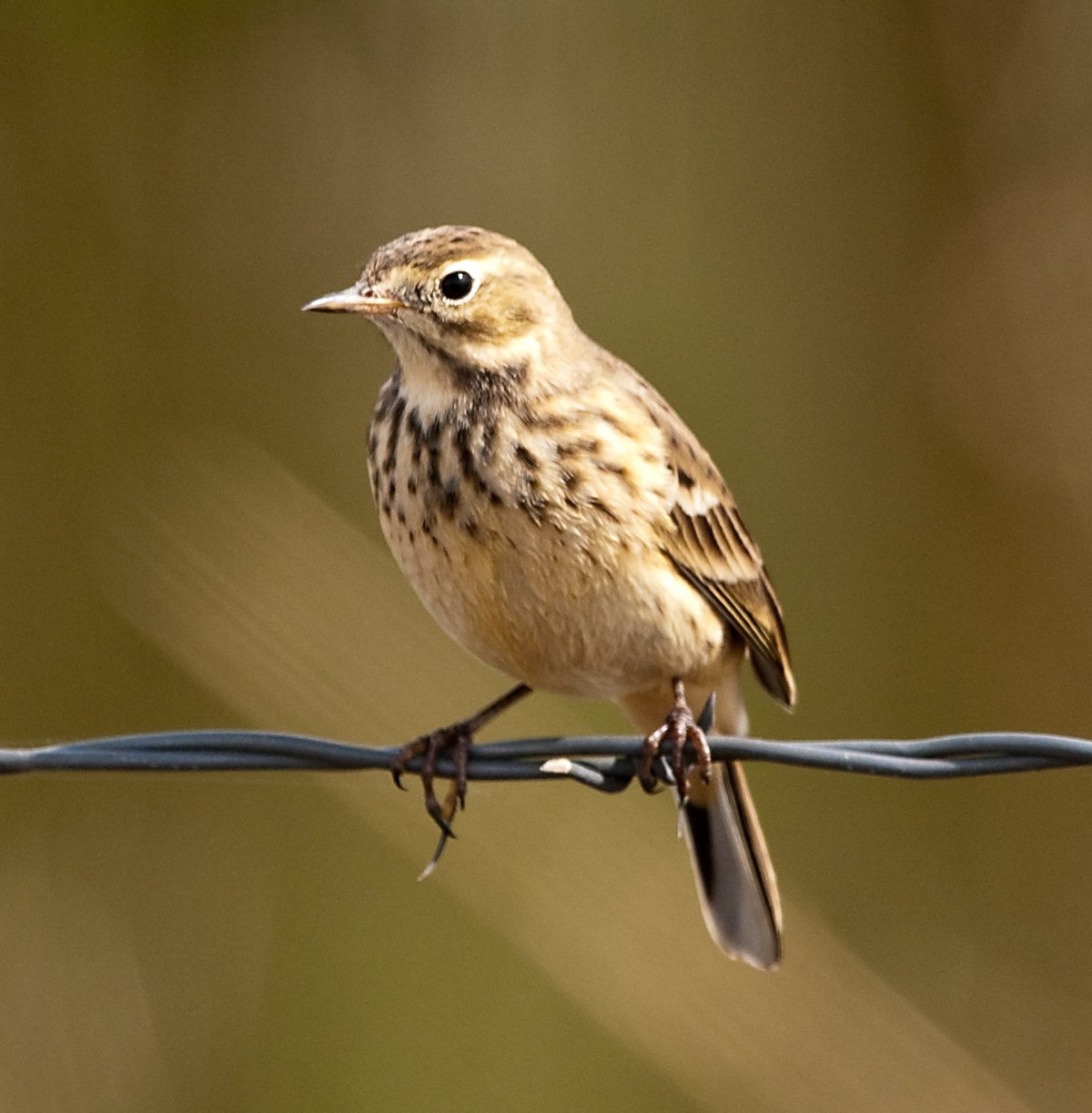
Wikipedia: American pipit Source: WIKIPEDIA
1200px-Anthus_rubescens_-Harney_County%2C_Oregon%2C_USA-8.jpg
🔍
Never observed (yet!)
Description
Geography: This bird appears across the great seas in the following continents: North America, Asia.General: Accidental
Details

Wikipedia: Red-throated pipit Source: WIKIPEDIA
1200px-Red-throated_Pipit.jpg
🔍
Never observed (yet!)
Description
Geography: This bird appears across the great seas in the following continents: Europe, North America, Africa, Asia.General: Deutschland: Zugvogel
Seasonal behavior
Seldom seen here Presence: 04-11 - 10-27 Migration in: 10-18 - 10-25 Migration out: 04-20 - 05-10More details at Vogelwarte.ch
Other Details
Physical details
Physical details: length=15 cm, wingspan=25-27 cm, weight=17-24 gDetails
Profile Wikipedia Vogelwarte BirdLife ZH ornitho.ch bird-song.ch Audubon AllAboutBirds Xeno-Canto BirdID NABU YouTube

Bachstelze. 2024-05-16 11:54:46 Kaltbrunner-Riet
First observed in Iceland on 2015-06-05.
Description
Geography: This bird appears across the great seas in the following continents: Europe, North America, Africa, Asia.General:
The white wagtail (Motacilla alba) is a small passerine bird in the family Motacillidae, which also includes pipits and longclaws. The species breeds in much of Europe and the Asian Palearctic and parts of North Africa. It has a toehold in Alaska as a scarce breeder. It is resident in the mildest parts of its range, but otherwise migrates to Africa. In Ireland and Great Britain, the darker subspecies, the pied wagtail or water wagtail[2] (M. a. yarrellii) predominates. In total, there are between 9 and 11 subspecies.
[more]
Deutschland: Brut-, Zugvogel
Seasonal behavior
Other Details
Physical details
Physical details: length=18 cm, wingspan=25-30 cm, weight=17-25 gHabitats: Settlement Interesting behavior: Wags its tail when calling.
Vocalisation
Song: General: Usually just calls. This song is just a few chirpy slurs, sometimes rising-rising-falling.Song:
Zirpt wie ein Sperling aber weniger Noten. Lh lh lh [Link]
Song: Song either slow and primitive, consisting of sharp falling notes given by perched birds, or longer fast and energic bursts in excited song-flight. [Link]
Song attributes:
Mnemnoic: Plaetschert wie ein Bach Melody: stereotype melodic, slow, Frequency: 2-7 KHz
♫ Source: XENOCANTO XC694995 - White Wagtail - Motacilla alba - song recorded in Spain.mp3 Spain (song)

Calls:
Contact calls short and sharp. Usually with disyllabic, "bouncing" quality, and with each syllable only accented, not clearly separated from the other (see Grey Wagtail). [Link]
bird-song.ch: zweisilbig «zilipp» oder einsilbig «zipp»
XC644775 - White Wagtail - Motacilla alba alba - call, recorded in Estonia.
♫ Source: XENOCANTO XC644775 - White Wagtail - Motacilla alba alba - call, recorded in Estonia.mp3 (call)

Call attributes: Call melody: one note, slow, Frequency: 3-7 KHz,
Details

Wikipedia: Eastern yellow wagtail Source: WIKIPEDIA
1200px-Motacilla_tschutschensis%2C_Tomohon%2C_North_Sulawesi.jpg
🔍
Never observed (yet!)
Description
Geography: This bird appears across the great seas in the following continents: Europe, North America, Asia.Details
Profile Wikipedia Audubon AllAboutBirds Xeno-Canto YouTube
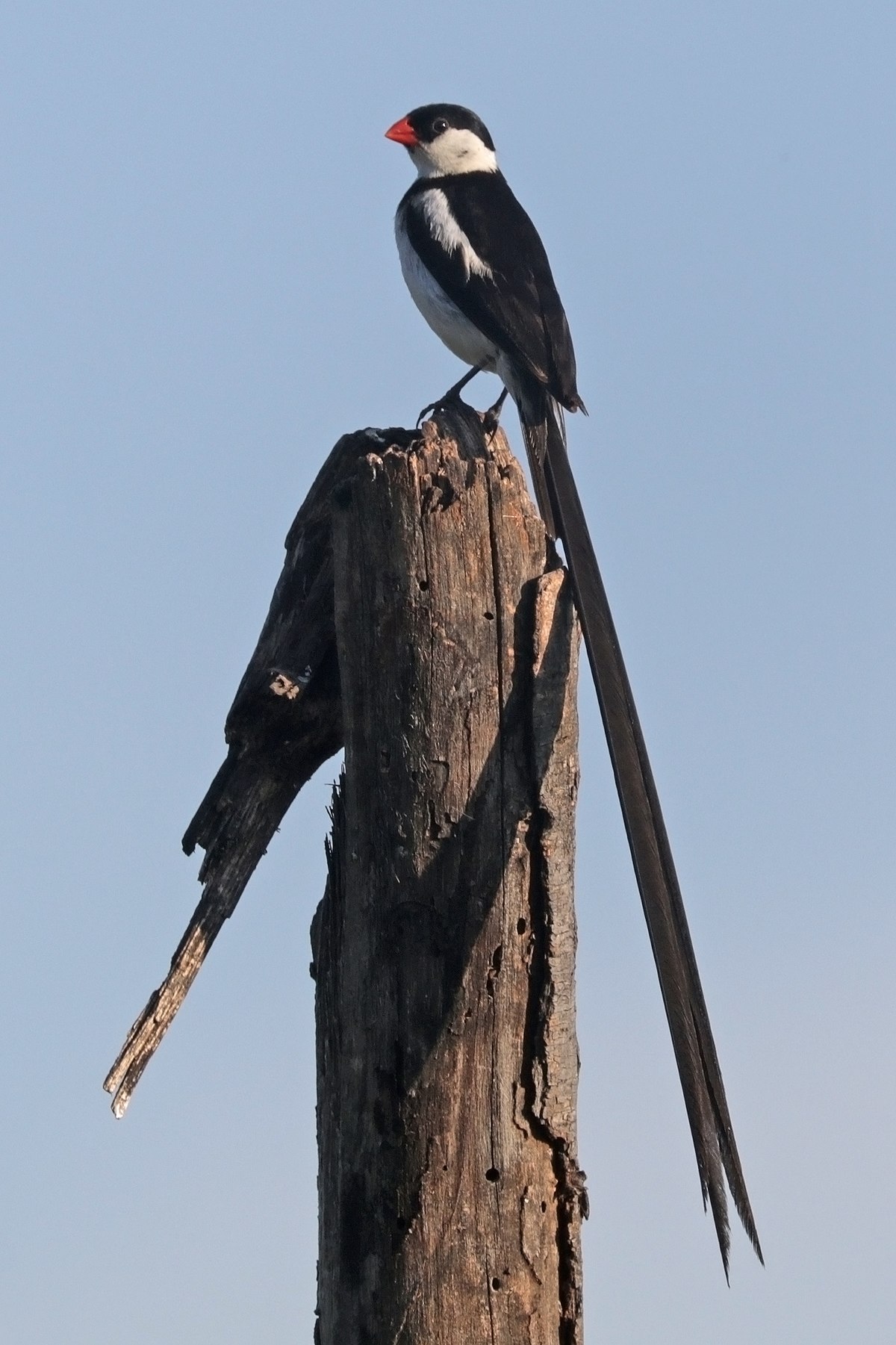
Wikipedia: Pin-tailed whydah Source: WIKIPEDIA
1200px-Pin-tailed_whydah_%28Vidua_macroura%29_breeding_male.jpg
🔍
Never observed (yet!)
Description
Geography: This bird appears across the great seas in the following continents: North America, Africa.General:
The pin-tailed whydah (Vidua macroura) is a small songbird with a conspicuous pennant-like tail in breeding males. It is a resident breeding bird in most of Africa south of the Sahara Desert.
[more]
Details

Wikipedia: African silverbill Source: WIKIPEDIA
1200px-African_Silverbill.jpg
🔍
Never observed (yet!)
Description
Geography: This bird appears across the great seas in the following continents: North America, Africa.General:
The African silverbill (Euodice cantans) is a small passerine bird formerly considered conspecific with the Asian species Indian silverbill, (Euodice malabarica). This estrildid finch is a common resident breeding bird in dry savanna habitat, south of the Sahara Desert. This species has also been introduced to other countries such as Portugal, Qatar and United States.
[more]
Details
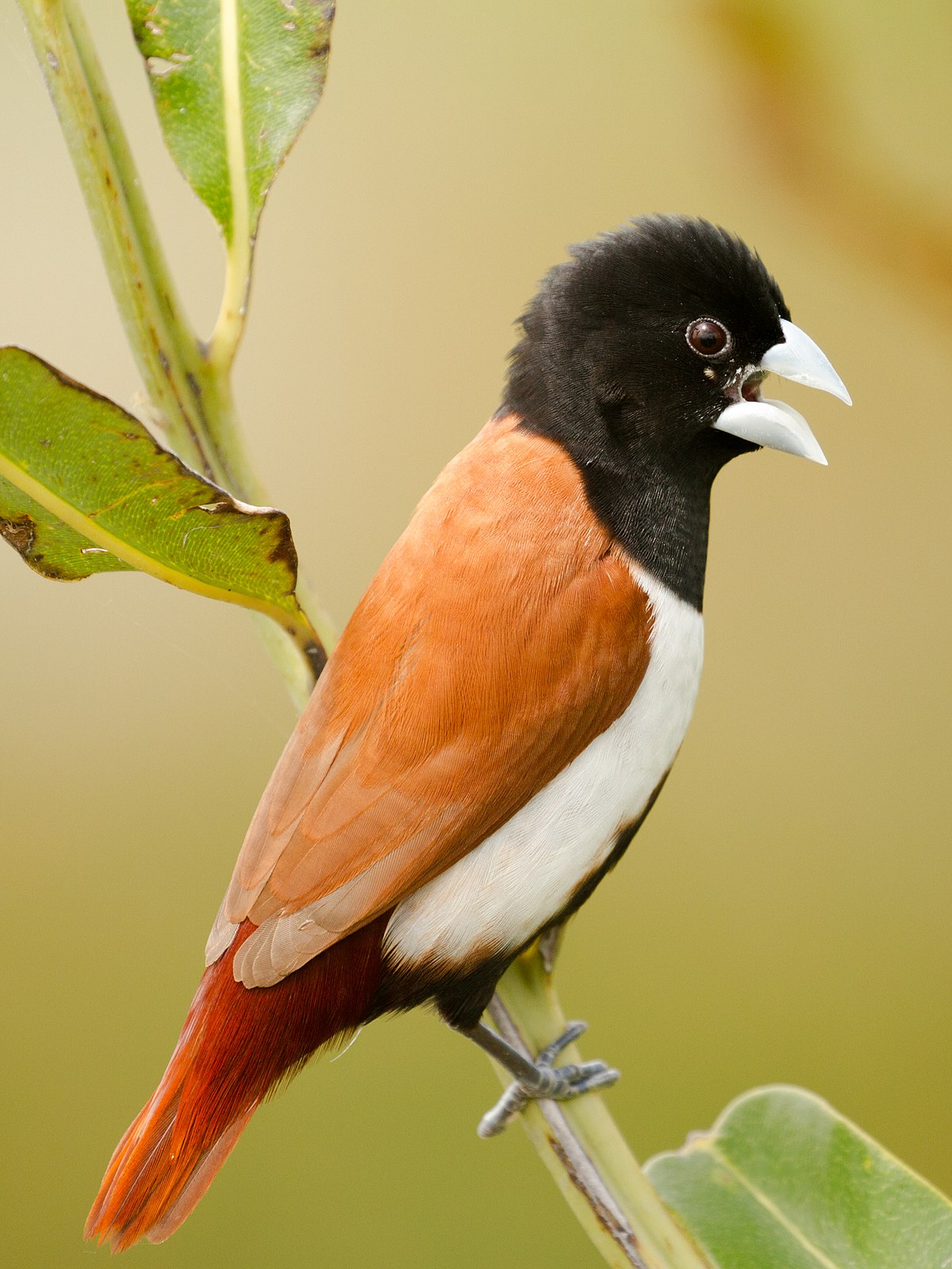
Wikipedia: Tricolored munia Source: WIKIPEDIA
1200px-Tricoloured_munia_%28cropped%29.jpg
🔍
Never observed (yet!)
Description
Geography: This bird appears across the great seas in the following continents: Europe, North America, South America, Asia.General:
The tricoloured munia (Lonchura malacca) is an estrildid finch, native to Bangladesh,[2] India, Sri Lanka, Pakistan, and southern China. The species has also introduced to the Caribbean, in Trinidad, Jamaica, Hispaniola, Puerto Rico, Cuba, and Venezuela. This species, like the chestnut munia has been known as the black-headed munia. Immature birds have pale brown upperparts, lack the dark head found in adults, and have uniform buff underparts that can be confused with immatures of other munias such as the scaly-breasted munia.
[more]
Details
Profile Wikipedia Audubon AllAboutBirds Xeno-Canto NABU YouTube

Scaly breasted munia, Vientiane. 2024-02-18 06:54:12 Laos
First observed in Laos on 2024-02-18.
Description
Geography: This bird appears across the great seas in the following continents: Europe, North America, Asia.General:
The scaly-breasted munia or spotted munia (Lonchura punctulata), known in the pet trade as nutmeg mannikin or spice finch, is a sparrow-sized estrildid finch native to tropical Asia. A species of the genus Lonchura, it was formally described and named by Carl Linnaeus in 1758. Its name is based on the distinct scale-like feather markings on the breast and belly. The adult is brown above and has a dark conical bill. The species has 11 subspecies across their range and differ slightly in size and color.
[more]
Vocalisation
Song: No details but a Xeno-Canto recording. Song attributes: Frequency:♫ Source: XENOCANTO XC797137 - Scaly-breasted Munia - Lonchura punctulata topela - song, Pha Chang Park, Wiang Chai District, Chiang Rai, Thailand.mp3 Thailand (song)

Details
Profile Wikipedia Audubon AllAboutBirds Xeno-Canto NABU YouTube
Wikipedia: Chestnut munia Source: WIKIPEDIA
Lonchura_atricapilla_jagori_-Cebu-8-3c.jpg
🔍
Never observed (yet!)
Description
Geography: This bird appears across the great seas in the following continents: Europe, North America, Asia.General: introduced
Details
Profile Wikipedia Audubon AllAboutBirds Xeno-Canto YouTube

Wikipedia: Bronze mannikin Source: WIKIPEDIA
1200px-Bronze_Mannikin_%288568589949%29%2C_crop.jpg
🔍
Never observed (yet!)
Description
Geography: This bird appears across the great seas in the following continents: North America, Africa.General:
The bronze mannikin or bronze munia (Spermestes cucullata) is a small passerine (i.e. perching) bird of the Afrotropics. This very social estrildid finch is an uncommon to locally abundant bird in much of Africa south of the Sahara Desert, where it is resident, nomadic or irruptive in mesic savanna or forest margin habitats.[5][6] It has an estimated global extent of occurrence of 8,100,000 km2. It is the smallest and most widespread of four munia species on the African mainland, the other being black-and-white, red-backed and magpie mannikin. It co-occurs with the Madagascan mannikin on the Comoro Islands, and was introduced to Puerto Rico. Especially in the West Africa, it is considered a pest in grain and rice fields. It is locally trapped for the pet bird trade.[4]
[more]
Details

Wikipedia: Red avadavat Source: WIKIPEDIA
A_pair_of_Red_avadavat_%28Amandava_amandava%29_Photograph_by_Shantanu_Kuveskar.jpg
🔍
Never observed (yet!)
Description
Geography: This bird appears across the great seas in the following continents: Europe, North America, Africa, Asia.General:
The red avadavat (Amandava amandava), red munia or strawberry finch, is a sparrow-sized bird of the family Estrildidae. It is found in the open fields and grasslands of tropical Asia and is popular as a cage bird due to the colourful plumage of the males in their breeding season. It breeds in the Indian Subcontinent in the monsoon season. The species name of amandava and the common name of avadavat are derived from the city of Ahmedabad in Gujarat, India, from where these birds were exported into the pet trade in former times.[2][3]
[more]
Details
Profile Wikipedia Audubon AllAboutBirds Xeno-Canto BirdID NABU YouTube

Wikipedia: Common waxbill Source: WIKIPEDIA
1200px-Estrilda_astrild_-Gran_Canaria%2C_Canary_Islands%2C_Spain-8_%281%29.jpg
🔍
Never observed (yet!)
Description
Geography: This bird appears across the great seas in the following continents: Europe, North America, Africa.General:
The common waxbill (Estrilda astrild), also known as the St Helena waxbill, is a small passerine bird belonging to the estrildid finch family. It is native to sub-Saharan Africa but has been introduced to many other regions of the world and now has an estimated global extent of occurrence of 10,000,000 km2. It is popular and easy to keep in captivity.
[more]
Details
Profile Wikipedia Audubon AllAboutBirds Xeno-Canto BirdID NABU YouTube

Wikipedia: Yellow-crowned bishop Source: WIKIPEDIA
Euplectes_afer_-Lake_Baringo%2C_Kenya_-male-8_CROP.jpg
🔍
Never observed (yet!)
Description
Geography: This bird appears across the great seas in the following continents: Europe, North America, Africa.General:
The yellow-crowned bishop (Euplectes afer) is a species of passerine bird in the family Ploceidae native to Africa south of the Sahara.[2] It is highly sexually dimorphic in its breeding season, during which the male adopts a distinctive yellow and black plumage, contrasting with the female's predominantly brown coloration. Three subspecies are recognised.
[more]
Details

Wikipedia: Orange bishop Source: WIKIPEDIA
1200px-Euplectes_orix_5_Luc_Viatour.jpg
🔍
Never observed (yet!)
Description
Geography: This bird appears across the great seas in the following continents: North America, Africa.General:
The northern red bishop or orange bishop (Euplectes franciscanus) is a small passerine bird in the family Ploceidae. It is part of the largest genus in the family with over 60 different species.[2] Its sister species is the Southern red bishop (Euplectes orix). This species is most recognizable by the bright reddish orange with contrasting black plumage displayed by the breeding male. It is most common throughout the northern African continent but has also been introduced to areas in the western hemisphere.
[more]
Details
Black-capped chickadee / Schwarzkopfmeise (Poecile atricapillus)
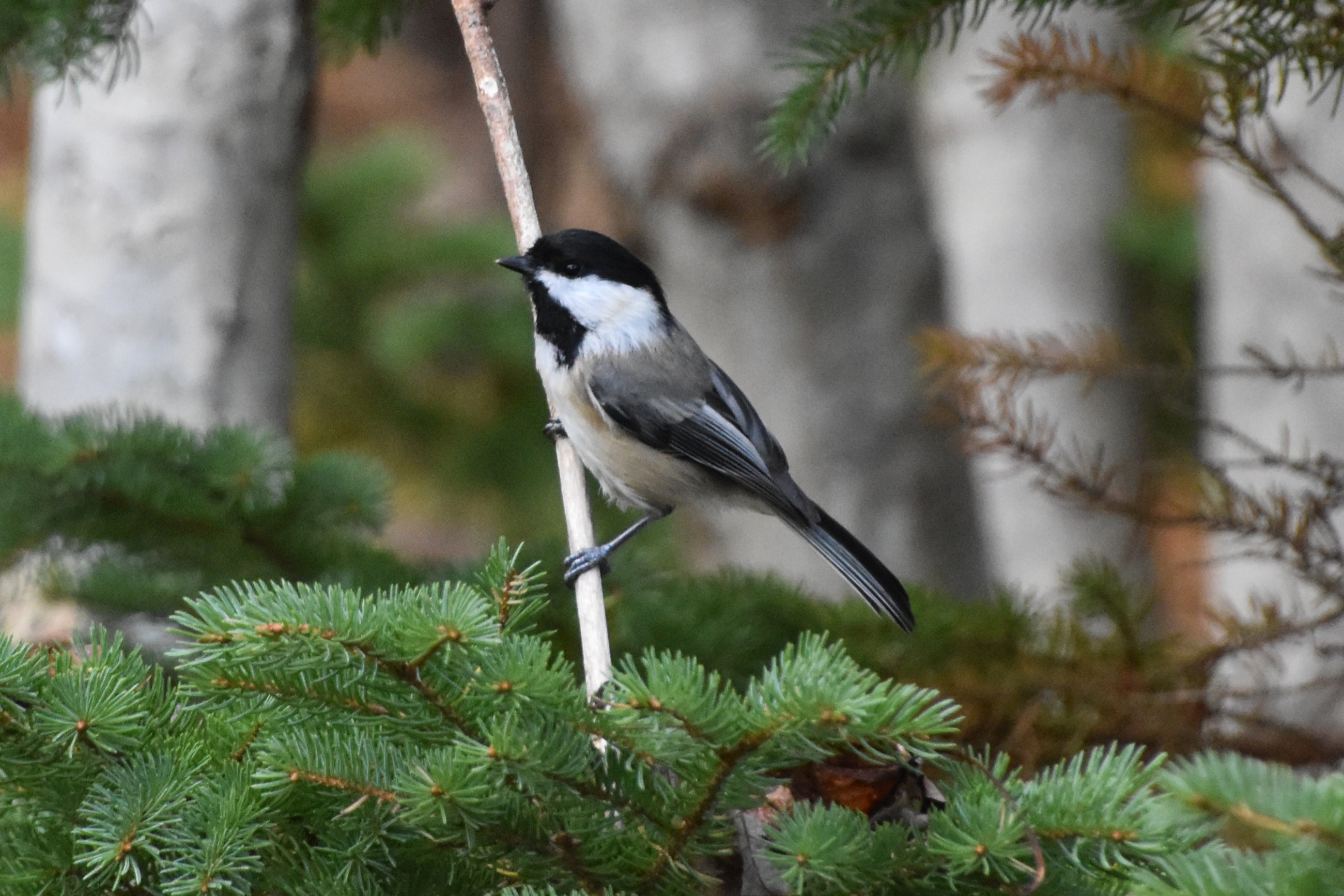
Black-capped chickadee. 2023-10-13 14:45:40 New England
First observed in New England on 2023-10-13.
Description
Geography: This bird appears across the great seas in the following continents: Europe, North America.General: I was surprised to see that the chickadees I saw in Maryland are not the same ones as in New England: Carolina and black-capped.Wikipedia says they 'most likely diverged about 2.5 million years ago'!
Details
Siberian tit / Lapplandmeise (Poecile cinctus)
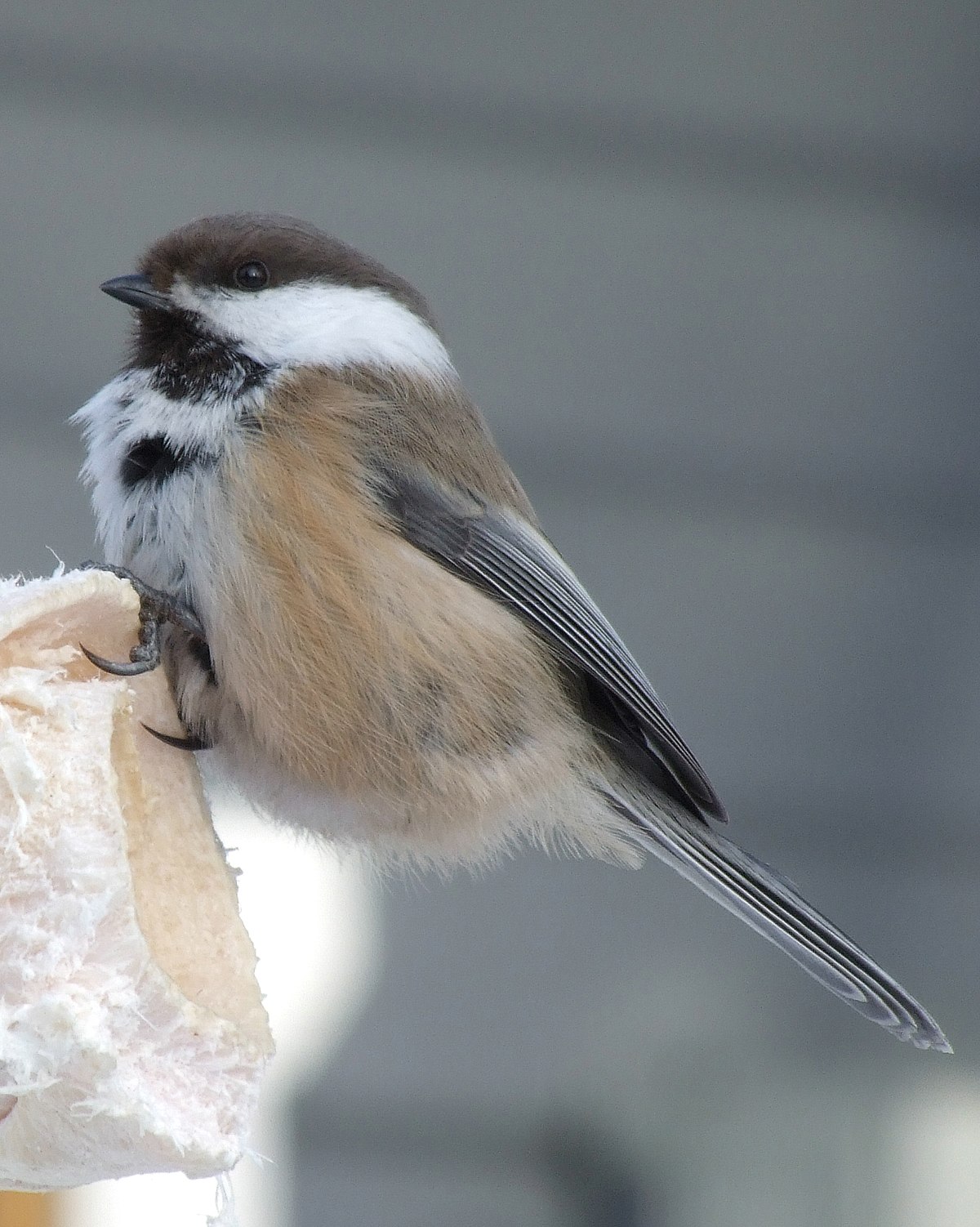
Wikipedia: Siberian tit Source: WIKIPEDIA
1200px-Siberian_Tit_Parus_Cinctus_2006_03_07.JPG
🔍
Never observed (yet!)
Description
Geography: This bird appears across the great seas in the following continents: Europe, North America.General:
The grey-headed chickadee or Siberian tit (Poecile cinctus, formerly Parus cinctus) is a passerine bird in the tit family Paridae. It is a widespread resident breeder throughout subarctic Scandinavia and the northern Palearctic, and also into North America in Alaska and the far northwest of Canada. It is a conifer specialist. It is resident, and most birds do not migrate. Curiously (with respect to its name), the bird has no grey on its head, which is black, white, and brown.
[more]
Vocalization:
Voice quite similar to Willow Tit. Other sounds: Chirping, bubbling sounds resembling Willow Tit, various other high pitched sounds. [Link]
Other Details
Physical details
Physical details: length=13 cm, wingspan=19-21 cm, weight=11-14 gDetails
Common starling / Star (Sturnus vulgaris)

Junger Star sitzt auf einem Highland Cattle bei Speck, Fehraltorf. 2022-08-17 14:44:56 Fehraltorf
First observed in 🇨🇭 on 2020-04-11.
Description
Geography: This bird appears across the great seas in the following continents: Europe, North America (introduced), Africa, Asia.General: Learned on BBC's Winterwatch: the movement of a swarm of starlings is called a murmuration! Check out this this video or even an entire half hour
General: In trees or in the fields by the cows.
General: Deutschland: Brut-, Jahres-, Zugvogel RL 3[8]
Personal notes: Frequently seen here, for instance by their nests under the eaves of one of the Toblerone houses. Introduced to North America from Europe by Eugene Schieffelin.
Vocalization: Eine der Vogelarten, die gleichzeitig zwei Töne singen kann!
Vocalization:
Among the best of imitators. Mimics birds, animals and mechanical noises. Often makes several sounds at the same time. [Link]
Seasonal behavior
Year-round bird Breeding: 04-01 - 07-20 Migration in: 01-21 - 04-11 Migration out: 09-07 - 11-26More details at Vogelwarte.ch
Other Details
Physical details
Physical details: length=21 cm, wingspan=37-42 cm, weight=60-90 gHabitats: Agricultural
Vocalisation
Song: I find their individual song amusing, with its (long) whoops and weird noises. As a group, they're just noisy! Song:Song a highly varied mix of falling whistles, bill-clappering and various masterful mimicry. [Link]
Song attributes:
Melody: improvised melodic, slow, Frequency: medium (1-5 KHz) Special sounds: whoop, mimicry, weird Singing season: 01-01 - 09-30 Dawn chorus start: 15 minutes before dawn.
Calls:
Other calls; a harsh "chaee" and a short sharp "tink". [Link]
I hear this occasionally and really enjoy it - a long rising 'whoop', as I call it', starting low at 1 1/2 KHz and rising to 6 1/2 KHz!
Birdnet 1968 - European Starling long whoop call - 2021-08-23 17-26-09 - European Starling - Fehraltorf.
♫ 2021-08-23 17:26:09 Source: BirdNet 20210823_172609 birdnet 1968 - European Starling long whoop call - 2021-08-23 17-26-09 - European Starling - Fehraltorf.mp3 Fehraltorf (call)
Call attributes: Call melody: one note, slow, Frequency: 1-6 KHz, Special sounds: whoop.
Details
Common myna / Maina (Acridotheres tristis)

First common myna seen on trip to SE Asia, in Wat Pho, Bangkok. 2024-01-19 17:00:32 Asia
First observed in Asia on 2024-01-19.
Description
Geography: This bird appears across the great seas in the following continents: North America, Africa, Asia.General: introduced
Vocalisation
Song: No details but a Xeno-Canto recording. Song attributes: Frequency:♫ Source: XENOCANTO XC729094 - Common Myna - Acridotheres tristis tristis.mp3 (song)

Details
Jungle myna / Dschungelmaina (Acridotheres fuscus)

Wikipedia: Jungle myna Source: WIKIPEDIA
Jungle_Myna_%28Acridotheres_fuscus%29_on_Kapok_%28Ceiba_pentandra%29_in_Kolkata_I_IMG_1340.jpg
🔍
Never observed (yet!)
Description
Geography: This bird appears across the great seas in the following continents: North America, Asia.General:
The jungle myna (Acridotheres fuscus) is a myna, a member of the starling family. It is found patchily distributed across much of the mainland of the Indian Subcontinent but absent in the arid zones of India. It is easily recognized by the tuft of feathers on its forehead that form a frontal crest, a feature also found in the closely related Javan myna and the pale-bellied myna which were treated as a subspecies in the past. The eyes are pale, yellow or blue depending on the population and the base of the orange-yellow bill is dark. It has also been introduced either intentionally or accidentally into many other parts of the world including Fiji, Taiwan, the Andaman Islands, and parts of Japan. The species has also spread out on its own to some islands in the Pacific.
[more]
Details
Island thrush / Südseedrossel (Turdus poliocephalus)
Profile Wikipedia eBird Audubon AllAboutBirds Xeno-Canto YouTube

Wikipedia: Island thrush Source: WIKIPEDIA
Island_Thrush.jpg
🔍
Never observed (yet!)
Description
Geography: This bird appears across the great seas in the following continents: North America, Australia.General: Christmas Island
Details
Eye-browed thrush / Weißbrauendrossel (Turdus obscurus)

Wikipedia: Eye-browed thrush Source: WIKIPEDIA
Eyebrowed_Thrush.jpg
🔍
Never observed (yet!)
Description
Geography: This bird appears across the great seas in the following continents: North America, Asia.General: Winter visitor
Details
White-rumped shama / Schamadrossel (Copsychus malabaricus)
Profile Wikipedia Audubon AllAboutBirds Xeno-Canto YouTube
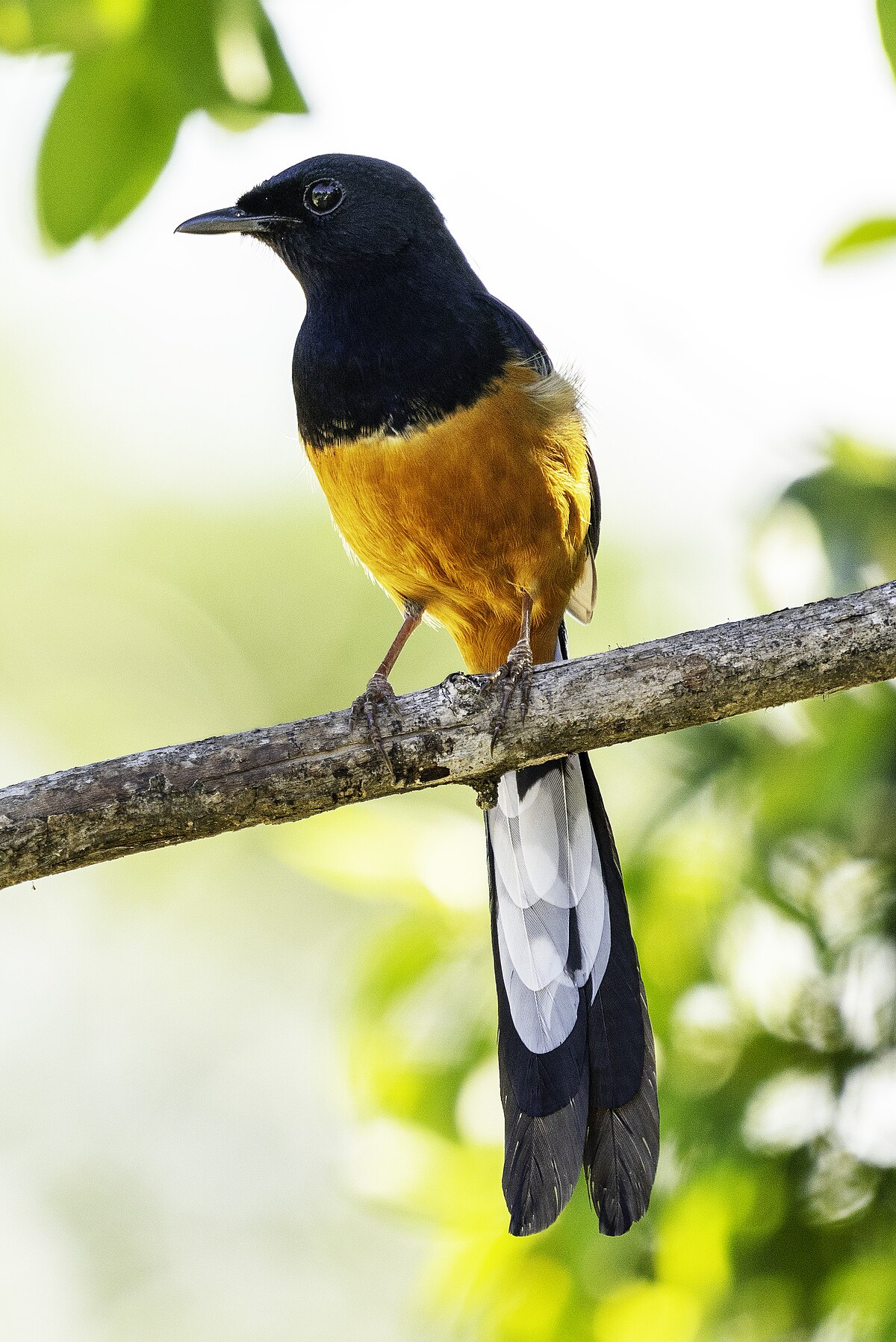
Wikipedia: White-rumped shama Source: WIKIPEDIA
1200px-White-rumped-shama-yala-sri-lanka-casey-klebba.jpg
🔍
Never observed (yet!)
Description
Geography: This bird appears across the great seas in the following continents: North America, Asia.General:
The white-rumped shama (Copsychus malabaricus) is a small passerine bird of the family Muscicapidae. Native to densely vegetated habitats in the Indian subcontinent and Southeast Asia, its popularity as a cage-bird and songster has led to it being introduced elsewhere.
[more]
Details
Northern wheatear / Steinschmätzer (Oenanthe oenanthe)
Profile Wikipedia Vogelwarte BirdLife ZH ornitho.ch Audubon AllAboutBirds Xeno-Canto NABU YouTube

Male northern wheatear, photo by Andreas Trepte - Own work, CC BY-SA 2.5 Source: WIKIPEDIA
Wikimedia Steinschmaetzer_Northern_wheatear_male.jpg
First observed in 🇨🇭 on 2021-07-29.
Description
Geography: This bird appears across the great seas in the following continents: Europe, North America, Africa, Asia.General: I thought after seeing these at over 2700 meters that they must be a typical mountain bird (and in the FOK Zurich materials they were in the mountain section), however Wikipedia explains that such a stony landscape is the key, whether that is high or not:
Geography:
The northern wheatear is a migratory insectivorous species breeding in open stony country in Europe and east across the Palearctic with footholds in northeastern Canada and Greenland as well as in northwestern Canada and Alaska. It nests in rock crevices and rabbit burrows. All birds spend most of their winter in Africa. ... Miniature tracking devices have recently shown that the northern wheatear has one of the longest migratory flights known - 30,000 km (18,640 miles), from sub-Saharan Africa to their Arctic breeding grounds.[15] [Link]Strangely the residence and migration maps differ greatly by source: in Wikipedia the northern wheatear spends winter in subsaharan Africa, while the authoratitive Kosmos-Vogelführer shows some in northern Africa like Morocco. Most other sources agree with Wikipedia and Sub-Saharan Africa.
General: Deutschland: Brut-, Zugvogel RL 1
Etymology: I thought the German name Steinschmätzer, presumably stone kisser (no one explains it, oddly enough) to be much more logical than the English northern wheatear. I was greatly amused to look it up and find it to be a 'folk etymology of "white" and "arse"' (Wikipedia).
Etymology:
The genus name Oenanthe is derived from the Greek oenos (οίνος) "wine" and anthos (ανθός) "flower". It refers to the northern wheatear's return to Greece in the spring just as the grapevines blossom. [Link]
Appearance and identification: It has an evil-looking black eye stripe like the shrike. (I liked Nici Baiker's description of it in the FOK field ornithology course as 'Zorro look'.) I saw one flying on Muottas Muragl and thought the striking gray oval surrounded by dark feathers has to be typical and seems unique to the northern wheatear.
Geography: In den FOK Unterlagen werden die Zugrouten von Alaska und von nordosten Kanada gezeigt, die beide für Winter nach Afrika ziehen. Die aus Alaska fliegen über Asien unglaubliche 15000 Kilometer! Die in Kanada haben es auch nicht leicht, da sie zuerst über den Atlantik nach Spanien fliegen!
Behavior:
 Herbert Steffny schreibt auch jetzt Anfang Mai wo die Neuntöter aus Afrika zureuckgekehrt sind, muss man nicht früh aufstehen um sie zu beobachten, weil sie selber warten bis es warm genug ist für die (leckeren) Insekten aktiv zu werden! [Link]
Vocalization:
Each phrase is often introduced by the "weet" sound, then followed by hastened, creaking, rattling and warbling sounds of 1-2 seconds duration. [Link]
Seasonal behavior
Presence: 03-23 - 10-27 Breeding: 05-10 - 08-09 Migration in: 03-23 - 05-31 Migration out: 08-09 - 10-27More details at Vogelwarte.ch
Other Details
Physical details
Physical details: length=14-15 cm, wingspan=26-32 cm, weight=18-29 gHabitats: Mountain
Similar species
Looks similar to: Red-backed shrike.Vocalisation
Song:The Wheatear song consists of short phrases with marked pauses. Each phrase is often introduced by the "weet" sound, then followed by hastened, creaking, rattling and warbling sounds of 1-2 seconds duration. The "check" sound is also often included in the song. [Link]
General: I thought after seeing these at over 2700 meters that they must be a typical mountain bird (and in the FOK Zurich materials they were in the mountain section), however Wikipedia explains that such a stony landscape is the key, whether that is high or not: Geography:
The northern wheatear is a migratory insectivorous species breeding in open stony country in Europe and east across the Palearctic with footholds in northeastern Canada and Greenland as well as in northwestern Canada and Alaska. It nests in rock crevices and rabbit burrows. All birds spend most of their winter in Africa. ... Miniature tracking devices have recently shown that the northern wheatear has one of the longest migratory flights known - 30,000 km (18,640 miles), from sub-Saharan Africa to their Arctic breeding grounds.[15] [Link]Strangely the residence and migration maps differ greatly by source: in Wikipedia the northern wheatear spends winter in subsaharan Africa, while the authoratitive Kosmos-Vogelführer shows some in northern Africa like Morocco. Most other sources agree with Wikipedia and Sub-Saharan Africa.
Song:
Kurze, wechselvolle Strophe mit vielen unreinen Tönen. Meist von erhöhter Warte aus oder in kurzem Singflug vorgetragen.
[Link]
The Wheatear song consists of short phrases with marked pauses. The "check" sound is also often included in the song. [Link]
Song attributes:
Melody: improvised melodic, fast, Frequency: 2-6 KHz Special sounds: rasp, rattle
♫ Source: XENOCANTO XC730221 - Northern Wheatear - Oenanthe oenanthe - song recorded in France, just 2-3 notes, then long pause.mp3 (song)

♫ Source: XENOCANTO XC764932 - Northern Wheatear - Oenanthe oenanthe - song recorded in Sweden with lots of whoops and swoops, about 2 seconds long, then 3-4 seconds pause.mp3 (song)

♫ Source: XENOCANTO XC319898 - Northern Wheatear - Oenanthe oenanthe - song recorded in Scotland and includes creaking or rattling mentioned at Nord U BirdID.mp3 Scotland (song)

♫ Source: XENOCANTO XC769228 - Northern Wheatear - Oenanthe oenanthe - song recorded in the Netherlands.mp3 (song)

Details
Siberian rubythroat / Rubinkehlchen (Calliope calliope)

Siberian rubythroat, near the Mekong in Vientiane. 2024-02-18 07:33:56 Laos
First observed in Laos on 2024-02-18.
Description
Geography: This bird appears across the great seas in the following continents: North America, Asia.General: Winter visitor
Vocalisation
Song: No details but a Xeno-Canto recording. Song attributes: Frequency:♫ Source: XENOCANTO XC843510 - Siberian Rubythroat - Calliope calliope - song, Vientiane Prefecture, Laos.mp3 Laos (song)

Details
Profile Wikipedia Audubon AllAboutBirds Xeno-Canto NABU YouTube
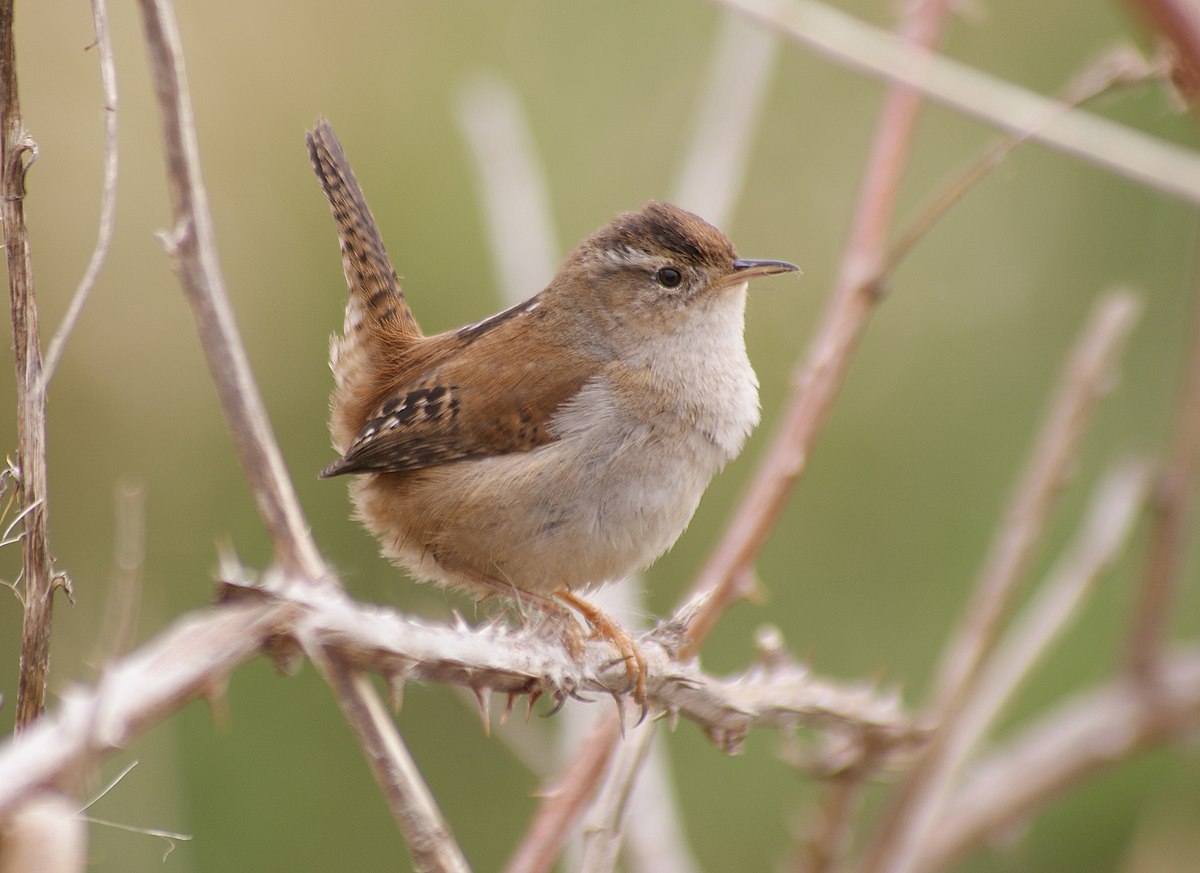
Wikipedia: Marsh wren Source: WIKIPEDIA
1200px-Cistothorus_palustris_-Reifel_Island%2C_Vancouver-8.jpg
🔍
Never observed (yet!)
Description
Geography: This bird appears across the great seas in the following continents: Europe, North America.General:
The marsh wren (Cistothorus palustris) is a small North American songbird of the wren family. It is sometimes called the long-billed marsh wren to distinguish it from the sedge wren, also known as the short-billed marsh wren.
[more]
Details

EIn Kolkrabe wollte anscheinend etwas zum Fressen von uns. 2024-09-14 12:18:14 Fanel/Chablais de Cudrefin und La Sauge
First observed in 🇨🇭 on 2021-03-10.
Description
Geography: This bird appears across the great seas in the following continents: Europe, North America, Africa.General: The raven is often mentioned in word puzzles as the largest songbird.
General: Deutschland: Brut-, Jahresvogel
Good to know: A flock of ravens may be called an unkindness [Literary names of groups and flocks]
Etymology:
Kolk, die erste Silbe seines seit dem 16. Jahrhundert bezeugten deutschen Namens, ist vermutlich lautmalerischen Ursprungs, ahmt also den Ruf des Vogels nach. [Link]
Jahrhundert bezeugten deutschen Namens, ist vermutlich lautmalerischen Ursprungs, ahmt also den Ruf des Vogels nach. [Link]
Appearance and identification:
It is one of the two largest corvids, alongside the thick-billed raven, and is possibly the heaviest passerine bird [Link]
Ravens are larger, the size of a Red-tailed Hawk [in Switzerland a red kite, similar 'length' but only 2/3 of the huge kite wingspan]. Ravens often travel in pairs, while crows are seen in larger groups. Also, watch the bird’s tail as it flies overhead. The crow’s tail feathers are basically the same length, so when the bird spreads its tail, it opens like a fan. Ravens, however, have longer middle feathers in their tails, so their tail appears wedge-shaped when open.
Listen closely to the birds’ calls. Crows give a cawing sound. But ravens produce a lower croaking sound.
[How to Tell a Raven From a Crow]
Vocalization:
Quite varied repertoire. Most heard sound a short, coarse, but resonant "korrk. Other sounds may be surprisingly resonant and pure, like a ringing "clong" etc. Shows even more variation when courting. [Link]
Seasonal behavior
Year-round bird Breeding: 02-20 - 06-09More details at Vogelwarte.ch
Other Details
Physical details
Physical details: length=64 cm, wingspan=120-150 cm, weight=800-1560 gHabitats: Mountain
Vocalisation
Song: No details but a Xeno-Canto recording. Song attributes: Frequency:♫ 2025-10-14 15:41:00 Switzerland (song)
Graak!
XC779842 - Northern Raven - Corvus corax corax - call recorded in Sweden.
♫ Source: XENOCANTO XC779842 - Northern Raven - Corvus corax corax - call recorded in Sweden.mp3 (call)

Call attributes: Call melody: non-musical, slow, Frequency: low (1-3 KHz), Special sounds: cawing.
Details
Profile Wikipedia Audubon AllAboutBirds Xeno-Canto YouTube

Black drongo. 2024-02-25 07:27:26 Laos
First observed in Laos on 2024-02-25.
Description
Geography: This bird appears across the great seas in the following continents: North America, Asia.General: Resident and winter visitor
Vocalisation
Song: No details but a Xeno-Canto recording. Song attributes: Frequency:♫ Source: XENOCANTO XC814830 - Black Drongo - Dicrurus macrocercus cathoecus - song, Hong Kong, China.mp3 (song)

Details
Dark-eyed junco / Winterammer (Junco hyemalis)
Profile Wikipedia A-Z Animals Audubon AllAboutBirds Xeno-Canto BirdID NABU YouTube

Wikipedia: Dark-eyed junco Source: WIKIPEDIA
1200px-Junco_hyemalis_hyemalis_CT2.jpg
First observed in New York on 2024-10-06.
Description
Geography: This bird appears across the great seas in the following continents: Europe, North America.General:
The dark-eyed junco (Junco hyemalis) is a species of junco, a group of small, grayish New World sparrows. This bird is common across much of temperate North America and in summer ranges far into the Arctic. It is a very variable species, much like the related fox sparrow (Passerella iliaca), and its systematics are still not completely untangled.
[more]
Vocalisation
Song: No details but a Xeno-Canto recording. Song attributes: Frequency:♫ 2024-10-06 10:07:00 Merlin suggested additional birds: Weißkehlammer, Rotkardinal, Schnäpperwaldsänger, Winterammer. New York (song)
Details

Fantasievolle Sturmmöwe Zürichsee, Postkarte vom Teddys Souvenir Shop, Limmatquai, Zürich. 2021-09-11 12:00:00
First observed in 🇨🇭 on 2021-02-05.
Description
Geography: This bird appears across the great seas in the following continents: Europe, North America, Africa, Asia.General: Not so common in Switzerland (most common would be the black-headed gull as far as I can see
General: Deutschland: Brut-, Jahres-, Zugvogel, Wintergast
Etymology:
[10] The original English word mew is related to German möwe and Dutch meeuw, and is ultimately onomatopoeic. [Link]
Appearance and identification: Nabu: NABU über das Aussehen der Sturmmöwe: 'Sturmmöwen sind etwas größer als Lachmöwen, jedoch deutlich kleiner als Silbermöwen. Sie sind überwiegend weiß mit grauem Rücken und grauen Flügeln. Die Flügelenden sind schwarz mit weißer Spitze. Der Kopf ist rundlich, die dunklen Augen dünn rot umrandet. Der schlanke Schnabel und die Beine sind grünlichgelb, ein Schnabelfleck fehlt.' [Porträt]
Vocalization:
Various mewing sounds. Similar in form to Herring Gull, but much higher pitched. [Link]
Seasonal behavior
Year-round bird Migration in: 01-01 - 05-10 Migration out: 10-18 - 12-31More details at Vogelwarte.ch
Other Details
Physical details
Physical details: length=40-42 cm, wingspan=100-115 cm, weight=300-480 gnot sexually dimporphic. Identifying characteristics: general: head = white (Gray in winter and when young), beak = yellow (greenish yellow), legs = yellow (duller in winter), , , , Adult: wings = gray, , , Youth: wings = white (with brown streaks), , Winter: tail = black (and white striped), Prachtkleid: tail = white Habitats: River and lake Details
Profile Wikipedia Audubon AllAboutBirds Xeno-Canto YouTube

Wikipedia: Slaty-backed gull Source: WIKIPEDIA
Ooseguro-kamome.jpg
🔍
Never observed (yet!)
Description
Geography: This bird appears across the great seas in the following continents: North America, Asia.General: Accidental
Details
Profile Wikipedia Audubon AllAboutBirds Xeno-Canto BirdID NABU YouTube
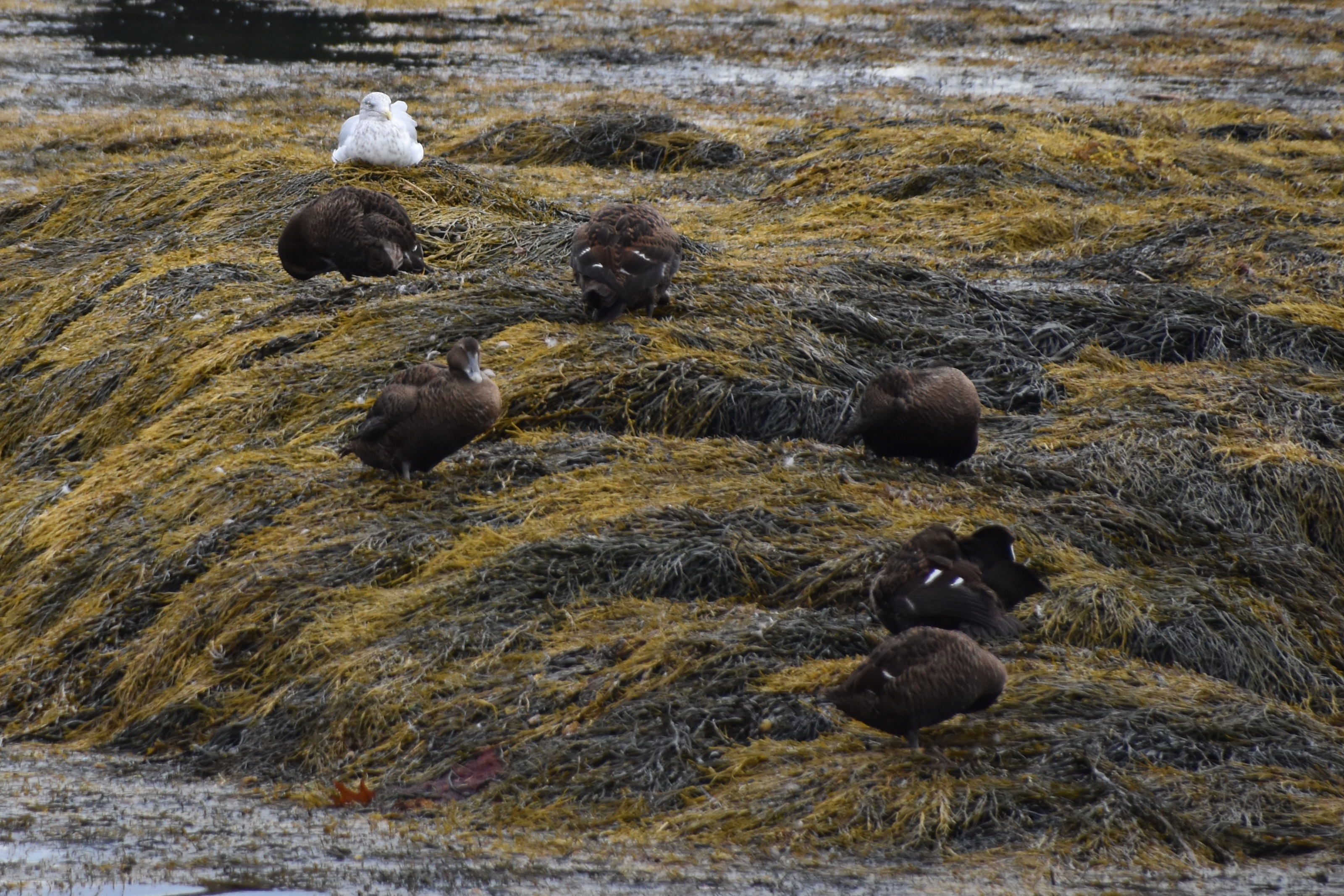
MerlinBirdID says glaucous gull and American black duck females. 2023-10-12 13:39:32 New England
First observed in New England on 2023-10-12.
Description
Geography: This bird appears across the great seas in the following continents: Europe, North America.General:
The glaucous gull (Larus hyperboreus) is a large gull, the second-largest gull in the world. It breeds in Arctic regions of the Northern Hemisphere and winters south to shores of the Holarctic. The genus name is from Latin larus, which appears to have referred to a gull or other large seabird. The specific name hyperboreus is Latin for "northern" from the Ancient Greek Huperboreoi people from the far north [2] "Glaucous" is from Latin glaucus and denotes the grey colour of the gull.[3]
[more]
Vocalization:
Like Herring Gull. [Link]
Other Details
Physical details
Physical details: length=62-68 cm, wingspan=150-165 cm, weight=964-2215 gDetails
Profile Wikipedia Vogelwarte BirdLife ZH ornitho.ch Audubon AllAboutBirds Xeno-Canto BirdID NABU YouTube

Either a lesser black-backed gull because of the orange legs, short neck, flat-topped head or yellow-legged gull because the bill is more yellow than orange. 2022-01-16 13:20:46
🔍
Never observed (yet!)
Description
Geography: This bird appears across the great seas in the following continents: Europe, North America, Africa, Asia.General: Deutschland: Brut-, Zugvogel, Wintergast
Vocalization:
Very similar to Herring Gull, but tone more nasal. [Link]
Other Details
Physical details
Physical details: length=52-64 cm, wingspan=117-134 cm, weight=620-1000 gHabitats: River and lake Details
Profile Wikipedia Vogelwarte BirdLife ZH ornitho.ch Audubon AllAboutBirds Xeno-Canto BirdID NABU YouTube
, Islay near Bridgend.JPG)
Great black-backed gull (Mantelmöwe), Islay near Bridgend. 2023-08-11 09:31:48 Islay
First observed in Islay on 2023-08-11.
Description
Geography: This bird appears across the great seas in the following continents: Europe, North America.General: Deutschland: Brut-, Jahres-, Zugvogel, Wintergast RL R
Vocalization:
Can be identified from the low pitch alone. Clearly deeper than Lesser Black-backed and Herring Gull. [Link]
Other Details
Physical details
Physical details: length=64-78 cm, wingspan=150-165 cm, weight=1033-2272 gHabitats: River and lake Details
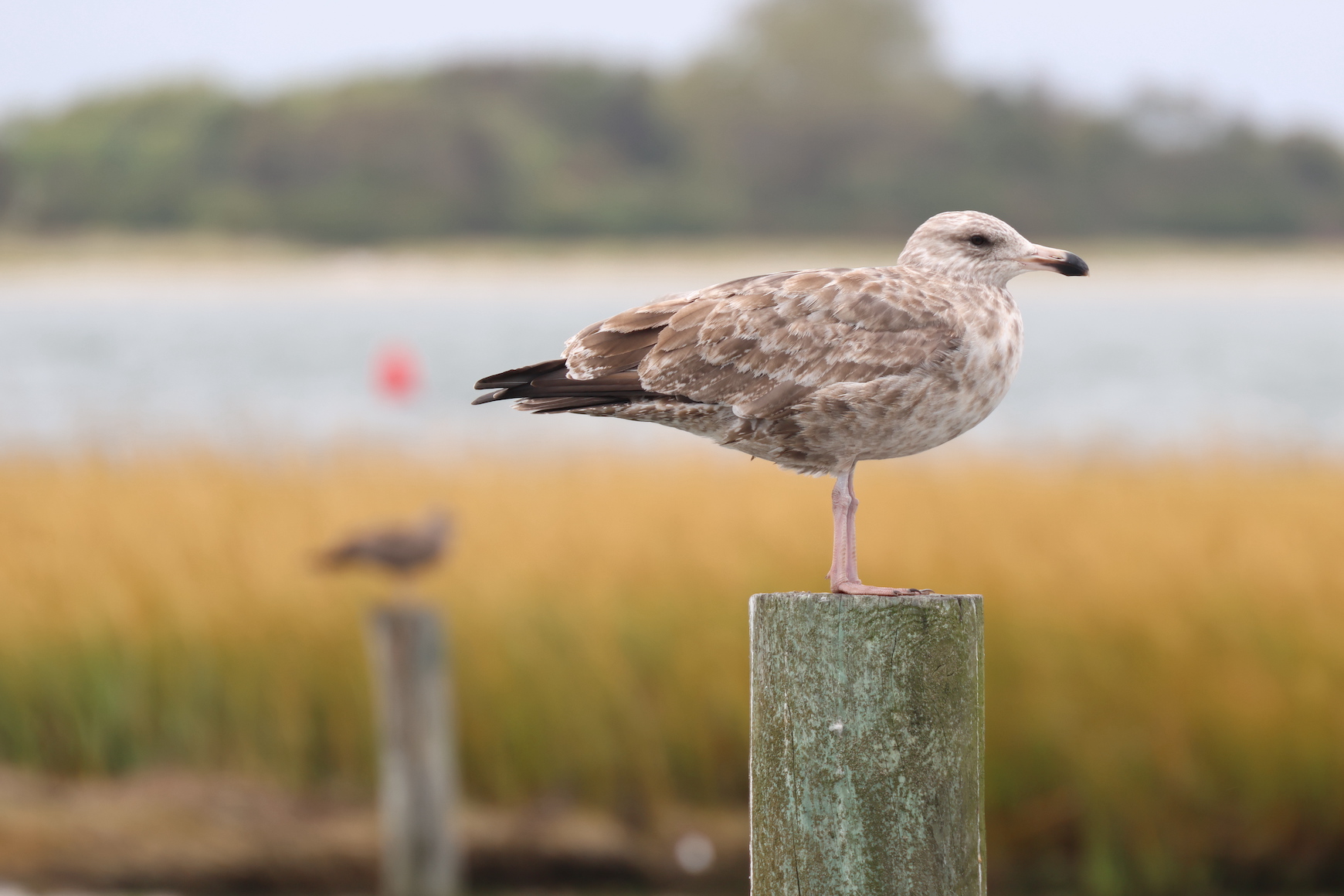
Herring gull, near Barnegat Lighthouse, Long Beach Island, NJ. 2024-09-18 19:48:40 New Jersey
First observed in Scotland on 2023-08-19.
Description
Geography: This bird appears across the great seas in the following continents: Europe, North America, South America, Asia.General: Deutschland: Brut-, Jahres-, Zugvogel, Wintergast
Vocalization:
Quite vocal. A long and strong "ay-kay-kay-kay-kay" with fading strength commonly heard. A deep "ga-ga-ga" heard from anxious birds. [Link]
Other Details
Physical details
Physical details: length=55-64 cm, wingspan=123-148 cm, weight=750-1440 gHabitats: River and lake Details
Profile Wikipedia Audubon AllAboutBirds Xeno-Canto BirdID NABU YouTube
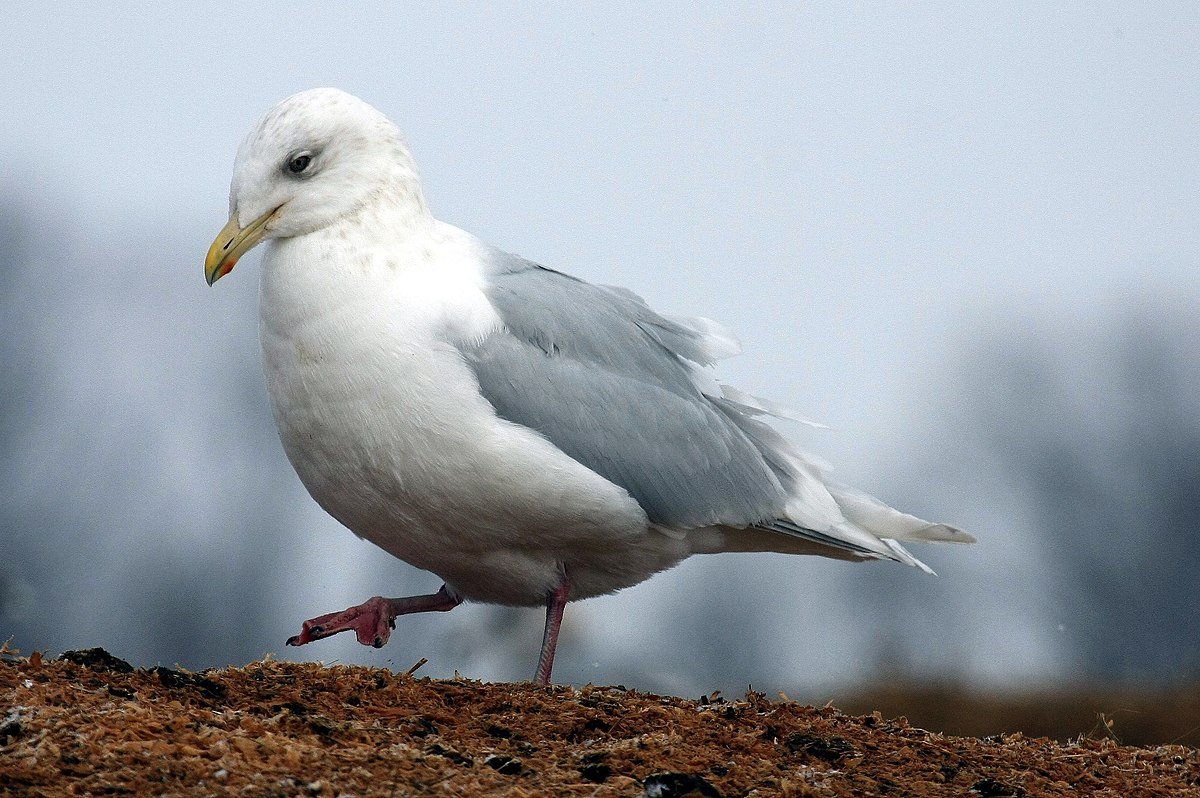
Wikipedia: Iceland gull Source: WIKIPEDIA
1200px-Larus_glaucoides_IthacaNY.jpg
🔍
Never observed (yet!)
Description
Geography: This bird appears across the great seas in the following continents: Europe, North America.General:
The Iceland gull (Larus glaucoides) is a medium-sized gull that breeds in the Arctic regions of Canada and Greenland, but not in Iceland (as its name suggests), where it is only seen during winter. The genus name is from Latin larus, which appears to have referred to a gull or other large seabird. The specific name glaucoides denotes its resemblance to Larus glaucus, a synonym of Larus hyperboreus, the glaucous gull; -oides is Ancient Greek and means "resembling".[2]
[more]
Vocalization:
Like Herring Gull, but tone sharper. [Link]
Other Details
Physical details
Physical details: length=52-60 cm, wingspan=140-150 cm, weight=460-1039 gDetails
Profile Wikipedia Xeno-Canto YouTube

Wikipedia: Kelp gull Source: WIKIPEDIA
1200px-SouthShetland-2016-Livingston_Island_%28Hannah_Point%29%E2%80%93Kelp_gull_%28Larus_dominicanus%29.jpg
🔍
Never observed (yet!)
Description
Geography: This bird appears across the great seas in the following continents: South America, Africa.Details
Cormorant, Graureiher, zwei Lachmöwen am Klingnauerstausee. 2022-02-05 10:35:32 Klingnauer Stausee (man-made lake)
First observed in 🇨🇭 on 2020-05-20.
Description
Geography: This bird appears across the great seas in the following continents: Europe, North America, Africa, Asia.General: Common waterbird at Pfäffikersee, that doesn't necessarily have the eponymous black head.
General: Deutschland: Brut-, Jahres-, Zugvogel, Wintergast
Etymology:
[40], In Richard Adams' 1972 novel Watership Down, a black-headed gull named Kehaar (who claims his name is the onomatopoeia of waves breaking against the shore) plays a major part in the story. [Link]
Vocalization:
Quite vocal, especially at breeding ground. [Link]
Seasonal behavior
Year-round birdOther Details
Physical details
Physical details: length=34-37 cm, wingspan=86-99 cm, weight=200-400 gnot sexually dimporphic. No breeding plumage Identifying characteristics: Summer: head = black, , , , , tail = black Winter: head = white (With Charlie Brown-style half circle behind the eye), , , , general: beak = red, legs = red, wings = gray, Habitats: River and lake
Vocalisation
Song: No details but a Xeno-Canto recording. Song attributes: Frequency:♫ 2021-04-27 16:51:23 Source: BirdNet 20210427_165123 birdnet 1485 - Black-headed Gull racket at Chlisee - No confident detection - Wetzikon.mp3 Wetzikon (song)
Details

Wikipedia: Grey-headed gull Source: WIKIPEDIA
1200px-Graukopf-M%C3%B6we_Larus_cirrocephalus_090501_We_150.JPG
🔍
Never observed (yet!)
Description
Geography: This bird appears across the great seas in the following continents: South America, Africa.General:
The grey-headed gull (Chroicocephalus cirrocephalus), also known as the grey-hooded gull, is a small gull which breeds patchily in South America and Africa south of the Sahara. It is not truly migratory, but is more widespread in winter. This species has occurred as a rare vagrant to North America, Italy and Spain. As is the case with many gulls, it has traditionally been placed in the genus Larus.
[more]
Details
Black-legged kittiwake / Dreizehenmöwe (Rissa tridactyla)
Profile Wikipedia Vogelwarte BirdLife ZH ornitho.ch Audubon AllAboutBirds Xeno-Canto NABU YouTube

Wikipedia: Black-legged kittiwake Source: WIKIPEDIA
1200px-Rissa_tridactyla_%28Vard%C3%B8%2C_2012%29.jpg
🔍
Never observed (yet!)
Description
Geography: This bird appears across the great seas in the following continents: Europe, North America, Africa, Asia.General: Deutschland: Brut-, Jahres-, Zugvogel, Wintergast RL R
Vocalization:
Highly vocal at breeding ground. A mewing "kitti-wake", with the pitch rising on the second drawn out syllable, and then falling. Generally silent elsewhere, except when squabbling over food. [Link]
Seasonal behavior
Seldom seen here Year-round bird Migration in: 03-01 - 03-23 Migration out: 03-15 - 03-23More details at Vogelwarte.ch
Other Details
Physical details
Physical details: length=38-40 cm, wingspan=95-105 cm, weight=310-500 gDetails
Gull-billed tern / Lachseeschwalbe (Gelochelidon nilotica)
Wikipedia: Gull-billed tern Source: WIKIPEDIA
1200px-Gelochelidon_nilotica_vanrossemi.jpg
🔍
Never observed (yet!)
Description
Geography: This bird appears across the great seas in the following continents: Europe, North America, South America, Africa, Asia.General: Deutschland: Brut-, seltener Zugvogel RL 1
Vocalization:
Quite vocal and easily distinguished from most congeners. Mewing and sharp in tone, but not rattling or raucous like most terns. Other variants are series of "ke-ke-ke-ke", or the mewing sounds. [Link]
Seasonal behavior
Seldom seen hereMore details at Vogelwarte.ch
Other Details
Physical details
Physical details: length=35-38 cm, wingspan=100-115 cm, weight=190-260 gDetails
Sabine's gull / Schwalbenmöwe (Xema sabini)

Wikipedia: Sabine's gull Source: WIKIPEDIA
Xema_sabini_-Iceland_-swimming-8_%281%29.jpg
🔍
Never observed (yet!)
Description
Geography: This bird appears across the great seas in the following continents: Europe, North America, South America, Africa, Asia.General: Deutschland: seltener Zugvogel
Seasonal behavior
Presence: 08-18 - 10-27 Migration in: 08-18 - 10-27More details at Vogelwarte.ch
Details
Black skimmer / Schwarzmantel-Scherenschnabel (Rynchops niger)
Profile Wikipedia Xeno-Canto YouTube

Black skimmers near Las Coloradas. 2023-04-15 10:11:18 Yucatan
First observed in Yucatan on 2023-04-15.
Description
Geography: This bird appears across the great seas in the following continents: North America, South America, Africa.General:
The black skimmer (Rynchops niger) is a tern-like seabird, one of three very similar birds species in the skimmer genus Rynchops in the gull family Laridae. It breeds in North and South America. Northern populations winter in the warmer waters of the Caribbean and the tropical and subtropical Pacific coasts, but the South American races make only shorter movements in response to annual floods which extend their feeding areas in the river shallows.
[more]
Details
Black tern / Trauerseeschwalbe (Chlidonias niger)
Profile Wikipedia Vogelwarte BirdLife ZH ornitho.ch Audubon AllAboutBirds Xeno-Canto BirdID NABU YouTube

Trauerseeschwalbe. 2024-08-24 18:51:27 Klingnauer Stausee (man-made lake)
First observed in 🇨🇭 on 2024-08-24.
Description
Geography: This bird appears across the great seas in the following continents: Europe, North America, South America, Africa.General: Deutschland: Brut-, Zugvogel RL 1
Vocalization:
Moderately vocal. [Link]
Other Details
Physical details
Physical details: length=22-24 cm, wingspan=64-68 cm, weight=60-86 gHabitats: River and lake Details
Blue noddy (Anous ceruleus)

Wikipedia: Blue noddy Source: WIKIPEDIA
1200px-Blue-grey_Noddy.jpg
🔍
Never observed (yet!)
Description
Geography: This bird appears across the great seas in the following continents: North America, Australia.General:
The blue noddy or hinaokū or manuohina[2] (Anous cerulea) is a seabird in the family Laridae. It is also known as the blue-grey noddy.
[more]
Details
Black noddy / Weißkappennoddi (Anous minutus)
Profile Wikipedia eBird Audubon AllAboutBirds Xeno-Canto YouTube

Wikipedia: Black noddy Source: WIKIPEDIA
1200px-Anous_minutus_by_Gregg_Yan_02.jpg
🔍
Never observed (yet!)
Description
Geography: This bird appears across the great seas in the following continents: North America, South America, Africa, Australia.General:
The black noddy or white-capped noddy (Anous minutus) is a seabird from the family Laridae. It is a medium-sized species of tern with black plumage and a white cap. It closely resembles the lesser noddy (Anous tenuirostris) with which it was at one time considered conspecific. The black noddy has slightly darker plumage and dark rather than pale lores.
[more]
Details
Brown noddy / Noddi (Anous stolidus)

Wikipedia: Brown noddy Source: WIKIPEDIA
1200px-Common_Noddy_1_-_Michaelmas.jpg
🔍
Never observed (yet!)
Description
Geography: This bird appears across the great seas in the following continents: North America, South America, Africa, Asia.Details
Common white-tern / Feenseeschwalbe (Gygis alba)
Wikipedia: Common white-tern Source: WIKIPEDIA
1200px-White_tern_with_fish.jpg
🔍
Never observed (yet!)
Description
Geography: This bird appears across the great seas in the following continents: North America, South America, Africa.General:
The white tern (Gygis alba) is a small seabird found across the tropical oceans of the world. It is sometimes known as the fairy tern although this name is potentially confusing as it is also the common name of Sternula nereis. Other names for the species include angel tern and white noddy in English, and manu-o-Kū in Hawaiian.
[more]
Details
Franklin's gull / Präriemöwe (Leucophaeus pipixcan)

Wikipedia: Franklin's gull Source: WIKIPEDIA
Franklin%27s_Gull%2C_Calgary.jpg
🔍
Never observed (yet!)
Description
Geography: This bird appears across the great seas in the following continents: North America, South America, Africa.General:
Franklin's gull (Leucophaeus pipixcan) is a small (length 12.6–14.2 in, 32–36 cm) gull.[2] The genus name Leucophaeus is from Ancient Greek leukos, "white", and phaios, "dusky". The specific pipixcan is a Nahuatl name for a type of gull.[3][4]
[more]
Details
Caspian tern / Raubseeschwalbe (Hydroprogne caspia)

Wikipedia: Caspian tern Source: WIKIPEDIA
1200px-Sterna-caspia-010.jpg
🔍
Never observed (yet!)
Description
Geography: This bird appears across the great seas in the following continents: Europe, North America, South America, Africa, Asia.General: Deutschland: Brut-, Zugvogel RL 1
Seasonal behavior
Presence: 03-23 - 10-07 Migration in: 04-20 - 05-31 Migration out: 04-20 - 04-28More details at Vogelwarte.ch
Other Details
Physical details
Physical details: length=47-54 cm, wingspan=130-145 cm, weight=500-750 gHabitats: River and lake Details
Bridled tern / Zügelseeschwalbe (Onychoprion anaethetus)
Wikipedia: Bridled tern Source: WIKIPEDIA
1200px-Bridled_Tern_LEI_Nov06.JPG
🔍
Never observed (yet!)
Description
Geography: This bird appears across the great seas in the following continents: North America, South America, Africa, Asia.Details
Sooty tern / Rußseeschwalbe (Onychoprion fuscatus)

Wikipedia: Sooty tern Source: WIKIPEDIA
1200px-Sterna_fuscata.JPG
🔍
Never observed (yet!)
Description
Geography: This bird appears across the great seas in the following continents: Europe, North America, South America, Africa, Asia.Details
Aleutian tern / Aleutenseeschwalbe (Onychoprion aleuticus)

Wikipedia: Aleutian tern Source: WIKIPEDIA
Aleutian_Tern.jpg
🔍
Never observed (yet!)
Description
Geography: This bird appears across the great seas in the following continents: North America, Asia.General: Accidental
Details
Royal tern / Königsseeschwalbe (Thalasseus maximus)

Leaving no tern unstoned at Las Coloradas - royal terns, I believe. 2023-04-15 09:34:30 Yucatan
First observed in Yucatan on 2023-04-15.
Description
Geography: This bird appears across the great seas in the following continents: Europe, North America, South America, Africa.General:
The royal tern (Thalasseus maximus) is a tern in the family Laridae.
[more]
Details
Sandwich tern / Brandseeschwalbe (Thalasseus sandvicensis)

Sandwich tern in flight with distinct yellow tipped bill. 2023-09-27 12:28:34 Florida
First observed in Costa Rica on 2018-03-11.
Description
Geography: This bird appears across the great seas in the following continents: Europe, North America, South America, Africa.General: Deutschland: Brut-, Zugvogel RL 2
Other Details
Physical details
Physical details: length=36-41 cm, wingspan=95-105 cm, weight=215-275 gHabitats: River and lake Details
Elegant tern / Schmuckseeschwalbe (Thalasseus elegans)

Wikipedia: Elegant tern Source: WIKIPEDIA
1200px-Elegant_Tern_Bolsa_Chica.jpg
🔍
Never observed (yet!)
Description
Geography: This bird appears across the great seas in the following continents: North America, South America, Africa.General:
The elegant tern (Thalasseus elegans) is a tern in the family Laridae. It breeds on the Pacific coasts of the southern United States and Mexico and winters south to Peru, Ecuador and Chile.
[more]
Details
Little gull / Zwergmöwe (Hydrocoloeus minutus)

Wikipedia: Little gull Source: WIKIPEDIA
1200px-%C4%8Cajka_mal%C3%A1_%28Larus_minutus%29_a_%284834254958%29.jpg
First observed in 🇨🇭 on 2022-12-03.
Description
Geography: This bird appears across the great seas in the following continents: Europe, North America, Africa, Asia.General: Deutschland: ausnahmsweise Brutvogel, Zugvogel RL R
Other Details
Physical details
Physical details: length=25-27 cm, wingspan=75-80 cm, weight=85-150 gHabitats: River and lake Details
Common ringed plover / Sandregenpfeifer (Charadrius hiaticula)
Profile Wikipedia Vogelwarte BirdLife ZH ornitho.ch Audubon AllAboutBirds Xeno-Canto BirdID NABU YouTube

Sandregenpfeifer auf Ende vom Damm in La Sauge. 2024-09-14 15:34:58 Fanel/Chablais de Cudrefin und La Sauge
First observed in 🇨🇭 on 2022-09-04.
Description
Geography: This bird appears across the great seas in the following continents: Europe, North America, Africa, Asia.General: Deutschland: Brut-, Zugvogel RL 1
Vocalization:
Usually heard before seen. [Link]
Seasonal behavior
Presence: 03-12 - 10-27 Migration in: 10-07 - 10-27 Migration out: 10-07 - 10-15More details at Vogelwarte.ch
Other Details
Physical details
Physical details: length=18-20 cm, wingspan=48-57 cm, weight=55-73 gHabitats: Wetland Details
Kentish plover / Seeregenpfeifer (Charadrius alexandrinus)
Profile Wikipedia Vogelwarte BirdLife ZH ornitho.ch Audubon AllAboutBirds Xeno-Canto NABU YouTube

Der kleinste Watvögel bei Ses Salines, Mallorcal, ein Seeregenpfeifer. 2022-04-08 17:00:16
First observed in Mallorca on 2022-04-08.
Description
Geography: This bird appears across the great seas in the following continents: Europe, North America, Africa, Asia.General: Deutschland: Brut-, Zugvogel RL 1
Seasonal behavior
Presence: 04-01 - 10-27 Migration in: 05-01 - 06-08 Migration out: 06-29 - 10-27More details at Vogelwarte.ch
Other Details
Physical details
Physical details: length=15-17 cm, wingspan=42-45 cm, weight=39-56 gHabitats: Wetland Details
Lesser sand-plover / Mongolenregenpfeifer (Charadrius mongolus)

Wikipedia: Lesser sand-plover Source: WIKIPEDIA
1200px-Charadrius_mongolus_-_Laem_Phak_Bia.jpg
🔍
Never observed (yet!)
Description
Geography: This bird appears across the great seas in the following continents: North America, Africa, Asia.Details
Semipalmated plover / Amerika-Sandregenpfeifer (Charadrius semipalmatus)
Profile Wikipedia Audubon AllAboutBirds Xeno-Canto BirdID NABU YouTube

Wikipedia: Semipalmated plover Source: WIKIPEDIA
Semipalmated_Plover.jpg
🔍
Never observed (yet!)
Description
Geography: This bird appears across the great seas in the following continents: Europe, North America, South America.General:
The semipalmated plover (Charadrius semipalmatus) is a small plover. The genus name Charadrius is a Late Latin word for a yellowish bird mentioned in the fourth-century Vulgate. It derives from Ancient Greek kharadrios a bird found in ravines and river valleys (kharadra, "ravine"). The specific semipalmatus is Latin and comes from semi, "half" and palma, "palm". Like the English name, this refers to its only partly webbed feet.[2]
[more]
Details
Black-bellied plover / Kiebitzregenpfeifer (Pluvialis squatarola)

Wikipedia: Black-bellied plover Source: WIKIPEDIA
1200px-Pluvialis_squatarola_%28summer_plumage%29.jpg
🔍
Never observed (yet!)
Description
Geography: This bird appears across the great seas in the following continents: Europe, North America, South America, Africa, Asia.General: Deutschland: Zugvogel
Seasonal behavior
Presence: 04-11 - 11-26 Migration in: 11-06 - 11-14 Migration out: 05-01 - 05-31More details at Vogelwarte.ch
Other Details
Physical details
Physical details: length=27-30 cm, wingspan=71-83 cm, weight=190-280 gHabitats: Wetland Details
American golden-plover / Wanderregenpfeifer (Pluvialis dominica)
Profile Wikipedia Audubon AllAboutBirds Xeno-Canto YouTube
Wikipedia: American golden-plover Source: WIKIPEDIA
Pluvialis_dominica1.jpg
🔍
Never observed (yet!)
Description
Geography: This bird appears across the great seas in the following continents: North America, South America, Africa.General:
The American golden plover (Pluvialis dominica), or American golden-plover is a medium-sized plover. The genus name is Latin and means relating to rain, from pluvia, "rain". It was believed that golden plovers flocked when rain was imminent. The species name dominica refers to Santo Domingo, now Hispaniola, in the West Indies.[2]
[more]
Details
Pacific golden plover / Sibirischer Goldregenpfeifer (Pluvialis fulva)

Wikipedia: Pacific golden plover Source: WIKIPEDIA
Pluvialis_fulva_-Bering_Land_Bridge_National_Preserve%2C_Alaska%2C_USA-8.jpg
🔍
Never observed (yet!)
Description
Geography: This bird appears across the great seas in the following continents: North America, Asia.Details
Curlew sandpiper / Sichelstrandläufer (Calidris ferruginea)
Profile Wikipedia Vogelwarte BirdLife ZH ornitho.ch Audubon AllAboutBirds Xeno-Canto BirdID NABU YouTube
.JPG)
Rostgans und nach MBI mehrere Sichelstrandlaeufer, die ich nur hier sehen (2024 auch). 2025-09-13 14:52:16 Klingnauer Stausee (man-made lake)
First observed in 🇨🇭 on 2024-08-24.
Description
Geography: This bird appears across the great seas in the following continents: Europe, North America, South America, Africa, Asia.General: Deutschland: Zugvogel
Etymology:
Nicolas Baiker sagt, Hauptmerkmale innerhalb der Strandläufer sind der Augenstreif und der Schnabel der relativ lang ist und immer lezten Drittel immer krummer, darum Sichelstrandläufer. [Link]
Other Details
Physical details
Physical details: length=18-19 cm, wingspan=42-46 cm, weight=50-65 gHabitats: Wetland
Vocalisation
Calls:Flight call a soft, ringing and rolling "krrrrrt, with variations. Lacks the hoarse, nasal quality of similar call by Dunlin. [Link]
At XenoCanto I heard 5 rising notes within a second.
Call attributes: Call melody: one note, fast, Frequency: 4-6 KHz, Special sounds: whoop.
Details
Ruff / Kampfläufer (Calidris pugnax)

MerlinBirdId sagt, das mit dem rotbraunen Rücken mit vielen Punkten war ein Kampfläufer - in dem Fall meine erste Besichtigung - und der dunkle wo wir nur den Arschsehen wären Dunkelwasserläufer - auf dem Klingnauerstausee. 2024-08-24 18:17:54 Klingnauer Stausee (man-made lake)
First observed in 🇨🇭 on 2024-08-24.
Description
Geography: This bird appears across the great seas in the following continents: Europe, North America, South America, Africa, Asia.General: Deutschland: Brut-, Zugvogel RL 1
Etymology: Nabu: Der Name leitet sich vom Balzverhalten der Männchen ab: In Balzarenen tragen sie „Turniere“ aus, um die Weibchen zu beeindrucken, dabei herrscht eine komplizierte Rollenverteilung. [Link]
Vocalization:
Generally silent. Short, muted, nasal, mono or disyllabic grunts sometimes heard. [Link]
Seasonal behavior
Presence: 02-20 - 11-06 Migration in: 05-21 - 05-31 Migration out: 05-21 - 05-28More details at Vogelwarte.ch
Other Details
Physical details
Physical details: length=26-30 cm, wingspan=54-58 cm, weight=75-230 gHabitats: Wetland Details
Long-toed stint / Langzehenstrandläufer (Calidris subminuta)
Profile Wikipedia Audubon AllAboutBirds Xeno-Canto YouTube

Wikipedia: Long-toed stint Source: WIKIPEDIA
1200px-Calidris_subminuta_-_Pak_Thale.jpg
🔍
Never observed (yet!)
Description
Geography: This bird appears across the great seas in the following continents: North America, Asia.Details
Rufous-necked stint / Rotkehlstrandläufer (Calidris ruficollis)
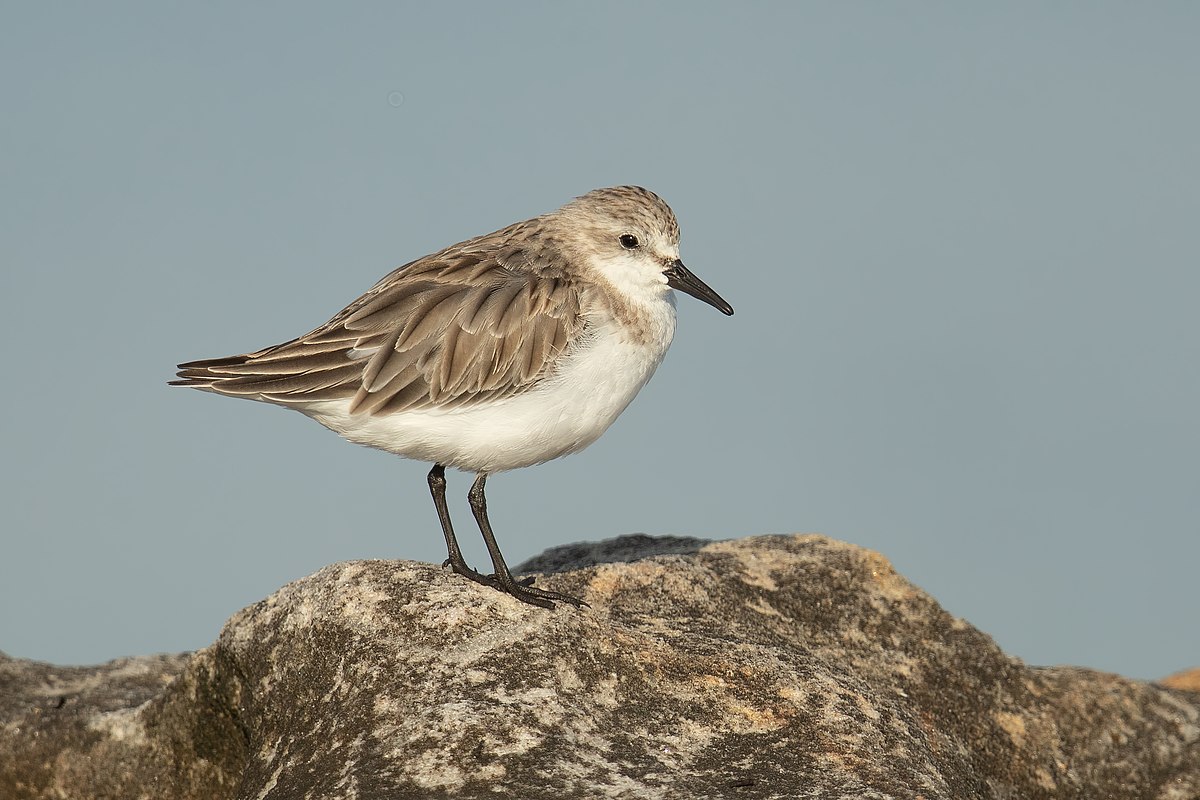
Wikipedia: Rufous-necked stint Source: WIKIPEDIA
1200px-Red-necked_Stint_-_Boat_Harbour.jpg
🔍
Never observed (yet!)
Description
Geography: This bird appears across the great seas in the following continents: North America, Asia.Details
Buff-breasted sandpiper / Grasläufer (Calidris subruficollis)

Wikipedia: Buff-breasted sandpiper Source: WIKIPEDIA
1200px-Tryngites_subruficollis_-USA-8.jpg
🔍
Never observed (yet!)
Description
Geography: This bird appears across the great seas in the following continents: North America, South America, Africa.General:
The buff-breasted sandpiper (Calidris subruficollis) is a small shorebird. The species name subruficollis is from Latin subrufus, "reddish" (from sub, "somewhat", and rufus, "rufous") and collis, "-necked/-throated" (from collum, "neck").[2] It is a calidrid sandpiper.
[more]
Details
Red knot / Knutt (Calidris canutus)
Profile Wikipedia Vogelwarte BirdLife ZH ornitho.ch Audubon AllAboutBirds Xeno-Canto BirdID NABU YouTube

Red knots, according to MerlinBirdID - underway to somewhere better at Las Coloradas. 2023-04-15 09:34:08 Yucatan
First observed in Yucatan on 2023-04-15.
Description
Geography: This bird appears across the great seas in the following continents: Europe, North America, South America, Africa, Asia.General: Deutschland: Zugvogel, Wintergast
Other Details
Physical details
Physical details: length=23-25 cm, wingspan=57-61 cm, weight=110-160 gHabitats: Wetland Details
Dunlin / Alpenstrandläufer (Calidris alpina)
Profile Wikipedia Vogelwarte BirdLife ZH ornitho.ch Audubon AllAboutBirds Xeno-Canto BirdID NABU YouTube
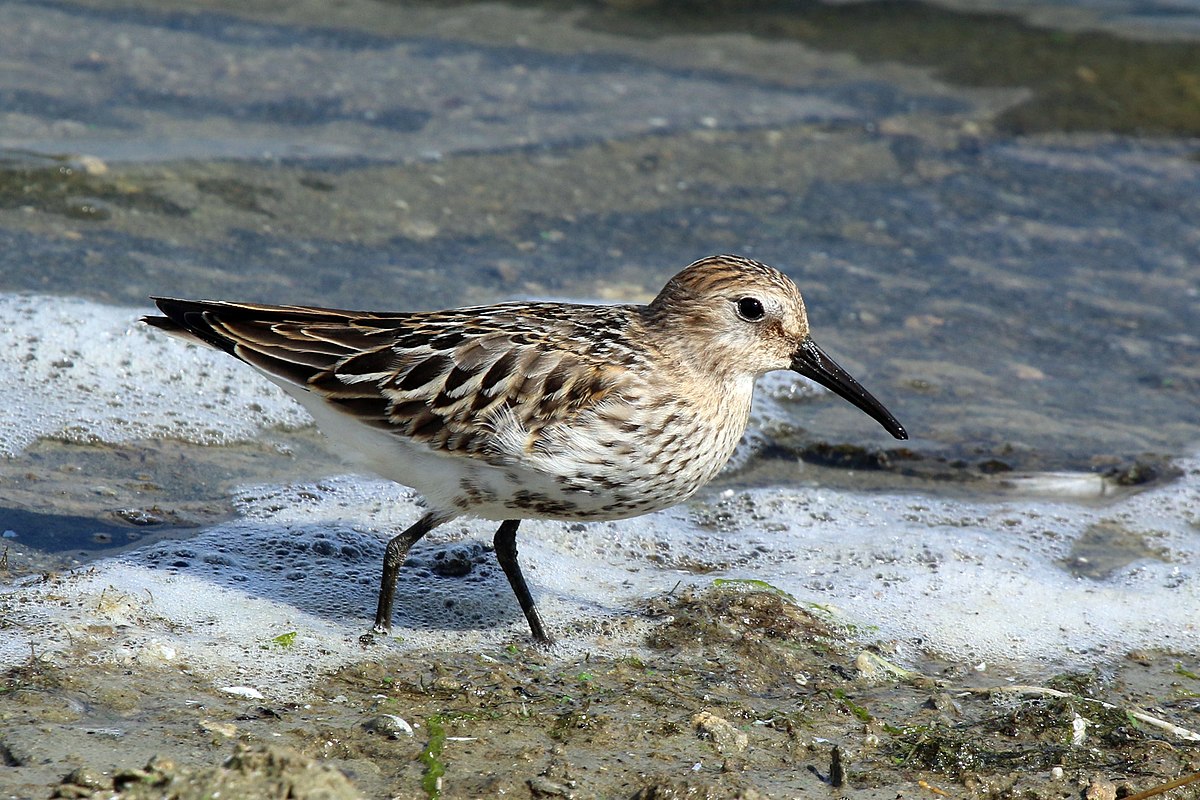
Wikipedia: Dunlin Source: WIKIPEDIA
1200px-Dunlin_%28Calidris_alpina%29_juvenile.jpg
🔍
Never observed (yet!)
Description
Geography: This bird appears across the great seas in the following continents: Europe, North America, South America, Africa, Asia.General: Deutschland: Brut-, Zugvogel, Wintergast RL 1
Seasonal behavior
Year-round bird Migration in: 03-01 - 03-23 Migration out: 03-15 - 03-23More details at Vogelwarte.ch
Other Details
Physical details
Physical details: length=16-20 cm, wingspan=38-43 cm, weight=35-60 gHabitats: Wetland Details
Sanderling / Sanderling (Calidris alba)
Profile Wikipedia Vogelwarte BirdLife ZH ornitho.ch Audubon AllAboutBirds Xeno-Canto BirdID NABU YouTube

Wahrscheinlich Sanderling - there must be a better photo. 2024-09-14 15:34:48 Fanel/Chablais de Cudrefin und La Sauge
First observed in Yucatan on 2023-03-27.
Description
Geography: This bird appears across the great seas in the following continents: Europe, North America, South America, Africa, Asia.General: Deutschland: Zugvogel, Wintergast
Seasonal behavior
Presence: 04-11 - 10-27 Migration in: 10-07 - 10-15 Migration out: 04-20 - 05-31More details at Vogelwarte.ch
Other Details
Physical details
Physical details: length=20-21 cm, wingspan=40-45 cm, weight=44-70 gHabitats: Wetland Details
Baird's sandpiper / Bairdstrandläufer (Calidris bairdii)
Profile Wikipedia Audubon AllAboutBirds Xeno-Canto YouTube

Wikipedia: Baird's sandpiper Source: WIKIPEDIA
Calidris_bairdii_-Gullbringusysla%2C_Iceland-8.jpg
🔍
Never observed (yet!)
Description
Geography: This bird appears across the great seas in the following continents: North America, South America, Africa.General:
Baird's sandpiper (Calidris bairdii) is a small shorebird. It is among those calidrids which were formerly included in the genus Erolia, which was subsumed into the genus Calidris in 1973.[2] The genus name is from Ancient Greek kalidris or skalidris, a term used by Aristotle for some grey-coloured waterside birds. The English name and specific bairdii commemorate Spencer Fullerton Baird, 19th-century naturalist and assistant secretary of the Smithsonian Institution.[3]
[more]
Details
White-rumped sandpiper / Weißbürzelstrandläufer (Calidris fuscicollis)
Profile Wikipedia Audubon AllAboutBirds Xeno-Canto YouTube

Wikipedia: White-rumped sandpiper Source: WIKIPEDIA
1200px-Calidris_fuscicollis_PLAYERO_RABADILLA_BLANCA.jpg
🔍
Never observed (yet!)
Description
Geography: This bird appears across the great seas in the following continents: North America, South America, Africa.General:
The white-rumped sandpiper (Calidris fuscicollis) is a small shorebird that breeds in the northern tundra of Canada and Alaska. This bird can be difficult to distinguish from other similar tiny shorebirds; these are known collectively as "peeps" or "stints".
[more]
Details
Purple sandpiper / Meerstrandläufer (Calidris maritima)
Profile Wikipedia Audubon AllAboutBirds Xeno-Canto BirdID NABU YouTube
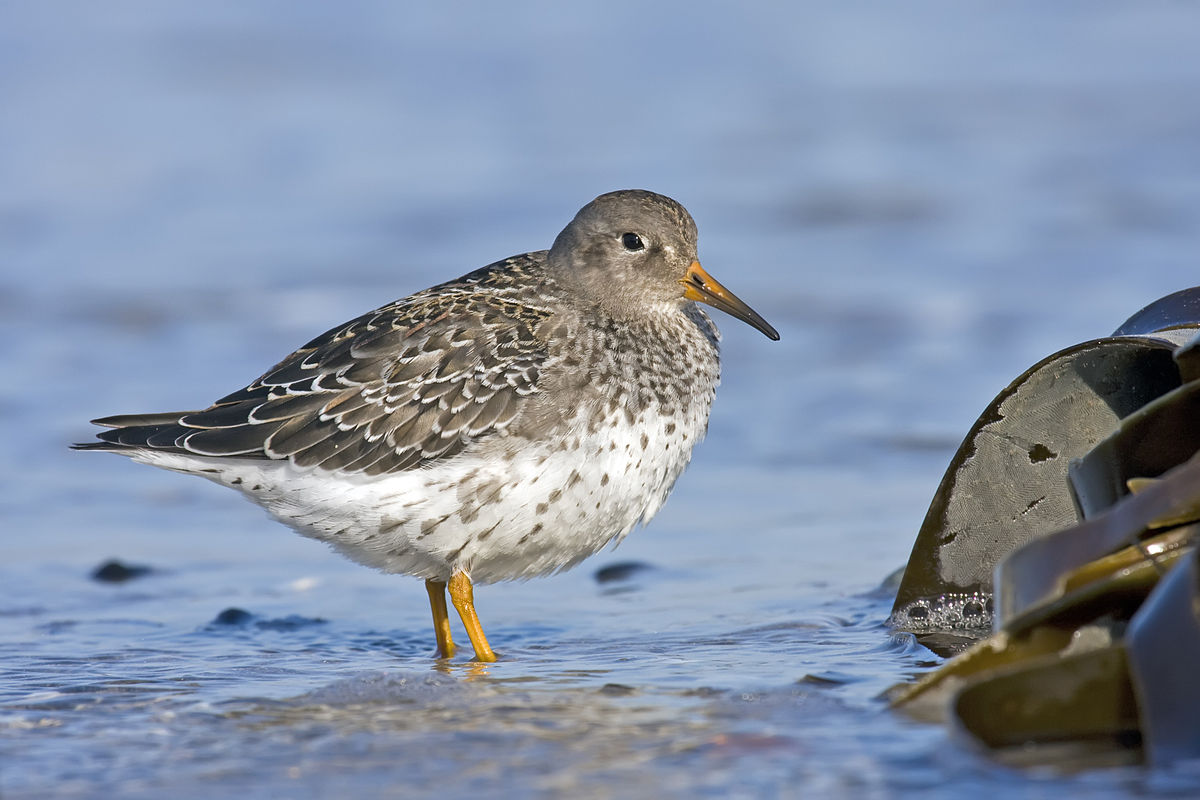
Wikipedia: Purple sandpiper Source: WIKIPEDIA
1200px-Calidris_maritima.jpg
🔍
Never observed (yet!)
Description
Geography: This bird appears across the great seas in the following continents: Europe, North America.General: Deutschland: Zugvogel, Wintergast
Other Details
Physical details
Physical details: length=20-22 cm, wingspan=42-46 cm, weight=52-80 gDetails
Sharp-tailed sandpiper / Spitzschwanz-Strandläufer (Calidris acuminata)
Profile Wikipedia Audubon AllAboutBirds Xeno-Canto YouTube

Wikipedia: Sharp-tailed sandpiper Source: WIKIPEDIA
1200px-Calidris_acuminata_-_Hexham_Swamp.jpg
🔍
Never observed (yet!)
Description
Geography: This bird appears across the great seas in the following continents: North America, Asia.Details
Pectoral sandpiper / Graubrust-Strandläufer (Calidris melanotos)
Profile Wikipedia Vogelwarte BirdLife ZH ornitho.ch Audubon AllAboutBirds Xeno-Canto BirdID NABU YouTube

Wikipedia: Pectoral sandpiper Source: WIKIPEDIA
1200px-Pectoral_Sandpiper3.jpg
🔍
Never observed (yet!)
Description
Geography: This bird appears across the great seas in the following continents: Europe, North America, South America, Asia.General: Deutschland: seltener Zugvogel
Details
Whimbrel / Regenbrachvogel (Numenius phaeopus)

Whimbrel at x. 2025-02-25 10:29:04 Lanzarote
First observed in San Christiano on 2022-03-19.
Description
Geography: This bird appears across the great seas in the following continents: Europe, North America, South America, Africa, Asia.General: Deutschland: Zugvogel
Seasonal behavior
Presence: 03-23 - 10-07 Migration in: 05-10 - 05-31 Migration out: 05-10 - 05-18More details at Vogelwarte.ch
Other Details
Physical details
Physical details: length=40-42 cm, wingspan=76-89 cm, weight=300-660 gHabitats: Wetland Details
Ruddy turnstone / Steinwälzer (Arenaria interpres)

Ruddy turnstone, San Christiana, Tenerife. 2022-03-19 10:26:30
First observed in Tenerife on 2022-03-19.
Description
Geography: This bird appears across the great seas in the following continents: Europe, North America, South America, Africa, Asia.General: Deutschland: Brut-, Zugvogel, Wintergast RL 2
Seasonal behavior
Presence: 04-11 - 10-18 Migration in: 05-01 - 06-20 Migration out: 05-01 - 06-08More details at Vogelwarte.ch
Other Details
Physical details
Physical details: length=22-24 cm, wingspan=50-57 cm, weight=85-150 gHabitats: Wetland Details
Common snipe / Bekassine (Gallinago gallinago)

Wahrscheinlich Bekassine mit dem langen Schnabel, Klingnauerstausee. 2022-02-05 11:54:14 Klingnauer Stausee (man-made lake)
First observed in 🇨🇭 on 2021-10-24.
Description
Geography: This bird appears across the great seas in the following continents: Europe, North America, Africa, Asia.General:
The common snipe (Gallinago gallinago) is a small, stocky wader native to the Old World.
[more]
Deutschland: Brut-, Zugvogel, Wintergast RL 1
Vocalization:
Quite vocal, especially at breeding ground. [Link]
Seasonal behavior
Year-round bird Migration in: 01-01 - 05-21 Migration out: 07-20 - 12-31More details at Vogelwarte.ch
Other Details
Physical details
Physical details: length=25-27 cm, wingspan=44-47 cm, weight=80-140 gHabitats: Wetland
Vocalisation
Song: No details but a Xeno-Canto recording. Song:Song an unmistakable bleating, drumming sound produced by vibrating tail feathers in sky-dives. [Link]
Song attributes:
Frequency:
♫ Source: XENOCANTO XC812599 - Common Snipe song, one note, 4x per sec - Gallinago gallinago.mp3 (song)

Calls:
Almost always give diagnostic hoarse and nasal "kaaat" call when flushed. Another territorial call is a rhythmic, mechanical and sharp "tika-tika-tka", or "ika-ka-ka". [Link]
XC947581 - Common Snipe flight call - Gallinago gallinago.
♫ Source: XENOCANTO XC947581 - Common Snipe flight call - Gallinago gallinago.mp3 (flight call)

Call attributes: flight call Call melody: one note, slow, Frequency: medium (1-5 KHz), Special sounds: quack.
Details
Swinhoe's snipe / Waldbekassine (Gallinago megala)
Profile Wikipedia Audubon AllAboutBirds Xeno-Canto YouTube

Wikipedia: Swinhoe's snipe Source: WIKIPEDIA
Gallinago_megala.jpg
🔍
Never observed (yet!)
Description
Geography: This bird appears across the great seas in the following continents: North America, Asia.Details
Long-billed dowitcher / Großer Schlammläufer (Limnodromus scolopaceus)
Profile Wikipedia Audubon AllAboutBirds Xeno-Canto YouTube

You can see why it's called Las Colarados here - I believe Erik said short-billed dowitchers. 2023-04-15 09:33:38 Yucatan
First observed in Yucatan on 2023-04-15.
Description
Geography: This bird appears across the great seas in the following continents: North America, South America, Asia.General: Accidental
Details
Bar-tailed godwit / Pfuhlschnepfe (Limosa lapponica)
Profile Wikipedia Vogelwarte BirdLife ZH ornitho.ch Audubon AllAboutBirds Xeno-Canto BirdID NABU YouTube

Wikipedia: Bar-tailed godwit Source: WIKIPEDIA
1200px-Bar-tailed_Godwit.jpg
🔍
Never observed (yet!)
Description
Geography: This bird appears across the great seas in the following continents: Europe, North America, Africa, Asia.General: Deutschland: Zugvogel
Seasonal Behavior: Eine junge Pfuhlschnepfe scheint einen Non-Stop-Rekord für Zugvögel aufgestellt zu haben. Der Vogel sei über 13.500 Kilometer von Alaska in den australischen Bundesstaat Tasmanien geflogen, das berichteten mehrere Medien übereinstimmend. [Link]
Vocalization:
Quite vocal at breeding ground but mostly silent elsewhere. Varied repertoire of mewing and sharp sounds, some resembling Black-tailed, some almost Snipe-like. [Link]
Seasonal behavior
Presence: 04-01 - 11-06 Migration in: 07-29 - 08-29 Migration out: 08-21 - 08-29More details at Vogelwarte.ch
Other Details
Physical details
Physical details: length=37-39 cm, wingspan=70-80 cm, weight=230-450 gHabitats: Wetland Details
Black-tailed godwit / Uferschnepfe (Limosa limosa)
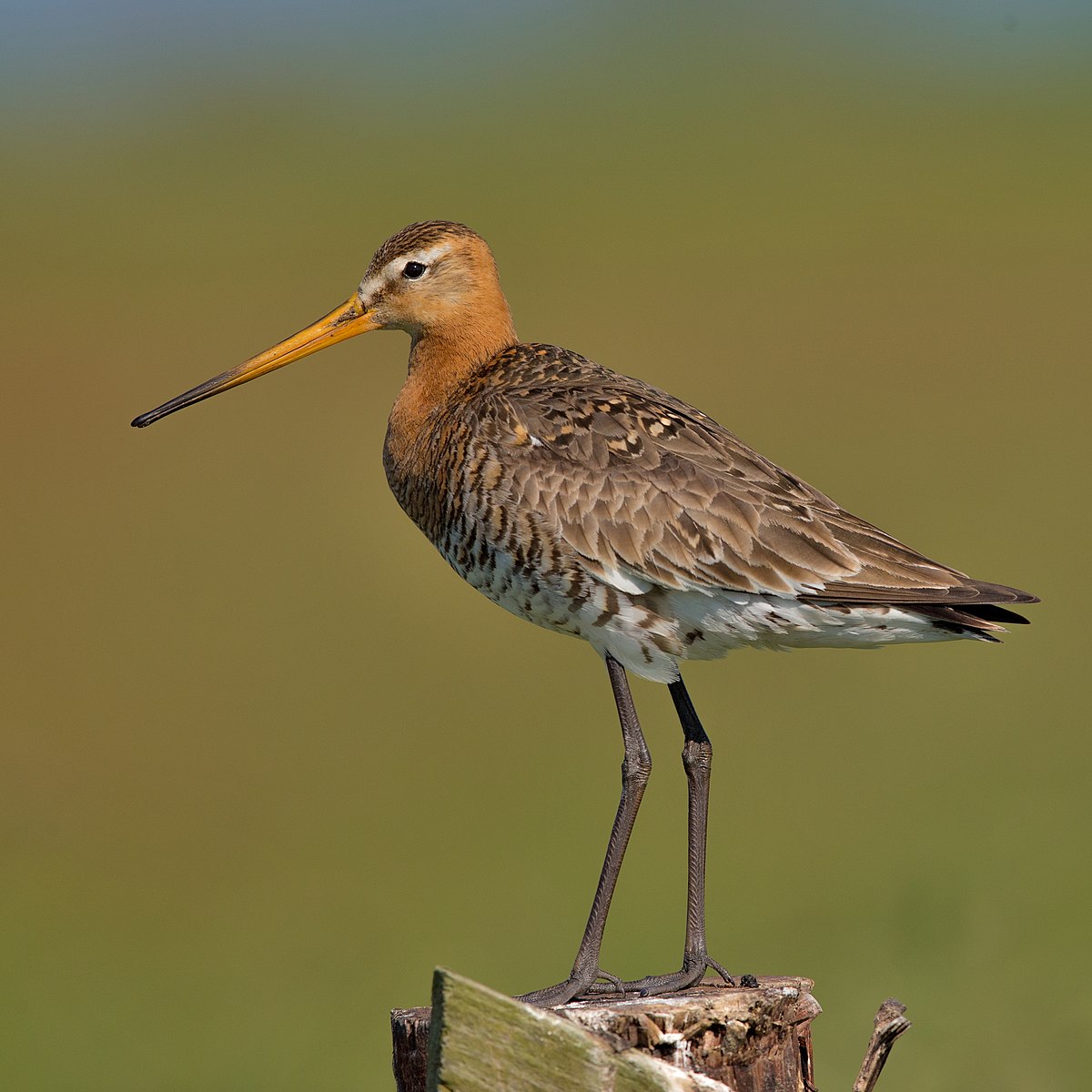
Wikipedia: Black-tailed godwit Source: WIKIPEDIA
1200px-Black-tailed_Godwit_Uferschnepfe.jpg
🔍
Never observed (yet!)
Description
Geography: This bird appears across the great seas in the following continents: Europe, North America, Africa, Asia.General: Deutschland: Brut-, Zugvogel RL 1
Vocalization:
Quite vocal at breeding ground, but mostly silent elsewhere. Varied repertoire of mewing and sharp sounds, some resembling Bar-tailed, some almost lapwing-like. [Link]
Seasonal behavior
Presence: 02-20 - 09-28 Migration in: 05-01 - 05-31 Migration out: 05-01 - 05-08More details at Vogelwarte.ch
Other Details
Physical details
Physical details: length=40-44 cm, wingspan=70-82 cm, weight=250-390 gHabitats: Wetland Details
Hudsonian godwit / Hudsonschnepfe (Limosa haemastica)
Profile Wikipedia Audubon AllAboutBirds Xeno-Canto YouTube

Wikipedia: Hudsonian godwit Source: WIKIPEDIA
1200px-Limosa_haemastica_-_Kogarah_Bay.jpg
🔍
Never observed (yet!)
Description
Geography: This bird appears across the great seas in the following continents: North America, South America, Africa.General:
The Hudsonian godwit (Limosa haemastica) is a large shorebird in the sandpiper family, Scolopacidae. The genus name Limosa is from Latin and means "muddy", from limus, "mud". The specific haemastica is from Ancient Greek and means "bloody". An 18th century name for this bird was red-breasted godwit.[2] The English term "godwit" was first recorded in about 1416–7 and is believed to imitate the bird's call.[3]
[more]
Details
Common greenshank / Grünschenkel (Tringa nebularia)
Profile Wikipedia Vogelwarte BirdLife ZH ornitho.ch Audubon AllAboutBirds Xeno-Canto BirdID NABU YouTube

MerlinBirdID says common greenshank, probably non-breeding adult. 2022-04-12 14:52:08
First observed in Mallorca on 2022-04-12.
Description
Geography: This bird appears across the great seas in the following continents: Europe, North America, Africa, Asia.General: Deutschland: ausnahmsweise Brutvogel, Zugvogel
Vocalization:
Most heard is a characteristic, trisyllabic "tew-tew-tew" (sometimes two or four syllables). Can resemble redshank, but pitch more stable, and not falling notably. Each syllable is clearly separated and equally emphasized. [Link]
Other Details
Physical details
Physical details: length=30-33 cm, wingspan=68-70 cm, weight=130-270 gHabitats: Wetland Details
Wandering tattler / Wanderwasserläufer (Tringa incana)

Wikipedia: Wandering tattler Source: WIKIPEDIA
1200px-Wandering_Tattler.jpg
🔍
Never observed (yet!)
Description
Geography: This bird appears across the great seas in the following continents: North America, South America, Australia.General:
The wandering tattler (Tringa incana) (formerly Heteroscelus incanus: Pereira & Baker, 2005; Banks et al., 2006), is a medium-sized wading bird. It is similar in appearance to the closely related gray-tailed tattler, T. brevipes. The tattlers are unique among the species of Tringa for having unpatterned, greyish wings and backs, and a scaly breast pattern extending more or less onto the belly in breeding plumage, in which both also have a rather prominent supercilium.
[more]
Details
Lesser yellowlegs / Kleiner Gelbschenkel (Tringa flavipes)
Profile Wikipedia Audubon AllAboutBirds Xeno-Canto YouTube

Wikipedia: Lesser yellowlegs Source: WIKIPEDIA
1200px-Lesser_Yellowlegs.jpg
🔍
Never observed (yet!)
Description
Geography: This bird appears across the great seas in the following continents: North America, South America, Africa.General:
The lesser yellowlegs (Tringa flavipes) is a medium-sized shorebird. The genus name Tringa is the New Latin name given to the green sandpiper by Aldrovandus in 1599 based on Ancient Greek trungas, a thrush-sized, white-rumped, tail-bobbing wading bird mentioned by Aristotle. The specific flavipes is from Latin flavus, "yellow", and pes, "foot".[2]
[more]
Details
Wood sandpiper / Bruchwasserläufer (Tringa glareola)
Profile Wikipedia Vogelwarte BirdLife ZH ornitho.ch Audubon AllAboutBirds Xeno-Canto BirdID NABU YouTube

Bruchwasserläufer. 2024-08-24 18:24:00 Klingnauer Stausee (man-made lake)
First observed in 🇨🇭 on 2021-08-19.
Description
Geography: This bird appears across the great seas in the following continents: Europe, North America, Africa, Asia.General: Deutschland: ehemaliger Brutvogel, Zugvogel RL 1
Vocalization:
Totally different from Green Sandpiper. [Link]
Other Details
Physical details
Physical details: length=19-21 cm, wingspan=56-57 cm, weight=50-80 gHabitats: Wetland
Vocalisation
Song: No details but a Xeno-Canto recording. Song attributes: Frequency:♫ 2021-08-19 08:26:04 Source: BirdNet 20210819_082604 birdnet 1940 - Wood Sandpiper, saw a bird flying, check reports in Ornitho - Wood Sandpiper - Uznach.mp3 Uznach (song)
Details
Grey-tailed tattler / Grauschwanzwasserläufer (Tringa brevipes)

Wikipedia: Grey-tailed tattler Source: WIKIPEDIA
Tringa_brevipes2.jpg
🔍
Never observed (yet!)
Description
Geography: This bird appears across the great seas in the following continents: North America, Asia.Details
Terek sandpiper / Terekwasserläufer (Xenus cinereus)
Profile Wikipedia Audubon AllAboutBirds Xeno-Canto BirdID NABU YouTube

Wikipedia: Terek sandpiper Source: WIKIPEDIA
Xenus_cinereus_%28Alnus%29.jpg
🔍
Never observed (yet!)
Description
Geography: This bird appears across the great seas in the following continents: Europe, North America, Africa, Asia.Details
Common sandpiper / Flussuferläufer (Actitis hypoleucos)
_probing_mud_banks_in_Kolkata_I_IMG_4169, by J.M.Garg - Own work.jpg)
Common Sandpiper (Actitis hypoleucos) probing mud banks in Kolkata I IMG 4169, by J.M.Garg - Own work. Source: OTHER
Common_Sandpiper_(Actitis_hypoleucos)_probing_mud_banks_in_Kolkata_I_IMG_4169, by J.M.Garg - Own work.jpg
First observed in 🇨🇭 on 2022-09-04.
Description
Geography: This bird appears across the great seas in the following continents: Europe, North America, Africa, Asia.General: Deutschland: Brut-, Zugvogel RL 2
Etymology: Birdweather: Mein Birdweather Gerät hat öfter das Gefühl dass es einen Flussuferläufer hört; Merlin hat es auch einmal gemeldet. [Link]
Other Details
Physical details
Physical details: length=19-21 cm, wingspan=38-41 cm, weight=40-60 gHabitats: Wetland
Vocalisation
Song: No details but a Xeno-Canto recording. Song attributes: Frequency:♫ 2024-08-08 07:22:45 Source: BIRDWEATHER 20240808_072245-Birdweather-Common_Sandpiper call.mp3 (call)
Calls:
Very vocal with characteristic repertoire of very high-pitched calls. Often heard is a disyllabic call, drawn out and slightly rising in pitch in the second part. This is often repeated in a series of rising tones in a cyclic manner, with approx 5 tones in each cycle. [Link]
1:
High-pitched, at least in Birdweather detection
XC927032 - Common Sandpiper 2-note call - Actitis hypoleucos.
♫ Source: XENOCANTO XC927032 - Common Sandpiper 2-note call - Actitis hypoleucos.mp3 (call)

2: No details but a Xeno-Canto recording.
XC924773 - Common Sandpiper flight call, swoop, 2 to 8 notes - Actitis hypoleucos.
♫ Source: XENOCANTO XC924773 - Common Sandpiper flight call, swoop, 2 to 8 notes - Actitis hypoleucos.mp3 (flight call)

Call attributes: Call melody: simple rhythmic, slow, Frequency: medium (1-5 KHz),
Details
Red phalarope / Thorshühnchen (Phalaropus fulicarius)

Wikipedia: Red phalarope Source: WIKIPEDIA
1200px-Phalaropus_fulicarius_10.jpg
🔍
Never observed (yet!)
Description
Geography: This bird appears across the great seas in the following continents: Europe, North America, South America, Africa, Asia.General: Deutschland: seltener Zugvogel
Seasonal behavior
Seldom seen hereMore details at Vogelwarte.ch
Other Details
Physical details
Physical details: length=20-22 cm, wingspan=40-44 cm, weight=40-75 gDetails
Wilson's phalarope / Wilson-Wassertreter (Phalaropus tricolor)
Profile Wikipedia Audubon AllAboutBirds Xeno-Canto YouTube
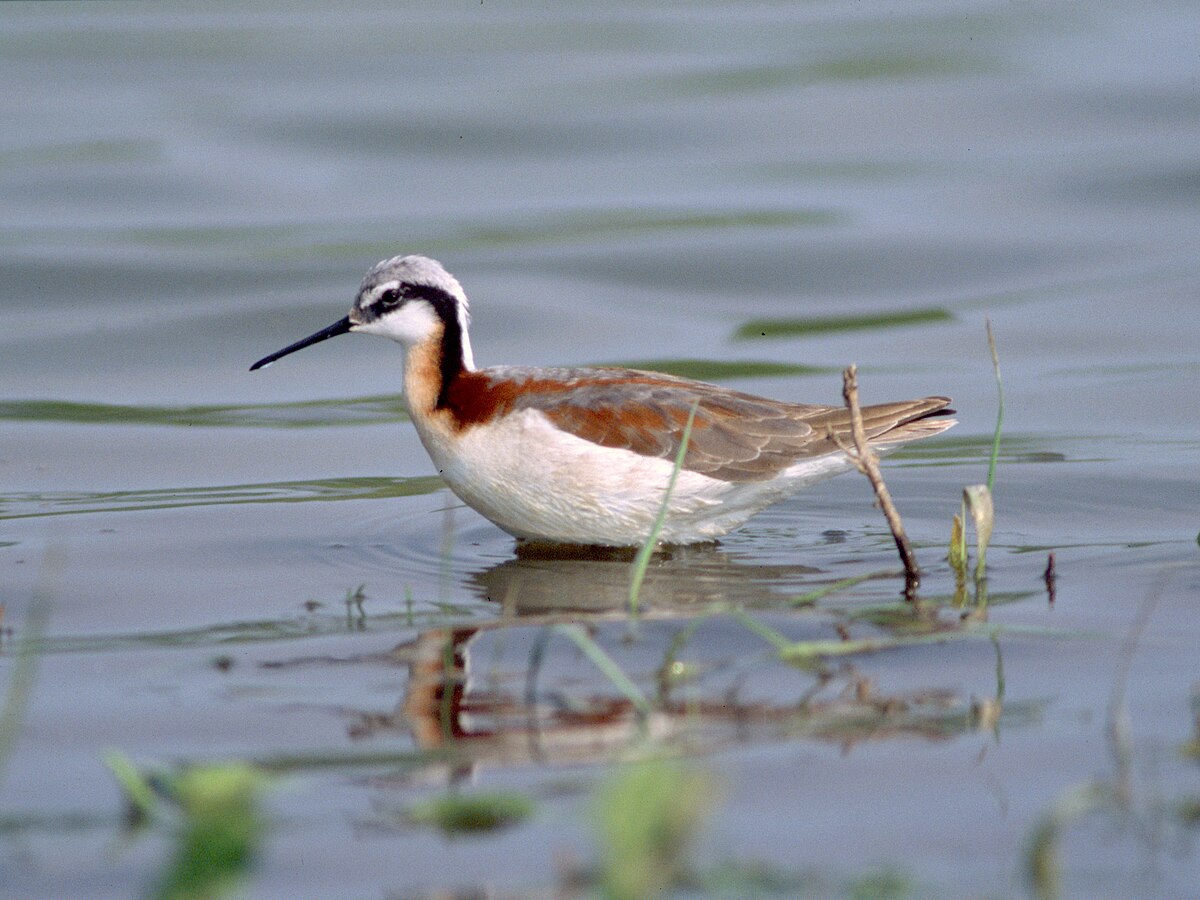
Wikipedia: Wilson's phalarope Source: WIKIPEDIA
1200px-Phalaropus_tricolor_-_breeding_female.jpg
🔍
Never observed (yet!)
Description
Geography: This bird appears across the great seas in the following continents: North America, South America, Africa.General:
Wilson's phalarope (Phalaropus tricolor) is a small wader. This bird, the largest of the phalaropes, breeds in the prairies of North America in western Canada and the western United States. It is migratory, wintering in inland salt lakes near the Andes in Argentina.[2] They are passage migrants through Central America around March/April and again during September/October.[3] The species is a rare vagrant to western Europe.
[more]
Details
Red-necked phalarope / Odinshühnchen (Phalaropus lobatus)
Profile Wikipedia Vogelwarte BirdLife ZH ornitho.ch Audubon AllAboutBirds Xeno-Canto BirdID NABU YouTube
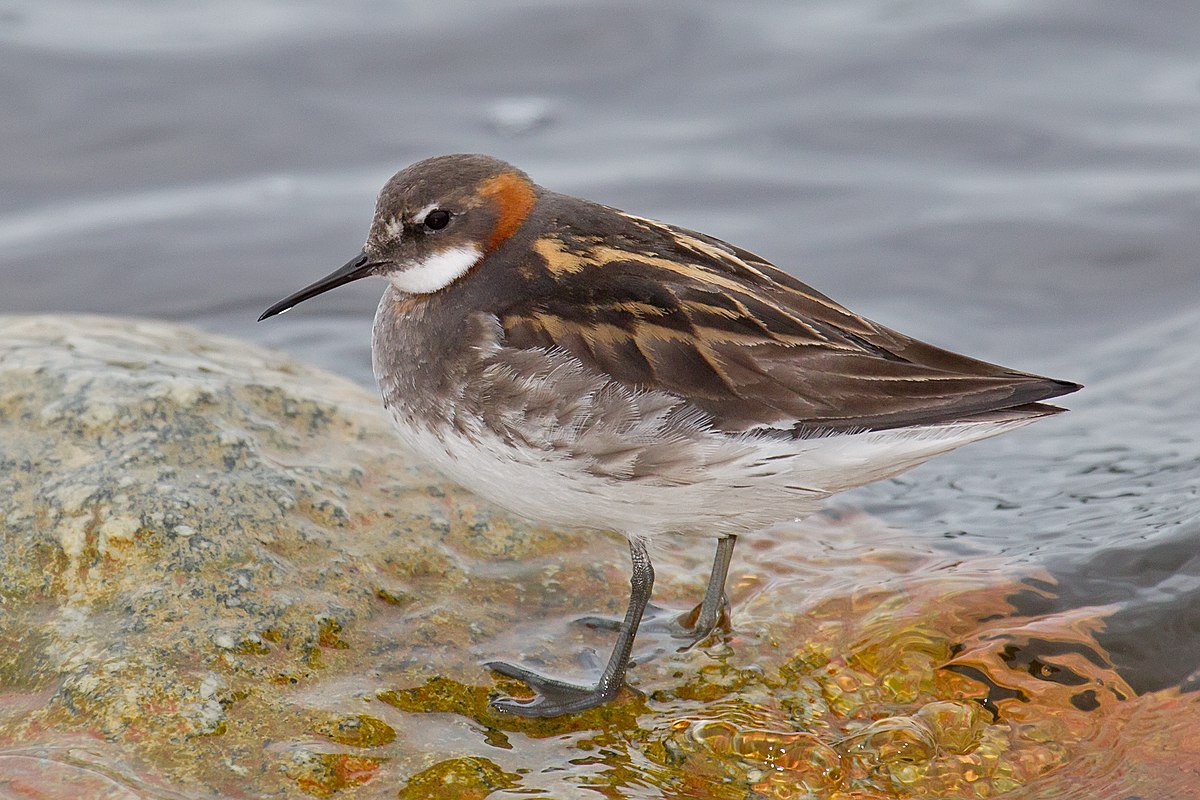
Wikipedia: Red-necked phalarope Source: WIKIPEDIA
1200px-Red-necked_Phalarope.jpg
🔍
Never observed (yet!)
Description
Geography: This bird appears across the great seas in the following continents: Europe, North America, South America, Africa, Asia.General: Deutschland: Zugvogel
Vocalization:
Short and sharp "teck", sometimes repeated to form trilling series. Also a mewing, nasal "veeoo". [Link]
Seasonal behavior
Presence: 05-21 - 10-27 Migration in: 10-07 - 10-27 Migration out: 10-07 - 10-15More details at Vogelwarte.ch
Other Details
Physical details
Physical details: length=18-19 cm, wingspan=32-41 cm, weight=27-48 gDetails
Common tern / Flussseeschwalbe (Sterna hirundo)
Profile Wikipedia Vogelwarte BirdLife ZH ornitho.ch bird-song.ch Audubon AllAboutBirds Xeno-Canto BirdID NABU YouTube

Flussseeschwalbe. 2023-07-08 19:00:12 Neeracherried
First observed in 🇨🇭 on 2020-04-27.
Description
Geography: This bird appears across the great seas in the following continents: Europe, North America, South America, Africa, Asia.General: Deutschland: Brut-, Zugvogel RL 2
Etymology:
[9] The Scots names picktarnie,[11] tarrock[12] and their many variants are also believed to be onomatopoeic, derived from the distinctive call. [Link]
Seasonal Behavior:
Die Flussseeschwalbe (Sterna hirundo) ist eine Vogelart aus der Familie der Seeschwalben (Sternidae).
Sie ist in Mitteleuropa ein verbreiteter, aber nicht sehr häufiger Brut- und Sommervogel.
Während der Zugzeiten können im mitteleuropäischen Raum außerdem viele Durchzügler beobachtet werden. [Link]
Vocalization:
Similar to Arctic Tern but deeper. [Link]
Seasonal behavior
Presence: 03-23 - 10-07 Breeding: 05-01 - 07-29 Migration in: 03-23 - 06-09 Migration out: 06-29 - 10-07More details at Vogelwarte.ch
Other Details
Physical details
Physical details: length=31-35 cm, wingspan=77-98 cm, weight=110-150 gHabitats: River and lake
Vocalisation
Song: No details but a Xeno-Canto recording. Song attributes: Frequency:♫ 2020-04-27 14:08:13 Source: BirdNet 20200427_140813 birdnet 430 - Common tern.mp3 Luppmen (song)
Details
Roseate tern / Rosenseeschwalbe (Sterna dougallii)
Profile Wikipedia Audubon AllAboutBirds Xeno-Canto BirdID NABU YouTube

Wikipedia: Roseate tern Source: WIKIPEDIA
1200px-Roseate_terns_Palometas.jpg
🔍
Never observed (yet!)
Description
Geography: This bird appears across the great seas in the following continents: Europe, North America, Africa, Asia.Other Details
Physical details
Physical details: length=33-38 cm, wingspan=72-80 cm, weight=92-133 gDetails
Arctic tern / Kü̈stenseeschwalbe (Sterna paradisaea)

Küstenseeschwalbe. 2026-05-26 13:09:32 Switzerland
First observed in 🇨🇭 on 2026-05-25.
Description
Geography: This bird appears across the great seas in the following continents: Europe, North America, South America, Africa, Asia.General: Deutschland: Brut-, Zugvogel RL 2
Vocalization:
Similar to Common Tern but higher pitched. [Link]
Seasonal behavior
Seldom seen hereMore details at Vogelwarte.ch
Other Details
Physical details
Physical details: length=33-35 cm, wingspan=75-85 cm, weight=95-120 gDetails
Thick-billed guillemot / Dickschnabellumme (Uria lomvia)

Wikipedia: Thick-billed guillemot Source: WIKIPEDIA
Uria_lomvia1.jpg
🔍
Never observed (yet!)
Description
Geography: This bird appears across the great seas in the following continents: Europe, North America.General:
The thick-billed murre or Brünnich's guillemot (Uria lomvia) is a bird in the auk family (Alcidae). This bird is named after the Danish zoologist Morten Thrane Brünnich. The very deeply black North Pacific subspecies Uria lomvia arra is also called Pallas' murre after its describer. The genus name is from Ancient Greek ouria, a waterbird mentioned by Athenaeus. The species term lomvia is a Swedish word for an auk or diver.[2] The English "guillemot" is from French guillemot probably derived from Guillaume, "William".[3] "Murre" is of uncertain origins, but may imitate the call of the common guillemot.[4]
[more]
Vocalization:
Coarse and deep voice, like a cross between Guillemot and Razorbill. Coarser than Guillemot but with the same laughing ending, but slower. [Link]
Other Details
Physical details
Physical details: length=39-43 cm, wingspan=65-73 cm, weight=750-1100 gDetails
Common murre / Trottellumme (Uria aalge)

Wikipedia: Common murre Source: WIKIPEDIA
1200px-Guillemots_on_Bear_Island_Svalbard_Arctic_%2819659642914%29.jpg
🔍
Never observed (yet!)
Description
Geography: This bird appears across the great seas in the following continents: Europe, North America, Africa.General: Deutschland: Brut-, Jahres-, Zugvogel, Wintergast RL R
Vocalization:
Very coarse and deep voice. [Link]
Other Details
Physical details
Physical details: length=38-41 cm, wingspan=64-70 cm, weight=490-863 gDetails
Razorbill / Tordalk (Alca torda)
Profile Wikipedia Audubon AllAboutBirds Xeno-Canto BirdID NABU YouTube

Wikipedia: Razorbill Source: WIKIPEDIA
1200px-Alca_torda_Caithness%2C_Scotland.jpg
🔍
Never observed (yet!)
Description
Geography: This bird appears across the great seas in the following continents: Europe, North America, Africa.General: Deutschland: Brut-, Jahresvogel, Wintergast RL R
Vocalization:
Very coarse and deep voice. Grunting or snore-like, with little phrasing. Mostly heard at breeding ground, but also sometimes at sea. [Link]
Other Details
Physical details
Physical details: length=37-39 cm, wingspan=63-68 cm, weight=524-890 gDetails
Dovekie / Krabbentaucher (Alle alle)

Wikipedia: Dovekie Source: WIKIPEDIA
1200px-Little_Auk_%28js%29_24.jpg
🔍
Never observed (yet!)
Description
Geography: This bird appears across the great seas in the following continents: Europe, North America.General: Deutschland: Zugvogel, Wintergast
Vocalization:
Voice higher pitched than other auks (except Black Guillemot). Trilling, rolling and chattering laughter "kreeee he he he he", or shorter, softer utterances; "ke ke" or "hup hup". [Link]
Other Details
Physical details
Physical details: length=17-19 cm, wingspan=40-48 cm, weight=140-190 gDetails
Black guillemot / Gryllteiste (Cepphus grylle)
Profile Wikipedia Audubon AllAboutBirds Xeno-Canto BirdID NABU YouTube

Wikipedia: Black guillemot Source: WIKIPEDIA
Tystie1.jpg
🔍
Never observed (yet!)
Description
Geography: This bird appears across the great seas in the following continents: Europe, North America.General: Deutschland: seltener Wintergast
Other Details
Physical details
Physical details: length=30-32 cm, wingspan=52-58 cm, weight=340-500 gDetails
Pigeon guillemot / Taubenteiste (Cepphus columba)
Profile Wikipedia Audubon AllAboutBirds Xeno-Canto NABU YouTube

Wikipedia: Pigeon guillemot Source: WIKIPEDIA
1200px-Pigeon_guillemot.jpg
🔍
Never observed (yet!)
Description
Geography: This bird appears across the great seas in the following continents: Europe, North America.General:
The pigeon guillemot (Cepphus columba) (/ˈɡɪlɪmɒt/) is a species of bird in the auk family, Alcidae. One of three species in the genus Cepphus, it is most closely related to the spectacled guillemot. There are five subspecies of the pigeon guillemot; all subspecies, when in breeding plumage, are dark brown with a black iridescent sheen and a distinctive wing patch broken by a brown-black wedge. Its non-breeding plumage has mottled grey and black upperparts and white underparts. The long bill is black, as are the claws. The legs, feet, and inside of the mouth are red. It closely resembles the black guillemot, which is slightly smaller and lacks the dark wing wedge present in the pigeon guillemot. Combined, the two form a superspecies.
[more]
Details
Atlantic puffin / Puffin (Fratercula arctica)
Profile Wikipedia Audubon AllAboutBirds Xeno-Canto NABU YouTube

Atlantic puffin landing. 2015-06-10 15:10:10
First observed in Iceland on 2015-06-10.
Description
Geography: This bird appears across the great seas in the following continents: Europe, North America, Africa.General:
The Atlantic puffin (Fratercula arctica), also known as the common puffin, is a species of seabird in the auk family. It is the only puffin native to the Atlantic Ocean; two related species, the tufted puffin and the horned puffin, are found in the northeastern Pacific. The Atlantic puffin breeds in Québec, Iceland, Norway, Greenland, Newfoundland and Labrador, Nova Scotia and the Faroe Islands, and as far south as Maine in the west and France in the east. The Atlantic Puffin is most commonly found on the Westman Islands, Iceland. Although it has a large population and a wide range, the species has declined rapidly, at least in parts of its range, resulting in it being rated as vulnerable by the IUCN. On land, it has the typical upright stance of an auk. At sea, it swims on the surface and feeds mainly on small fish, which it catches by diving under water, using its wings for propulsion.
[more]
Vocalization:
Deep, but not so coarse as Razorbill. Smoother and more gliding changes in pitch, like a "slow-motion" laugh or distant chainsaw; "aaaahrrr, aahr, ahr arh". [Link]
Other Details
Physical details
Physical details: length=26-29 cm, wingspan=47-63 cm, weight=320-480 gDetails
Ancient murrelet / Silberalk (Synthliboramphus antiquus)
Profile Wikipedia Audubon AllAboutBirds Xeno-Canto YouTube

Wikipedia: Ancient murrelet Source: WIKIPEDIA
1200px-Ancient_Murrelet_-_Semiahmoo_Spit.jpg
🔍
Never observed (yet!)
Description
Geography: This bird appears across the great seas in the following continents: North America, Asia.General: Accidental
Details
South polar skua / Südpolarskua (Stercorarius maccormicki)

Wikipedia: South polar skua Source: WIKIPEDIA
1200px-South_polar_skua.jpg
🔍
Never observed (yet!)
Description
Geography: This bird appears across the great seas in the following continents: North America, Africa.General:
The south polar skua (Stercorarius maccormicki) is a large seabird in the skua family, Stercorariidae. An older name for the bird is MacCormick's skua, after explorer and naval surgeon Robert McCormick, who first collected the type specimen. This species and the other large Southern Hemisphere skuas, such as the great skua, are sometimes placed in a separate genus Catharacta.
[more]
Details
Parasitic jaeger / Schmarotzerraubmöwe (Stercorarius parasiticus)

Arctic Skua, defending its nest. 2015-06-10 14:32:52
First observed in Iceland on 2015-06-10.
Description
Geography: This bird appears across the great seas in the following continents: Europe, North America, South America, Africa, Asia.General: Deutschland: Zugvogel
Vocalization:
Mostly heard at breeding ground. [Link]
Seasonal behavior
Seldom seen hereMore details at Vogelwarte.ch
Other Details
Physical details
Physical details: length=41-46 cm, wingspan=110-125 cm, weight=330-570 gDetails
Long-tailed jaeger / Falkenraubmöwe (Stercorarius longicaudus)

Wikipedia: Long-tailed jäger Source: WIKIPEDIA
1200px-Long-tailed_Skua_%28js%29_26.jpg
🔍
Never observed (yet!)
Description
Geography: This bird appears across the great seas in the following continents: Europe, North America, South America, Africa, Asia.General: Deutschland: seltener Zugvogel
Seasonal behavior
Seldom seen hereMore details at Vogelwarte.ch
Other Details
Physical details
Physical details: length=48-53 cm, wingspan=105-117 cm, weight=240-350 gDetails
Pomarine jaeger / Spatelraubmöwe (Stercorarius pomarinus)
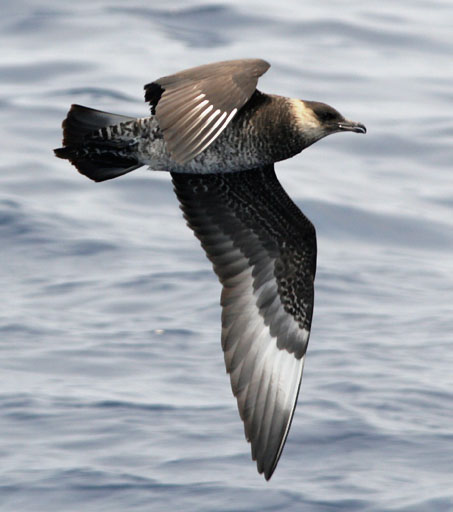
Wikipedia: Pomarine jäger Source: WIKIPEDIA
Stercorarius_pomarinusPCCA20070623-3985B.jpg
🔍
Never observed (yet!)
Description
Geography: This bird appears across the great seas in the following continents: Europe, North America, South America, Africa, Asia.General: Deutschland: seltener Zugvogel
Seasonal behavior
Seldom seen hereMore details at Vogelwarte.ch
Other Details
Physical details
Physical details: length=46-51 cm, wingspan=125-138 cm, weight=600-900 gDetails
Family Burhinidae (Triele, Haematopodidae – Austernfischer und Recurvirostridae – Säbelschnäblerverwandte):
Common moorhen / Teichhuhn (Gallinula chloropus)

Teichhuhn am Greifensee. 2022-01-27 14:06:40 Greifensee
First observed in 🇨🇭 on 2021-02-12.
Description
Geography: This bird appears across the great seas in the following continents: Europe, North America, Africa, Asia.General: Seen at the Pfäffikersee walking across the path from one set of reeds to another. An apprentice at the nature center gave us the identification, presuming it was a juvenile because of the lack of color. I'd have said its legs were shorter, but the moorhen definitely has the main trait we saw, that it holds its short tail in the air.
General: Deutschland: Brut-, Jahres-, Zugvogel, Wintergast RL V
Habitat:
Common Moorhens prefer to nest in the thicket on the edge of ponds, lakes or rivers and mostly only give themselves away through their guttural calls. They are easier to observe in winter because then they leave their well-vegetated habitat and are seen in meadows, parks and on open waters. [Link]
Seasonal behavior
Year-round bird Breeding: 04-20 - 08-09 Migration in: 03-01 - 05-01 Migration out: 09-07 - 12-16More details at Vogelwarte.ch
Other Details
Physical details
Physical details: length=32-35 cm, wingspan=50-55 cm, weight=240-420 gHabitats: Wetland
Vocalisation
Song: No details but a Xeno-Canto recording. Song:Most typical is the territorial call (song); a sharp, loud and resonant "krrrr-ook" or "krrrk". [Link]
Song attributes:
Frequency:
♫ Source: XENOCANTO XC946631 - Common Moorhen call, like a quack - Gallinula chloropus.mp3 (call)

Calls:
Rich repertoire of loud calls and softer sounds. Other calls; a sharp, three or four-syllable "kekeke", and a soft "wep" sometimes drawn-out in a more mewing version. [Link]
Call attributes: Call melody: one note, slow, Frequency: medium (1-5 KHz), Special sounds: quack.
Details
Buff-banded rail / Bindenralle (Gallirallus philippensis)

Wikipedia: Buff-banded rail Source: WIKIPEDIA
1200px-Buff-banded_Rail_1_-_Newington.jpg
🔍
Never observed (yet!)
Description
Geography: This bird appears across the great seas in the following continents: North America, Asia, Australia.General:
The buff-banded rail (Hypotaenidia philippensis) is a distinctively coloured, highly dispersive, medium-sized rail of the rail family, Rallidae. This species comprises several subspecies found throughout much of Australasia and the south-west Pacific region, including the Philippines (where it is known as tikling), New Guinea, Australia, New Zealand (where it is known as the banded rail or moho-pererū in Māori),[2] and numerous smaller islands, covering a range of latitudes from the tropics to the Subantarctic.
[more]
Details
Grey-headed swamphen / Graukopf-Purpurhuhn (Porphyrio poliocephalus)

Wikipedia: Grey-headed swamphen Source: WIKIPEDIA
1200px-Grey-headed_swamphen_%28Porphyrio_poliocephalus%29_male.jpg
🔍
Never observed (yet!)
Description
Geography: This bird appears across the great seas in the following continents: North America, Asia.General:
The grey-headed swamphen (Porphyrio poliocephalus) is a species of swamphen occurring from the Middle East and the Indian subcontinent to southern China and northern Thailand. It used to be considered a subspecies of the purple swamphen, but was elevated to full species status in 2015; today the purple swamphen is considered a superspecies and each of its six subspecies groups are designated full species.[1]
[more]
Details
Spotless crake / Südsee-Sumpfhuhn (Porzana tabuensis)
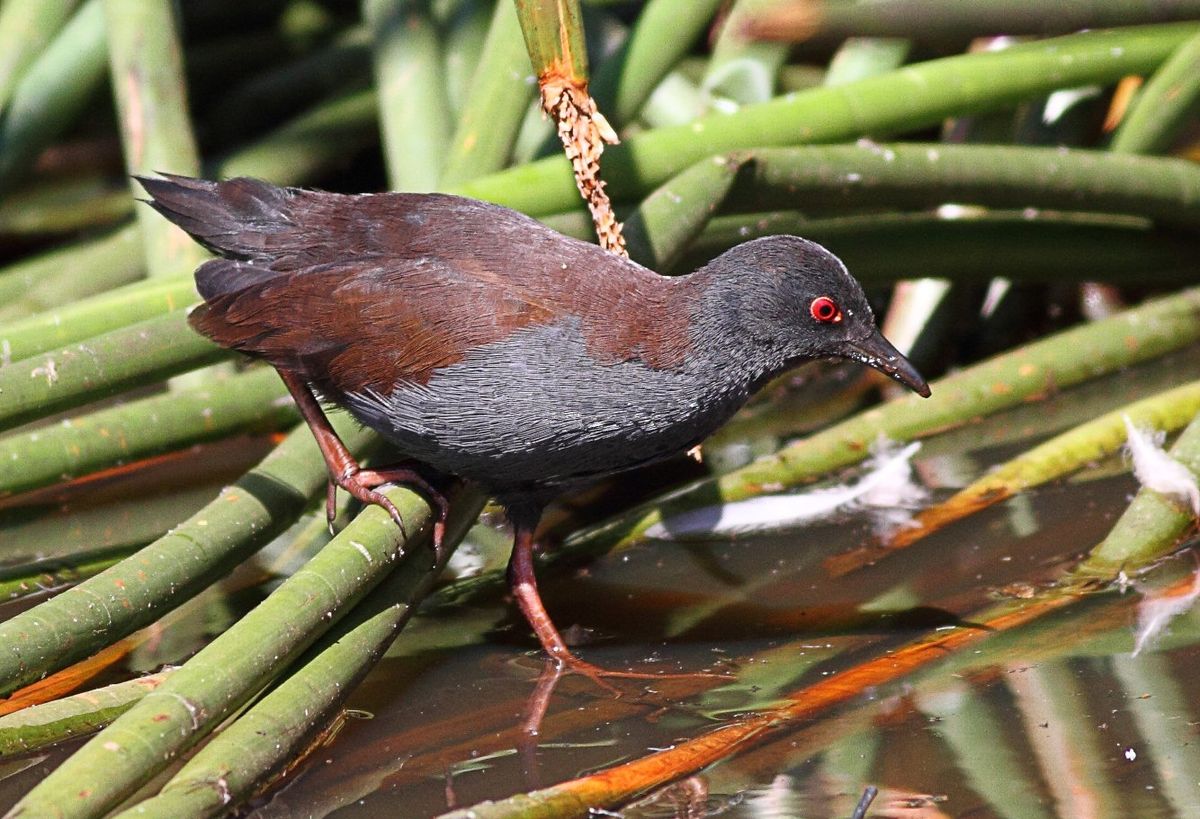
Wikipedia: Spotless crake Source: WIKIPEDIA
1200px-Porzana_tabuensis_-Crop.jpg
🔍
Never observed (yet!)
Description
Geography: This bird appears across the great seas in the following continents: North America, Australia.General:
The spotless crake (Zapornia tabuensis) is a species of bird in the rail family, Rallidae.
[more]
Details

Mäusebussard nah bei Gutenswil. 2024-06-04 10:29:56 Fehraltorf
First observed in 🇨🇭 on 2020-04-17.
Description
Geography: This bird appears across the great seas in the following continents: Europe, North America, Africa, Asia.General:
The common buzzard (Buteo buteo) is a medium-to-large bird of prey which has a large range. A member of the genus Buteo, it is a member of the family Accipitridae. The species lives in most of Europe and extends its breeding range across much of the Palearctic as far as the northwestern China (Tien Shan), far western Siberia and northwestern Mongolia.[1][2] Over much of its range, it is a year-round resident. However, buzzards from the colder parts of the Northern Hemisphere as well as those that breed in the eastern part of their range typically migrate south for the northern winter, many journeying as far as South Africa.[3] The common buzzard is an opportunistic predator that can take a wide variety of prey, but it feeds mostly on small mammals, especially rodents such as voles. It typically hunts from a perch.[4] Like most accipitrid birds of prey, it builds a nest, typically in trees in this species, and is a devoted parent to a relatively small brood of young.[2] The common buzzard appears to be the most common diurnal raptor in Europe, as estimates of its total global population run well into the millions.[2][5]
[more]
Deutschland: Brut-, Jahres-, Zugvogel, Wintergast
Vocalization:
Quite vocal. [Link]
Seasonal behavior
Year-round birdOther Details
Physical details
Physical details: length=51-57 cm, wingspan=113-128 cm, weight=550-1300 gHabitats: Agricultural
Vocalisation
Song: No details but a Xeno-Canto recording. Song attributes: Frequency:♫ 2026-02-24 16:08:50
Source: Zoom H2n Fehraltorf (call)Calls:
Most typical call a wailing, mewing "peeoooo". Quite similar to Rough-legged Buzzard, but the pitch falls more rapidly and is then sustained for the last part of the call. [Link]
Klingt ähnlich wie Rotmilan aber kürzer
XC917665 - Common Buzzard - Buteo buteo - call.
♫ Source: XENOCANTO XC917665 - Common Buzzard - Buteo buteo - call.mp3 (call)

Call attributes: Call melody: simple rhythmic, slow, Frequency: medium (1-5 KHz), Special sounds: swoop.
Details
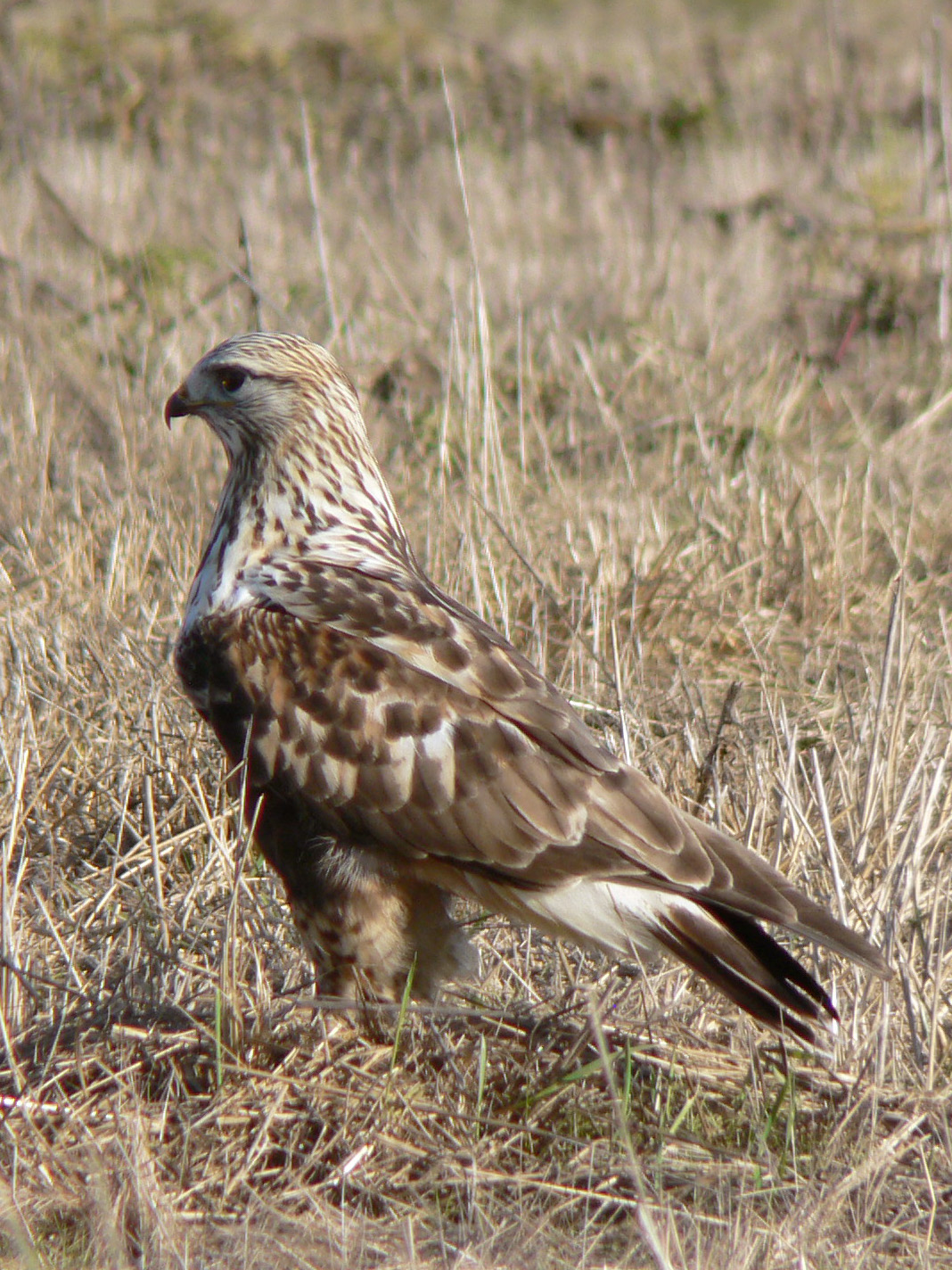
Wikipedia: Rough-legged hawk Source: WIKIPEDIA
Buteo_lagopus_29283.JPG
🔍
Never observed (yet!)
Description
Geography: This bird appears across the great seas in the following continents: Europe, North America.General: Deutschland: ausnahmsweise Brutvogel, Wintergast
Seasonal behavior
Year-round bird Migration in: 11-15 - 12-31 Migration out: 02-20 - 04-11More details at Vogelwarte.ch
Other Details
Physical details
Physical details: length=50-60 cm, wingspan=120-150 cm, weight=700-1600 gDetails

Kiebitze fliehen wenn ein Habicht darüber fliegt. 2021-10-24 13:31:52 Neeracherried
First observed in 🇨🇭 on 2021-01-17.
Description
Geography: This bird appears across the great seas in the following continents: Europe, North America, Africa, Asia.General: A young northern goshawk appeared in a tree on the Bahnhofstrasse in Fehraltorf one snowy January day in 2021.
General: Deutschland: Brut-, Jahresvogel
Appearance and identification:
A medium-large raptor in the family Accipitridae, which also includes other extant diurnal raptors, such as eagles, buzzards and harriers. As a species in the genus Accipiter, the goshawk is often considered a "true hawk".[3] The scientific name is Latin; Accipiter is "hawk", from accipere, "to grasp", and gentilis is "noble" or "gentle" because in the Middle Ages only the nobility were permitted to fly goshawks for falconry. [Link]
Vocalization:
Series of short "ke-ke-ke-ke-ke". [Link]
Seasonal behavior
Year-round bird Breeding: 04-01 - 07-20More details at Vogelwarte.ch
Other Details
Physical details
Physical details: length=48-62 cm, wingspan=135-165 cm, weight=600-2000 gHabitats: Agricultural Details
Steinadler. 2022-05-21 16:32:48 Leuk
First observed in 🇨🇭 on 2022-05-21.
Description
Geography: This bird appears across the great seas in the following continents: Europe, North America, Africa.General: Deutschland: Brut-, Jahresvogel RL 2
Vocalization:
Not very vocal. A short, clear, yelping "kew". Sometimes in series in mellow tempo. [Link]
Seasonal behavior
Year-round bird Breeding: 03-23 - 08-18More details at Vogelwarte.ch
Other Details
Physical details
Physical details: length=75-88 cm, wingspan=204-220 cm, weight=2840-6665 gHabitats: Agricultural Details
Osprey / Fischadler (Pandion haliaetus)

Osprey with eyes wide open in Holbox. 2023-04-21 06:54:26 Yucatan
First observed in Yucatan on 2023-04-21.
Description
Geography: This bird appears across the great seas in the following continents: Europe, North America, South America, Africa, Asia.General: Deutschland: Brut-, Zugvogel RL 3
Other Details
Physical details
Physical details: length=55-58 cm, wingspan=145-170 cm, weight=1120-2050 gHabitats: Agricultural
Vocalisation
Song: No details but a Xeno-Canto recording. Song attributes: Frequency:♫ 2023-10-12 15:55:00 New England (song)
Details
Profile Wikipedia Audubon AllAboutBirds Xeno-Canto YouTube

Wikipedia: Chestnut-bellied sandgrouse Source: WIKIPEDIA
1200px-Sandgrouse_-_Male.jpg
🔍
Never observed (yet!)
Description
Geography: This bird appears across the great seas in the following continents: North America, Africa.General:
The chestnut-bellied sandgrouse or common sandgrouse[citation needed] (Pterocles exustus) is a species of sandgrouse. It is a sedentary and nomadic species that ranges from northern and central Africa and further east towards western and southern Asia. There are six recognised subspecies.[2]
[more]
Details

Rock dove with beautiful orange eyes. 2025-06-06 15:26:39 Stromboli
First observed in La Gomera on 2022-03-08.
Description
Geography: This bird appears across the great seas in the following continents: Europe, North America, South America, Africa, Asia.General: Deutschland: Brut-, Jahresvogel
Vocalization:
Not loud. [Link]
Seasonal behavior
Year-round bird Breeding: 01-01 - 12-31More details at Vogelwarte.ch
Other Details
Physical details
Physical details: length=31-34 cm, wingspan=63-70 cm, weight=230-370 gHabitats: Settlement
Vocalisation
Song: No details but a Xeno-Canto recording. Song:Song a two-syllable, but continuous cooing. First a rolling ascending "orrrrrr" immediately followed by a short descending "oohh". Wings produce a quite audible whistling sound. [Link]
Song attributes:
Frequency:
♫ Source: XENOCANTO XC661807 - Rock Dove call - Columba livia.mp3 (call)

No details but a Xeno-Canto recording.
Call attributes: song Frequency: ,
Details

Türkentaube in der bekannten Birke an der Luppmen. 2024-11-16 16:45:22 Luppmen
First observed in 🇨🇭 on 2020-05-21.
Description
Geography: This bird appears across the great seas in the following continents: Europe, North America (introduced), Africa, Asia (introduced).General:
The Eurasian collared dove (Streptopelia decaocto) is a dove species native to Europe and Asia; it was introduced to Japan, North America and islands in the Caribbean. Because of its vast global range and increasing population trend, it has been listed as Least Concern on the IUCN Red List since 2014.[1]
[more]
Deutschland: Brut-, Jahresvogel
Seasonal behavior
Year-round bird Breeding: 01-01 - 10-27More details at Vogelwarte.ch
Other Details
Physical details
Physical details: length=31-33 cm, wingspan=47-55 cm, weight=170-240 gHabitats: Settlement
Vocalisation
Song: No details but a Xeno-Canto recording. Song:Gu-guh-gu, klingt wie „ Gross-mue-ti“ Dazu auch „chräi“ oder „chwii“
[Link]
Song a characteristic, rhythmic cooing, consisting of three syllables with emphasis on the second. The third lower pitched than the rest. Can be rendered as "su-do-ku" (or "deca-oc-to", latin name derived from song). [Link]
Song attributes:
Frequency:
♫ 2023-03-14 08:21:46
Source: Zoom H6/H2n Madeira (song)Details

Spotted doves. 2024-01-22 12:42:16 Thailand
First observed in Thailand on 2024-01-22.
Description
Geography: This bird appears across the great seas in the following continents: North America, Asia.General: introduced
Vocalisation
Song: No details but a Xeno-Canto recording. Song attributes: Frequency:♫ Source: XENOCANTO XC884362 - Spotted Dove - Spilopelia chinensis.mp3 (song)

Details

Wikipedia: African collared-dove Source: WIKIPEDIA
Streptopelia_roseogrisea.jpg
🔍
Never observed (yet!)
Description
Geography: This bird appears across the great seas in the following continents: Europe, North America, Africa.General:
The African collared dove (Streptopelia roseogrisea) is a small dove found in the Sahel, northern parts of the Horn of Africa and southwestern Arabia. Although it lives in arid lands, it is found around water sources.
[more]
Details

Zebra dove on temple grounds, Chiang Mai. 2024-01-22 13:44:56 Thailand
First observed in Thailand on 2024-01-19.
Description
Geography: This bird appears across the great seas in the following continents: North America, Asia.General: Native in south, introduced to central Thailand[5]
Vocalisation
Song: No details but a Xeno-Canto recording. Song attributes: Frequency:♫ Source: XENOCANTO XC844626 - Zebra Dove - Geopelia striata.mp3 (song)

Details
Profile Wikipedia eBird Audubon AllAboutBirds Xeno-Canto YouTube

Wikipedia: Diamond dove Source: WIKIPEDIA
Diamond_Dove_6265-1.jpg
🔍
Never observed (yet!)
Description
Geography: This bird appears across the great seas in the following continents: North America, Australia.General:
The diamond dove (Geopelia cuneata) is a resident bird in Australia. The dove predominantly exists in areas near water but which are lightly arid or semi-arid in nature, being Central, West and Northern Australia. They are one of Australia's smallest pigeons along with the peaceful dove. They have been spotted occasionally in Southern Australia in parks and gardens when the centre of Australia is very dry.
[more]
Details

Wikipedia: Collared kingfisher Source: WIKIPEDIA
1200px-Todiramphus_chloris_2_-_Laem_Phak_Bia.jpg
🔍
Never observed (yet!)
Description
Geography: This bird appears across the great seas in the following continents: North America, Africa, Asia.Details
Profile Wikipedia Vogelwarte BirdLife ZH ornitho.ch bird-song.ch Audubon AllAboutBirds Xeno-Canto BirdID NABU YouTube

Wikipedia Kuckuck, Cuculus canorus. Source: WIKIPEDIA
Wikipedia Kuckuck, Cuculus canorus.jpg
First observed in 🇨🇭 on 2021-05-04.
Description
Geography: This bird appears across the great seas in the following continents: Europe, North America, Africa, Asia.General: Deutschland: Brut-, Zugvogel RL V
Etymology:
Auch in vielen anderen Sprachen, wie im Französischen (Coucou), Italienischen (cucú), Spanischen (cuco, manchmal cuclillo), Russischen (Kukuschka), Griechisch (koukoula), Englischen (Cuckoo), Polnischen (Kukułka), Ungarischen (kakukk) und Lateinischen (cuculus) wurde der Ruf lautmalerisch in seinen Namen integriert. [Link]
[2][3] The cuckoo family gets its common name and genus name by onomatopoeia for the call of the male common cuckoo. [Link]
Geography:
A common migratory bird across most of Europe and Asia, it regularly strays to the western Alaskan islands in late spring and early summer. [Link]
Seasonal behavior
Presence: 04-01 - 10-07 Breeding: 05-01 - 07-20 Migration in: 04-01 - 05-31 Migration out: 07-10 - 10-07More details at Vogelwarte.ch
Other Details
Physical details
Physical details: length=32-34 cm, wingspan=55-60 cm, weight=95-140 gHabitats: Forest
Vocalisation
Song: Two-noter Song:Männchen: Unverwechselbarer Ruf. Weibchen: im Frühling eine kichernde Rufreihe,
[Link]
Song: the well known disyllabic "cuck-coo" with emphasis on first note, and the second note a third lower than the first one. Also a harsh "tchaa tchaa", and a bubbly trill, reminiscent of Little Grebe, uttered by the female. [Link]
Song attributes:
Melody: simple rhythmic, slow, Frequency: 0-1 KHz
Details
Profile Wikipedia Vogelwarte BirdLife ZH ornitho.ch Audubon AllAboutBirds Xeno-Canto BirdID NABU YouTube

Wikipedia Datei Falco columbarius Male. Source: WIKIPEDIA
Wikipedia_Datei_Falco_columbarius_Male.jpg
First observed in 🇨🇭 on 2024-05-16.
Description
Geography: This bird appears across the great seas in the following continents: Europe, North America, South America, Africa, Asia.General:
The merlin (Falco columbarius) is a small species of falcon from the Northern Hemisphere,[2] with numerous subspecies throughout North America and Eurasia. A bird of prey, the merlin breeds in the northern Holarctic; some migrate to subtropical and northern tropical regions in winter. Males typically have wingspans of 53–58 centimetres (21–23 in), with females being slightly larger. They are swift fliers and skilled hunters which specialize in preying on small birds in the size range of sparrows to doves and medium-sized shorebirds. In recent decades merlin populations in North America have been significantly increasing, with some merlins becoming so well adapted to city life that they forgo migration; in Europe, populations increased up to about 2000 but have been steady subsequently.[3] The merlin has for centuries been well regarded as a falconry bird.
[more]
Deutschland: Zugvogel, Wintergast
Vocalization:
Series of harsh "kwik-wik wik". Coarseness similar to Peregrine, but pace much quicker. [Link]
Seasonal behavior
Year-round bird Migration in: 02-20 - 03-01 Migration out: 02-22 - 03-01More details at Vogelwarte.ch
Other Details
Physical details
Physical details: length=25-30 cm, wingspan=50-62 cm, weight=125-300 gHabitats: Agricultural Details

Wikipedia: Peregrine falcon Source: WIKIPEDIA
Falco_peregrinus_good_-_Christopher_Watson.jpg
🔍
Never observed (yet!)
Description
Geography: This bird appears across the great seas in the following continents: Europe, North America, South America, Africa, Asia.General: Deutschland: Brut-, Jahres-, Zugvogel, Wintergast
Vocalization:
A harsh, drawn out "kiaaaa" with emphasised endings repeated in series. Much slower than Merlin, but higher pitched than Gyrfalcon. [Link]
Seasonal behavior
Year-round bird Breeding: 02-20 - 07-10 Migration in: 02-20 - 05-01 Migration out: 08-09 - 11-06More details at Vogelwarte.ch
Other Details
Physical details
Physical details: length=36-48 cm, wingspan=95-110 cm, weight=582-1300 gHabitats: Agricultural
Vocalisation
Song: No details but a Xeno-Canto recording. Song attributes: Frequency:♫ Source: XENOCANTO XC942609 - Peregrine Falcon call - Falco peregrinus.mp3 (call)

Calls:
Also shorter, coarse warning-calls. [Link]
No details but a Xeno-Canto recording.
Call attributes: song Frequency: ,
Details
Profile Wikipedia Audubon AllAboutBirds Xeno-Canto BirdID NABU YouTube
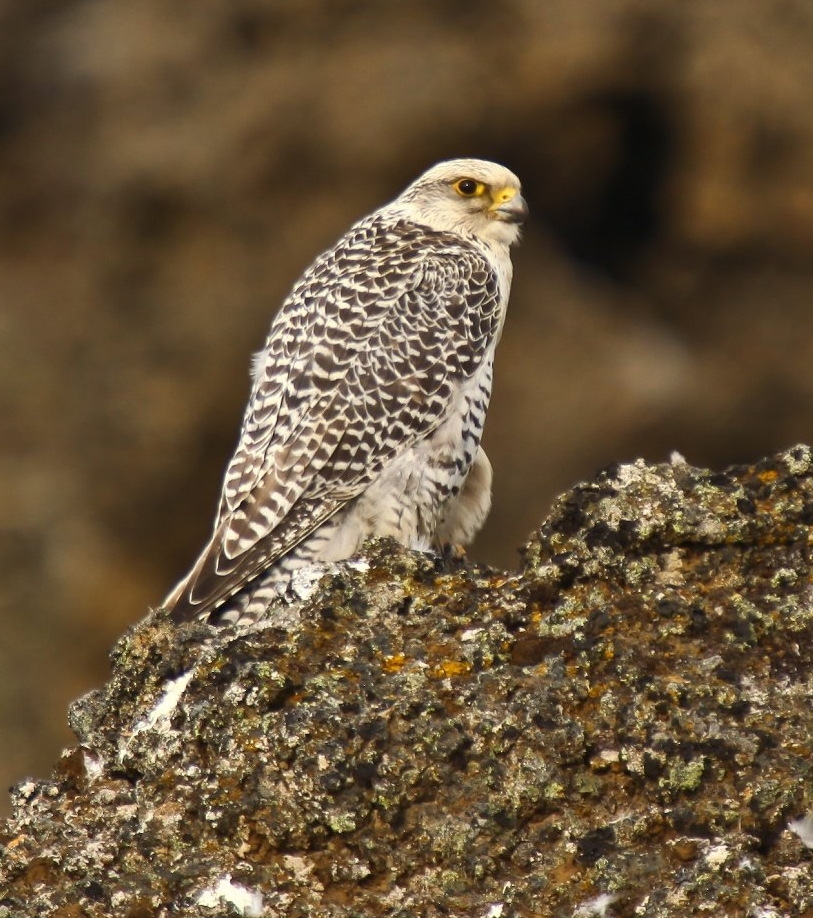
Wikipedia: Gyrfalcon Source: WIKIPEDIA
Falco_rusticolus_white_cropped.jpg
🔍
Never observed (yet!)
Description
Geography: This bird appears across the great seas in the following continents: Europe, North America.General:
Der Gerfalke (Falco rusticolus) ist die weltweit größte Falkenart. Er ist zirkumpolar in den arktischen Regionen Eurasiens und Nordamerikas sowie Grönlands vertreten und besiedelt dort die Tundra. In Mitteleuropa ist er nur sehr selten als Wintergast zu beobachten und hält sich dann meist in Küstennähe auf.
[more]
Vocalization:
A coarse, drawn out, Peregrine-like "kaaawt", with emphasis on ending, is repeated in series. Much slower paced than in small falcons, and deeper and with different attack than in Peregrine. [Link]
Other Details
Physical details
Physical details: length=50-60 cm, wingspan=130-160 cm, weight=805-2100 gDetails

Chilean flamingo. 2019-02-15 17:02:42 Patagonia
First observed in Patagonia on 2019-02-15.
Description
Geography: This bird appears across the great seas in the following continents: Europe, South America.General: Deutschland: Brut-, seltener Zugvogel Bruten gehen auf ausgesetzte Tiere zurück; Population gilt als noch nicht eingebürgert
Details

Halsbandsittich in Giardino di Boboli mit Annas iPhone aufgenommen. 2025-11-19 13:12:00 Florence
First observed in Florence on 2025-11-19.
Description
Geography: This bird appears across the great seas in the following continents: Europe, North America, Africa, Asia.General: Deutschland: etabliertes Neozoon, Brut-, Jahresvogel
Vocalisation
Song: No details but a Xeno-Canto recording. Song attributes: Frequency:♫ 2025-11-20 17:03:12 Switzerland (song)
Details

Wikipedia: Yellow-headed parrot Source: WIKIPEDIA
Amazona_oratrix_belizensis.jpg
🔍
Never observed (yet!)
Description
Geography: This bird appears across the great seas in the following continents: Europe, North America.General: Deutschland: etabliertes Neozoon, Brut-, Jahresvogel
Details

Wikipedia: Nanday parakeet Source: WIKIPEDIA
1200px-2011-4_parrot_in_Strasbourg.jpg
🔍
Never observed (yet!)
Description
Geography: This bird appears across the great seas in the following continents: Europe, North America.General:
The nanday parakeet (Aratinga nenday), also known as the black-hooded parakeet or nanday conure, is a medium-small, mostly green, Neotropical parrot native to continental South America.
[more]
Details

Wikipedia: Peach-faced lovebird Source: WIKIPEDIA
1200px-Rosy-faced_lovebird_%28Agapornis_roseicollis_roseicollis%29.jpg
🔍
Never observed (yet!)
Description
Geography: This bird appears across the great seas in the following continents: North America, Africa.General:
The rosy-faced lovebird (Agapornis roseicollis), also known as the rosy-collared or peach-faced lovebird, is a species of lovebird native to arid regions in southwestern Africa such as the Namib Desert. A loud and constant chirper, these birds are very social animals and often congregate in small groups in the wild. They eat throughout the day and take frequent baths. Coloration can vary widely among populations. Plumage is identical in males and females. Lovebirds are renowned for their sleep position in which they sit side-by-side and turn their faces in towards each other. Also, females are well noted to tear raw materials into long strips, "twisty-tie" them onto their backs, and fly substantial distances back to make a nest. They are common in the pet industry.
[more]
Details

Monk parakeet - I though this was the first time I'd seen them, but I saw one in Madrid! 2025-02-18 14:09:07 Madrid
First observed in Madrid on 2024-07-12.
Description
Geography: This bird appears across the great seas in the following continents: Europe, North America, Africa.General:
The monk parakeet (Myiopsitta monachus), also known as the Quaker parrot, is a species of true parrot in the family Psittacidae. It is a small, bright-green parrot with a greyish breast and greenish-yellow abdomen. Its average lifespan is 20–30 years. It originates from the temperate to subtropical areas of Argentina and the surrounding countries in South America. Self-sustaining feral populations occur in many places, mainly in North America and Europe.
[more]
Vocalisation
Song: No details but a Xeno-Canto recording. Song attributes: Frequency:♫ 2025-07-12 14:31:00 Switzerland (song)
Details

Wikipedia: Sulfur-crested cockatoo Source: WIKIPEDIA
Cacatua_galerita_Tas_2.jpg
🔍
Never observed (yet!)
Description
Geography: This bird appears across the great seas in the following continents: North America, Australia.General:
The sulphur-crested cockatoo (Cacatua galerita) is a relatively large white cockatoo found in wooded habitats in Australia, New Guinea, and some of the islands of Indonesia. They can be locally very numerous, leading to them sometimes being considered pests. A highly intelligent bird,[2] they are well known in aviculture, although they can be demanding pets.
[more]
Details

Wikipedia: Red-throated loon Source: WIKIPEDIA
1200px-Gavia_Stellata_%C3%96lfus%C3%A1_20090606.jpg
🔍
Never observed (yet!)
Description
Geography: This bird appears across the great seas in the following continents: Europe, North America.General: Deutschland: Zugvogel, Wintergast
Vocalization:
In flight; nasal, dry, gooselike series of rhythmic cackling "ko-ko-ko". Most vocal when courting and breeding. A meowing drawn-out sound starting with a register break, then falling in pitch. [Link]
Seasonal behavior
Year-round bird Migration in: 02-01 - 02-10 Migration out: 02-02 - 02-10More details at Vogelwarte.ch
Other Details
Physical details
Physical details: length=53-69 cm, wingspan=106-116 cm, weight=1170-1900 gHabitats: River and lake Details
Profile Wikipedia Audubon AllAboutBirds Xeno-Canto BirdID NABU YouTube
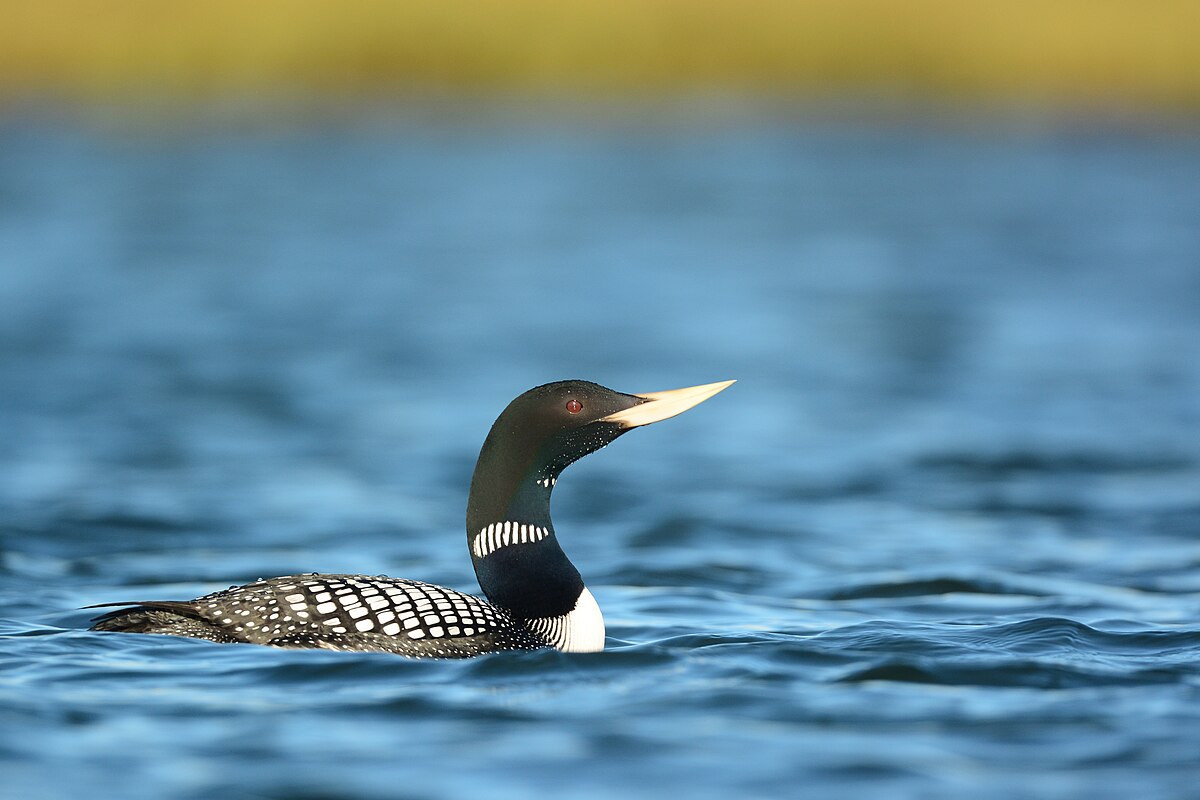
Wikipedia: Yellow-billed loon Source: WIKIPEDIA
1200px-Yellow-billed_Loon_Chipp_South_8-12-13_Ryan_Askren.jpg
🔍
Never observed (yet!)
Description
Geography: This bird appears across the great seas in the following continents: Europe, North America.General:
The yellow-billed loon (Gavia adamsii), also known as the white-billed diver, is the largest member of the loon or diver family. Breeding adults have a black head, white underparts and chequered black-and-white mantle. Non-breeding plumage is drabber with the chin and foreneck white. The main distinguishing feature from great northern loon is the longer straw-yellow bill which, because the culmen is straight, appears slightly uptilted.
[more]
Other Details
Physical details
Physical details: length=76-91 cm, wingspan=0 cm, weight=4050-6400 gDetails

Prachttaucher paar, er im Schlichtkleid im Winter, Altnau. 2024-12-07 13:15:56
First observed in 🇨🇭 on 2024-12-07.
Description
Geography: This bird appears across the great seas in the following continents: Europe, North America.General: Deutschland: Zugvogel, Wintergast
Seasonal behavior
Year-round bird Migration in: 02-01 - 02-10 Migration out: 02-02 - 02-10More details at Vogelwarte.ch
Other Details
Physical details
Physical details: length=58-73 cm, wingspan=110-130 cm, weight=1316-3400 gHabitats: River and lake Details

Great northern loon, Squam Lake, New Hampshire. 2023-10-06 12:26:58 New England
First observed in New England on 2023-10-06.
Description
Geography: This bird appears across the great seas in the following continents: Europe, North America.General: Deutschland: seltener Wintergast
Seasonal behavior
Seldom seen hereMore details at Vogelwarte.ch
Other Details
Physical details
Physical details: length=69-91 cm, wingspan=69-91 cm, weight=3600-4480 gDetails
Profile Wikipedia A-Z Animals Audubon AllAboutBirds Xeno-Canto YouTube

Pied-billed grebe, Bacalar. 2023-03-31 13:17:14 Yucatan
First observed in Yucatan on 2023-03-31.
Description
Geography: This bird appears across the great seas in the following continents: North America, South America, Africa.General:
The pied-billed grebe (Podilymbus podiceps) is a species of the grebe family of water birds. Since the Atitlán grebe (Podilymbus gigas) has become extinct, it is the sole extant member of the genus Podilymbus.[2] The pied-billed grebe is primarily found in ponds throughout the Americas.[3] Other names of this grebe include American dabchick, rail, dabchick, Carolina grebe, devil-diver, dive-dapper, dipper, hell-diver, pied-billed dabchick, pied-bill, thick-billed grebe, and water witch.[4][5]
[more]
Details

Evtl Schwarzhalstaucher. 2021-03-07 11:13:08 Rapperswil
First observed in 🇨🇭 on 2021-03-07.
Description
Geography: This bird appears across the great seas in the following continents: Europe, North America, Africa.General:
The black-necked grebe or eared grebe (Podiceps nigricollis) is a member of the grebe family of water birds. It was described in 1831 by Christian Ludwig Brehm. There are currently three accepted subspecies, including the nominate subspecies. Its breeding plumage features a distinctive ochre-coloured plumage which extends behind its eye and over its ear coverts. The rest of the upper parts, including the head, neck, and breast, are coloured black to blackish brown. The flanks are tawny rufous to maroon-chestnut, and the abdomen is white. When in its non-breeding plumage, this bird has greyish-black upper parts, including the top of the head and a vertical stripe on the back of the neck. The flanks are also greyish-black. The rest of the body is a white or whitish colour. The juvenile has more brown in its darker areas. The subspecies californicus can be distinguished from the nominate by the former's usually longer bill. The other subspecies, P. n. gurneyi, can be differentiated by its greyer head and upper parts and by its smaller size. P. n. gurneyi can also be told apart by its lack of a non-breeding plumage. This species is present in parts of Africa, Eurasia, and the Americas.
[more]
Deutschland: Brut-, Zugvogel, seltener Wintergast
Seasonal behavior
Year-round bird Breeding: 05-01 - 07-29 Migration in: 03-01 - 06-09 Migration out: 06-29 - 11-26More details at Vogelwarte.ch
Other Details
Physical details
Physical details: length=28-34 cm, wingspan=56-60 cm, weight=213-450 gHabitats: River and lake Details

Horned grebe, Myvatn, Iceland. 2015-06-05 11:22:28
First observed in Iceland on 2015-06-05.
Description
Geography: This bird appears across the great seas in the following continents: Europe, North America.General: Deutschland: Brut-, Zugvogel, Wintergast RL 1
Vocalization:
Varied. Vibrating, wailing, dry and cackling sequences. A mewing, falling and far-reaching "kiaa" and various rattling sounds. [Link]
Other Details
Physical details
Physical details: length=31-38 cm, wingspan=46-55 cm, weight=364-449 gHabitats: River and lake Details
Profile Wikipedia Vogelwarte BirdLife ZH ornitho.ch Audubon AllAboutBirds Xeno-Canto BirdID NABU YouTube

Wikipedia: Red-necked grebe Source: WIKIPEDIA
1200px-Podicepsgrisegena.jpg
🔍
Never observed (yet!)
Description
Geography: This bird appears across the great seas in the following continents: Europe, North America.General: Deutschland: Brut-, Zugvogel
Vocalization:
Most vocal at breeding ground. Wide repertoire of harsh, raucous and wailing sounds. [Link]
Seasonal behavior
Year-round bird Migration in: 02-20 - 05-10 Migration out: 07-29 - 12-07More details at Vogelwarte.ch
Other Details
Physical details
Physical details: length=40-50 cm, wingspan=61-88 cm, weight=692-925 gHabitats: River and lake Details
Profile Wikipedia Audubon AllAboutBirds Xeno-Canto BirdID NABU YouTube
Wikipedia: Manx shearwater Source: WIKIPEDIA
1200px-Manx_Shearwater.JPG
🔍
Never observed (yet!)
Description
Geography: This bird appears across the great seas in the following continents: Europe, North America, Africa.General:
The Manx shearwater (Puffinus puffinus) is a medium-sized shearwater in the seabird family Procellariidae. The scientific name of this species records a name shift: Manx shearwaters were called Manks puffins in the 17th century. Puffin is an Anglo-Norman word (Middle English pophyn) for the cured carcasses of nestling shearwaters. The Atlantic puffin acquired the name much later, possibly because of its similar nesting habits.
[more]
Vocalization:
Vocal at breeding ground. [Link]
Other Details
Physical details
Physical details: length=31-36 cm, wingspan=76-88 cm, weight=375-459 gDetails
Profile Wikipedia eBird Audubon AllAboutBirds Xeno-Canto YouTube

Wikipedia: Little shearwater Source: WIKIPEDIA
PuffinusElegansKeulemans.jpg
🔍
Never observed (yet!)
Description
Geography: This bird appears across the great seas in the following continents: North America, Australia.General:
The little shearwater (Puffinus assimilis) is a small shearwater in the petrel family Procellariidae. Despite the generic name, it is unrelated to the puffins, which are auks, the only similarity being that they are both burrow-nesting seabirds.
[more]
Details

Wikipedia: Tropical shearwater Source: WIKIPEDIA
P%C3%A9trel_de_Barau_.jpg
🔍
Never observed (yet!)
Description
Geography: This bird appears across the great seas in the following continents: North America, Africa.General:
The tropical shearwater (Puffinus bailloni) is a seabird in the family Procellariidae formerly considered conspecific with Audubon's shearwater (Puffinus lherminieri).[2]
[more]
Details

Wikipedia: Northern fulmar Source: WIKIPEDIA
Fulmarus_Glacialis.jpg
🔍
Never observed (yet!)
Description
Geography: This bird appears across the great seas in the following continents: Europe, North America, Asia.General: Deutschland: Brut-, Jahres-, Zugvogel, Wintergast RL R
Vocalization:
Mostly heard on breeding ground. [Link]
Other Details
Physical details
Physical details: length=45-50 cm, wingspan=102-112 cm, weight=610-1000 gDetails
Profile Wikipedia eBird Xeno-Canto YouTube
Wikipedia: Parkinson's petrel Source: WIKIPEDIA
Blackpetrel.jpg
🔍
Never observed (yet!)
Description
Geography: This bird appears across the great seas in the following continents: South America, Australia.General:
The black petrel (Procellaria parkinsoni), also called the Parkinson's petrel, is a medium-sized, black-plumaged petrel, the smallest of the Procellaria. The species is an endemic breeder of New Zealand, breeding only on Great Barrier Island and Little Barrier Island, off the North Island. At sea it disperses as far as Australia and Ecuador.
[more]
Details
Profile Wikipedia eBird Audubon AllAboutBirds Xeno-Canto YouTube

Wikipedia: Mottled petrel Source: WIKIPEDIA
Pterodroma_inexpectata.jpg
🔍
Never observed (yet!)
Description
Geography: This bird appears across the great seas in the following continents: North America, Australia.General:
The mottled petrel (Pterodroma inexpectata) or kōrure is a species of seabird and a member of the gadfly petrels. It usually attains 33 to 35 cm (13–14 in) in length with a 74 to 82 cm (29–32 in) wingspan.
[more]
Details
Profile Wikipedia Audubon AllAboutBirds Xeno-Canto YouTube
Wikipedia: White-necked petrel Source: WIKIPEDIA
1200px-Pterodroma_cervicalis_-_SE_Tasmania.jpg
🔍
Never observed (yet!)
Description
Geography: This bird appears across the great seas in the following continents: North America, Asia.Details
Profile Wikipedia eBird Audubon AllAboutBirds Xeno-Canto YouTube

Wikipedia: Black-winged petrel Source: WIKIPEDIA
1200px-BWP_3_-_Christopher_Watson.jpg
🔍
Never observed (yet!)
Description
Geography: This bird appears across the great seas in the following continents: North America, Australia.General:
The black-winged petrel (Pterodroma nigripennis) is a species of seabird in the family Procellariidae. It breeds on a number of oceanic islands in the tropical and subtropical East Pacific Ocean and spends the rest of the year at sea.
[more]
Details

Wikipedia: Cook's petrel Source: WIKIPEDIA
Cookspetrel2.jpg
🔍
Never observed (yet!)
Description
Geography: This bird appears across the great seas in the following continents: North America, Australia.General:
Cook's petrel (Pterodroma cookii) or the blue-footed petrel,[2] is a Procellariform seabird. It is a member of the gadfly petrels and part of the subgroup known as Cookilaria petrels, which includes the very similar Stejneger's petrel.
[more]
Details

Wikipedia: Gould's petrel Source: WIKIPEDIA
1200px-Pterodroma_leucoptera_-_Southport_-_Christopher_Watson.jpg
🔍
Never observed (yet!)
Description
Geography: This bird appears across the great seas in the following continents: North America, Australia.General:
Gould's petrel (Pterodroma leucoptera) is a species of seabird in the family Procellariidae. The common name commemorates the English ornithologist and bird artist John Gould (1804-1881).[2]
[more]
Details
Profile Wikipedia Audubon AllAboutBirds Xeno-Canto BirdID NABU YouTube

Wikipedia: Fea's petrel Source: WIKIPEDIA
1200px-Feas_Petrel_From_The_Crossley_ID_Guide_Eastern_Birds.jpg
🔍
Never observed (yet!)
Description
Geography: This bird appears across the great seas in the following continents: Europe, North America, Africa.General:
The Fea's petrel (Pterodroma feae), is a small seabird in the gadfly petrel genus, Pterodroma. It was previously considered to be a subspecies of the soft-plumaged petrel (P. mollis), but they are actually not closely related at all. However, P. feae is very closely related to Zino's petrel and Desertas petrel, two other species recently split from P. mollis. The gadfly petrels are named for their speedy weaving flight, as if evading horseflies. The flight action is also reflected in the genus name Pterodroma, from Ancient Greek pteron, "wing" and dromos, " runner".[2] This species is named after the Italian zoologist Leonardo Fea (1852-1903).[3]
[more]
Details
Wikipedia: Bulwer's petrel Source: WIKIPEDIA
1200px-P%C3%A9trel_de_Bulwer.jpg
🔍
Never observed (yet!)
Description
Geography: This bird appears across the great seas in the following continents: Europe, North America, Africa, Australia.General:
Bulwer's petrel (Bulweria bulwerii) is a small petrel in the family Procellariidae, and found in the genus Bulweria (Bonaparte, 1843). This bird is named after the English naturalist James Bulwer.
[more]
Details

Wikipedia: Tahiti petrel Source: WIKIPEDIA
Tahitipetrel1.jpg
🔍
Never observed (yet!)
Description
Geography: This bird appears across the great seas in the following continents: South America, Africa.Details

Wikipedia: Sooty shearwater Source: WIKIPEDIA
1200px-Puffinus_griseus_in_flight_-_SE_Tasmania.jpg
🔍
Never observed (yet!)
Description
Geography: This bird appears across the great seas in the following continents: Europe, South America, Africa.General: Deutschland: seltener Zugvogel
Vocalization:
Mostly heard at breeding ground. A peculiar, rhythmic, coarse moaning, with a disyllabic attack, followed by a deeper, cooing "in-breath". [Link]
Other Details
Physical details
Physical details: length=40-51 cm, wingspan=94-109 cm, weight=666-978 gDetails

Wikipedia: Buller's shearwater Source: WIKIPEDIA
Bullershearwater.jpg
🔍
Never observed (yet!)
Description
Geography: This bird appears across the great seas in the following continents: North America, Australia.General:
Buller's shearwater (Ardenna bulleri) is a Pacific species of seabird in the family Procellariidae; it is also known as the grey-backed shearwater or New Zealand shearwater. A member of the black-billed wedge-tailed Thyellodroma group, among the larger shearwaters of the genus Ardenna, it forms a superspecies with the wedge-tailed shearwater (A. pacificus).[2]
[more]
Details
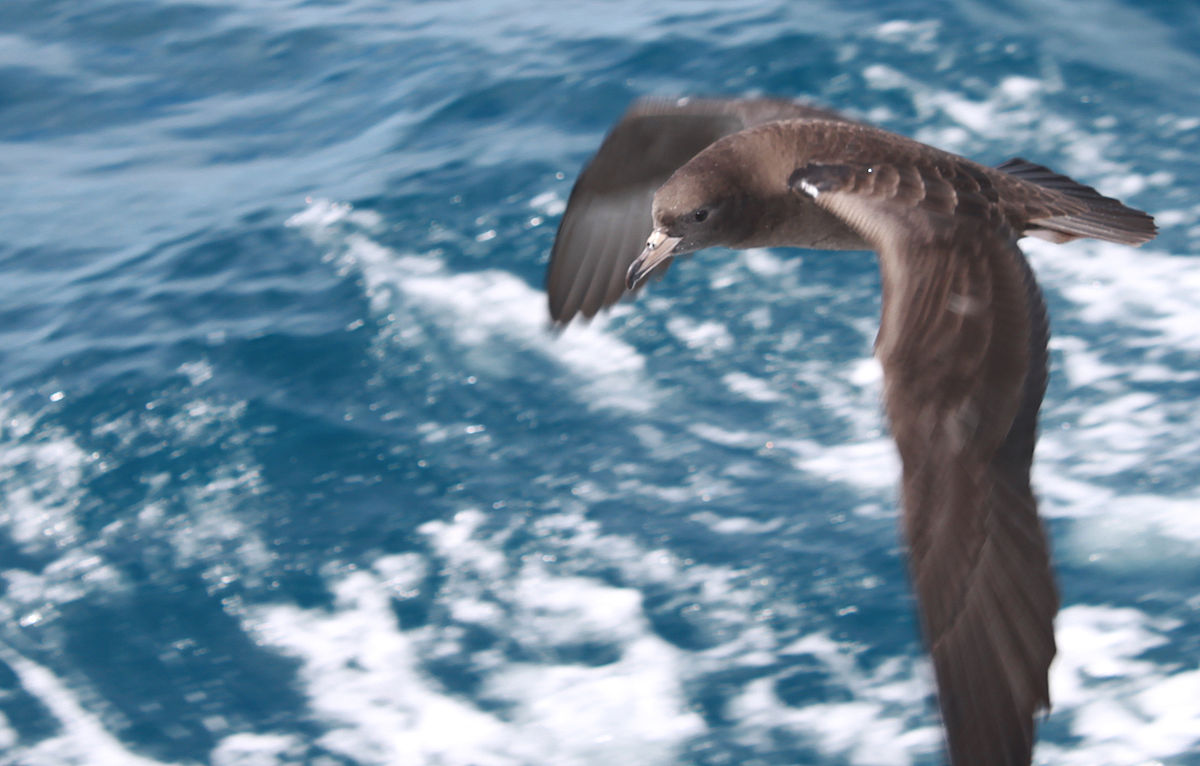
Wikipedia: Flesh-footed shearwater Source: WIKIPEDIA
1200px-Puffinus_carneipes_-New_Zealand_-flying-8b.jpg
🔍
Never observed (yet!)
Description
Geography: This bird appears across the great seas in the following continents: North America, Africa.Details

Wikipedia: Short-tailed shearwater Source: WIKIPEDIA
1200px-Puffinus_tenuirostris_-_SE_Tasmania.jpg
🔍
Never observed (yet!)
Description
Geography: This bird appears across the great seas in the following continents: North America, South America, Asia.Details

Wikipedia: Wedge-tailed shearwater Source: WIKIPEDIA
Wedge_tailed_shearwater2.jpg
🔍
Never observed (yet!)
Description
Geography: This bird appears across the great seas in the following continents: North America, South America, Africa, Asia.Details
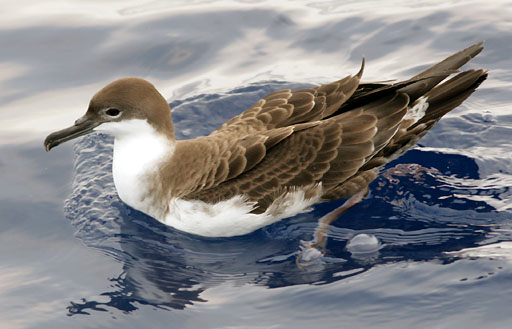
Wikipedia: Great shearwater Source: WIKIPEDIA
Puffinus_gravisPCCA20070623-3641B.jpg
🔍
Never observed (yet!)
Description
Geography: This bird appears across the great seas in the following continents: Europe, North America, Africa.General:
The great shearwater (Ardenna gravis) is a large shearwater in the seabird family Procellariidae. Ardenna was first used to refer to a seabird by Italian naturalist Ulisse Aldrovandi in 1603, and gravis is Latin for "heavy".[3]
[more]
Other Details
Physical details
Physical details: length=43-51 cm, wingspan=100-118 cm, weight=715-950 gDetails
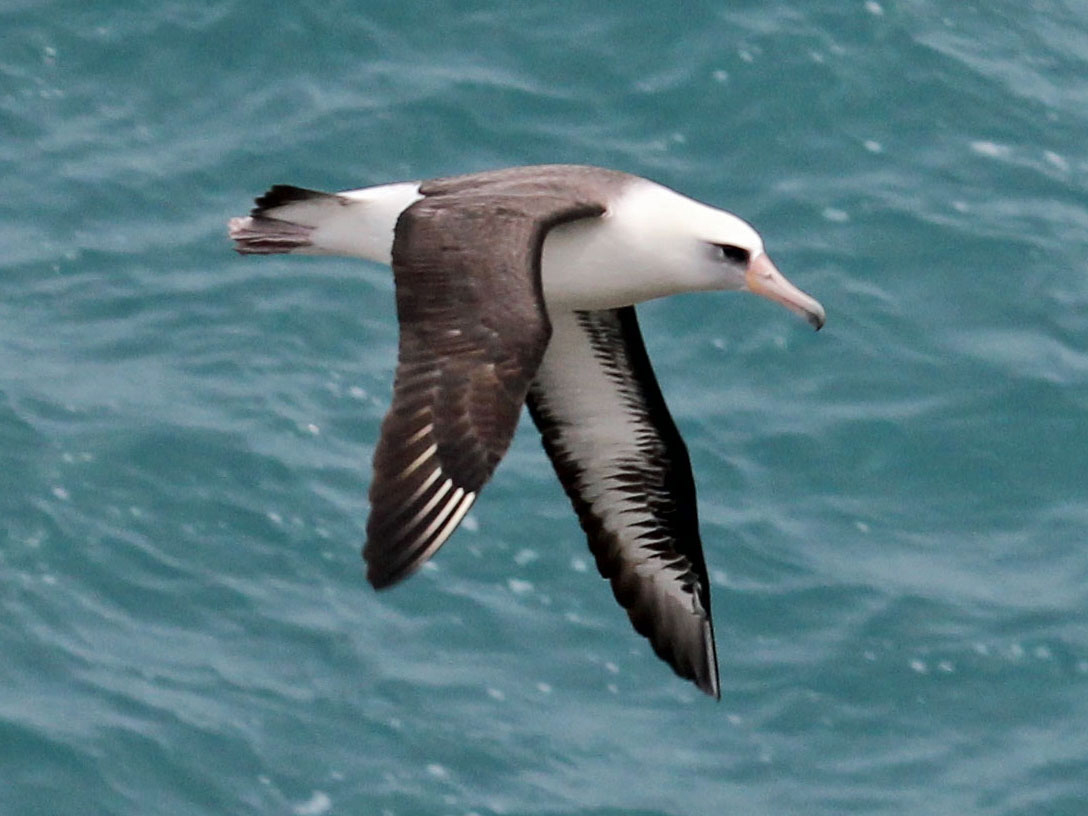
Wikipedia: Laysan albatross Source: WIKIPEDIA
Laysan_Albatross_RWD2.jpg
🔍
Never observed (yet!)
Description
Geography: This bird appears across the great seas in the following continents: North America, Asia.Details
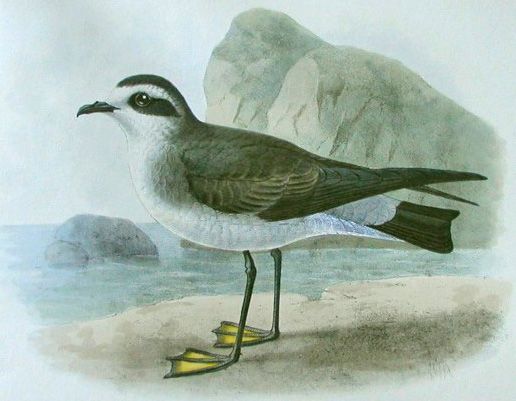
Wikipedia: White-faced storm-petrel Source: WIKIPEDIA
Godmanstormlg.jpg
🔍
Never observed (yet!)
Description
Geography: This bird appears across the great seas in the following continents: Europe, North America, South America, Africa.Details

Wikipedia: Band-rumped storm-petrel Source: WIKIPEDIA
1200px-Band_rumped_storm_petrel_Andre_Raine_KESRP_%2821789178016%29.jpg
🔍
Never observed (yet!)
Description
Geography: This bird appears across the great seas in the following continents: Europe, North America, South America, Africa.General:
The band-rumped storm petrel, Madeiran storm petrel, or Harcourt's storm petrel (Oceanodroma castro) is of the storm petrel family Hydrobatidae.
[more]
Details
Profile Wikipedia Audubon AllAboutBirds Xeno-Canto YouTube

Wikipedia: Matsudaira's storm-petrel Source: WIKIPEDIA
012016-IMG_5713_Matsudaira%27s_Storm-Petrel_%28Oceanodroma_matsudairae%29_%288005427860%29.jpg
🔍
Never observed (yet!)
Description
Geography: This bird appears across the great seas in the following continents: North America, Africa.Details
Profile Wikipedia Audubon AllAboutBirds Xeno-Canto BirdID NABU YouTube

Wikipedia: Leach's storm-petrel Source: WIKIPEDIA
1200px-Lesp1.jpg
🔍
Never observed (yet!)
Description
Geography: This bird appears across the great seas in the following continents: Europe, North America, South America.General:
Leach's storm petrel or Leach's petrel (Oceanodroma leucorhoa) is a small seabird of the tubenose order. It is named after the British zoologist William Elford Leach. The scientific name is derived from Ancient Greek. Oceanodroma is from okeanos, "ocean" and dromos, "runner", and leucorhoa is from leukos, "white" and orrhos, "rump".[2]
[more]
Details

Wikipedia: Wilson's storm-petrel Source: WIKIPEDIA
1200px-Oceanites_oceanicus_-_SE_Tasmania.jpg
🔍
Never observed (yet!)
Description
Geography: This bird appears across the great seas in the following continents: Europe, North America, South America, Africa, Asia.Details

Wikipedia: Snowy owl Source: WIKIPEDIA
1200px-Snowy_Owl_%28240866707%29.jpeg
🔍
Never observed (yet!)
Description
Geography: This bird appears across the great seas in the following continents: Europe, North America.General:
The snowy owl (Bubo scandiacus), also known as the polar owl, the white owl and the Arctic owl,[3] is a large, white owl of the true owl family.[4] Snowy owls are native to the Arctic regions of both North America and the Palearctic, breeding mostly on the tundra.[2] It has a number of unique adaptations to its habitat and lifestyle, which are quite distinct from other extant owls.[5] One of the largest species of owl, it is the only owl with largely white plumage.[4] Males tend to be a purer white overall while females tend to more have more extensive flecks of dark brown.[6] Juvenile male snowy owls have dark markings that may appear similar to females until maturity, at which point they typically turn whiter. The composition of brown markings about the wing, although not foolproof, is the most reliable technique to age and sex individual snowy owls.[7]
[more]
Other Details
Physical details
Physical details: length=53-66 cm, wingspan=142-166 cm, weight=1200-2900 gDetails

Wikipedia: Northern barred owl Source: WIKIPEDIA
1200px-Strix-varia-005.jpg
First observed in New England on 2023-10-04.
Description
Geography: This bird appears across the great seas in the following continents: Europe, North America.General:
Syrnium varium
[more]
Etymology:
Der zweite Gesang ist ein rhythmisches „whohú-buhóoh whohú-buhóoh“, im Englischen lautmalerisch umschrieben mit dem Satz „I cook today - you cook tomorrow“. [Link]
Vocalisation
Song: No details but a Xeno-Canto recording. Song attributes: Frequency:♫ 2023-10-04 21:17:00 New England (call)
We heard this in New England after sunset, and swore it sounded like monkeys. Merlin's SoundID told it was a barred owl, and when I looked up 'barred owl monkey' in the internet, I found that monkey call is a common description, for instance here.
From YouTube, date uncertain - These Caterwauling Barred Owls Sound Like Monkeys - Calling All Turkeys.
♫ 2019-01-01 00:00:00 Source: OTHER 20190101_000000 From YouTube, date uncertain - These Caterwauling Barred Owls Sound Like Monkeys - Calling All Turkeys.mp3 (call)
Call attributes: Call melody: one note, slow, Frequency: 0-1 KHz,
Details

Wikipedia: Great grey owl Source: WIKIPEDIA
Strix_nebulosaRB.jpg
🔍
Never observed (yet!)
Description
Geography: This bird appears across the great seas in the following continents: Europe, North America.General:
The great grey owl or great gray owl (Strix nebulosa) is a very large owl, documented as the world's largest species of owl by length. It is distributed across the Northern Hemisphere, and it is the only species in the genus Strix found in both Eastern and Western Hemispheres. In some areas it is also called Phantom of the North, cinereous owl, spectral owl, Lapland owl, spruce owl, bearded owl, and sooty owl.[2]
[more]
Other Details
Physical details
Physical details: length=65-70 cm, wingspan=134-158 cm, weight=500-1500 gDetails

Wikipedia: Boreal owl Source: WIKIPEDIA
Aegolius-funereus-001.jpg
🔍
Never observed (yet!)
Description
Geography: This bird appears across the great seas in the following continents: Europe, North America.General: Deutschland: Brut-, Jahresvogel
Seasonal behavior
Year-round bird Breeding: 03-12 - 07-10More details at Vogelwarte.ch
Other Details
Physical details
Physical details: length=24-26 cm, wingspan=54-62 cm, weight=100-190 gHabitats: Forest Details

Wikipedia: Short-eared owl Source: WIKIPEDIA
1200px-Short_Eared_Owl_on_the_Ground.jpg
🔍
Never observed (yet!)
Description
Geography: This bird appears across the great seas in the following continents: Europe, North America, South America, Africa, Asia.General: Deutschland: Brut-, Zugvogel, Wintergast RL 1
Other Details
Physical details
Physical details: length=37-39 cm, wingspan=95-110 cm, weight=260-420 gHabitats: Wetland Details

Wikipedia: Long-eared owl Source: WIKIPEDIA
Long-eared_Owl_-_Kisjuszallas_-_Hungary_S4E0920_%2815671750198%29.jpg
🔍
Never observed (yet!)
Description
Geography: This bird appears across the great seas in the following continents: Europe, North America, Africa, Asia.General: Deutschland: Brut-, Jahres-, Zugvogel, Wintergast
Vocalization:
Other sounds include; a nasal "eeeeeaaa" reminiscent of Collared Dove, nasal mewing and bill clicking. [Link]
Seasonal behavior
Year-round bird Breeding: 03-12 - 07-20More details at Vogelwarte.ch
Other Details
Physical details
Physical details: length=35-37 cm, wingspan=90-100 cm, weight=220-370 gHabitats: Agricultural Details
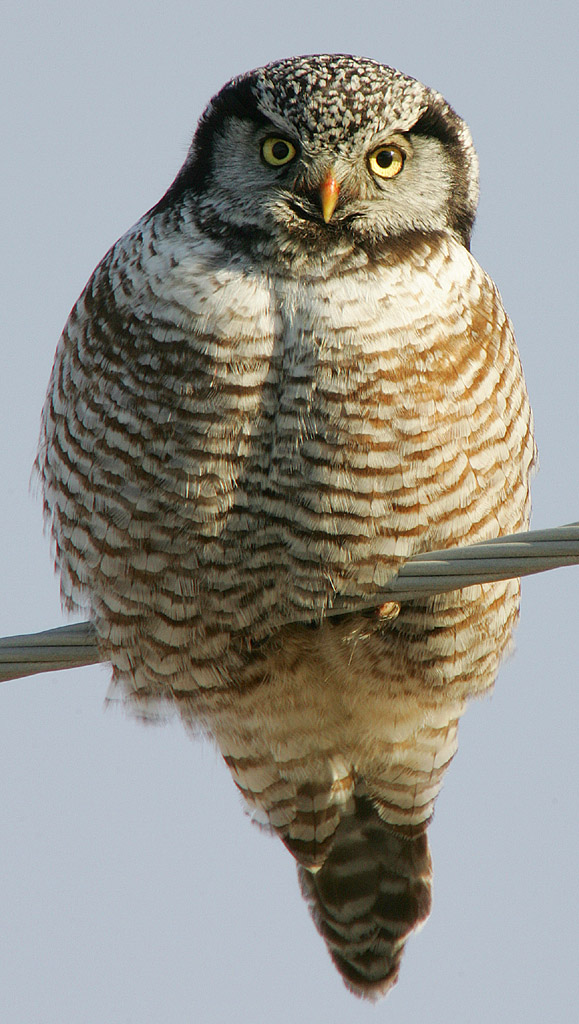
Wikipedia: Northern hawk-owl Source: WIKIPEDIA
Surnia-ulula-002.jpg
🔍
Never observed (yet!)
Description
Geography: This bird appears across the great seas in the following continents: Europe, North America, Africa.General:
The northern hawk-owl or northern hawk owl (Surnia ulula) is a medium-sized true owl of the northern latitudes. It is non-migratory and usually stays within its breeding range, though it sometimes irrupts southward. It is one of the few owls that is neither nocturnal nor crepuscular, being active only during the day. This is the only living species in the genus Surnia of the family Strigidae, the "typical" owls (as opposed to barn owls, Tytonidae). The species is sometimes called simply the hawk owl; however, many species of owls in the genus Ninox are also called "hawk owls".
[more]
Vocalization:
Seldom heard outside breeding ground. [Link]
Other Details
Physical details
Physical details: length=36-39 cm, wingspan=74-81 cm, weight=215-380 gDetails
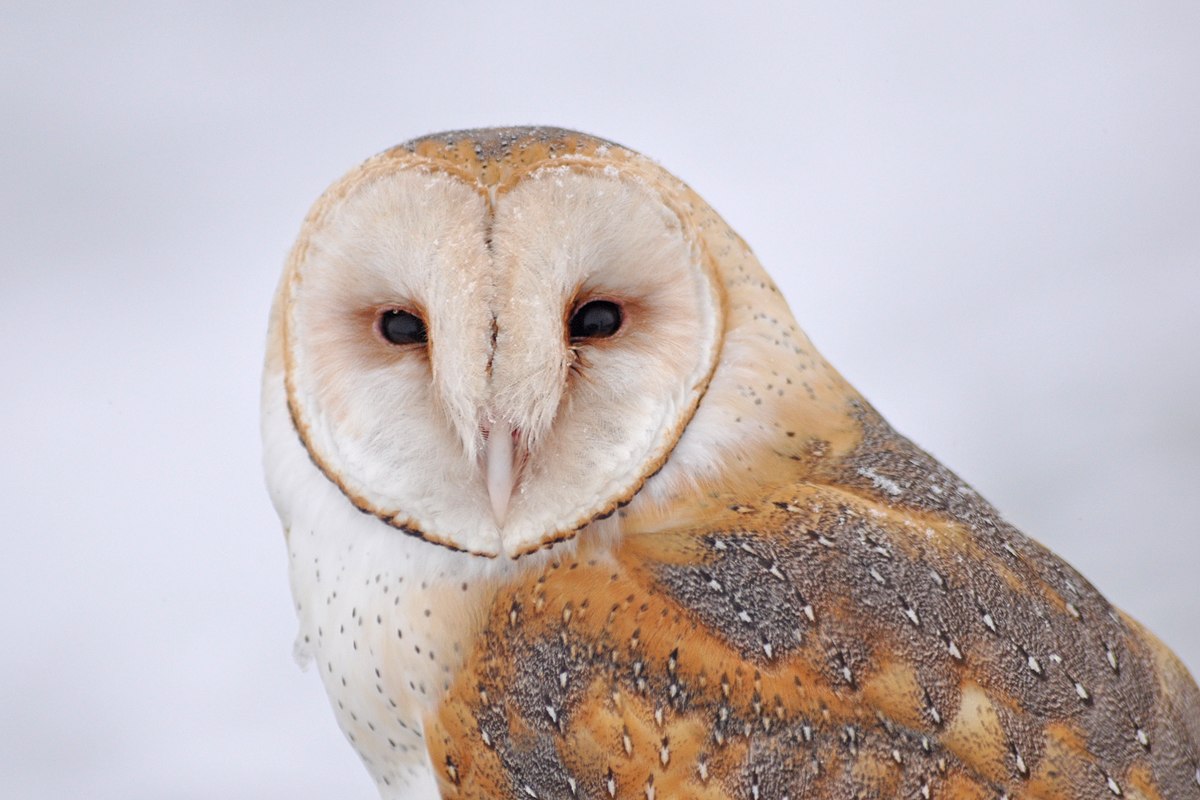
Wikipedia: American barn owl Source: WIKIPEDIA
1200px-American_Barn_Owl%2C_Bear_River%2C_Utah_%289637780911%29.jpg
🔍
Never observed (yet!)
Description
Geography: This bird appears across the great seas in the following continents: Europe, South America.General:
The American barn owl (Tyto furcata) is usually considered a subspecies group and together with the western barn owl group, the eastern barn owl group, and sometimes the Andaman masked owl, make up the barn owl, cosmopolitan in range. The barn owl is recognized by most taxonomic authorities. A few (including the International Ornithologists' Union) separate them into distinct species, as is done here. The American barn owl is native to North and South America, and has been introduced to Hawaii.
[more]
Details

Wikipedia: Barn owl Source: WIKIPEDIA
1200px-Tyto_alba_-British_Wildlife_Centre%2C_Surrey%2C_England-8a_%281%29.jpg
🔍
Never observed (yet!)
Description
Geography: This bird appears across the great seas in the following continents: Europe, North America, South America, Africa, Asia.General: Deutschland: Brut-, Jahresvogel
Vocalization:
Large repertoire of mainly hissing and screeching sounds. [Link]
Seasonal behavior
Year-round bird Breeding: 04-01 - 09-17More details at Vogelwarte.ch
Other Details
Physical details
Physical details: length=33-35 cm, wingspan=80-95 cm, weight=240-350 gHabitats: Agricultural Details

Wikipedia: Chicken Source: WIKIPEDIA
Female_pair.jpg
🔍
Never observed (yet!)
Description
Geography: This bird appears across the great seas in the following continents: Europe, North America, Asia.General:
The chicken (Gallus gallus domesticus) is a large and round short-winged bird, domesticated from the red junglefowl of Southeast Asia around 8,000 years ago. Most chickens are raised for food, providing meat and eggs; others are kept as pets[1] or for cockfighting.
[more]
introduced, Norfolk & Christmas Island
Details

Wikipedia: Kalij pheasant Source: WIKIPEDIA
1200px-Kalij_pheasant_Prasanna_Mamidala.jpg
🔍
Never observed (yet!)
Description
Geography: This bird appears across the great seas in the following continents: North America, Asia.General:
The kalij pheasant (Lophura leucomelanos) is a pheasant found in forests and thickets, especially in the Himalayan foothills, from Pakistan to western Thailand. Males are rather variable depending on the subspecies involved, but all have an at least partially glossy bluish-black plumage, while females are overall brownish. Both sexes have a bare red face and greyish legs (the latter separating it from the red-legged silver pheasant).[2] It is generally common and widespread, though three of its eastern subspecies (L. l. oatesi, L. l. lineata, and L. l. crawfurdi) are considered threatened and L. l. moffitti is virtually unknown in the wild.[2]
[more]
Details
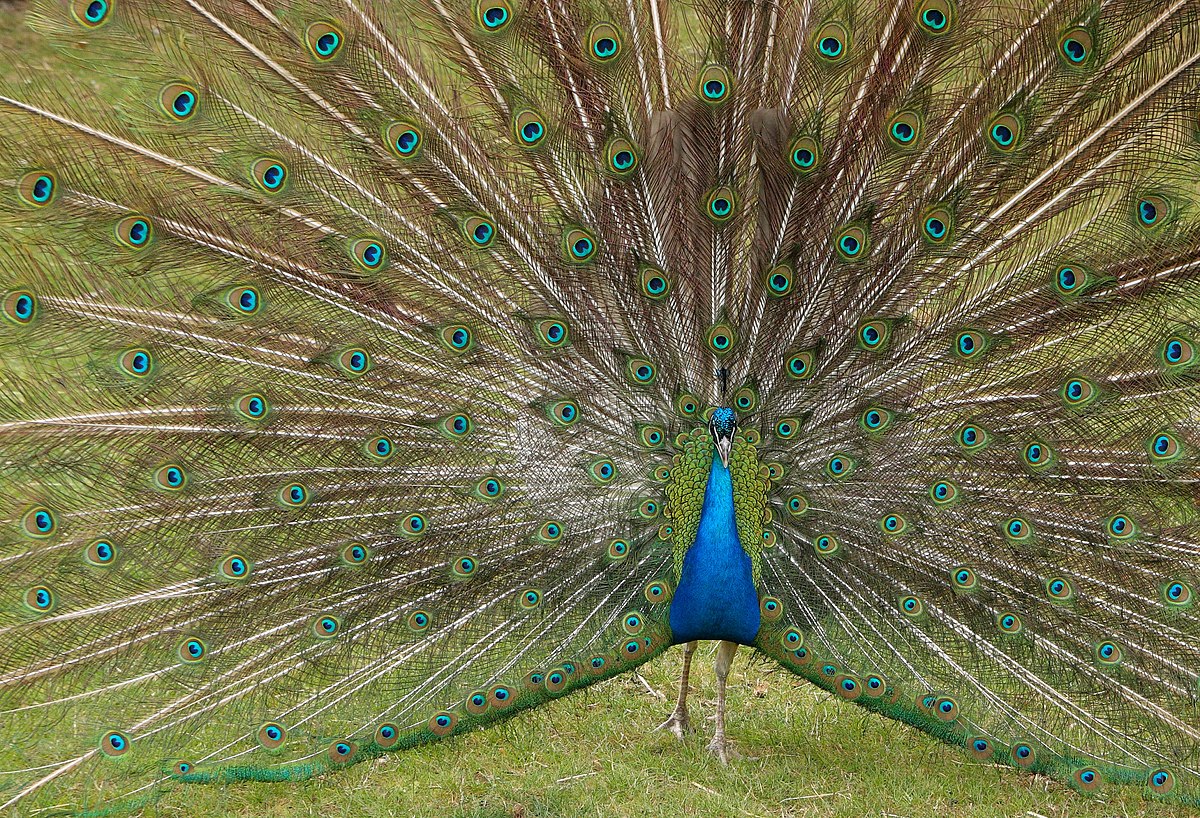
Wikipedia: Indian peafowl Source: WIKIPEDIA
1200px-Peacock%2C_East_Park%2C_Hull_-_panoramio.jpg
🔍
Never observed (yet!)
Description
Geography: This bird appears across the great seas in the following continents: North America, Africa.General: introduced, King, Rottnest & Furneaux Islands
Details
, Islay en route to Bunnahabhain, Islay.JPG)
Common pheasant (Fasan), Islay en route to Bunnahabhain, Islay. 2023-08-14 10:52:28 Islay
First observed in Islay on 2023-08-14.
Description
Geography: This bird appears across the great seas in the following continents: Europe, North America, Australia.General: Deutschland: Brut-, Jahresvogel; etabliertes Neozoon wurde im Mittelalter zur Jagd eingeführt
Vocalization:
Diverse repertoire of harsh cackling sounds. [Link]
Seasonal behavior
Year-round birdOther Details
Physical details
Physical details: length=53-89 cm, wingspan=70-90 cm, weight=750-1700 gHabitats: Agricultural Details
Profile Wikipedia Audubon AllAboutBirds Xeno-Canto YouTube

Wikipedia: Blue-breasted quail Source: WIKIPEDIA
1200px-Excalfactoria_chinensis_%28aka%29.jpg
🔍
Never observed (yet!)
Description
Geography: This bird appears across the great seas in the following continents: North America, Asia.General:
The king quail (Synoicus chinensis), also known as the blue-breasted quail, Asian blue quail, Chinese painted quail, or Chung-Chi, is a species of Old World quail in the family Phasianidae. This species is the smallest "true quail", ranging in the wild from southeastern Asia to Oceania with 10 different subspecies. A failed attempt was made to introduce this species to New Zealand by the Otago Acclimatisation Society in the late 1890s. It is quite common in aviculture worldwide, where it is sometimes misleadingly known as the "button quail", which is the name of an only very distantly related family of birds, the buttonquails.
[more]
Details
Profile Wikipedia Audubon AllAboutBirds Xeno-Canto BirdID NABU YouTube
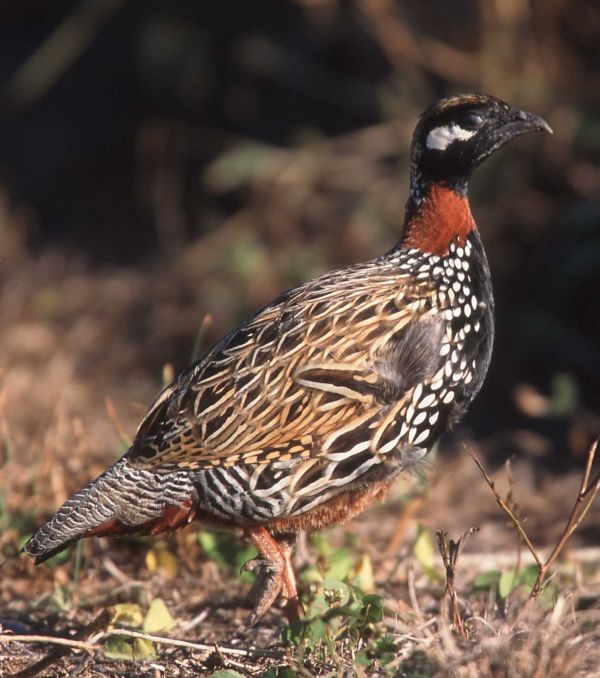
Wikipedia: Black francolin Source: WIKIPEDIA
Black_Francolin.jpg
🔍
Never observed (yet!)
Description
Geography: This bird appears across the great seas in the following continents: Europe, North America.General:
The black francolin (Francolinus francolinus) is a gamebird in the pheasant family Phasianidae of the order Galliformes, gallinaceous birds. It was formerly known as the Black Partridge. It is the state bird of Haryana state, India (locally known as Kaala Teetar काला तीतर).
[more]
Details

Wikipedia: Grey partridge Source: WIKIPEDIA
1200px-Nurmkanad.jpg
🔍
Never observed (yet!)
Description
Geography: This bird appears across the great seas in the following continents: Europe, North America.General: Deutschland: Brut-, Jahresvogel RL 2
Vocalization:
Also various clucking sounds. [Link]
Seasonal behavior
Year-round bird Breeding: 05-01 - 07-29More details at Vogelwarte.ch
Other Details
Physical details
Physical details: length=29-31 cm, wingspan=45-48 cm, weight=340-450 gHabitats: Agricultural Details

Wikipedia: Chukar partridge Source: WIKIPEDIA
Alectoris-chukar-001.jpg
🔍
Never observed (yet!)
Description
Geography: This bird appears across the great seas in the following continents: Europe, North America, Africa.General:
Das Chukarhuhn (Alectoris chukar), auch Chukarsteinhuhn genannt, ist eine Vogelart aus der Familie der Fasanenartigen (Phasianidae), die zur Ordnung der Hühnervögel (Galliformes) gehört. Es hat innerhalb der Gattung der Steinhühner das umfangreichste Verbreitungsgebiet und kommt von der Balkanhalbinsel und den Inseln des Ägäischens Meeres bis nach Nordchina vor. Es nutzt dabei Lebensräume, die sich hinsichtlich Relief, Klima und Vegetation stark unterscheiden, weswegen man das Chukarhuhn auch als eine Vogelart mit hoher ökologischer Plastizität bezeichnet.[1]
[more]
Details
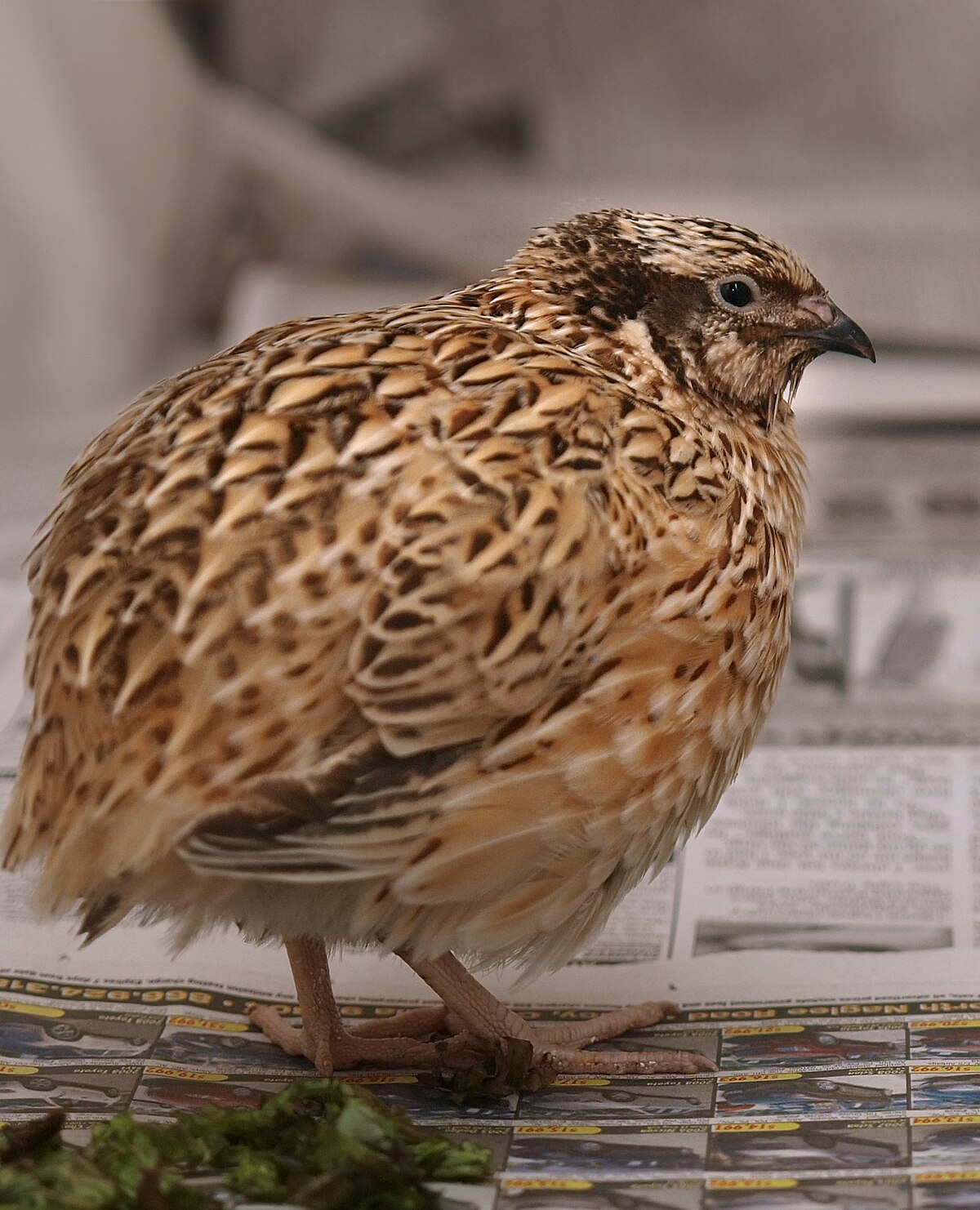
Wikipedia: Japanese quail Source: WIKIPEDIA
1200px-Japanese_Quail.jpg
🔍
Never observed (yet!)
Description
Geography: This bird appears across the great seas in the following continents: North America, Asia.General: Very rare winter visitor
Details
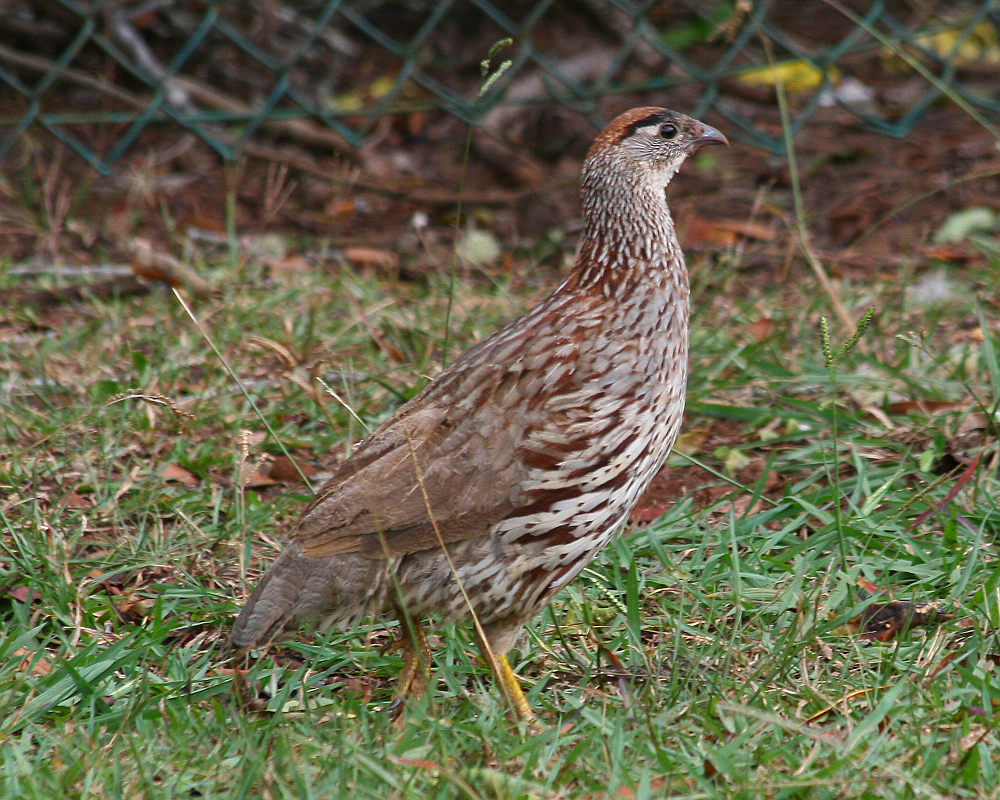
Wikipedia: Erckel's francolin Source: WIKIPEDIA
Erckel%27s_Francolin.PNG
🔍
Never observed (yet!)
Description
Geography: This bird appears across the great seas in the following continents: Europe, North America, Africa.General:
Erckel's spurfowl (Pternistis erckelii), also known as Erckel's francolin,[2] is a species of game bird in the family Phasianidae.
[more]
Details

Wild turkey near Vickys mothers house. 2023-10-11 14:54:58 New England
First observed in Maryland on 2021-06-18.
Description
Geography: This bird appears across the great seas in the following continents: North America, Australia.General: introduced, King, Flinders & Kangaroo Island
Vocalisation
No details but a Xeno-Canto recording. - but really OTHERFrom YouTube, date uncertain - These Caterwauling Barred Owls Sound Like Monkeys - Calling All Turkeys.
♫ 2019-01-01 00:00:00 Source: OTHER 20190101_000000 From YouTube, date uncertain - These Caterwauling Barred Owls Sound Like Monkeys - Calling All Turkeys.mp3 (call)
Call attributes: song Frequency: ,
Details
Profile Wikipedia Vogelwarte BirdLife ZH ornitho.ch bird-song.ch Audubon AllAboutBirds Xeno-Canto BirdID NABU YouTube
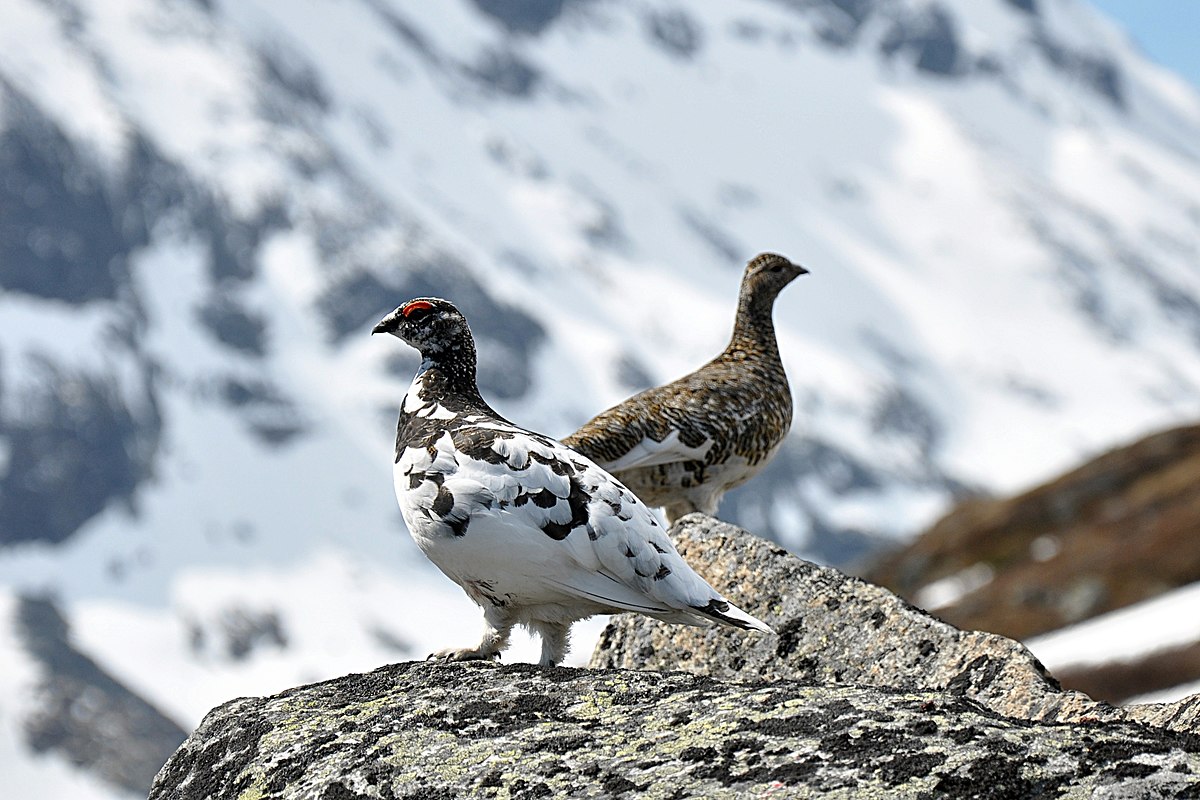
Wikipedia: Rock ptarmigan Source: WIKIPEDIA
1200px-Rock_Ptarmigan_%28Lagopus_Muta%29.jpg
🔍
Never observed (yet!)
Description
Geography: This bird appears across the great seas in the following continents: Europe, North America.General: Deutschland: Brut-, Jahresvogel RL R
Vocalization:
Female has similar sounds, but is higher pitched and not so coarse as male. [Link]
Seasonal behavior
Year-round bird Breeding: 05-01 - 08-09More details at Vogelwarte.ch
Other Details
Physical details
Physical details: length=34-36 cm, wingspan=54-60 cm, weight=350-600 gHabitats: Mountain Details

Wikipedia: Willow ptarmigan Source: WIKIPEDIA
1200px-Lagopus_lagopus_-_adult_%28Denali%2C_2010%29.jpg
🔍
Never observed (yet!)
Description
Geography: This bird appears across the great seas in the following continents: Europe, North America.General:
The willow ptarmigan (/ˈtɑːrmɪɡən/) (Lagopus lagopus) is a bird in the grouse subfamily Tetraoninae of the pheasant family Phasianidae. It is also known as the willow grouse and in Ireland and Britain, where the subspecies L. l. scotica was previously considered to be a separate species, as the red grouse. It is a sedentary species, breeding in birch and other forests and moorlands in northern Europe, the tundra of Scandinavia, Siberia, Alaska and Canada, in particular in the provinces of Newfoundland and Labrador and Quebec. It is the state bird of Alaska. In the summer the birds are largely brown, with dappled plumage, but in the winter they are white with some black feathers in their tails (British populations do not adopt a winter plumage). The species has remained little changed from the bird that roamed the tundra during the Pleistocene. Nesting takes place in the spring when clutches of four to ten eggs are laid in a scrape on the ground. The chicks are precocial and soon leave the nest. While they are young, both parents play a part in caring for them. The chicks eat insects and young plant growth while the adults are completely herbivorous, eating leaves, flowers, buds, seeds and berries during the summer and largely subsisting on the buds and twigs of willow and other dwarf shrubs and trees during the winter.
[more]
Other Details
Physical details
Physical details: length=37-42 cm, wingspan=55-66 cm, weight=450-750 gDetails

Wikipedia: California quail Source: WIKIPEDIA
California_quail.jpg
🔍
Never observed (yet!)
Description
Geography: This bird appears across the great seas in the following continents: North America, Australia.General: introduced, Norfolk & King Island
Details
Classification not found:
General: 1 species not correctly classifiedScopoli's shearwater / Sepiasturmtaucher (Calonectris diomedia)

Wikipedia: Scopoli's shearwater Source: WIKIPEDIA
Scopoli%27s_Shearwater.jpg
First observed in Canary Islands on 2022-03-16.
Description
Geography: This bird appears across the great seas in the following continents: Europe, North America, Africa.General:
Scopoli's shearwater (Calonectris diomedea) is a bird in the family Procellariidae currently considered conspecific with Cory's shearwater (Calonectris borealis). It has no subspecies.[2] The genus name Calonectris comes from Ancient Greek kalos, "good" and nectris, "swimmer". The specific diomedea refers to Diomedes, the mythical king. His wife was serially unfaithful while he fought at Troy, so he left to found a city in Italy. After his death, his distraught friends were turned into white seabirds.[3] The English name is for Italian naturalist Giovanni Antonio Scopoli who first described the species.
[more]
Vocalisation
Song: No details but a Xeno-Canto recording. Song attributes: Frequency:♫ 2022-03-16 22:04:37 (song)
Details