Vögel gesucht in Kaltbrunnen-Riet in August 2021 mit Meia - welche Vögel sind besonders interessant und haben andere Leute gemeldet

Vögel in der Systematik Insgesamt 32 Vogelarten sind inbegriffen, 27 davon schon beobachtet. Vögel nicht beobachtet bisher: Gelbspötter Feldschwirl Rotkehlpieper Rotfussfalke

Klasse aves (Vögel / Birds):

Ordnung Anseriformes (Vögel / Ducks, geese and swans):

Familie Anatidae (Entenvögel / Waterfowl):

Unterfamilie Anatinae (Dabbling ducks plus extinct):
Gattung Callonetta:
Rotschulterente / Ringed teal (Callonetta leucophrys)
Profil Wikipedia Xeno-Canto YouTube


🔍 Never observed (yet!)

Beschreibung

Allgemein: Die Rotschulterente (Callonetta leucophrys) ist eine Vogelart aus der Familie der Entenvögel (Anatidae). Sie gehört zu der Gattung Callonetta der Schwimmenten (Anatini). [mehr]
Vollprofil

Gattung Lophonetta:
Gattung Pteronetta:
Gattung Speculanas:
Gattung Nomonyx:
Gattung Mergellus:
Gattung Ptaiochen:
Gattung Thambetochen:
Gattung Clangula:
Gattung Melanitta:
Gattung Polysticta:
Gattung Lophodytes:
Gattung Camptorhynchus:
Gattung Heteronetta:
Gattung Sibirionetta:
Gattung Rhodonessa:
Unterfamilie Anserinae (Gänse):
Tribus Anserini (Echten Gänse):
Gattung Anser (Feldgänse / Geese):
Tribus Cygnini (Schwäne / Swans):
Gattung Cygnus (Swans):
Gattung Branta:
Gattung Cereopsis:
Gattung Coscoroba:
Gattung Spatula:
Unterfamilie Dendrocygninae:
Gattung Dendrocygna:
Gattung Thalassornis:
Unterfamilie Stictonettinae:
Gattung Stictonetta:
Unterfamilie Plectropterinae:
Gattung Plectropterus:
Unterfamilie Aythyinae:
Gattung Marmaronetta:
Gattung Nettapus:

Familie Anhimidae (Screamers):

Gattung Chauna:
Gattung Anhima:

Familie Anseranatidae:

Gattung Anseranas:

Ordnung Suliformes:

Familie Phalacrocoracidae (Kormorane / Cormorants and shags):

Gattung Phalacrocorax:
Gattung Microcarbo:
Gattung Leucocarbo:
Gattung Nannopterum:
Gattung Gulosus:

Ordnung Pelecaniformes (Ibis, herons and pelicans):

Familie Ardeidae (Reiher / Herons):

Gattung Ardea (Great herons):
Silberreiher / Great egret (Ardea alba)
Alternative Klassifikation: Casmerodius albus, Egretta alba, Egretta albus, Casmerodius albus
Profil Wikipedia A-Z Animals Vogelwarte BirdLife ZH ornitho.ch Audubon AllAboutBirds Xeno-Canto BirdID NABU YouTube


Silberreiher in Deutschland, von WikiCommons Von Andreas Eichler, CC BY-SA 4.0, https://commons.wikimedia.org/w/index.php?curid=59954907 Quelle: OTHER Wikicommons 2016.10.30--Silberreiher.jpg
Zuerst beobachtet in 🇨🇭 an 2021-02-24.

Beschreibung

Geographie: Dieser Vogel erscheint jenseits grossen Meere in Kontinenten : Europa, Nordamerika, Südamerika, Afrika, Asien.
Allgemein: Auf dem Heimweg von Schwanden haben wir bei Benken ganz weisse Reiher gesehen. Laut ornitho.ch waren sie Silberreiher.
Allgemein: Bei den meisten Quellen heisst es, sie sind in der Schweiz nur Durchzüger oder Wintergäste. Aber laut Balzari und Gygax, brüten auch einige Vögel am Lac Neuchatel seit 2013.
Allgemein: Deutschland: Zugvogel, Wintergast
Vokalisierung: Silent outside breeding ground. [Link]

Saisonales Verhalten

Jahresvogel
Migration rein: 03-01 - 05-31
Migration raus: 08-09 - 11-15

Weitere Infos at Vogelwarte.ch

Weitere Infos

Physikalische Details

Körperlich: Länge=85-102 cm, Flügelspanne=140-170 cm, Gewicht=960-1030 g
Habitate: Nassgebiet

Vokalisierung

Rufe: In colonies various harsh calls like a dry, and mechanical "kerrrrrrr", and a very nasal "geet" or "ga-geet ga-geet" are heard. [Link] 1: Partly an awkward quack: uck uck. Rattles. Deep-toned urrr. Higher-toned trill.
2: No details but a Xeno-Canto recording.
XC751146 - Great Egret - Ardea alba - call and flight call - Shanghai, China.

Quelle: XENOCANTO XC751146 - Great Egret - Ardea alba - call and flight call - Shanghai, China.mp3 (Flugruf)


Ruf Eigenschaften: Ruf Melodie: nicht musikalisch, langsam, Frequenz: low (1-3 KHz),
Vollprofil

Gattung Nycticorax (Night herons):
Nachtreiher / Black-crowned night-heron (Nycticorax nycticorax)
Auch bekannt als: Black-crowned night heron
Profil Wikipedia Vogelwarte BirdLife ZH ornitho.ch Audubon AllAboutBirds Xeno-Canto NABU YouTube


Nachtreiher in Camargue - the only bird I've been able to identify so far looking back on those old photos. 1991-07-15 12:41:47 Camargue
Zuerst beobachtet in Camargue an 1991-07-15.

Beschreibung

Geographie: Dieser Vogel erscheint jenseits grossen Meere in Kontinenten : Europa, Nordamerika, Südamerika, Afrika, Asien.
Allgemein: Deutschland: Brutvogel, seltener Zugvogel RL 1

Saisonales Verhalten

Präsenz: 03-23 - 09-28
Migration rein: 09-07 - 09-14
Migration raus: 09-07 - 09-28
Weitere Infos at Vogelwarte.ch

Weitere Infos

Physikalische Details

Körperlich: Länge=58-65 cm, Flügelspanne=105-112 cm, Gewicht=500-800 g
Habitate: Nassgebiet
Vollprofil

Gattung Egretta (Plumed egrets):
Gattung Nyctanassa:
Gattung Botaurus (Brown bitterns):
Gattung Bubulcus (Cattle egrets):
Gattung Butorides (Green-backed herons):
Gattung Cochlearius:
Gattung Ixobrychus (Least bitterns):
Gattung Syrigma:
Gattung Tigrisoma:
Gattung Zebrilus:
Gattung Ardeola:
Gattung Dupetor:
Gattung Agamia:
Gattung Gorsachius:
Gattung Pilherodius:

Familie Anhingidae (Anhingas):

Gattung Anhinga:

Familie Fregatidae (Frigatebirds):

Gattung Fregata:

Familie Pelecanidae (Pelicans):

Gattung Pelecanus:

Familie Phaethontidae (Tropicbirds):

Gattung Phäthon:

Familie Sulidae (Tölpel / Gannets and boobies):

Gattung Sula:
Gattung Morus:
Gattung Papasula:

Familie Threskiornithidae:

Gattung Plegadis:
Gattung Platalea:
Gattung Geronticus:
Gattung Threskiornis:
Gattung Nipponia:
Gattung Eudocimus:
Gattung Theristicus:
Gattung Phimosus:
Gattung Mesembrinibis:
Gattung Pseudibis:
Gattung Bostrychia:
Gattung Lophotibis:

Ordnung Passeriformes (Singvögel / Passerine):

Unterordnung Passeri (Sperlingsvögel):

Überfamilie Sylvioidea:
Familie Aegithalidae (Schwanzmeisen / Long-tailed tits):
Gattung Ägithalos:
Schwanzmeise / Long-tailed tit (Aegithalos caudatus)
Alternative Klassifikation: Parus caudatus
Profil Wikipedia Vogelwarte BirdLife ZH ornitho.ch bird-song.ch Xeno-Canto BirdID NABU YouTube


Herzige Schwanzmeise. 2025-01-10 14:59:26 Fehraltorf
Zuerst beobachtet in 🇨🇭 an 2020-04-13.

Beschreibung

Allgemein: Vogelwarte.ch beschreibt genau was ich am Hungerseeli gesehen habe: 'Die Schwanzmeise zählt zu den kleinsten Vogelarten, scheint allerdings durch den langen Schwanz und das aufgeplusterte Gefieder grösser.' Wikipedia schreibt,
Allgemein: Deutschland: Brut-, Jahres-, Zugvogel, Wintergast
Aussehen und Identifizierung: Bei uns in der Schweiz gibt's die Unterart europäus, mit breiten dunklen Streifen über den Augen. 'Die Schwanzmeise ist nicht enger mit den echten Meisen verwandt.' [Link]

Saisonales Verhalten

Jahresvogel
Brut: 03-23 - 06-29
Weitere Infos at Vogelwarte.ch

Weitere Infos

Physikalische Details

Körperlich: Länge=14 cm, Flügelspanne=16-19 cm, Gewicht=7-10 g
Habitate: Wald

Vokalisierung

Gesang: General: Meistens hört man das Pfief...chk..chk..Pfief von den Rufen, siehe dort.
Song: Nabu: Der Gesang ist ein feines Trillern und selten zu hören (someone at XenoCanto compares it to a blue tit trill). [Link]
Gesang: Song: high tsee-tsee; funny downhill trill
Gesang: Song: Rapid, continuous, randomly composed sequence of bubbling,chirping sounds. [Link] Gesang Eigenschaften: Eselsbrücke Diddly doot-doot-doot-doot Melody: stereotypisch melodisch (hhmll), langsam, Frequency: high (3-9 KHz)
Quelle: XENOCANTO XC572437 - Long-tailed Tit - Aegithalos caudatus - song.mp3 (Gesang)


Rufe: Call: quite short, chirping, twittering "tzzirrret tzirrrret". Often starting at high pitch and rapidly falling, or just flat. Also a thin, slightly falling "zi zi ziii". [Link] 1: Die fast ständig geäusserten, hohen Rufe verraten die kleinen, rastlosen Turner im Gezweig meist schon, bevor sie zu sehen sind. [Link]
Flight call from XenoCanto

Quelle: XENOCANTO XC517804 Long-tailed tit flight call.mp3 (Flugruf)


2: A swoop with a trill at the end

Quelle: XENOCANTO XC871720 - Long-tailed Tit call with swoop and trill - Aegithalos caudatus.mp3 (Ruf)
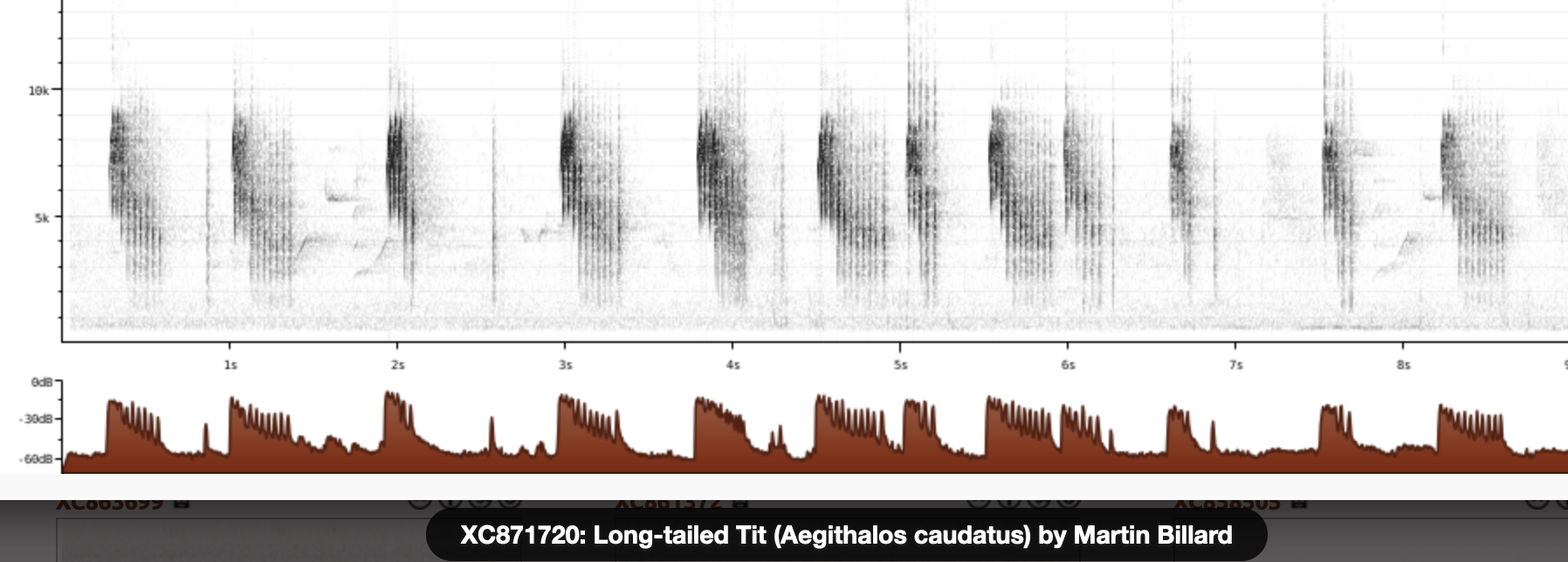

Ruf Eigenschaften: Kontaktruf Ruf Melodie: einfach rhythmisch, langsam, Frequenz: 7-9 KHz,
Vollprofil

Gattung Psaltriparus:
Gattung Ägithina:
Gattung Psaltria:
Familie Timaliidae (Babblers):
Gattung Pomatostomus:
Gattung Illadopsis:
Gattung Mystacornis:
Gattung Neomixis:
Gattung Oxylabes:
Gattung Pomatorhinus:
Gattung Stachyris:
Gattung Yuhina:
Gattung Alcippe:
Gattung Macronous:
Gattung Chrysomma:
Gattung Gampsorhynchus:
Gattung Jabouilleia:
Gattung Kakamega:
Gattung Malacocincla:
Gattung Malacopteron:
Gattung Kenopia:
Gattung Napothera:
Gattung Pteruthius:
Gattung Timalia:
Gattung Xiphirhynchus:
Gattung Pseudoalcippe:
Gattung Speläornis:
Gattung Arcanator:
Gattung Modulatrix:
Gattung Lioptilus:
Gattung Ptyrticus:
Gattung Dumetia:
Gattung Parophasma:
Gattung Pnöpyga:
Gattung Rimator:
Gattung Conostoma:
Gattung Erpornis:
Gattung Moupinia:
Gattung Leonardina:
Gattung Micromacronus:
Gattung Ptilocichla:
Gattung Rhopocichla:
Gattung Sphenocichla:
Gattung Erythrogenys:
Gattung Mixornis:
Gattung Macronus:
Gattung Cyanoderma:
Familie Sylviidae (Grasmücken / Old world warblers):
Unterfamilie Megalurinae:
Gattung Graminicola:
Unterfamilie Acrocephalinae:
Gattung Cettia:
Gattung Acrocephalus:
Schilfrohrsänger / Sedge warbler (Acrocephalus schoenobaenus)
Alternative Klassifikation: Motacilla schoenobaenus
Profil Wikipedia Vogelwarte BirdLife ZH ornitho.ch Xeno-Canto BirdID NABU YouTube


Schilfrohrsänger. 2022-06-04 11:48:08 Kaltbrunner-Riet
Zuerst beobachtet in 🇨🇭 an 2020-05-20.

Beschreibung

Allgemein: Brütet hier nicht, darum eher selten, Durchzügler.
Allgemein: Deutschland: Brut-, Zugvogel seit 2016 nicht mehr auf der Vorwarnliste

Saisonales Verhalten

Präsenz: 03-23 - 10-27
Brut: 05-01 - 07-29
Migration rein: 03-23 - 05-31
Migration raus: 07-10 - 10-27
Weitere Infos at Vogelwarte.ch

Weitere Infos

Physikalische Details

Körperlich: Länge=13 cm, Flügelspanne=17-21 cm, Gewicht=9-15 g
Habitate: Nassgebiet

Vokalisierung

Gesang: Das Beispiel auf vogelwarte.ch ist eher ein knarren und trillern, ähnlicher Rhythmus und Klänge wie der Teichrohrsänger.
Gesang: Gesang sehr ähnlich dem Teichrohrsänger. Aber nicht so im Takt. Bevorzugte Tongebilde werden mehrmals wiederholt. Des öftern Singflug über dem Schilf. [Link]

Song vigorous and varied. [Link] Gesang Eigenschaften: Melody: singt 20 Sekunden oder länger, langsam, Frequency: medium (1-5 KHz) Special sounds: Mimikry
Quelle: XENOCANTO XC661577 - Sedge Warbler - Acrocephalus schoenobaenus - song.mp3 (Gesang)


Vollprofil

Teichrohrsänger / Eurasian reed warbler (Acrocephalus scirpaceus)
Alternative Klassifikation: Turdus scirpaceus
Auch bekannt als: Common reed warbler
Profil Wikipedia Vogelwarte BirdLife ZH ornitho.ch bird-song.ch Xeno-Canto BirdID NABU YouTube


Teichrohrsänger. 2024-05-20 08:58:41 Klingnauer Stausee
Zuerst beobachtet in 🇨🇭 an 2020-04-27.

Beschreibung

Allgemein: 2-5 repetitions of each sound. Is the tone a bit lower than the other reed warblers?
Allgemein: Deutschland: Brut-, Zugvogel

Saisonales Verhalten

Präsenz: 04-11 - 10-18
Brut: 05-10 - 08-18
Migration rein: 04-11 - 05-31
Migration raus: 07-29 - 10-18
Weitere Infos at Vogelwarte.ch

Weitere Infos

Physikalische Details

Körperlich: Länge=13 cm, Flügelspanne=17-21 cm, Gewicht=10-16 g
Habitate: Nassgebiet

Vokalisierung

Gesang: Weird, squeaky, urgent. Slower than Sumpfrohrsaenger.
Gesang: Gleichmässiges Tempo! Man kann den Takt schlagen dazu.(Metronomsänger) Oft 2-3x wiederholte kurze Motive. Viele schnarrende Töne. [Link]
By far easiest to identify by song: Characteristic, almost metric and even rhythm, very different from Sedge Warbler. Squeaky timbre with many, almost bizarre, harmonics. Phrases generally repeated 2-3 times. [Link] Gesang Eigenschaften: Melody: singt 20 Sekunden oder länger, schnell, Frequency: medium (1-5 KHz) Special sounds: komisch
Quelle: XENOCANTO XC653035 - Eurasian Reed Warbler - Acrocephalus scirpaceus - song.mp3 (Gesang)


Vollprofil

Drosselrohrsänger / Great reed warbler (Acrocephalus arundinaceus)
Alternative Klassifikation: Turdus arundinaceus
Profil Wikipedia Vogelwarte BirdLife ZH ornitho.ch bird-song.ch Xeno-Canto BirdID NABU YouTube


Drosselrohrsänger, Leukerfeld. 2022-05-21 10:39:42 Leuk
Zuerst beobachtet in 🇨🇭 an 2020-05-20.

Beschreibung

Allgemein: Deutschland: Brut-, Zugvogel seit 2016 nicht mehr auf der Vorwarnliste
Persönlich gemerkt: Zuerst in Bolle Magadino gesehen und gehört.
Aussehen und Identifizierung: 50% grösser als der ähnlich aussehende Teichrohrsänger
Verhalten: In der Sonntagszeitung von 23. Mai 2021 wurde über neue Erkenntnisse zum Zug von Drosselrohrsängern geschrieben. Durch neue, leichte Messgeräte konnte man sehen, dass die Vögel in der Nacht auf 2 km Höhe fliegen, beim Sonnenaufgang über eine Stunde hoch bis 5.5 km fliegen. Da sie das Mittlemeer und die Saharawüste überfliegen, wo sie nicht landen können, fliegen sie bis 34 Stunden non-stop. Das Fliegen erzeugt viel Körperwärme und die Höhe hilft ihnen abzukühlen. [(Abo erforderlich)]

Saisonales Verhalten

Präsenz: 04-20 - 09-28
Brut: 05-10 - 08-18
Migration rein: 04-20 - 05-31
Migration raus: 07-20 - 09-28
Weitere Infos at Vogelwarte.ch

Weitere Infos

Physikalische Details

Körperlich: Länge=19-20 cm, Flügelspanne=24-29 cm, Gewicht=29-36 g
Habitate: Nassgebiet

Vokalisierung

Gesang: General: Klingt für mich wie krächz pieps pieps. Vogelarten der Schweiz sieht das anders: 'Laute und auffällig knarrende, rau tönende Strophe ''karre-kiet karre karre-keit.'' '
Song: In Vergleich zu Teichrohrsänger langsamer und lauter. [Link]
Gesang: Gesang ähnlich Teichrohrsänger, aber viel lauter, Tonhöhenunterschiede 2-3 Oktaven. Karre-Kit-Sänger.. Sehr taktmässig. [Link]
Song similar to Reed Warbler in timbre, but much deeper and slower. [Link] Gesang Eigenschaften: Melody: singt 20 Sekunden oder länger, langsam, Frequency: medium (1-5 KHz) Special sounds: Raspel
Quelle: XENOCANTO XC661392 - Great Reed Warbler - Acrocephalus arundinaceus - song.mp3 (Gesang)


Vollprofil

Gattung Chloropeta:
Gattung Hippolais:
Gelbspötter / Icterine warbler (Hippolais icterina)
Alternative Klassifikation: Hippolais hippolais
Profil Wikipedia Vogelwarte BirdLife ZH ornitho.ch bird-song.ch Xeno-Canto BirdID NABU YouTube


Wikipedia: Icterine warbler Quelle: WIKIPEDIA 1200px-Hippolais_icterina2.jpg
🔍 Never observed (yet!)

Beschreibung

Allgemein: Gesucht in Kaltbrunnenriet - in Juni 2022 nicht gefunden.
Allgemein: Deutschland: Brut-, Zugvogel
Etymologie: Ihren Namen [Spötter] tragen sie, weil sie in ihren Gesang den anderer Vögel nachahmend aufnehmen („spotten“). [Link]
It referred to a small bird mentioned by Aristotle and others and may be onomatopoeic or derived from hupo,"under", and laas, "stone". [Link]
Aussehen und Identifizierung: Yellow belly, brown back, very similar to melodious warbler. Sometimes has the punky ruffled head feathers.
Aussehen und Identifizierung: Ebird: Distinctive features include longish, daggerlike bill, long primary projection in the wings, and square tail. Told from similar Melodious Warbler by usually conspicuous pale wing panel, longer wings, and marginally shorter bill. Usually difficult to see when singing except during song flights, when long wings are apparent. Found in tall forest with oaks and birch, mixed forest, gardens, and parks. [Link]
Geographie: Es gibt nur 100-150 Paare in der Schweiz, darum steht es auf der Rote Liste CH as stark gefährdet - und ist sicher schwierig zu finden. [Link]

Saisonales Verhalten

Präsenz: 05-01 - 09-15

Weitere Infos

Physikalische Details

Körperlich: Länge=13 cm, Flügelspanne=20-24 cm, Gewicht=10-15 g
Habitate: Landwirtschaft

Vokalisierung

Gesang: Short bits 4-8 notes, sometimes with a little pause, overall a greenfinch feel. Some whoops, some chucks like a great tit, some bits like a house sparrow, even a meow. BirdLife Schweiz says full of vigor, includes some mis-tones and creaky calls; eBird says Song is fast, loud, and melodious with lots of mimicry.Can sing low (2k) or high (10k)
Gesang: Sein lauter, lebhafter und variabler Gesang setzt sich aus flötenden, zwitschernden und nasalen Tönen sowie Imitationen anderer Vogelarten wie Drosseln, Meisen, Schwalben oder Pirol zusammen. [Scheint mir aus Segmente von ~2 Sekunden zu bestehen.] [Link]
Song very virtuous and varied. Most similar to Marsh Warbler, but timbre and attack harder and more powerful. Tempo varied with many pauses, but includes longer, and more flowing sequences than Marsh Warbler. Song frequently interrupted by characteristic, nasal, high-pitched squeaks unlike Marsh Warbler. Master of mimicry. Imitations are often repeated several times before changing to melodious motifs or more "noisy" phrases. [Link] Gesang Eigenschaften: Melody: improvisiert melodisch, schnell, Frequency: 2-10 KHz Special sounds: Mimikry
Vollprofil

Gattung Leptopöcile:
Gattung Sylvietta:
Gattung Hylia:
Gattung Macrosphenus:
Gattung Urosphena:
Gattung Achätops:
Gattung Sphenöacus:
Gattung Melocichla:
Gattung Tesia:
Gattung Tickellia:
Gattung Abroscopus:
Gattung Eremomela:
Gattung Nesillas:
Gattung Iduna:
Gattung Oligura:
Gattung Arundinax:
Unterfamilie Sylviinae:
Gattung Sylvia:
Gartengrasmücke / Garden warbler (Sylvia borin)
Alternative Klassifikation: Sylvia simplex
Profil Wikipedia Vogelwarte BirdLife ZH ornitho.ch bird-song.ch Xeno-Canto BirdID NABU YouTube


Das muss ein Gartengrasmücke sein im Feld bei W-Wiher, noch nie so in Getreide gesehen, aber es klingt plausibel. 2024-06-27 18:57:05 Fehraltorf
Zuerst beobachtet in 🇨🇭 an 2020-04-27.

Beschreibung

Allgemein: Unauffällig, schüchtern, singen aber wie verrückt. Ich habe sie früher viel gehört beim Hungerseeli, sehe sie praktisch nur als Schatten in den Ästen oder schnell zum nächsten Baum fliegend.
Allgemein: Hidden in the branches. Does change trees though. 2024 saw one in a grain field by the Wildert Weiher
Allgemein: Deutschland: Brut-, Zugvogel
Aussehen und Identifizierung: Nabu: Das Hauptbestimmungsmerkmal dieser sehr unauffällig gefärbten Grasmücke ist, dass sie kein besonderes Merkmal besitzt.
Im gegensatz zu ihrem Namen kommt die Gartengrasmücke eher seltener in Gärten vor, häufiger ist sie in Hecken und grossen Büschen in waldrandlage anzutreffen, wo sie recht versteckt lebt.
[Aus der NABU Android-App]

Saisonales Verhalten

Präsenz: 04-15 - 10-05
Brut: 04-30 - 08-10
Migration rein: 04-15 - 05-30
Migration raus: 08-01 - 10-05
Weitere Infos at Vogelwarte.ch

Weitere Infos

Physikalische Details

Körperlich: Länge=14 cm, Flügelspanne=20-24 cm, Gewicht=16-22 g
Habitate: Wald

Vokalisierung

Gesang: Song: Hard to distinguish from Mönchsgrasmücke/black cap, but they sing much longer and don't end with a typical short melody like the black caps. [Link]
'minutenlang anhaltenden, plaudernden und abwechslungsreichen Gesang' [Link]
Gesang: Sprudelnd, orgelnd, die längsten Strophen aller hiesigen Grasmücken. Mit vielen reinen, volltönenden Tönen. Ohne Überschlag der Mönchsgrasmücke. [Link]
Song: a full bodied, flowing, melodious stream of notes, distinguished by its almost constant, warbled quality and lack of clear whistling notes (see Blackcap). Tempo is fairly even. Beware confusion possibility with occasional subsong of Blackcap that never reaches the whistling part! Call a nasal "che". [Link] Gesang Eigenschaften: Melody: improvisiert melodisch (hm), schnell, Frequency: medium (1-5 KHz)
Quelle: XENOCANTO XC728379 - Garden Warbler - Sylvia borin - song.mp3 (Gesang)


Rufe: Alarm call a hard "check", and a hoarse "tcherr". [Link] No details but a Xeno-Canto recording. - but really OWN
Garden warbler calls from bushes at Wildert.

♫ 2025-07-23 17:28:00 Wildert (Ruf)

Ruf Eigenschaften: Gesang Frequenz: ,
Vollprofil

Gattung Curruca:
Gattung Hemitesia:
Gattung Graueria:
Gattung Fulvetta:
Gattung Lioparus:
Gattung Sinosuthora:
Gattung Cholornis:
Gattung Psittiparus:
Gattung Suthora:
Gattung Regulus:
Gattung Panurus:
Gattung Chamäa:
Gattung Amaurocichla:
Familie Pycnonotidae (Bulbuls):
Gattung Hypsipetes:
Gattung Andropadus:
Gattung Phyllastrephus:
Gattung Pycnonotus:
Gattung Alophoixus:
Gattung Tricholestes:
Gattung Chlorocichla:
Gattung Bleda:
Gattung Criniger:
Gattung Ixonotus:
Gattung Bäopogon:
Gattung Nicator:
Gattung Spizixos:
Gattung Calyptocichla:
Gattung Setornis:
Gattung Iole:
Gattung Ixos:
Gattung Microscelis:
Gattung Thescelocichla:
Gattung Hemixos:
Gattung Pyrrhurus:
Gattung Acritillas:
Gattung Arizelocichla:
Gattung Eurillas:
Gattung Stelgidillas:
Gattung Brachypodius:
Gattung Cerasophila:
Gattung Thapsinillas:
Familie Zosteropidae (White-eyes):
Gattung Zosterops:
Gattung Apalopteron:
Gattung Cleptornis:
Gattung Chlorocharis:
Gattung Hypocryptadius:
Gattung Lophozosterops:
Gattung Oculocincta:
Gattung Woodfordia:
Gattung Heleia:
Gattung Madanga:
Gattung Tephrozosterops:
Gattung Sterrhoptilus:
Gattung Dasycrotapha:
Gattung Megazosterops:
Gattung Zosterornis:
Familie Hirundinidae (Schwalben / Swallows):
Gattung Hirundo:
Gattung Cecropis:
Gattung Atticora:
Gattung Tachycineta:
Gattung Progne:
Gattung Stelgidopteryx:
Gattung Riparia:
Gattung Psalidoprocne:
Gattung Petrochelidon:
Gattung Ptyonoprogne:
Gattung Pygochelidon:
Gattung Delichon:
Gattung Notiochelidon:
Gattung Pseudhirundo:
Gattung Phedina:
Gattung Haplochelidon:
Gattung Alopochelidon:
Gattung Cheramöca:
Gattung Pseudochelidon:
Familie Alaudidae (Lerchen / Larks):
Gattung Certhilauda:
Gattung Eremopterix:
Gattung Alauda:
Gattung Eremophila:
Gattung Alämon:
Gattung Ammomanes:
Gattung Galerida:
Gattung Calandrella:
Gattung Mirafra:
Gattung Lullula:
Gattung Spizocorys:
Gattung Eremalauda:
Gattung Chersophilus:
Gattung Chersomanes:
Gattung Melanocorypha:
Gattung Calendulauda:
Gattung Heteromirafra:
Gattung Pinarocorys:
Gattung Ramphocoris:
Gattung Pseudalämon:
Gattung Alaudala:
Familie Cisticolidae (Halmsänger):
Gattung Cisticola:
Gattung Prinia:
Gattung Camaroptera:
Gattung Eminia:
Gattung Hypergerus:
Gattung Scotocerca:
Gattung Schistolais:
Gattung Apalis:
Gattung Euryptila:
Gattung Rhopophilus:
Gattung Bathmocercus:
Gattung Spiloptila:
Gattung Speirops:
Gattung Artisornis:
Gattung Calamonastes:
Gattung Incana:
Gattung Urolais:
Gattung Orthotomus:
Gattung Scepomycter:
Gattung Drymocichla:
Gattung Malcorus:
Gattung Oreophilais:
Gattung Phragmacia:
Gattung Phyllolais:
Gattung Urorhipis:
Gattung Oreolais:
Familie Phylloscopidae (Laubsänger):
Gattung Phylloscopus:
Gattung Seicercus:
Gattung Rhadina:
Familie Leiothrichidae:
Gattung Leiothrix:
Gattung Garrulax (White-crested laughingthrush):
Gattung Turdoides:
Gattung Actinodura:
Gattung Cutia:
Gattung Heterophasia:
Gattung Liocichla:
Gattung Minla:
Gattung Kupeornis:
Gattung Phyllanthus:
Gattung Trochalopteron:
Gattung Montecincla:
Gattung Grammatoptila:
Gattung Laniellus:
Gattung Leioptila:
Gattung Argya:
Gattung Siva:
Gattung Sibia:
Gattung Chatarrhäa:
Gattung Chrysominla:
Gattung Ianthocincla:
Familie Bernieridae:
Gattung Cryptosylvicola:
Gattung Thamnornis:
Gattung Crossleyia:
Gattung Xanthomixis:
Gattung Hartertula:
Familie Pellorneidae:
Gattung Pellorneum:
Gattung Trichastoma:
Gattung Laticilla:
Gattung Turdinus:
Gattung Schöniparus:
Familie Locustellidae:
Gattung Locustella:
Feldschwirl / Common grasshopper warbler (Locustella naevia)
Auch bekannt als: Common grasshopper-warbler, Grasshopper warbler
Profil Wikipedia Vogelwarte BirdLife ZH ornitho.ch bird-song.ch Xeno-Canto BirdID NABU YouTube


Wikipedia: Common grasshopper warbler Quelle: WIKIPEDIA Grashoppsangare-070512.jpg
🔍 Never observed (yet!)

Beschreibung

Allgemein: Der Feldschwirl (Locustella naevia) ist ein Singvogel aus der Gattung der Schwirle (Locustella) und der Familie der Grassänger (Locustellidae). In Mitteleuropa ist diese Art ein verbreiteter und lokal häufiger Brut- und Sommervogel. [mehr]
Deutschland: Brut-, Zugvogel RL 3

Saisonales Verhalten

Präsenz: 04-11 - 10-07
Brut: 05-01 - 07-29
Migration rein: 04-11 - 06-09
Migration raus: 07-29 - 10-07
Weitere Infos at Vogelwarte.ch

Weitere Infos

Physikalische Details

Körperlich: Länge=12-13 cm, Flügelspanne=15-19 cm, Gewicht=11-16 g
Habitate: Nassgebiet

Ähnliche Arten

Gesang oder Rüfe ähnlich wie: Rohrschwirl.

Vokalisierung

Gesang: Buzzing like an insect or machinery. BirdLife Schweiz says like a grasshopper (which is after all the English name).
Gesang: Sehr lang anhaltendes Schwirren. Die einzelnen Schlage noch zu erkennen. Der Klang erinnert etwas an Heuschreckenzirpen (alter Name Heuschreckenrohrsänger, langer Name, lange Strophe) und klingt etwas blechern., d.h. Mit Oberton. (fast wie ein Wecker bei dem man den Finger etwas auf die Glocke hält) [Link]
Song insect-like and high-pitched. A monotonous stream of even clicks similar to a running fishing line. Maintained for seemingly endless periods, and often hard to locate. Song most similar to Savi's Warbler but is slower (each click more separated), and higher pitched with a metallic, ringing quality. Short sequences of song also functions as contact call. Also a Robin-like "tick". [Link] Gesang Eigenschaften: Melody: einfach rhythmisch, schnell, Frequency: 5-8 KHz
Vollprofil

Rohrschwirl / Savi's warbler (Locustella luscinioides)
Alternative Klassifikation: Locustella luscinoides
Profil Wikipedia Vogelwarte BirdLife ZH ornitho.ch bird-song.ch Xeno-Canto BirdID NABU YouTube


Wikipedia - Rohrschwirl Chiemgau. Quelle: WIKIPEDIA Wikipedia - Rohrschwirl_Chiemgau.jpg
Zuerst beobachtet in 🇨🇭 an 2022-06-04.

Beschreibung

Allgemein: Der Rohrschwirl (Locustella luscinioides) ist ein Singvogel aus der Familie der Grassänger (Locustellidae). Es werden drei Unterarten unterschieden. [mehr]
Deutschland: Brut-, Zugvogel

Saisonales Verhalten

Präsenz: 04-01 - 08-29
Brut: 05-01 - 08-09
Migration rein: 04-01 - 05-31
Migration raus: 07-29 - 08-29
Weitere Infos at Vogelwarte.ch

Weitere Infos

Physikalische Details

Körperlich: Länge=14 cm, Flügelspanne=18-21 cm, Gewicht=14-16 g
Habitate: Nassgebiet

Ähnliche Arten

Gesang oder Rüfe ähnlich wie: Feldschwirl, Ziegenmelker.

Vokalisierung

Gesang: Endless buzzing like an insect or machinery. Lower tone than Feldschwirl.
Gesang: Gesang ähnlich obiger Art [Feldschwirl]. Tiefere Tonlage, höhere Frequenz. Strophen meist kürzer [Link]
Song insect-like and high-pitched. A monotonous stream of even clicks similar to the whirring of a sewing machine. Song most similar to Grasshopper Warbler but faster (each click hard to distinguish), and lower pitched with less, ringing quality, due to less prominent high frequencies. At closer range a Robin-like, accelerating ticking is heard, introducing the actual song. [Link] Gesang Eigenschaften: Melody: einfach rhythmisch, schnell, Frequency: 3-5 KHz
Quelle: XENOCANTO XC710242 - Savi's Warbler - Locustella luscinioides - song.mp3 (Gesang)


Vollprofil

Gattung Megalurus:
Gattung Bradypterus:
Gattung Cincloramphus:
Gattung Schönicola:
Gattung Malia:
Gattung Chätornis:
Gattung Megalurulus:
Gattung Robsonius:
Gattung Elaphrornis:
Gattung Büttikoferella:
Gattung Amphilais:
Gattung Poodytes:
Familie Scotocercidae:
Gattung Horornis:
Gattung Phyllergates:
Überfamilie Passeroidea:
Familie Passeridae (Sperlinge / Sparrows):
Gattung Passer:
Gattung Plocepasser:
Gattung Petronia:
Gattung Prunella:
Gattung Anomalospiza:
Gattung Montifringilla:
Gattung Philetairus:
Gattung Aidemosyne:
Gattung Padda:
Gattung Carpospiza:
Gattung Pyrgilauda:
Gattung Gymnoris:
Familie Fringillidae (Finken):
Unterfamilie Fringillinae:
Gattung Fringilla:
Unterfamilie Carduelinae:
Gattung Serinus (Canaries):
Gattung Carpodacus:
Gattung Cardülis:
Gattung Acanthis (Redpolls):
Gattung Pyrrhula:
Gattung Coccothraustes:
Gattung Loxia:
Gattung Eophona:
Gattung Hämatospiza:
Gattung Mycerobas:
Gattung Pinicola:
Gattung Uragus:
Gattung Leucosticte:
Gattung Linurgus:
Gattung Neospiza:
Gattung Melamprosops:
Gattung Pyrrhoplectes:
Gattung Hesperiphona:
Gattung Kozlowia:
Gattung Hämorhous:
Gattung Spinus (Siskins):
Gattung Chloris:
Gattung Linaria:
Unterfamilie Emberizinae:
Gattung Platyspiza:
Gattung Cyanerpes:
Gattung Hemispingus:
Gattung Tersina:
Gattung Buarremon:
Gattung Melopyrrha:
Gattung Embernagra:
Tribus Cardinalini:
Gattung Cardinalis:
Gattung Passerina:
Gattung Spiza:
Gattung Pheucticus:
Gattung Cyanocompsa:
Gattung Caryothraustes:
Gattung Cyanoloxia:
Gattung Porphyrospiza:
Gattung Rhodothraupis:
Gattung Parkerthraustes:
Gattung Phäothlypis:
Tribus Emberizini:
Gattung Emberiza (Buntings):
Rohrammer / Common reed bunting (Emberiza schoeniclus)
Alternative Klassifikation: Schoeniclus schoeniclus
Auch bekannt als: Reed bunting, Eurasian reed bunting
Profil Wikipedia Vogelwarte BirdLife ZH ornitho.ch bird-song.ch Xeno-Canto BirdID NABU YouTube


Rohrammer von Fanel-Platform aus. 2024-05-22 18:08:53 Fanel/Chablais de Cudrefin und La Sauge
Zuerst beobachtet in 🇨🇭 an 2020-04-27.

Beschreibung

Allgemein: Deutschland: Brut-, Zugvogel, Wintergast
Aussehen und Identifizierung: A bit like General Burnsides: white sideburns, here curling back around a black head. [Link]

Saisonales Verhalten

Jahresvogel
Brut: 04-20 - 07-29
Migration rein: 02-10 - 04-20
Migration raus: 09-17 - 11-26
Weitere Infos at Vogelwarte.ch

Weitere Infos

Physikalische Details

Körperlich: Länge=15-16 cm, Flügelspanne=21-28 cm, Gewicht=16-25 g
Habitate: Nassgebiet

Ähnliche Arten

Sieht ähnlich aus wie: Haussperling.

Vokalisierung

Gesang: General: At Fanel I heard sequences of whistles and trills (buzzes?), just a few notes, but wandering up and down: m h lll, or l m hhh m. Listen to recording of 2022-06-25 13.37.28
Song: Oft 4 Noten: mlhl [Link]
BirdID: A short sequence of 3-5 brittle and buzzing sounds, repeated consistently with marked pauses. Last sound in phrase often has a conclusive feel, but not always. [Link]
Gesang: Song variable between individuals and breeding status: A short sequence of 3-5 brittle and buzzing sounds, repeated consistently with marked pauses. Last sound in phrase often has a conclusive feel, but not always. Paired males sing slower than unpaired. Unpaired male song also more contracted, making the pauses between each phrase stand out. [Link] Gesang Eigenschaften: Melody: stereotypisch melodisch (mllllm), langsam, Frequency: 3-7 KHz Special sounds: Triller
Quelle: XENOCANTO XC723277 - Common Reed Bunting - Emberiza schoeniclus - song.mp3 (Gesang)


♫ 2022-06-25 13:37:28 Quelle: BirdNet 20220625_133728 birdnet - Rohrammer - Rohrammer - Neuchâtel.mp3 La Sauge (Gesang)

Quelle: XENOCANTO XC665288 - Common Reed Bunting - Emberiza schoeniclus schoeniclus - song.mp3 (Gesang)


Quelle: XENOCANTO XC694863 - Common Reed Bunting - Emberiza schoeniclus - song.mp3 (Gesang)


Quelle: XENOCANTO XC719864 - Common Reed Bunting - Emberiza schoeniclus - song.mp3 (Gesang)


Quelle: XENOCANTO XC656275 - Common Reed Bunting - Emberiza schoeniclus - song.mp3 (Gesang)


Quelle: XENOCANTO XC572969 - Common Reed Bunting - Emberiza schoeniclus - song.mp3 (Gesang)


Rufe: Contact call a sharp, descending and drawn "tseeeoo". A bit similar to Yellow Wagtail, but not as sharp and explosive. In migration a thick, and unmusical "chong" is often heard. [Link] No details but a Xeno-Canto recording.
XC884544 - Common Reed Bunting - Emberiza schöniclus - swooping call.

Quelle: XENOCANTO XC884544 - Common Reed Bunting - Emberiza schoeniclus - swooping call.mp3 (Ruf)


Ruf Eigenschaften: Gesang Frequenz: ,
Vollprofil

Gattung Calcarius:
Gattung Plectrophenax:
Gattung Melophus:
Gattung Rowettia:
Gattung Donacospiza:
Gattung Peucäa:
Gattung Orthogonys:
Gattung Schöniclus:
Gattung Fringillaria:
Gattung Chlorophonia:
Gattung Euphonia:
Unterfamilie Drepanidinae:
Gattung Hemignathus:
Gattung Himatione:
Gattung Loxops:
Gattung Oreomystis:
Gattung Palmeria:
Gattung Paroreomyza:
Gattung Pseudonestor:
Gattung Vestiaria:
Gattung Telespiza:
Gattung Rhodopechys:
Gattung Loxioides:
Gattung Bucanetes:
Gattung Rhodospiza:
Gattung Eremopsaltria:
Unterfamilie Peucedraminae:
Gattung Peucedramus:
Gattung Urocynchramus:
Gattung Callacanthis:
Gattung Chaunoproctus:
Gattung Rhynchostruthus:
Gattung Akialoa:
Gattung Psittirostra:
Gattung Crithagra:
Familie Motacillidae (Stelzenverwandte):
Gattung Anthus:
Wiesenpieper / Meadow pipit (Anthus pratensis)
Profil Wikipedia Vogelwarte BirdLife ZH ornitho.ch bird-song.ch Xeno-Canto BirdID NABU YouTube
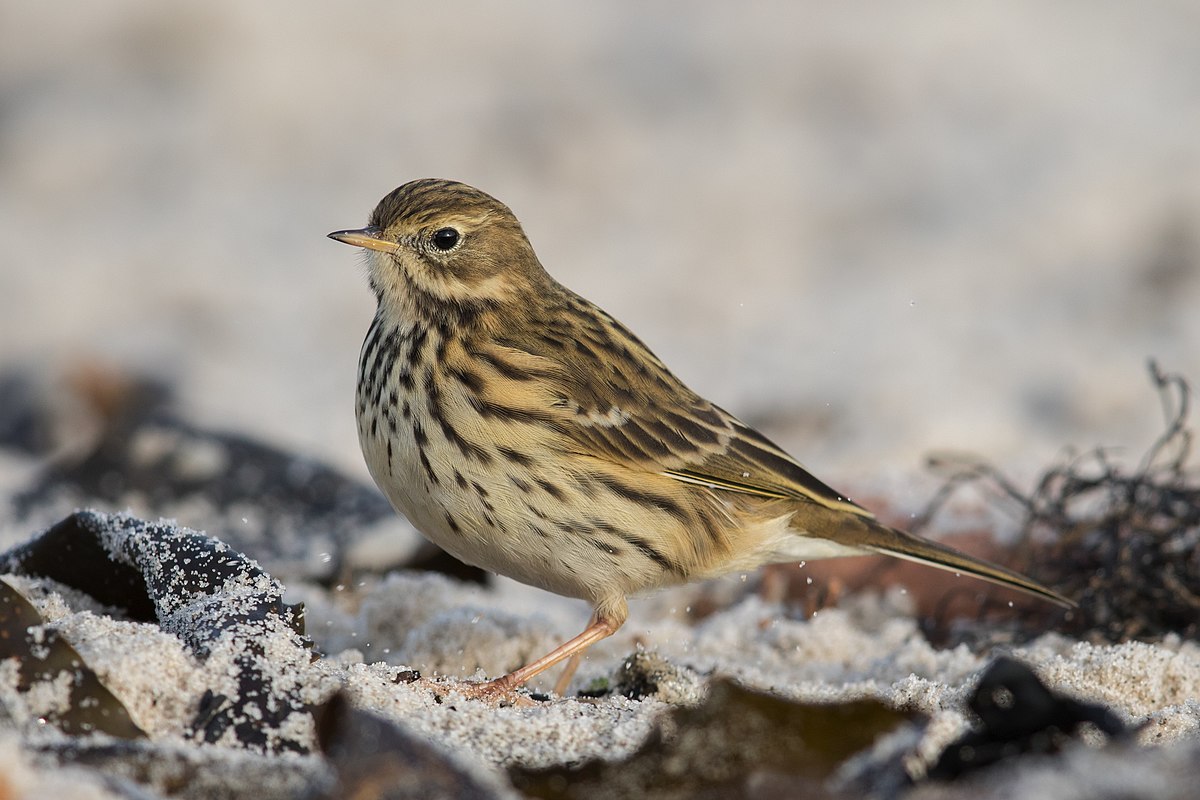

Wikipedia: Meadow pipit Quelle: WIKIPEDIA 1200px-Wiesenpieper_Meadow_pipit.jpg
Zuerst beobachtet in 🇨🇭 an 2021-06-27.

Beschreibung

Allgemein: Looks like Misteldrossel
Allgemein: Deutschland: Brut, Zugvogel, Wintergast RL V
Etymologie: [9] The name "pipit", first documented by Thomas Pennant in 1768, is onomatopoeic, from the call note of this species. [Link]
Saisonal: Meadow Pipits can often be observed in large numbers when they gather on fields during migration. They like to stay in meadows with high grass or on arable land and only fly up when disturbed or when a bird of prey appears, which is why they are often overlooked. [Link]

Saisonales Verhalten

Jahresvogel
Brut: 04-01 - 07-29
Migration rein: 02-20 - 05-10
Migration raus: 09-17 - 11-06
Weitere Infos at Vogelwarte.ch

Weitere Infos

Physikalische Details

Körperlich: Länge=14 cm, Flügelspanne=22-25 cm, Gewicht=15-22 g
Habitate: Berg

Ähnliche Arten

Sieht ähnlich aus wie: Misteldrossel.

Vokalisierung

Gesang: Single note, possibly rising at the end. (Or: long 4 second phrases, gradually louder then softer; swoopy or whoopy.) Sings in flight. BirdID: Song very similar to Rock Pipit, but tone less full and more brittle. Lacks Rock Pipit's closing trill, and beginning is less "hammering". - but what does a rock pipit sound like?
Gesang: Ähnlich Baumpieper, aber ohne Zia-Rufe. Vollständiger Gesang nur in flatterndem Singflug. Lange Strophen. Mittelstück meist zart und hoch [Link]
Song very similar to Rock Pipit, but tone less full and more brittle. Lacks Rock Pipit's closing trill, and beginning is less "hammering". [Link] Gesang Eigenschaften: Melody: einnotig, schnell, Frequency: medium (1-5 KHz)
Quelle: XENOCANTO XC722919 - Meadow Pipit - Anthus pratensis - song.mp3 (Gesang)


Rufe: fast tonlos „ist, ist.“ [Link]
Contact call a short "eest". Similar to Rock Pipit but shorter,cleaner and most often in quick series. Warning call a sharp, high pitched "tzeet". Also a rattling "trrrrt". [Link] No details but a Xeno-Canto recording.
XC930459 - Meadow Pipit flight call - Anthus pratensis.

Quelle: XENOCANTO XC930459 - Meadow Pipit flight call - Anthus pratensis.mp3 (Flugruf)


Ruf Eigenschaften: Flugruf Frequenz: ,
Vollprofil

Baumpieper / Tree pipit (Anthus trivialis)
Alternative Klassifikation: Alauda trivialis
Profil Wikipedia Vogelwarte BirdLife ZH ornitho.ch bird-song.ch Xeno-Canto BirdID NABU YouTube


MerlinBirdID says Tree pipit (Baumpieper), Jura, Scotland. 2023-08-13 10:51:12 Schottland
Zuerst beobachtet in 🇨🇭 an 2020-06-12.

Beschreibung

Allgemein: Sieht aus wie ein Drossel
Allgemein: Deutschland: Brut-, Zugvogel RL V

Saisonales Verhalten

Präsenz: 04-01 - 10-07
Brut: 04-20 - 08-09
Migration rein: 04-01 - 05-21
Migration raus: 08-09 - 10-07
Weitere Infos at Vogelwarte.ch

Weitere Infos

Physikalische Details

Körperlich: Länge=15 cm, Flügelspanne=25-27 cm, Gewicht=18-29 g
Habitate: Berg

Ähnliche Arten

Gesang oder Rüfe ähnlich wie: Grünfink.

Vokalisierung

Gesang: Reminds me of a greenfinch - series of trills, whoops and other sounds with a long pause
Gesang: Mehrere unterschiedliche Tonreihen aneinandergefügt. Zuletzt „zia zia zia ziah“. Zuerst auf Baum sitzend, dann im Singflug, Zia-Rufe während Gleitflug (Fallschirmvogel) [Link]
Song characteristic. Starts with a series of Chaffinch-like "che-che-che" which gives way to long, descending, "ricocheting" whistling notes (especially at the end of song-flight). [Link] Gesang Eigenschaften: Melody: einfach rhythmisch, langsam, Frequency: medium (1-5 KHz) Special sounds: Triller, aufsteigend
Quelle: XENOCANTO XC570506 - Tree Pipit - Anthus trivialis - song.mp3 (Gesang)


Quelle: XENOCANTO XC649035 - Tree Pipit - Anthus trivialis - song.mp3 (Gesang)


Rufe: “psiet“ etwas nach unten gezogen. Auch „zieh“ [Link]
Flight call a short buzzing "tzzzeet". Given at even pitch, and in a fuller tone than Red-Throated Pipit. [Link] 1: Sounds like 1-note to me. Have also heard two high notes, then dann hlhlhl
2: No details but a Xeno-Canto recording.
XC917776 - Tree Pipit alarm call, one note, repeated every second - Anthus trivialis.

Quelle: XENOCANTO XC917776 - Tree Pipit alarm call, one note, repeated every second - Anthus trivialis.mp3 (Alarmruf)


Ruf Eigenschaften: Ruf Melodie: einnotig, langsam, Frequenz: medium (1-5 KHz),
Vollprofil
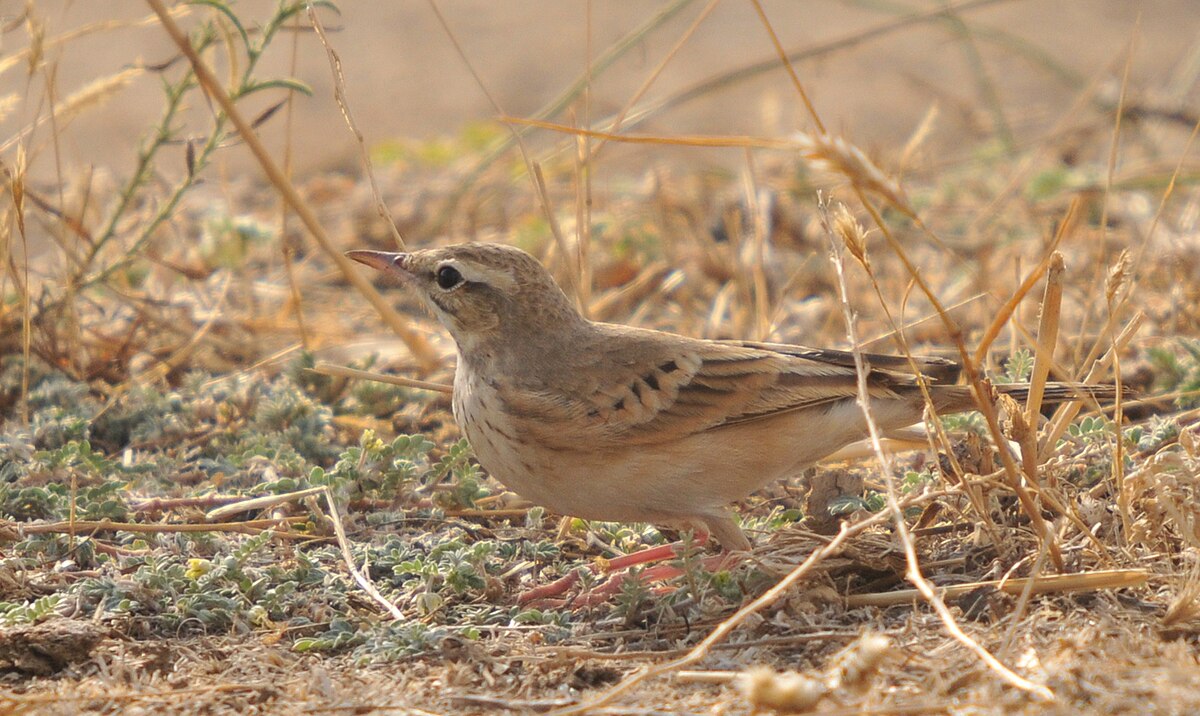
Brachpieper / Tawny pipit (Anthus campestris)
Alternative Klassifikation: Alauda campestris
Profil Wikipedia Vogelwarte BirdLife ZH ornitho.ch Xeno-Canto BirdID NABU YouTube


Wikipedia: Tawny pipit Quelle: WIKIPEDIA 1200px-Anthus_campestris-3.jpg
Zuerst beobachtet in 🇨🇭 an 2022-10-02.

Beschreibung

Allgemein: Langer schlanker Vogel, man sagt ähnlicher wie eine Schafstelze
Allgemein: Deutschland: Brut-, Zugvogel RL 1

Saisonales Verhalten

Präsenz: 04-01 - 10-07
Brut: 05-10 - 07-29
Migration rein: 08-10 - 08-18
Migration raus: 08-18 - 10-07
Weitere Infos at Vogelwarte.ch

Weitere Infos

Physikalische Details

Körperlich: Länge=16 cm, Flügelspanne=25-28 cm, Gewicht=24-32 g
Habitate: Landwirtschaft

Ähnliche Arten

Sieht ähnlich aus wie: Schafstelze.

Vokalisierung

Gesang: Song simple. Consists of three notes merged in a short, continuous and ringing "tsee-ro-ee", given every 1-2 seconds.
Gesang: Song simple. Consists of three notes merged in a short, continuous and ringing "tsee-ro-ee", given every 1-2 seconds. Timbre is wagtail-like and intonation variable, but consistent in each song. Flight call similar in timbre, like a cross between Yellow Wagtail and House Sparrow (song). Thinner and more wagtail-like than Richard's Pipit. [Link] Gesang Eigenschaften: Melody: stereotypisch melodisch, langsam, Frequency: 2-6 KHz
Quelle: XENOCANTO XC726515 - Tawny Pipit - Anthus campestris - song.mp3 (Gesang)


Vollprofil

Rotkehlpieper / Red-throated pipit (Anthus cervinus)
Alternative Klassifikation: Motacilla cervina
Profil Wikipedia Vogelwarte BirdLife ZH ornitho.ch Audubon AllAboutBirds Xeno-Canto BirdID NABU YouTube


Wikipedia: Red-throated pipit Quelle: WIKIPEDIA 1200px-Red-throated_Pipit.jpg
🔍 Never observed (yet!)

Beschreibung

Geographie: Dieser Vogel erscheint jenseits grossen Meere in Kontinenten : Europa, Nordamerika, Afrika, Asien.
Allgemein: Deutschland: Zugvogel

Saisonales Verhalten

Selten hier gesehen
Präsenz: 04-11 - 10-27
Migration rein: 10-18 - 10-25
Migration raus: 04-20 - 05-10
Weitere Infos at Vogelwarte.ch

Weitere Infos

Physikalische Details

Körperlich: Länge=15 cm, Flügelspanne=25-27 cm, Gewicht=17-24 g
Vollprofil

Gattung Motacilla:
Schafstelze / Western yellow wagtail (Motacilla flava)
Auch bekannt als: Wiesenschafstelze, Yellow wagtail
Profil Wikipedia Vogelwarte BirdLife ZH ornitho.ch bird-song.ch Xeno-Canto NABU YouTube


Schafstelze, Albufera. 2022-04-12 14:59:06
Zuerst beobachtet in Mallorca an 2022-04-12.

Beschreibung

Allgemein: Yellow, gray head, white mask.
Allgemein: Deutschland: Brut-, Zugvogel

Saisonales Verhalten

Präsenz: 03-23 - 10-27
Brut: 05-10 - 07-29
Migration rein: 03-23 - 05-31
Migration raus: 08-09 - 10-27
Weitere Infos at Vogelwarte.ch

Weitere Infos

Physikalische Details

Körperlich: Länge=17 cm, Flügelspanne=23-27 cm, Gewicht=14-21 g
Habitate: Nassgebiet

Ähnliche Arten

Sieht ähnlich aus wie: Brachpieper.

Vokalisierung

Gesang: Just a few notes, call seems to be common but song rare. Very short chirp of ~ 1 sec, long pause of 3 secs. At Wauwilermoos it seemed to be 'Twee tweetwee (higher note:) twee!'
Gesang: Song primitive and less striking. Beware differences in calls and songs between different subspecies. [Link] Gesang Eigenschaften: Melody: stereotypisch melodisch, langsam, Frequency: 3-9 KHz
Quelle: XENOCANTO XC721189 - Western Yellow Wagtail - Motacilla flava cinereocapilla - song.mp3 (Gesang)


Rufe: Contact call characteristic and widely used; a sharp, drawn out "pseeeoo" with an accented ending falling in pitch. A variable phrase with two or three notes resembling the contact call in timbre. [Link] General: Single note repeated
Song: sperling ähnliches lh lh lh. Dachte die wären melodisch?? Nein. BL chirpy ml ml [Link]
XC653784 - Western Yellow Wagtail - Motacilla flava flavissima - call.

Quelle: XENOCANTO XC653784 - Western Yellow Wagtail - Motacilla flava flavissima - call.mp3 (Ruf)


Ruf Eigenschaften: Ruf Melodie: einnotig, langsam, Frequenz: 3-9 KHz, Spezielle Klänge: absteigend.
Vollprofil

Gattung Macronyx:
Gattung Dendronanthus:
Gattung Tmetothylacus:
Familie Estrildidae:
Unterfamilie Viduinae:
Gattung Vidua:
Unterfamilie Estrildinae:
Gattung Lonchura (Mannikins):
Gattung Pöphila:
Gattung Taeniopygia:
Gattung Spermestes:
Gattung Odontospiza:
Gattung Erythrura:
Gattung Amandava:
Gattung Estrilda:
Gattung Hypargos:
Gattung Lagonosticta:
Gattung Ortygospiza:
Gattung Nigrita:
Gattung Parmoptila:
Gattung Cryptospiza:
Gattung Clytospiza:
Gattung Pytilia:
Gattung Euschistospiza:
Gattung Uräginthus:
Gattung Spermophaga:
Gattung Pyrenestes:
Gattung Mandingoa:
Gattung Nesocharis:
Gattung Amadina:
Gattung Neochmia:
Gattung Stagonopleura:
Gattung Emblema:
Gattung Heteromunia:
Gattung Lepidopygia:
Gattung Granatina:
Familie Nectariniidae:
Gattung Nectarinia:
Gattung Äthopyga:
Gattung Anthreptes:
Gattung Arachnothera:
Gattung Promerops:
Gattung Cyanomitra:
Gattung Chalcomitra:
Gattung Cinnyris:
Gattung Deleornis:
Gattung Hedydipna:
Gattung Leptocoma:
Gattung Anabathmis:
Gattung Chalcoparia:
Gattung Anthobaphes:
Gattung Kurochkinegramma:
Gattung Dreptes:
Familie Icteridae (New world blackbirds, orioles and allies):
Gattung Agelaius:
Gattung Sturnella:
Gattung Quiscalus:
Gattung Cacicus:
Gattung Amblycercus:
Gattung Curäus:
Gattung Dives:
Gattung Dolichonyx:
Gattung Euphagus:
Gattung Gnorimopsar:
Gattung Icterus:
Gattung Lampropsar:
Gattung Amblyramphus:
Gattung Gymnomystax:
Gattung Macroagelaius:
Gattung Molothrus:
Gattung Nesopsar:
Gattung Oreopsar:
Gattung Psarocolius:
Gattung Pseudoleistes:
Gattung Scaphidura:
Gattung Xanthocephalus:
Gattung Xanthopsar:
Gattung Ocyalus:
Gattung Hypopyrrhus:
Gattung Chrysomus:
Familie Melanocharitidae:
Gattung Melanocharis:
Gattung Ödistoma:
Gattung Toxorhamphus:
Familie Paramythiidae:
Gattung Paramythia:
Gattung Oreocharis:
Familie Parulidae (New world warblers):
Gattung Vermivora:
Gattung Basileuterus:
Gattung Limnothlypis:
Gattung Geothlypis:
Gattung Icteria:
Gattung Oporornis:
Gattung Cardellina:
Gattung Catharopeza:
Gattung Granatellus:
Gattung Helmitheros:
Gattung Microligea:
Gattung Mniotilta:
Gattung Myioborus:
Gattung Protonotaria:
Gattung Seiurus:
Gattung Setophaga:
Gattung Teretistris:
Gattung Xenoligea:
Gattung Zeledonia:
Gattung Leucopeza:
Gattung Oreothlypis:
Gattung Parkesia:
Gattung Leiothlypis:
Gattung Myiothlypis:
Familie Dicaeidae:
Gattung Dicäum:
Gattung Prionochilus:
Familie Ploceidae:
Unterfamilie Ploceinae:
Gattung Ploceus:
Gattung Quelea:
Gattung Dinemellia:
Gattung Pseudonigrita:
Gattung Malimbus:
Gattung Anaplectes:
Gattung Amblyospiza:
Gattung Bubalornis:
Gattung Euplectes:
Gattung Sporopipes:
Gattung Foudia:
Gattung Brachycope:
Gattung Histurgops:

Familie Paridae (Meisen / Titmice):

Gattung Parus:
Gattung Lophophanes:
Gattung Cyanistes:
Gattung Poecile:
Gattung Bäolophus:
Gattung Anthoscopus:
Gattung Periparus:
Gattung Remiz:
Gattung Pseudopodoces:
Gattung Pholidornis:
Gattung Melanochlora:
Gattung Sylviparus:
Gattung Cephalopyrus:
Gattung Melaniparus:
Gattung Machlolophus:
Gattung Sittiparus:
Gattung Pardaliparus:

Familie Cotingidae:

Gattung Ampelion:
Gattung Rupicola:
Gattung Ampelioides:
Gattung Carpodectes:
Gattung Cephalopterus:
Gattung Conioptilon:
Gattung Cotinga:
Gattung Doliornis:
Gattung Gymnoderus:
Gattung Hämatoderus:
Gattung Iodopleura:
Gattung Laniisoma:
Gattung Lipaugus:
Gattung Oxyruncus:
Gattung Perissocephalus:
Gattung Phönicircus:
Gattung Pipreola:
Gattung Porphyroläma:
Gattung Procnias:
Gattung Pyroderus:
Gattung Querula:
Gattung Xipholena:
Gattung Phytotoma:
Gattung Snowornis:
Gattung Tijuca:
Gattung Zaratornis:
Gattung Carpornis:
Gattung Phibalura:

Familie Furnariidae:

Gattung Asthenes:
Gattung Thripophaga:
Gattung Furnarius:
Gattung Cranioleuca:
Gattung Hellmayrea:
Gattung Synallaxis:
Gattung Glyphorynchus:
Gattung Lochmias:
Gattung Upucerthia:
Gattung Thripadectes:
Gattung Philydor:
Gattung Margarornis:
Gattung Pseudoseisura:
Gattung Anumbius:
Gattung Coryphistera:
Gattung Sclerurus:
Gattung Pygarrhichas:
Gattung Nasica:
Gattung Hylexetastes:
Gattung Dendrexetastes:
Gattung Automolus:
Gattung Xenops:
Gattung Geositta:
Gattung Cinclodes:
Gattung Leptasthenura:
Gattung Phacellodomus:
Gattung Berlepschia:
Gattung Aphrastura:
Gattung Limnornis:
Gattung Phleocryptes:
Gattung Schizöaca:
Gattung Oreophylax:
Gattung Schöniophylax:
Gattung Certhiaxis:
Gattung Premnornis:
Gattung Premnoplex:
Gattung Pseudocolaptes:
Gattung Anabacerthia:
Gattung Syndactyla:
Gattung Hylocryptus:
Gattung Heliobletus:
Gattung Megaxenops:
Gattung Xenerpestes:
Gattung Metopothrix:
Gattung Eremobius:
Gattung Chilia:
Gattung Sylviorthorhynchus:
Gattung Spartonoica:
Gattung Acrobatornis:
Gattung Anabazenops:
Gattung Ancistrops:
Gattung Gyalophylax:
Gattung Hyloctistes:
Gattung Roraimia:
Gattung Simoxenops:
Gattung Siptornis:
Gattung Clibanornis:
Gattung Limnoctites:
Gattung Siptornopsis:
Gattung Cichlocolaptes:
Gattung Biatas:

Familie Pittidae (Pittas):

Gattung Pitta:
Gattung Erythropitta:
Gattung Hydrornis:

Familie Ptilonorhynchidae (Bowerbirds):

Gattung Amblyornis:
Gattung Ailurödus:
Gattung Ptilonorhynchus:
Gattung Chlamydera:
Gattung Prionodura:
Gattung Sericulus:
Gattung Archboldia:
Gattung Chlamydochära:
Gattung Scenopöetes:

Familie Rhinocryptidae (Tapaculos):

Gattung Scytalopus:
Gattung Melanopareia:
Gattung Myornis:
Gattung Pteroptochos:
Gattung Scelorchilus:
Gattung Rhinocrypta:
Gattung Liosceles:
Gattung Psilorhamphus:
Gattung Merulaxis:
Gattung Eugralla:
Gattung Eleoscytalopus:
Gattung Acropternis:
Gattung Teledromas:

Familie Sturnidae (Stare / Starlings):

Gattung Sturnus:
Gattung Lamprotornis:
Gattung Oreoscoptes:
Gattung Melanotis:
Gattung Gracula:
Gattung Leucopsar:
Gattung Cosmopsarus:
Gattung Scissirostrum:
Gattung Creatophora:
Gattung Acridotheres:
Gattung Mino:
Gattung Ampeliceps:
Gattung Aplonis:
Gattung Buphagus:
Gattung Cinnyricinclus:
Gattung Pöoptera:
Gattung Sarcops:
Gattung Neocichla:
Gattung Onychognathus:
Gattung Spreo:
Gattung Saroglossa:
Gattung Basilornis:
Gattung Enodes:
Gattung Streptocitta:
Gattung Speculipastor:
Gattung Grafisia:
Gattung Fregilupus:
Gattung Hartlaubius:
Gattung Pholia:
Gattung Notopholia:
Gattung Sturnia:
Gattung Agropsar:
Gattung Gracupica:

Familie Turdidae (Drosseln / Thrushes):

Gattung Catharus:
Gattung Turdus:
Gattung Erithacus:
Gattung Monticola:
Gattung Zoothera:
Gattung Luscinia:
Blaukehlchen / Bluethroat (Luscinia svecica)
Alternative Klassifikation: Erithacus svecius
Profil Wikipedia Vogelwarte BirdLife ZH ornitho.ch Xeno-Canto BirdID NABU YouTube


I had an ID via app for an immature or female bluethroat - which has no blue throat, but long legs and a relatively short tail in comparison - could be this. 2024-02-17 07:02:22 Laos
Zuerst beobachtet in Laos an 2024-02-17.

Beschreibung

Allgemein: Gesucht in Kaltbrunnenriet - in Juni 2022 nicht gefunden.
Allgemein: Deutschland: Brut-, Zugvogel seit 2016 nicht mehr auf der Vorwarnliste
Aussehen und Identifizierung: Sparrow-brown head, then strong blue, orange-brown, blue,dark brown, orange-brown, ending in a white belly!

Saisonales Verhalten

Präsenz: 03-12 - 10-07
Brut: 05-01 - 07-29
Migration rein: 03-12 - 05-01
Migration raus: 08-09 - 10-07
Weitere Infos at Vogelwarte.ch

Weitere Infos

Physikalische Details

Körperlich: Länge=14 cm, Flügelspanne=20-22 cm, Gewicht=15-25 g
Habitate: Nassgebiet

Vokalisierung

Gesang: Often one little phrase or even a single note repeated, a bit like a nightingale? Occasional figaro?
Gesang: Song: Structure slightly similar to Nightingale, but tone much thinner and less full-bodied. A good impersonator and various imitations are interwoven among metallic, ringing sounds to form a complex, intriguing song. [Link] Gesang Eigenschaften: Melody: improvisiert melodisch, schnell, Frequency: 3-8 KHz Special sounds: Triller
Vollprofil

Gattung Sheppardia:
Gattung Stiphrornis:
Gattung Myadestes:
Gattung Entomodestes:
Gattung Neocossyphus:
Gattung Stizorhina:
Gattung Cichlopsis:
Gattung Sialia:
Gattung Ixoreus:
Gattung Hylocichla:
Gattung Alethe:
Gattung Heinrichia:
Gattung Geokichla:

Familie Tyrannidae:

Gattung Empidonax:
Gattung Tyrannus:
Gattung Sayornis:
Gattung Anairetes:
Gattung Stigmatura:
Gattung Uromyias:
Gattung Elaenia:
Gattung Pachyramphus:
Gattung Tityra:
Gattung Mionectes:
Gattung Agriornis:
Gattung Lessonia:
Gattung Muscigralla:
Gattung Xolmis:
Gattung Muscisaxicola:
Gattung Gubernetes:
Gattung Terenotriccus:
Gattung Corythopis:
Gattung Contopus:
Gattung Aphanotriccus:
Gattung Lathrotriccus:
Gattung Cnemotriccus:
Gattung Mitrephanes:
Gattung Sublegatus:
Gattung Myiobius:
Gattung Myiarchus:
Gattung Fluvicola:
Gattung Leptopogon:
Gattung Myiopagis:
Gattung Todirostrum:
Gattung Rhytipterna:
Gattung Sapayoa:
Gattung Hemitriccus:
Gattung Laniocera:
Gattung Atalotriccus:
Gattung Colonia:
Gattung Lophotriccus:
Gattung Myiornis:
Gattung Cnipodectes:
Gattung Myiotriccus:
Gattung Oncostoma:
Gattung Onychorhynchus:
Gattung Capsiempis:
Gattung Platyrinchus:
Gattung Phyllomyias:
Gattung Ramphotrigon:
Gattung Tolmomyias:
Gattung Pöcilotriccus:
Gattung Pseudotriccus:
Gattung Rhynchocyclus:
Gattung Xenopsaris:
Gattung Myiodynastes:
Gattung Pitangus:
Gattung Pyrocephalus:
Gattung Camptostoma:
Gattung Inezia:
Gattung Knipolegus:
Gattung Serpophaga:
Gattung Mecocerculus:
Gattung Myiophobus:
Gattung Neopipo:
Gattung Ochthöca:
Gattung Ornithion:
Gattung Phäomyias:
Gattung Phylloscartes:
Gattung Suiriri:
Gattung Tyrannulus:
Gattung Zimmerius:
Gattung Attila:
Gattung Casiornis:
Gattung Culicivora:
Gattung Empidonomus:
Gattung Euscarthmus:
Gattung Legatus:
Gattung Megarynchus:
Gattung Myiozetetes:
Gattung Polystictus:
Gattung Pseudocolopteryx:
Gattung Sirystes:
Gattung Griseotyrannus:
Gattung Philohydor:
Gattung Alectrurus:
Gattung Arundinicola:
Gattung Tachuris:
Gattung Pyrrhomyias:
Gattung Hirundinea:
Gattung Tumbezia:
Gattung Cnemarchus:
Gattung Myiotheretes:
Gattung Neoxolmis:
Gattung Polioxolmis:
Gattung Hymenops:
Gattung Satrapa:
Gattung Machetornis:
Gattung Deltarhynchus:
Gattung Pogonotriccus:
Gattung Colorhamphus:
Gattung Ochthornis:
Gattung Pseudelaenia:
Gattung Täniotriccus:
Gattung Tyrannopsis:
Gattung Conopias:
Gattung Heteroxolmis:
Gattung Silvicultrix:
Gattung Muscipipra:
Gattung Nephelomyias:
Gattung Xenotriccus:
Gattung Nesotriccus:
Gattung Phelpsia:

Familie Muscicapidae (Schnäpperverwandte / Old world flycatchers):

Gattung Ficedula:
Gattung Muscicapa:
Grauschnäpper / Spotted flycatcher (Muscicapa striata)
Alternative Klassifikation: Motacilla striata
Profil Wikipedia Vogelwarte BirdLife ZH ornitho.ch bird-song.ch Xeno-Canto BirdID NABU YouTube


MerlinBirdID meint Klapper-grasmuecke, was super waere. Denke selber es sieht aus wie ein Grauschnaepper, teilweise weil die Fluegel der KGM im Fotos etwas brauner waren. Mein Birdweather Geraet sagt, es hat GS gehoert. 2024-09-09 12:48:42 Wald Fehraltorf
Zuerst beobachtet in 🇨🇭 an 2020-06-03.

Beschreibung

Allgemein: Perches on limbs in forest to swoop for insects and return to perch, specifically heard in woods near Staldenweiher.
Allgemein: Deutschland: Brut-, Zugvogel
Aussehen und Identifizierung: Heard in woods near Staldenweiher, seen at Kaltbrunnerriet. Has streaks on crown and breast, rather than spots. Medium brown on head and back, light colored belly. 'Pincette-shaped beak'.
Saisonal: Auf Englisch heissen sie 'Flycatcher' und fressen tatsächlich vor allen Insekte,aber Wikipedia sagt 'ab Mitte Juli auch verschiedene Früchte' - was bestätigt das das Foto von 9. September 2024 ein Grauschnäpper sein kann. [Link]

Saisonales Verhalten

Präsenz: 04-20 - 10-07
Brut: 05-21 - 08-09
Migration rein: 04-20 - 05-31
Migration raus: 07-29 - 10-07
Weitere Infos at Vogelwarte.ch

Weitere Infos

Physikalische Details

Körperlich: Länge=14 cm, Flügelspanne=23-25 cm, Gewicht=14-20 g
Habitate: Siedlung

Vokalisierung

Gesang: High (6-8 KHz?) short sound repeated every half to 5 seconds.
Gesang: Gesang 'unauffällig' - zirp x 2-3, mal steigender tWIT
Gesang: Song a primitive, slow series of various buzzing and very high pitched sounds. No recurring phrases. [Link] Gesang Eigenschaften: Melody: einfach rhythmisch, langsam, Frequency: 6-8 KHz
Rufe: The discreet calls often goes unnoticed. Most calls high pitched with a buzzing, "electric" timbre. Alarm call a sharp, drawn "tzreeeee-check", with the second syllable abruptly clipping the sound. [Link] General: To me something between a one-note and an extremely simple melody, namely med-med chk-hi-med-med, with a very irregular speed, not at all like a metronome.
Call: Most calls high pitched with a buzzing, "electric" timbre. [Link]
KLingt für mich bisher wie alle 1-notige Rufe.

Quelle: XENOCANTO XC656714 - Spotted Flycatcher - Muscicapa striata.mp3 (Gesang?)


Ruf Eigenschaften: Ruf Melodie: einnotig, langsam, Frequenz: 4-7 KHz, Spezielle Klänge: unregelmässig rhythmisch.
Vollprofil

Gattung Saxicola:
Braunkehlchen / Whinchat (Saxicola rubetra)
Profil Wikipedia Vogelwarte BirdLife ZH ornitho.ch bird-song.ch Xeno-Canto BirdID NABU YouTube
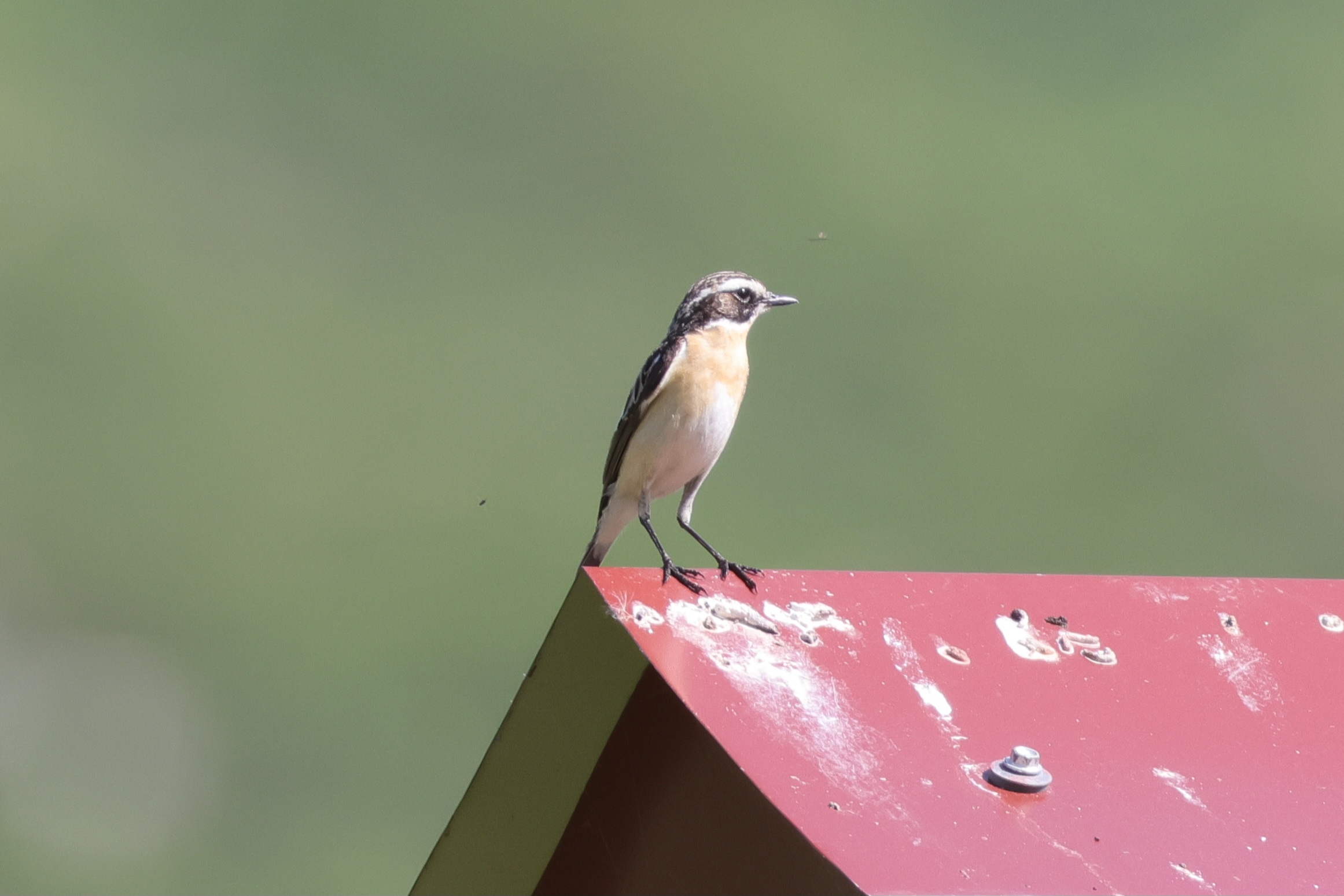

Whinchat aka Braunkehlchen in Andermatt. 2025-06-14 09:58:09 Andermatt
Zuerst beobachtet in 🇨🇭 an 2020-05-07.

Beschreibung

Allgemein: Die bauen ein Nest auf dem Boden auf einer Wiese oder Feld und brauchen relativ lang bis die Jungen flugge sind, darum hoffe ich, dass sie weitergezogen sind. Da Felder selten so lang ungestört bleiben im Mittelland, sind sie immer mehr in höheren Lagen zu finden.
Allgemein: Deutschland: Brut-, Zugvogel RL 3
Persönlich gemerkt: Diesen Vogel haben wir paarweise in einem Rapsfeld entdeckt. Von weitem konnte man nur etwas orange Farbe entdecken. Ich habe ihn 2 Tage später im gleichen Feld gesucht und bin um das ganze Feld gelaufen. Erst am Ende habe ich ihn gesehen: am Anfang, sicher 100m von mit entfernt und um 2 Ecken. Da habe ich dieses Foto gemacht und in Büchern, Apps und Internet nach seiner Identität gesucht. Als ich ein sehr ähnliches Bild auf ornitho.ch gefunden habe, wo er auch auf einer Rapspflanze drauf sitzt, sah ich es als bestätigt, dass es ein Braunkelchen war.


Vokalisierung: The "peeu"-sound is depper and more resonant than similar sounds by Wheatear and Stonechat. [Link]

Saisonales Verhalten

Präsenz: 03-20 - 10-15
Brut: 05-10 - 08-10
Migration rein: 03-20 - 05-15
Migration raus: 07-20 - 10-15
Weitere Infos at Vogelwarte.ch

Weitere Infos

Physikalische Details

Körperlich: Länge=12 cm, Flügelspanne=21-24 cm, Gewicht=14-19 g
Habitate: Landwirtschaft

Vokalisierung

Gesang: General: Der Gesang (bei Vogelwarte.ch) klingt für mich ähnlich wie eine Mönchsgrasmücke, aber nur in sehr kurzen Phrasen.
Song: Gesang hat zwei Teile wie erster und dritter vom Hausrotschwanz. Steigend, fallend. [Link]
Gesang:
Gesang: Kurzes (3-7 Töne) Liedchen mit 1-2 Kreischlauten, (ähnlich der Mittellaute b. Hausrotschwanz) variabel. Ahmt auch andere Vögel nach. [Link]
Song variable with lots of mimicry. The short phrases starts with dry, rattling or sneering trills, followed by clear whistling notes and expert mimicry. More varied, both in tone and tempo, than both Stonechat and Wheatear. [Link] Gesang Eigenschaften: Melody: improvisiert melodisch, schnell, Frequency: high (3-9 KHz) Special sounds: Mimikry
Rufe: „teck, teck“ (ähnlich wie wenn man zwei Steine zusammen schlägt) [Link]
Contact call resembles many of it relatives. A short, soft "peeu", followed by a hard "check" (like hitting two rocks together). [Link] No details but a Xeno-Canto recording.
XC732132 - Whinchat - Saxicola rubetra - call - chirp, click.

Quelle: XENOCANTO XC732132 - Whinchat - Saxicola rubetra - call - chirp, click.mp3 (Ruf)


Ruf Eigenschaften: Gesang Frequenz: ,
Vollprofil

Schwarzkehlchen / Common stonechat (Saxicola torquatus)
Alternative Klassifikation: Saxicola torquata
Auch bekannt als: African stonechat, European stonechat
Profil Wikipedia Vogelwarte BirdLife ZH ornitho.ch bird-song.ch Xeno-Canto NABU YouTube


Wahrscheinlich junges Schwarzkehlchen. 2024-06-20 19:30:57 Bannriet, SG
Zuerst beobachtet in Morocco an 2019-11-20.

Beschreibung

Allgemein: Das Schwarzkehlchen (Saxicola rubicola) ist ein kleiner Singvogel aus der Gattung der Wiesenschmätzer (Saxicola) und der Familie der Fliegenschnäpper (Muscicapidae). Die beiden nächstverwandten Arten, das Afrikaschwarzkehlchen (Saxicola torquatus) und das Pallasschwarzkehlchen (Saxicola maurus), galten früher als Unterarten, wurden aber durch Ewan Urquhart und Adam Bowley im Jahr 2002 als selbständige Arten klassifiziert. Die hier beschriebene Art wird zur Unterscheidung daher zuweilen auch Europäisches Schwarzkehlchen genannt. Das Schwarzkehlchen gilt regional als ein stark gefährdeter Vogel. Der Gesamtbestand ist aber mit 2.000.000 – 4.000.000 Brutpaaren (Birdlife International) derzeit nicht gefährdet. [mehr]

Saisonales Verhalten

Jahresvogel
Brut: 03-23 - 08-18
Migration rein: 02-20 - 05-10
Migration raus: 08-18 - 11-06
Weitere Infos at Vogelwarte.ch

Weitere Infos

Habitate: Landwirtschaft

Vokalisierung

Gesang: No details but a Xeno-Canto recording.
Gesang: Gesang ähnlich obiger Art [Braunkehlchen]. Reine und kratzende Laute abwechselnd, wellenförmig [Link] Gesang Eigenschaften: Frequency:
Quelle: XENOCANTO XC633658 - European Stonechat - Saxicola rubicola - song.mp3 (Gesang)


Rufe: hart „track“ oder „fiet-track-track“ [Link] No details but a Xeno-Canto recording.
XC937556 - European Stonechat or Schwarzkehlchen - Saxicola rubicola - call.

Quelle: XENOCANTO XC937556 - European Stonechat or Schwarzkehlchen - Saxicola rubicola - call.mp3 (Ruf)


Ruf Eigenschaften: Gesang Frequenz: ,
Vollprofil

Gattung Phönicurus:
Gattung Cyanoptila:
Gattung Copsychus:
Gattung Cyornis:
Gattung Cichlherminia:
Gattung Paradoxornis:
Gattung Cercotrichas:
Gattung Cossypha:
Gattung Pogonocichla:
Gattung Swynnertonia:
Gattung Cossyphicula:
Gattung Melänornis:
Gattung Önanthe (Wheatears):
Gattung Rhinomyias:
Gattung Bradornis:
Gattung Enicurus:
Gattung Rhyacornis:
Gattung Cochoa:
Gattung Nesocichla:
Gattung Psophocichla:
Gattung Namibornis:
Gattung Chaimarrornis:
Gattung Muscicapella:
Gattung Niltava:
Gattung Fraseria:
Gattung Eumyias:
Gattung Cercomela:
Gattung Myrmecocichla:
Gattung Thamnoläa:
Gattung Brachypteryx:
Gattung Campicoloides:
Gattung Cichladusa:
Gattung Cinclidium:
Gattung Empidornis:
Gattung Hodgsonius:
Gattung Irania:
Gattung Myiomela:
Gattung Myioparus:
Gattung Saxicoloides:
Gattung Trichixos:
Gattung Myophonus:
Gattung Humblotia:
Gattung Grandala:
Gattung Adelura:
Gattung Chamätylas:
Gattung Calliope:
Gattung Kittacincla:
Gattung Sholicola:
Gattung Larvivora:
Gattung Xenocopsychus:
Gattung Anthipes:

Familie Petroicidae (Australasian robins):

Gattung Eopsaltria:
Gattung Tregellasia:
Gattung Petroica:
Gattung Eugerygone:
Gattung Melanodryas:
Gattung Micröca:
Gattung Pachycephalopsis:
Gattung Peneothello:
Gattung Drymodes:
Gattung Pöcilodryas:
Gattung Amalocichla:
Gattung Monachella:

Familie Acanthisittidae (New zealand wrens):

Gattung Xenicus:
Gattung Acanthisitta:
Gattung Traversia:
Gattung Pachyplichas:

Familie Menuridae:

Gattung Menura:
Gattung Atrichornis:

Familie Climacteridae:

Gattung Climacteris:
Gattung Cormobates:

Familie Sittidae (Kleiber):

Gattung Sitta:
Gattung Tichodroma:

Familie Mimidae (Spottdrosseln):

Gattung Toxostoma:
Gattung Cinclocerthia:
Gattung Mimus:
Gattung Dumetella:
Gattung Margarops:
Gattung Melanoptila:
Gattung Ramphocinclus:
Gattung Donacobius:
Gattung Nesomimus:
Gattung Mimodes:

Familie Certhiidae (Baumläufer):

Unterfamilie Troglodytinae:
Gattung Troglodytes:
Gattung Campylorhynchus:
Gattung Thryothorus:
Gattung Henicorhina:
Gattung Thryorchilus:
Gattung Cyphorhinus:
Gattung Catherpes:
Gattung Cistothorus:
Gattung Cinnycerthia:
Gattung Thryomanes:
Gattung Microcerculus:
Gattung Odontorchilus:
Gattung Salpinctes:
Gattung Uropsila:
Gattung Pheugopedius:
Gattung Thryophilus:
Gattung Cantorchilus:
Gattung Ferminia:
Unterfamilie Certhiinae:
Gattung Certhia:
Gattung Salpornis:
Unterfamilie Polioptilinae:
Gattung Polioptila:
Gattung Auriparus:
Gattung Ramphocänus:
Gattung Microbates:

Familie Dendrocolaptidae:

Gattung Xiphorhynchus:
Gattung Lepidocolaptes:
Gattung Sittasomus:
Gattung Dendrocolaptes:
Gattung Drymornis:
Gattung Xiphocolaptes:
Gattung Dendrocincla:
Gattung Campylorhamphus:
Gattung Deconychura:

Familie Formicariidae:

Gattung Formicarius:
Gattung Grallaria:
Gattung Grallaricula:
Gattung Hylopezus:
Gattung Myrmothera:
Gattung Chamäza:
Gattung Cercomacra:
Gattung Pyriglena:
Gattung Pittasoma:

Familie Thamnophilidae:

Gattung Thamnophilus:
Gattung Drymophila:
Gattung Formicivora:
Gattung Herpsilochmus:
Gattung Hypocnemis:
Gattung Myrmotherula:
Gattung Terenura:
Gattung Phlegopsis:
Gattung Myrmornis:
Gattung Frederickena:
Gattung Pithys:
Gattung Mackenziäna:
Gattung Hypödaleus:
Gattung Batara:
Gattung Taraba:
Gattung Sakesphorus:
Gattung Megastictus:
Gattung Pygiptila:
Gattung Thamnistes:
Gattung Thamnomanes:
Gattung Dysithamnus:
Gattung Myrmoborus:
Gattung Myrmeciza:
Gattung Phänostictus:
Gattung Rhegmatorhina:
Gattung Gymnopithys:
Gattung Microrhopias:
Gattung Myrmorchilus:
Gattung Neoctantes:
Gattung Dichrozona:
Gattung Hylophylax:
Gattung Myrmochanes:
Gattung Hypocnemoides:
Gattung Sclateria:
Gattung Gymnocichla:
Gattung Percnostola:
Gattung Cymbilaimus:
Gattung Rhopornis:
Gattung Epinecrophylla:
Gattung Willisornis:
Gattung Xenornis:
Gattung Stymphalornis:
Gattung Myrmelastes:
Gattung Myrmoderus:
Gattung Clytoctantes:
Gattung Aprositornis:
Gattung Euchrepomis:
Gattung Sipia:
Gattung Akletos:
Gattung Ammonastes:
Gattung Ampelornis:
Gattung Hafferia:
Gattung Myrmophylax:
Gattung Oneillornis:
Gattung Poliocrania:
Gattung Sciaphylax:

Familie Eurylaimidae:

Gattung Smithornis:
Gattung Calyptomena:
Gattung Psarisomus:
Gattung Cymbirhynchus:
Gattung Eurylaimus:
Gattung Serilophus:
Gattung Corydon:
Gattung Pseudocalyptomena:
Gattung Sarcophanops:

Familie Pipridae:

Gattung Pipra:
Gattung Machäropterus:
Gattung Neopelma:
Gattung Piprites:
Gattung Schiffornis:
Gattung Xenopipo:
Gattung Chloropipo:
Gattung Chiroxiphia:
Gattung Manacus:
Gattung Antilophia:
Gattung Ilicura:
Gattung Tyranneutes:
Gattung Lepidothrix:
Gattung Heterocercus:
Gattung Masius:
Gattung Corapipo:
Gattung Dixiphia:
Gattung Ceratopipra:
Gattung Cryptopipo:

Familie Conopophagidae:

Gattung Conopophaga:

Familie Bombycillidae (Seidenschwänze):

Gattung Bombycilla:
Gattung Phainoptila:
Gattung Dulus:
Gattung Phainopepla:
Gattung Ptilogonys:

Familie Cinclidae (Wasseramseln):

Gattung Cinclus:

Familie Philepittidae:

Gattung Philepitta:
Gattung Neodrepanis:

Familie Picathartidae:

Gattung Picathartes:
Gattung Chätops:

Überfamilie Corvoidea:

Familie Corcoracidae (Australian choughs):
Gattung Corcorax:
Gattung Struthidea:
Familie Paradisaeidae (Paradise birds):
Gattung Epimachus:
Gattung Diphyllodes:
Gattung Manucodia:
Gattung Ptiloris:
Gattung Cicinnurus:
Gattung Seleucidis:
Gattung Paradisäa:
Gattung Lophorina:
Gattung Parotia:
Gattung Phonygammus:
Gattung Astrapia:
Gattung Drepanornis:
Gattung Lycocorax:
Gattung Paradigalla:
Gattung Pteridophora:
Gattung Semioptera:
Familie Laniidae (Würger / Shrikes):
Gattung Lanius:
Neuntöter / Red-backed shrike (Lanius collurio)
Profil Wikipedia Xeno-Canto BirdID NABU YouTube


Neuntöter im Apfelbaum beim Bauernhof Friedliweid. 2024-08-03 17:39:44 Friedliweid
Zuerst beobachtet in 🇨🇭 an 2021-05-29.

Beschreibung

Allgemein: Kulturland. Im Gebüsch an der Stillen Reuss.
Allgemein: Deutschland: Brut-, Zugvogel
Persönlich gemerkt: Saw this masked bandit at Maienfeld. I was also told where to find it in the hedges at the Stille Reuss in Rottenschwil.
Kultur: The BirdLife Switzerland bird of the year of 2020, the red-backed shrike or Neuntöter, made a surprising appearance in the New York Times in May 2021 when a private collection of manuscript and books from the Brontë family was put up for sale. Among the books is father Brontë's copy of Thomas Bewick’s 'A History of British Birds,' which Jane Eyre leafs through in a scene in Charlotte's novel of the same name. [NY Times, 'A Lost Brontë Library Surfaces', by Jennifer Schuessler, May 25, 2021]
Etymologie: Er spiesst Beutetiere oft an Dornen oder spitzen Seitenästen auf, um sie zu bearbeiten und zu zerteilen oder als Vorrat zu halten. Seinen Namen soll der Neuntöter dieser Eigenart verdanken: Man hat früher irrtümlicherweise angenommen, dass er immer erst neun Tiere aufspiesst, bevor er wieder eines verzehrt. [Link]

Saisonales Verhalten

Präsenz: 05-01 - 10-07
Brut: 05-10 - 08-09
Migration rein: 05-01 - 06-09
Migration raus: 07-20 - 10-07
Weitere Infos at Vogelwarte.ch

Weitere Infos

Physikalische Details

Körperlich: Länge=17 cm, Flügelspanne=24-27 cm, Gewicht=25-35 g
Habitate: Landwirtschaft

Ähnliche Arten

Sieht ähnlich aus wie: Steinschmätzer.

Vokalisierung

Gesang: Reminds me a bit of a Rohrsaenger/Feldlerche with its short, varied bits. BirdID says Song surprisingly varied with many expert imitations of small passerines, interwoven with bell-like ringing and dry chirping sounds. May be confusing and hard to identify if bird not seen. Song not very loud, but phrases can be very long. 'May be confusing' - tell me about it! What's not confusing about trying to tell apart 422 species of Swiss birds!
Gesang: Call a hard "check check" (like striking two rocks together), and a variable nasal "twee" Song surprisingly varied with many expert imitations of small passerines, interwoven with bell-like ringing and dry chirping sounds. May be confusing and hard to identify if bird not seen. Song not very loud, but phrases can be very long. [Link] Gesang Eigenschaften: Melody: singt 20 Sekunden oder länger, langsam, Frequency: medium (1-5 KHz) Special sounds: Mimikry
Quelle: XENOCANTO XC570644 - Marsh Warbler - Acrocephalus palustris - song.mp3 (Gesang)


Vollprofil

Gattung Corvinella:
Gattung Eurocephalus:
Familie Corvidae (Krähenverwandte):
Gattung Cyanocitta:
Gattung Corvus (Crows):
Dohle / Jackdaw (Coloeus monedula)
Alternative Klassifikation: Corvus monedula
Auch bekannt als: Eurasian jackdaw, Western jackdaw
Profil Wikipedia Vogelwarte BirdLife ZH ornitho.ch bird-song.ch Xeno-Canto BirdID NABU YouTube


Dohle-Paar wieder beim Fehraltorf Bahnhof-Parkplatz. 2025-03-19 09:08:59 Fehraltorf
Zuerst beobachtet in 🇨🇭 an 2022-05-21.

Beschreibung

Allgemein: Deutschland: Brut-, Jahres-, Zugvogel, Wintergast je nach Bundesland: RL V; RL 3
Etymologie: [Der deutsche Name der Dohle lässt sich bis auf das althochdeutsche tāha zurückverfolgen, wahrscheinlich eine lautmalerische Bezeichnung, die sich von den Rufen der Vögel ableitete. [Link]

Saisonales Verhalten

Jahresvogel
Brut: 04-11 - 07-10
Migration rein: 02-01 - 04-01
Migration raus: 09-28 - 11-26
Weitere Infos at Vogelwarte.ch

Weitere Infos

Habitate: Siedlung

Ähnliche Arten

Gesang oder Rüfe ähnlich wie: Rabenkrähe.

Vokalisierung

Gesang: No details but a Xeno-Canto recording.
Gesang Eigenschaften: Frequency:
♫ 2025-02-05 14:52:00 Schweiz (Gesang)

Rufe: Nabu: Ein hartes „kjack“ oder „schack“ sowie ein raues „tschräh“ hört man am häufigsten von der Dohle. Sie ist ein begabtes Stimmwunder und hat eine Vielzahl von Lauten und Imitationen auf Lager. [Link]
meist angenehm klingende, kurze Rufe: "kja", oft mehrfach wiederholt, härteres "kjack!" oder gezogenes "kjaar". [Link] Strange tone, Almost barking or a gull cry.
XC604997 - Western Jackdaw - Coloeus monedula - call, recorded in England.

Quelle: XENOCANTO XC604997 - Western Jackdaw - Coloeus monedula - call, recorded in England.mp3 (Ruf)


Ruf Eigenschaften: Ruf Melodie: einfach rhythmisch, schnell, Frequenz: 1-3 KHz, Spezielle Klänge: komisch.
Vollprofil

Gattung Pica (Magpies):
Gattung Aphelocoma:
Gattung Perisoreus:
Gattung Gymnorhinus:
Gattung Cyanolyca:
Gattung Cyanocorax:
Gattung Calocitta:
Gattung Garrulus:
Gattung Nucifraga:
Gattung Pyrrhocorax:
Gattung Cissa:
Gattung Ptilostomus:
Gattung Urocissa:
Gattung Oriolus:
Gattung Cnemophilus:
Gattung Loboparadisea:
Gattung Melampitta:
Gattung Artamus:
Gattung Cyanopica:
Gattung Platylophus:
Gattung Sphecotheres:
Gattung Podoces:
Gattung Zavattariornis:
Gattung Crypsirina:
Gattung Dendrocitta:
Gattung Platysmurus:
Gattung Temnurus:
Gattung Pityriasis:
Gattung Coracornis:
Gattung Hylocitrea:
Familie Vireonidae (Vireos):
Unterfamilie Cyclarhinae (Peppershrikes):
Gattung Cyclarhis:
Unterfamilie Vireoninae (Shrike-vireos):
Gattung Vireo:
Unterfamilie Vireolaniinae (Vireos and greenlets):
Gattung Vireolanius:
Gattung Hylophilus:
Familie Orthonychidae (Logrunners):
Gattung Orthonyx (Chowchillas):
Familie Malaconotidae:
Gattung Laniarius:
Gattung Telophorus:
Gattung Dryoscopus:
Gattung Malaconotus:
Gattung Tchagra:
Gattung Nilaus:
Gattung Rhodophoneus:
Gattung Chlorophoneus:
Familie Dicruridae:
Gattung Dicrurus:
Gattung Erythrocercus:
Gattung Machärirhynchus:
Familie Irenidae:
Gattung Chloropsis:
Gattung Irena:
Familie Callaeidae:
Gattung Calläas:
Gattung Heteralocha:
Gattung Philesturnus:
Unterfamilie Pachycephalidae (Whistlers):
Gattung Pachycephala:
Gattung Turnagra:
Gattung Colluricincla:
Gattung Pitohui:
Gattung Rhagologus:
Gattung Daphönositta:
Gattung Falcunculus:
Gattung Oreoica:
Gattung Aleadryas:
Gattung Eulacestoma:
Gattung Pachycare:
Gattung Pseudorectes:
Gattung Melanorectes:
Gattung Ornorectes:
Familie Cinclosomatidae:
Gattung Ptilorrhoa:
Gattung Eupetes:
Gattung Androphobus:
Gattung Psophodes:
Gattung Cinclosoma:
Gattung Ifrita:
Familie Vangidae:
Gattung Schetba:
Gattung Cyanolanius:
Gattung Oriolia:
Gattung Newtonia:
Gattung Leptopterus:
Gattung Vanga:
Gattung Euryceros:
Gattung Hypositta:
Gattung Falculea:
Gattung Tylas:
Gattung Artamella:
Gattung Xenopirostris:
Gattung Calicalicus:
Familie Monarchidae:
Gattung Terpsiphone:
Gattung Hypothymis:
Gattung Myiagra:
Gattung Trochocercus:
Gattung Pomarea:
Gattung Monarcha:
Gattung Grallina:
Gattung Chasiempis:
Gattung Arses:
Gattung Neolalage:
Gattung Clytorhynchus:
Gattung Mayrornis:
Gattung Metabolus:
Gattung Eutrichomyias:
Gattung Symposiachrus:
Gattung Carterornis:
Familie Prionopidae:
Gattung Prionops:
Gattung Tephrodornis:
Gattung Philentoma:
Unterfamilie Platysteiridae:
Gattung Platysteira:
Gattung Batis:
Gattung Bias:
Gattung Lanioturdus:
Gattung Pseudobias:
Gattung Dyaphorophyia:
Familie Campephagidae (Cuckooshrikes):
Gattung Coracina:
Gattung Campephaga:
Gattung Lalage:
Gattung Pericrocotus:
Gattung Hemipus:
Gattung Campochära:
Gattung Lobotos:
Gattung Cyanograucalus:
Gattung Edolisoma:

Familie Rhabdornithidae:

Gattung Rhabdornis:

Familie Thraupidae (Tanagers):

Gattung Ramphocelus:
Gattung Piranga:
Gattung Certhidea:
Gattung Geospiza:
Gattung Rhodinocichla:
Gattung Chlorophanes:
Gattung Chlorothraupis:
Gattung Chrysothlypis:
Gattung Cnemoscopus:
Gattung Conothraupis:
Gattung Creurgops:
Gattung Cypsnagra:
Gattung Dacnis:
Gattung Delothraupis:
Gattung Diglossa:
Gattung Eucometis:
Gattung Habia:
Gattung Hemithraupis:
Gattung Heterospingus:
Gattung Lamprospiza:
Gattung Lanio:
Gattung Mitrospingus:
Gattung Nemosia:
Gattung Nephelornis:
Gattung Oreomanes:
Gattung Phänicophilus:
Gattung Pyrrhocoma:
Gattung Sericossypha:
Gattung Spindalis:
Gattung Tachyphonus:
Gattung Thlypopsis:
Gattung Xenodacnis:
Gattung Camarhynchus:
Gattung Cöreba:
Gattung Tiaris:
Gattung Pinaroloxias:
Gattung Loxigilla:
Gattung Haplospiza:
Gattung Sporophila:
Gattung Volatinia:
Gattung Poospiza:
Gattung Saltatricula:
Gattung Phrygilus:
Gattung Coryphospingus:
Gattung Melanospiza:
Gattung Oryzoborus:
Gattung Catamenia:
Gattung Sicalis:
Gattung Conirostrum:
Gattung Catamblyrhynchus:
Gattung Acanthidops:
Gattung Euneornis:
Gattung Loxipasser:
Gattung Nesospingus:
Gattung Emberizoides:
Gattung Dolospingus:
Gattung Calyptophilus:
Gattung Nesospiza:
Gattung Amaurospiza:
Gattung Diglossopis:
Gattung Idiopsar:
Gattung Melanodera:
Gattung Trichothraupis:
Gattung Rhodospingus:
Gattung Compsothraupis:
Gattung Charitospiza:
Gattung Coryphaspiza:
Gattung Cyanicterus:
Gattung Incaspiza:
Gattung Iridophanes:
Gattung Orchesticus:
Gattung Piezorhina:
Gattung Urothraupis:
Gattung Xenospingus:
Unterfamilie Thraupinae:
Gattung Saltator:
Gattung Tangara:
Gattung Thraupis:
Gattung Anisognathus:
Gattung Buthraupis:
Gattung Calochätes:
Gattung Chlorochrysa:
Gattung Chlorornis:
Gattung Cissopis:
Gattung Dubusia:
Gattung Iridosornis:
Gattung Neothraupis:
Gattung Pipräidea:
Gattung Schistochlamys:
Gattung Paroaria:
Gattung Lophospingus:
Gattung Diuca:
Gattung Bangsia:
Gattung Stephanophorus:
Gattung Wetmorethraupis:
Gattung Gubernatrix:
Gattung Geospizopsis:
Gattung Castanozoster:
Gattung Microspingus:
Gattung Rhopospina:
Gattung Asemospiza:

Familie Stenostiridae:

Gattung Elminia:
Gattung Culicicapa:
Gattung Stenostira:
Gattung Chelidorhynx:

Familie Hypocolidae:

Gattung Hypocolius:

Familie Mohoidae:

Gattung Moho:
Gattung Chätoptila:

Familie Passerellidae:

Gattung Pipilo (Towhees):
Gattung Spizella:
Gattung Junco (Juncos):
Gattung Zonotrichia:
Gattung Passerella:
Gattung Melospiza:
Gattung Chlorospingus:
Gattung Atlapetes:
Gattung Ammodramus:
Gattung Arremonops:
Gattung Melozone:
Gattung Chondestes:
Gattung Passerculus:
Gattung Aimophila:
Gattung Calamospiza:
Gattung Amphispiza:
Gattung Poöcetes:
Gattung Arremon:
Gattung Pezopetes:
Gattung Pselliophorus:
Gattung Xenospiza:
Gattung Oriturus:
Gattung Torreornis:
Gattung Oreothraupis:
Gattung Kieneria:
Gattung Artemisiospiza:
Gattung Ammospiza:
Gattung Centronyx:
Gattung Spizelloides:
Gattung Rhynchospiza:

Familie Rhipiduridae:

Gattung Rhipidura:
Gattung Chätorhynchus:
Gattung Lamprolia:

Überfamilie Meliphagoidea:

Familie Meliphagidae (Honeyeaters):
Gattung Ptiloprora:
Gattung Lichenostomus:
Gattung Melidectes:
Gattung Manorina:
Gattung Macgregoria:
Gattung Meliphaga:
Gattung Melipotes:
Gattung Melithreptus:
Gattung Myzomela:
Gattung Philemon:
Gattung Ephthianura:
Gattung Acanthorhynchus:
Gattung Anthochära:
Gattung Ashbyia:
Gattung Certhionyx:
Gattung Conopophila:
Gattung Entomyzon:
Gattung Epthianura:
Gattung Foulehaio:
Gattung Glycichära:
Gattung Grantiella:
Gattung Lichmera:
Gattung Melilestes:
Gattung Plectorhyncha:
Gattung Prosthemadera:
Gattung Pycnopygius:
Gattung Ramsayornis:
Gattung Timeliopsis:
Gattung Trichodere:
Gattung Xanthotis:
Gattung Acanthagenys:
Gattung Phylidonyris:
Gattung Notiomystis:
Gattung Gymnomyza:
Gattung Anthornis:
Gattung Glyciphila:
Gattung Glycifohia:
Gattung Guadalcanaria:
Gattung Meliarchus:
Gattung Stresemannia:
Gattung Nesoptilotis:
Gattung Myza:
Gattung Melitograis:
Gattung Bolemoreus:
Gattung Caligavis:
Gattung Stomiopera:
Gattung Gavicalis:
Gattung Purnella:
Gattung Oreornis:
Gattung Ptilotula:
Gattung Cissomela:
Gattung Sugomel:
Familie Pardalotidae:
Gattung Pardalotus:
Familie Maluridae:
Gattung Malurus:
Gattung Amytornis:
Gattung Stipiturus:
Gattung Clytomyias:
Gattung Sipodotus:
Gattung Chenorhamphus:
Familie Acanthizidae:
Gattung Sericornis:
Gattung Acanthiza:
Gattung Aphelocephala:
Gattung Gerygone:
Gattung Smicrornis:
Gattung Mohoua:
Gattung Oreoscopus:
Gattung Acanthornis:
Gattung Pyrrholämus:
Gattung Calamanthus:
Gattung Origma:
Gattung Pycnoptilus:
Gattung Äthomyias:
Gattung Neosericornis:
Familie Dasyornithidae:
Gattung Dasyornis:

Familie Artamidae:

Gattung Gymnorhina:
Gattung Cracticus:
Gattung Strepera:
Gattung Peltops:
Gattung Melloria:

Familie Hyliotidae:

Gattung Hyliota:

Gattung Myzornis:

Gattung Neolestes:

Gattung Calyptura:

Gattung Poliolais:

Ordnung Charadriiformes (Regenpfeiferartige / Shorebirds and others):

Familie Laridae (Reiher / Gulls):

Unterfamilie Larinae (Möwen):
Gattung Larus:
Gattung Chroicocephalus:
Gattung Rissa:
Gattung Pinguinus:
Gattung Pagophila:
Gattung Gelochelidon:
Gattung Creagrus:
Gattung Xema:
Gattung Rynchops:
Gattung Chlidonias:
Gattung Anous:
Gattung Gygis:
Gattung Larosterna:
Gattung Phätusa:
Gattung Rhodostethia:
Gattung Leucophäus:
Gattung Hydroprogne:
Gattung Onychoprion:
Gattung Sternula:
Gattung Thalasseus:
Gattung Hydrocolöus:
Gattung Procelsterna:
Gattung Saundersilarus:
Gattung Ichthyätus:

Familie Charadriidae (Regenpfeifer):

Gattung Vanellus:
Gattung Hoplopterus:
Gattung Charadrius:
Gattung Elseyornis:
Gattung Oreopholus:
Gattung Thinornis:
Gattung Pluvialis:
Gattung Phegornis:
Gattung Pluvianellus:
Gattung Anarhynchus:
Gattung Erythrogonys:
Gattung Ibidorhyncha:
Gattung Peltohyas:

Familie Scolopacidae (Schnepfenvögel / Shorebirds):

Gattung Calidris:
Gattung Numenius (Curlews):
Grosser Brachvogel / Eurasian curlew (Numenius arquata)
Auch bekannt als: Grosse Brachvögel
Profil Wikipedia Vogelwarte BirdLife ZH ornitho.ch bird-song.ch Xeno-Canto BirdID NABU YouTube


Grosser brachvogel, Klingnauerstausee. 2022-02-05 11:54:42 Klingnauer Stausee
Zuerst beobachtet in 🇨🇭 an 2021-02-12.

Beschreibung

Allgemein: In Jona findet man viele auf der Wiese unter Obstbäumen, anscheinend weil es dort viele Insekten und Schnecken gibt (siehe oben).
Allgemein: Deutschland: Brut-, Zugvogel RL 1
Geographie: Die Brachvögel brütet im Moment recht viel in Vergleich mit früher. [Link]
Ernährung: Nabu: Auf dem Speiseplan des Großen Brachvogels stehen vor allem Insekten und deren Larven und andere Kleintiere wie Schnecken und Regenwürmer, aber auch Krebstierchen. Ab und zu frisst er auch Amphibien, Reptilien oder Fische. [Link]

Saisonales Verhalten

Jahresvogel
Migration rein: 02-20 - 05-10
Migration raus: 07-10 - 12-07
Weitere Infos at Vogelwarte.ch

Weitere Infos

Physikalische Details

Körperlich: Länge=50-60 cm, Flügelspanne=80-100 cm, Gewicht=540-1300 g
Habitate: Nassgebiet

Vokalisierung

Gesang: No details but a Xeno-Canto recording.
Gesang: Song starts similar to Whimbrel, with long wailing notes "kluuueee", but takes on a different ending as it accelerates to an ascending phrase repeated in rapid cycles . [Link] Gesang Eigenschaften: Frequency:
Quelle: XENOCANTO XC625195-grosser brachvogel, michal jezierski, uk.mp3 (Flugruf)


Das Männchen steigt mit einzelnen, klangvollen Rufen auf, die vor der Landung in einen weithin hörbaren Triller übergehen. [Link]

Ruf Eigenschaften: Flugruf Ruf Melodie: einfach rhythmisch, langsam, Frequenz: low (1-3 KHz),
Vollprofil

Gattung Arenaria (Turnstones):
Gattung Scolopax:
Gattung Gallinago:
Bekassine / Common snipe (Gallinago gallinago)
Alternative Klassifikation: Capella gallinago
Profil Wikipedia Vogelwarte BirdLife ZH ornitho.ch bird-song.ch Audubon AllAboutBirds Xeno-Canto BirdID NABU YouTube


Wahrscheinlich Bekassine mit dem langen Schnabel, Klingnauerstausee. 2022-02-05 11:54:14 Klingnauer Stausee
Zuerst beobachtet in 🇨🇭 an 2021-10-24.

Beschreibung

Geographie: Dieser Vogel erscheint jenseits grossen Meere in Kontinenten : Europa, Nordamerika, Afrika, Asien.
Allgemein: Die Bekassine (Gallinago gallinago) ist eine sehr langschnäbelige, mittelgroße Art aus der Familie der Schnepfenvögel. Sie ist über große Teile der Paläarktis verbreitet und überwintert überwiegend in den Subtropen und Tropen der Alten Welt. Sie besiedelt zur Brutzeit Moore, Feuchtgrünland und Wiesen; zur Zugzeit ist sie wie die meisten Watvögel auf schlammigen Flächen an Binnengewässern und Küsten zu finden. Charakteristisch ist der Balzflug, bei dem der Vogel sich aus großer Höhe senkrecht herabfallen lässt und mit abgespreizten, äußeren Steuerfedern ein „wummerndes“ Geräusch erzeugt. [mehr]
Deutschland: Brut-, Zugvogel, Wintergast RL 1
Vokalisierung: Quite vocal, especially at breeding ground. [Link]

Saisonales Verhalten

Jahresvogel
Migration rein: 01-01 - 05-21
Migration raus: 07-20 - 12-31
Weitere Infos at Vogelwarte.ch

Weitere Infos

Physikalische Details

Körperlich: Länge=25-27 cm, Flügelspanne=44-47 cm, Gewicht=80-140 g
Habitate: Nassgebiet

Vokalisierung

Gesang: No details but a Xeno-Canto recording.
Gesang: Song an unmistakable bleating, drumming sound produced by vibrating tail feathers in sky-dives. [Link] Gesang Eigenschaften: Frequency:
Quelle: XENOCANTO XC812599 - Common Snipe song, one note, 4x per sec - Gallinago gallinago.mp3 (Gesang)


Rufe: Almost always give diagnostic hoarse and nasal "kaaat" call when flushed. Another territorial call is a rhythmic, mechanical and sharp "tika-tika-tka", or "ika-ka-ka". [Link]
XC947581 - Common Snipe flight call - Gallinago gallinago.

Quelle: XENOCANTO XC947581 - Common Snipe flight call - Gallinago gallinago.mp3 (Flugruf)


Ruf Eigenschaften: Flugruf Ruf Melodie: einnotig, langsam, Frequenz: medium (1-5 KHz), Spezielle Klänge: quaken.
Vollprofil

Gattung Lymnocryptes:
Gattung Limnodromus:
Gattung Limosa:
Gattung Tringa:
Waldwasserläufer / Green sandpiper (Tringa ochropus)
Profil Wikipedia Vogelwarte BirdLife ZH ornitho.ch Xeno-Canto BirdID NABU YouTube


Waldwasserläufer. 2025-07-17 12:54:08 Kaltbrunner-Riet
Zuerst beobachtet in 🇨🇭 an 2022-09-04.

Beschreibung

Allgemein: Deutschland: Brut-, Zugvogel, Wintergast
Vokalisierung: Totally different from Wood Sandpiper. [Link]

Saisonales Verhalten

Jahresvogel
Migration rein: 06-20 - 09-07
Migration raus: 03-23 - 05-01
Weitere Infos at Vogelwarte.ch

Weitere Infos

Physikalische Details

Körperlich: Länge=21-24 cm, Flügelspanne=57-61 cm, Gewicht=60-90 g
Habitate: Nassgebiet
Vollprofil

Grünschenkel / Common greenshank (Tringa nebularia)
Profil Wikipedia Vogelwarte BirdLife ZH ornitho.ch Audubon AllAboutBirds Xeno-Canto BirdID NABU YouTube


MerlinBirdID says common greenshank, probably non-breeding adult. 2022-04-12 14:52:08
Zuerst beobachtet in Mallorca an 2022-04-12.

Beschreibung

Geographie: Dieser Vogel erscheint jenseits grossen Meere in Kontinenten : Europa, Nordamerika, Afrika, Asien.
Allgemein: Deutschland: ausnahmsweise Brutvogel, Zugvogel
Vokalisierung: Most heard is a characteristic, trisyllabic "tew-tew-tew" (sometimes two or four syllables). Can resemble redshank, but pitch more stable, and not falling notably. Each syllable is clearly separated and equally emphasized. [Link]

Weitere Infos

Physikalische Details

Körperlich: Länge=30-33 cm, Flügelspanne=68-70 cm, Gewicht=130-270 g
Habitate: Nassgebiet
Vollprofil

Gattung Xenus:
Gattung Actitis:
Gattung Phalaropus:
Gattung Aphriza:
Gattung Bartramia:
Gattung Cönocorypha:
Gattung Limicola:
Gattung Prosobonia:
Gattung Ächmorhynchus:

Unterfamilie Sterninae (Möwenverwandte / Terns):

Gattung Sterna:

Familie Turnicidae (Buttonquails):

Gattung Turnix:

Familie Alcidae (Alke):

Gattung Uria (Murres):
Gattung Aethia:
Gattung Alca:
Gattung Alle:
Gattung Brachyramphus:
Gattung Cepphus:
Gattung Cyclorrhynchus:
Gattung Fratercula:
Gattung Ptychoramphus:
Gattung Synthliboramphus:
Gattung Cerorhinca:

Familie Haematopodidae (Oystercatchers):

Gattung Hämatopus:

Familie Glareolidae (Brachschwalbenverwandte und Stercorariidae – Raubmöwen):

Gattung Glareola:
Gattung Cursorius:
Gattung Rhinoptilus:
Gattung Pluvianus:
Gattung Stiltia:

Familie Stercorariidae:

Gattung Stercorarius:

Familie Jacanidae (Jacanas):

Gattung Irediparra:
Gattung Jacana:
Gattung Actophilornis:
Gattung Hydrophasianus:
Gattung Metopidius:
Gattung Microparra:

Familie Burhinidae (Triele, Haematopodidae – Austernfischer und Recurvirostridae – Säbelschnäblerverwandte):

Gattung Burhinus:

Familie Rostratulidae:

Gattung Rostratula:
Gattung Nycticryphes:

Familie Chionididae:

Gattung Chionis:

Familie Pedionomidae:

Gattung Pedionomus:

Familie Recurvirostridae:

Gattung Recurvirostra:
Gattung Himantopus:
Gattung Cladorhynchus:

Familie Dromadidae:

Gattung Dromas:

Ordnung Gruiformes (Kranichvögel / Terrestrial and marshbirds):

Familie Rallidae (Rallen / Rails):

Gattung Fulica (Coots):
Gattung Rallus:
Wasserralle / Water rail (Rallus aquaticus)
Auch bekannt als: Western water rail
Profil Wikipedia Vogelwarte BirdLife ZH ornitho.ch bird-song.ch Xeno-Canto BirdID NABU YouTube


Irgendwo etwa 3m weg, gab's eine Wasserralle, immer noch nicht gesehen. 2025-10-31 15:14:35 Wildert
Zuerst beobachtet in 🇨🇭 an 2021-02-15.

Beschreibung

Allgemein: Im Schilf an einem See.
Allgemein: Deutschland: Brut-, Jahres-, Zugvogel, Wintergast RL V
Aussehen und Identifizierung: Die Wasserralle hat einen kurzen Schwanz und einen leicht nach unten gebogenen, rötlichen Schnabel. Kopfseiten, Kehle, Hals und Brust sind schiefergrau bis graublau. Die Augen sind rötlich und die mittellangen Beine mit den recht langen Zehen sind fleischfarbig gefärbt. Das Gefieder am Bauch, an der Brust und im Gesicht ist hellblau. Der Rücken ist dunkelbraun mit schwarzen Streifen gekennzeichnet. An den Seiten ist eine schwarz-weiße Musterung zu finden. Männchen und Weibchen haben die gleiche Färbung. [Link]
Verhalten: Shy but generally not uncommon, this reclusive marsh bird is more often heard than seen: listen for its varied piglike squeals and grunts coming from dense vegetation. Favors fresh marshes and ponds with taller vegetation, especially reeds and rushes [Link]
Vokalisierung: Varied but distinct. [Link]

Saisonales Verhalten

Jahresvogel
Brut: 04-20 - 07-29
Migration rein: 02-20 - 05-10
Migration raus: 07-29 - 11-15
Weitere Infos at Vogelwarte.ch

Weitere Infos

Physikalische Details

Körperlich: Länge=23-28 cm, Flügelspanne=38-45 cm, Gewicht=80-180 g
Habitate: Nassgebiet

Vokalisierung

Gesang: No details but a Xeno-Canto recording.
Gesang: Most heard is the territorial song consisting of short, nasal, sharp grunts "tuck- tuck-tuck", ending with a drawn-out trill rising and falling in pitch "kiiiieeerrrr". [Link] Gesang Eigenschaften: Frequency:
Quelle: XENOCANTO XC943956 - Water Rail - Rallus aquaticus - squeaky call.mp3 (Ruf)


Rufe: Another diagnostic call is heard from excited birds; a longer pig-like shrilling squeal, with waning repetitions. A bit like someone squeezing a rubber toy. Also short and sharp calls "kvii". [Link] Alle sagen, sie klingen wie Schweine!

Ruf Eigenschaften: Ruf Melodie: einnotig, langsam, Frequenz: medium (1-5 KHz), Spezielle Klänge: komisch.
Vollprofil

Gattung Gallinula:
Gattung Gallirallus:
Gattung Laterallus:
Gattung Megacrex:
Gattung Porphyrio:
Gattung Porzana:
Gattung Anurolimnas:
Gattung Aramides:
Gattung Amaurornis:
Gattung Sarothrura:
Gattung Crex:
Gattung Gallicrex:
Gattung Coturnicops:
Gattung Himantornis:
Gattung Rallina:
Gattung Pardirallus:
Gattung Nesoclopeus:
Gattung Canirallus:
Gattung Amaurolimnas:
Gattung Micropygia:
Gattung Eulabeornis:
Gattung Habroptila:
Gattung Aramidopsis:
Gattung Lewinia:
Gattung Dryolimnas:
Gattung Neocrex:
Gattung Diaphorapteryx:
Gattung Atlantisia:
Gattung Zapornia:
Gattung Mentocrex:
Gattung Nesotrochis:

Familie Gruidae (Cranes):

Gattung Grus:
Gattung Balearica:
Gattung Anthropoides:
Gattung Antigone:

Familie Aramidae (Limpkins):

Gattung Aramus:

Familie Psophiidae (Trumpeters):

Gattung Psophia:

Familie Aptornithidae:

Gattung Aptornis:

Familie Heliornithidae (Sungrebes):

Gattung Heliornis:
Gattung Podica:
Gattung Heliopais:

Familie Mesitornithidae:

Gattung Mesitornis:
Gattung Monias:

Familie Otididae (Bustards):

Gattung Ardeotis:
Gattung Otis:
Gattung Eupodotis:
Gattung Afrotis:
Gattung Neotis:
Gattung Chlamydotis:
Gattung Lissotis:
Gattung Tetrax:
Gattung Lophotis:

Familie Eurypygidae (Sunbitterns):

Gattung Eurypyga:

Familie Rhynochetidae (Kagu):

Gattung Rhynochetos:

Klasse Accipitriformes (Greifvögel / Hawks and eagles):

Familie Accipitridae (Habichtartige):

Unterfamilie Buteoninae (Bussardartige):
Gattung Buteo (Hawks):
Unterfamilie Accipitrinae (Bussardartige / True hawks):
Gattung Accipiter:
Sperber / Eurasian sparrowhawk (Accipiter nisus)
Alternative Klassifikation: Falco nisus
Profil Wikipedia Vogelwarte BirdLife ZH ornitho.ch Xeno-Canto BirdID NABU YouTube


Sperber Paar im Naturschutzgebiet im Staldenweiher-Wald. 2024-08-04 18:33:32 Staldenweiher
Zuerst beobachtet in 🇨🇭 an 2021-02-06.

Beschreibung

Allgemein: Der Sperber (Accipiter nisus) ist ein Greifvogel und gehört zur Familie der Habichtartigen (Accipitridae). Die Weibchen sind fast doppelt so groß und schwer wie die Männchen. In der Jägersprache werden die Männchen Sprinz genannt (während bei allen anderen Greifvögeln für das Männchen die Bezeichnung Terzel verwendet wird). [mehr]
Deutschland: Brut-, Jahres-, Zugvogel, Wintergast
Vokalisierung: Series of short "ke-ke-ke-ke-ke", with rising pitch. [Link]

Saisonales Verhalten

Jahresvogel
Brut: 05-01 - 08-09
Migration rein: 02-20 - 05-10
Migration raus: 08-18 - 11-06
Weitere Infos at Vogelwarte.ch

Weitere Infos

Physikalische Details

Körperlich: Länge=28-38 cm, Flügelspanne=55-70 cm, Gewicht=110-342 g
Habitate: Landwirtschaft

Vokalisierung

Gesang: No details but a Xeno-Canto recording.
Gesang: Meist in Horstnähe zu hören. Eine Reihe von kurzen Einzellauten, [Link] Gesang Eigenschaften: Frequency:
Quelle: XENOCANTO XC818384 - Eurasian Sparrowhawk - Accipiter nisus - call, Brandenburg, Germany.mp3 (Ruf)


Rufe: wie „gigigi“. Ähnlichkeit mit Wendehals, aber klarer und schneller. Schneller auch als Grünspecht und tiefer als Turmfalke. [Link]
Less resonant and less full than similar call of Goshawk, and much faster. Also a short "peeaaaa", shorter and more squeaky than Buzzard. [Link] No details but a Xeno-Canto recording.

Ruf Eigenschaften: Gesang Frequenz: ,
Vollprofil

Gattung Ägypius:
Gattung Aquila:
Gattung Circus (Harriers):
Rohrweihe / Western marsh harrier (Circus aeruginosus)
Auch bekannt als: Marsh harrier, Eurasian marsh-harrier, Eurasian marsh-harrier, Western marsh-harrier
Profil Wikipedia Vogelwarte BirdLife ZH ornitho.ch Xeno-Canto BirdID NABU YouTube


MerlinBirdID meint Rohrweihe. 2022-05-21 16:00:56 Leuk
Zuerst beobachtet in 🇨🇭 an 2022-05-21.

Beschreibung

Allgemein: Deutschland: Brut-, Zugvogel

Saisonales Verhalten

Jahresvogel
Migration rein: 03-12 - 06-09
Migration raus: 07-29 - 10-27
Weitere Infos at Vogelwarte.ch

Weitere Infos

Physikalische Details

Körperlich: Länge=48-56 cm, Flügelspanne=115-130 cm, Gewicht=405-800 g
Habitate: Landwirtschaft

Vokalisierung

Gesang: No details but a Xeno-Canto recording.
Gesang Eigenschaften: Frequency:
Quelle: XENOCANTO XC884134 - Western Marsh Harrier - Circus aeruginosus - whooping, swooping call.mp3 (Ruf)


Rufe: Call: A sharp "kwii-uuu" of about a seconds length, rapidly ascending in pitch, and ending on a falling tone. [Link] No details but a Xeno-Canto recording.

Ruf Eigenschaften: Gesang Frequenz: ,
Vollprofil

Gattung Gyps:
Gattung Haliäetus:
Gattung Haliastur:
Gattung Polyboroides:
Gattung Trigonoceps:
Gattung Necrosyrtes:
Gattung Torgos:
Gattung Neophron:
Gattung Gypätus:
Gattung Circätus:
Gattung Milvus:
Gattung Pernis:
Gattung Sarcogyps:
Gattung Gampsonyx:
Gattung Hieraätus:
Gattung Rostrhamus:
Gattung Elanoides:
Gattung Harpia:
Gattung Spilornis:
Gattung Spizätus:
Gattung Parabuteo:
Gattung Buteogallus:
Gattung Geranoätus:
Gattung Busarellus:
Gattung Morphnus:
Gattung Polemätus:
Gattung Spizastur:
Gattung Stephanoätus:
Gattung Henicopernis:
Gattung Aviceda:
Gattung Oroätus:
Gattung Ictinätus:
Gattung Harpagornis:
Gattung Elanus:
Gattung Gypohierax:
Gattung Eutriorchis:
Gattung Chondrohierax:
Gattung Leptodon:
Gattung Pithecophaga:
Gattung Leucopternis:
Gattung Hamirostra:
Gattung Ictinia:
Gattung Lophoictinia:
Gattung Terathopius:
Gattung Dryotriorchis:
Gattung Harpyopsis:
Gattung Lophätus:
Gattung Melierax:
Gattung Ichthyophaga:
Gattung Geranospiza:
Gattung Harpyhaliätus:
Gattung Butastur:
Gattung Harpagus:
Gattung Micronisus:
Gattung Macheiramphus:
Gattung Nisätus:
Gattung Urotriorchis:
Gattung Erythrotriorchis:
Gattung Megatriorchis:
Gattung Kaupifalco:
Gattung Clanga:
Gattung Lophotriorchis:

Familie Cathartidae:

Gattung Vultur:
Gattung Cathartes:
Gattung Coragyps:
Gattung Gymnogyps:
Gattung Sarcoramphus:

Familie Sagittariidae:

Gattung Sagittarius:

Familie Pandionidae (Fischadler):

Gattung Pandion:

Überordnung Palaeognathae:

Ordnung Casuariiformes (Emu and cassowaries):

Familie Casuariidae (Cassowaries):
Gattung Casuarius:
Familie Dromaiidae (Emus):
Gattung Dromaius:

Ordnung Rheiformes (Rheas):

Familie Rheidae:
Gattung Pterocnemia:
Gattung Rhea:

Ordnung Struthioniformes (Laufvögel / Ostriches):

Familie Struthionidae:
Gattung Struthio:
Familie Aepyornithidae:
Gattung Mullerornis:
Gattung Äpyornis:

Ordnung Tinamiformes (Tinamous):

Familie Tinamidae:
Gattung Eudromia:
Gattung Nothoprocta:
Gattung Rhynchotus:
Gattung Tinamus:
Gattung Crypturellus:
Gattung Nothura:
Gattung Tinamotis:
Gattung Nothocercus:

Ordnung Dinornithiformes (Moas):

Familie Emeidae:
Gattung Anomalopteryx:
Gattung Megalapteryx:
Gattung Pachyornis:
Gattung Emeus:
Gattung Euryapteryx:
Familie Dinornithidae:
Gattung Dinornis:

Ordnung Apterygiformes (Kiwis):

Familie Apterygidae:
Gattung Apteryx:

Infraklasse Neognathae:

Ordnung Ciconiiformes (Storchenvögel / Storks and others):

Familie Ciconiidae (Storks):
Gattung Ciconia:
Gattung Mycteria:
Gattung Leptoptilos:
Gattung Jabiru:
Gattung Ephippiorhynchus:
Gattung Anastomus:
Familie Scopidae:
Gattung Scopus:
Familie Balaenicipitidae:
Gattung Baläniceps:
Familie Pteroclidae:
Gattung Pterocles:
Gattung Syrrhaptes:
Familie Thinocoridae:
Gattung Thinocorus:
Gattung Attagis:

Ordnung Columbiformes (Taubenvögel / Pigeons and others):

Familie Columbidae (Pigeons):
Gattung Columba:
Gattung Streptopelia:
Gattung Zenaida:
Gattung Columbina:
Gattung Claravis:
Gattung Ducula:
Gattung Geopelia:
Gattung Geotrygon:
Gattung Goura:
Gattung Leptotila:
Gattung Leucosarcia:
Gattung Macropygia:
Gattung Metriopelia:
Gattung Öna:
Gattung Phapitreron:
Gattung Phaps:
Gattung Ptilinopus:
Gattung Scardafella:
Gattung Treron:
Gattung Geophaps:
Gattung Reinwardtöna:
Gattung Alectrönas:
Gattung Calönas:
Gattung Chalcophaps:
Gattung Didunculus:
Gattung Drepanoptila:
Gattung Ectopistes:
Gattung Gallicolumba:
Gattung Nesönas:
Gattung Ocyphaps:
Gattung Otidiphaps:
Gattung Turtur:
Gattung Gymnophaps:
Gattung Hemiphaga:
Gattung Petrophassa:
Gattung Patagiönas:
Gattung Henicophaps:
Gattung Lopholaimus:
Gattung Trugon:
Gattung Turacöna:
Gattung Uropelia:
Gattung Zentrygon:
Gattung Aplopelia:
Gattung Alopecönas:
Familie Raphidae:
Gattung Pezophaps:
Gattung Raphus:

Ordnung Coraciiformes (Rackenvögel / Kingfishers and others):

Familie Alcedinidae (Kingfishers):
Gattung Dacelo:
Gattung Alcedo:
Gattung Ceyx:
Gattung Halcyon:
Gattung Todiramphus:
Gattung Lacedo:
Gattung Pelargopsis:
Gattung Actenoides:
Gattung Cittura:
Gattung Syma:
Gattung Tanysiptera:
Gattung Melidora:
Gattung Clytoceyx:
Gattung Corythornis:
Gattung Caridonax:
Gattung Ispidina:
Familie Coraciidae:
Gattung Coracias:
Gattung Eurystomus:
Familie Cerylidae:
Gattung Chloroceryle:
Gattung Ceryle:
Gattung Megaceryle:
Familie Meropidae:
Gattung Merops:
Gattung Meropogon:
Gattung Nyctyornis:
Familie Momotidae:
Gattung Momotus:
Gattung Baryphthengus:
Gattung Hylomanes:
Gattung Electron:
Gattung Eumomota:
Gattung Aspatha:
Familie Todidae:
Gattung Todus:
Familie Brachypteraciidae:
Gattung Brachypteracias:
Gattung Atelornis:
Gattung Uratelornis:
Gattung Geobiastes:
Familie Leptosomidae:
Gattung Leptosomus:

Ordnung Cuculiformes (Kuckucke / Cuckoos and others):

Familie Cuculidae (Cuckoos):
Gattung Carpococcyx:
Gattung Eudynamys:
Gattung Scythrops:
Gattung Cuculus:
Gattung Phänicophäus:
Gattung Cacomantis:
Gattung Chrysococcyx:
Gattung Cercococcyx:
Gattung Clamator:
Gattung Surniculus:
Gattung Chalcites:
Gattung Coua:
Gattung Coccycua:
Gattung Hierococcyx:
Gattung Dasylophus:
Gattung Ceuthmochares:
Gattung Rhinortha:
Gattung Urodynamis:
Familie Crotophagidae:
Gattung Guira:
Gattung Crotophaga:
Familie Coccyzidae:
Gattung Piaya:
Gattung Coccyzus:
Gattung Saurothera:
Familie Centropidae:
Gattung Centropus:
Familie Neomorphidae:
Gattung Geococcyx:
Gattung Dromococcyx:
Gattung Neomorphus:
Gattung Tapera:

Ordnung Falconiformes (Falkenartige / Falcons and others):

Familie Falconidae:
Gattung Falco (Falcons):
Rotfussfalke / Red-footed falcon (Falco vespertinus)
Profil Wikipedia Vogelwarte BirdLife ZH ornitho.ch Xeno-Canto BirdID NABU YouTube


Wikipedia: Red-footed falcon Quelle: WIKIPEDIA Falco_vespertinus_3_%28Martin_Mecnarowski%29.jpg
🔍 Never observed (yet!)

Beschreibung

Allgemein: Deutschland: ausnahmsweise Brutvogel, seltener Zugvogel

Saisonales Verhalten

Präsenz: 04-20 - 10-07
Migration rein: 06-09 - 06-17
Migration raus: 08-18 - 10-07
Weitere Infos at Vogelwarte.ch

Weitere Infos

Physikalische Details

Körperlich: Länge=29-31 cm, Flügelspanne=66-78 cm, Gewicht=130-197 g
Habitate: Landwirtschaft
Vollprofil

Gattung Spiziapteryx:
Gattung Micrastur:
Gattung Milvago:
Gattung Polihierax:
Gattung Microhierax:
Gattung Herpetotheres:
Gattung Phalcobönus:
Gattung Daptrius:
Gattung Caracara:
Gattung Ibycter:

Ordnung Phönicopteriformes (Flamingos / Flamingos):

Familie Phoenicopteridae (Flamingos):
Gattung Phönicopterus:
Gattung Phönicoparrus:

Ordnung Piciformes (Spechtvögel / Woodpeckers and others):

Familie Picidae (Woodpeckers):
Gattung Colaptes:
Gattung Picoides:
Gattung Dendrocopos:
Gattung Dryocopus:
Gattung Piculus:
Gattung Veniliornis:
Gattung Sphyrapicus:
Gattung Picumnus:
Gattung Melanerpes:
Gattung Campephilus:
Gattung Picus:
Gattung Dendropicos:
Gattung Xiphidiopicus:
Gattung Jynx:
Gattung Campethera:
Gattung Blythipicus:
Gattung Celeus:
Gattung Chrysocolaptes:
Gattung Geocolaptes:
Gattung Sasia:
Gattung Meiglyptes:
Gattung Mulleripicus:
Gattung Dinopium:
Gattung Gecinulus:
Gattung Hemicircus:
Gattung Nesoctites:
Gattung Leiopicus:
Gattung Dryobates:
Gattung Chrysophlegma:
Gattung Chloropicus:
Gattung Ipophilus:
Gattung Verreauxia:
Gattung Micropternus:
Familie Ramphastidae:
Gattung Aulacorhynchus:
Gattung Andigena:
Gattung Baillonius:
Gattung Capito:
Gattung Eubucco:
Gattung Pteroglossus:
Gattung Ramphastos:
Gattung Selenidera:
Gattung Semnornis:
Gattung Pogonornis:
Familie Lybiidae:
Gattung Lybius:
Gattung Pogoniulus:
Gattung Trachyphonus:
Gattung Stactoläma:
Gattung Gymnobucco:
Gattung Tricholäma:
Gattung Buccanodon:
Familie Megalaimidae:
Gattung Megalaima:
Gattung Psilopogon:
Gattung Calorhamphus:
Familie Indicatoridae:
Gattung Indicator:
Gattung Melichneutes:
Gattung Melignomon:
Gattung Prodotiscus:

Ordnung Psittaciformes (Papageien / Parrots and others):

Familie Psittacidae (Parrots):
Gattung Ara:
Gattung Psittacula:
Gattung Amazona:
Gattung Aratinga:
Gattung Pionus:
Gattung Psittacus:
Gattung Neophema:
Gattung Pezoporus:
Gattung Platycercus:
Gattung Polytelis:
Gattung Strigops:
Gattung Anodorhynchus:
Gattung Cyanopsitta:
Gattung Deroptyus:
Gattung Guaruba:
Gattung Pyrrhura:
Gattung Micropsitta:
Gattung Psittrichas:
Gattung Agapornis:
Gattung Loriculus:
Gattung Forpus:
Gattung Cyanoramphus:
Gattung Eunymphicus:
Gattung Brotogeris:
Gattung Coracopsis:
Gattung Eclectus:
Gattung Nestor:
Gattung Poicephalus:
Gattung Psephotus:
Gattung Myiopsitta:
Gattung Diopsittaca:
Gattung Orthopsittaca:
Gattung Bolborhynchus:
Gattung Primolius:
Gattung Graydidascalus:
Gattung Aprosmictus:
Gattung Psittaculirostris:
Gattung Tanygnathus:
Gattung Pionopsitta:
Gattung Barnardius:
Gattung Gypopsitta:
Gattung Triclaria:
Gattung Hapalopsittaca:
Gattung Rhynchopsitta:
Gattung Cyanoliseus:
Gattung Pionites:
Gattung Alisterus:
Gattung Prioniturus:
Gattung Neopsephotus:
Gattung Purpureicephalus:
Gattung Enicognathus:
Gattung Prosopeia:
Gattung Nannopsittaca:
Gattung Psittacella:
Gattung Touit:
Gattung Bolbopsittacus:
Gattung Cyclopsitta:
Gattung Geoffroyus:
Gattung Leptosittaca:
Gattung Northiella:
Gattung Psilopsiagon:
Gattung Lathamus:
Gattung Psittinus:
Gattung Mascarinus:
Gattung Conuropsis:
Gattung Callocephalon:
Gattung Alipiopsitta:
Gattung Eupsittula:
Gattung Psittacara:
Gattung Pyrilia:
Gattung Ognorhynchus:
Familie Cacatuidae (Cockatoos):
Gattung Cacatua:
Gattung Nymphicus:
Gattung Calyptorhynchus:
Gattung Probosciger:
Gattung Eolophus:
Familie Psittaculidae:
Gattung Melopsittacus:
Tribus Loriini (Lories):
Gattung Lorius:
Gattung Charmosyna:
Gattung Glossopsitta:
Gattung Trichoglossus:
Gattung Vini:
Gattung Chalcopsitta:
Gattung Eos:
Gattung Neopsittacus:
Gattung Oreopsittacus:
Gattung Pseudeos:
Gattung Psitteuteles:
Gattung Phigys:
Gattung Psephotellus:

Ordnung Sphenisciformes (Penguins):

Familie Spheniscidae (Penguins):
Gattung Aptenodytes:
Gattung Eudyptes:
Gattung Pygoscelis:
Gattung Spheniscus:
Gattung Eudyptula:
Gattung Megadyptes:

Ordnung Gaviiformes (Seetaucher / Loons):

Familie Gaviidae (Loons):
Gattung Gavia:

Ordnung Opisthocomiformes (Hoatzins):

Familie Opisthocomidae (Hoatzins):
Gattung Opisthocomus:

Ordnung Podicipediformes (Lappentaucher / Grebes):

Familie Podicipedidae (Grebes):
Gattung Podilymbus:
Gattung Podiceps:
Gattung Ächmophorus:
Gattung Tachybaptus:
Zwergtaucher / Little grebe (Tachybaptus ruficollis)
Profil Wikipedia Vogelwarte BirdLife ZH ornitho.ch bird-song.ch Xeno-Canto BirdID NABU YouTube


Zwergtaucher, Bannriet. 2024-06-21 08:22:26 Bannriet, SG
Zuerst beobachtet in Südafrika an 2009-10-22.

Beschreibung

Allgemein: Der Zwergtaucher (Tachybaptus ruficollis) ist eine Art aus der Familie der Lappentaucher. In Europa ist diese in Eurasien und Afrika verbreitete Art der kleinste Vertreter dieser Familie. Zwergtaucher sind in Europa durchaus häufig. Sie werden jedoch wegen ihres unauffälligen Gefieders und ihrer insbesondere während der Brutzeit sehr versteckten Lebensweise meist übersehen. [mehr]
Deutschland: Brut-, Jahres-, Zugvogel, Wintergast
Vokalisierung: Relatively vocal compared to many other grebes. [Link]

Saisonales Verhalten

Jahresvogel
Brut: 04-11 - 08-18
Migration rein: 02-20 - 05-01
Migration raus: 06-29 - 11-26
Weitere Infos at Vogelwarte.ch

Weitere Infos

Physikalische Details

Körperlich: Länge=25-29 cm, Flügelspanne=40-45 cm, Gewicht=140-193 g
Habitate: Fluss und See

Vokalisierung

Gesang: Der Gesang ist ein lautes, hohes Trillern. Männchen und Weibchen tragen ihn häufig im Duett vor. [Link]
Gesang Eigenschaften: Melody: einfach rhythmisch, schnell, Frequency: 1-5 KHz
Rufe: Call; sometimes a single quite clear high pitched "dydlylyyt". More often combined into longer phrases with harsher quality, oscillating like laughter and travelling up and down in pitch in agitated motion. Reminiscent of female Cuckoo. [Link] No details but a Xeno-Canto recording. - but really OWN
Zwergtaucher in bannriet, SG - ich habe ihn überrascht, er hat diesen panischen Ruf gemacht und ist dann getaucht und verschwunden - herrlich!

♫ 2024-06-20 19:23:00 Bannriet, SG (Ruf)

Ruf Eigenschaften: Gesang Frequenz: ,
Vollprofil

Gattung Rollandia:
Gattung Poliocephalus:

Ordnung Procellariiformes (Röhrennasen / Petrels and albatrosses):

Familie Procellariidae (Sturmvögel / Shearwaters and petrels):
Gattung Puffinus:
Gattung Fulmarus:
Gattung Daption:
Gattung Macronectes:
Gattung Pachyptila:
Gattung Procellaria:
Gattung Pterodroma:
Gattung Bulweria:
Gattung Calonectris:
Gattung Pagodroma:
Gattung Pseudobulweria:
Gattung Aphrodroma:
Gattung Halobäna:
Gattung Thalassoica:
Gattung Ardenna:
Familie Diomedeidae (Albatrosse):
Gattung Diomedea:
Gattung Phoebetria:
Gattung Thalassarche:
Gattung Phoebastria:
Familie Pelecanoididae:
Gattung Pelecanoides:
Unterfamilie Hydrobatidae (Sturmschwalben / Storm petrels):
Gattung Fregetta:
Gattung Pelagodroma:
Gattung Oceanodroma:
Gattung Garrodia:
Gattung Hydrobates:
Gattung Oceanites:
Gattung Nesofregetta:

Ordnung Strigiformes (Eulen / Owls):

Familie Strigidae:
Gattung Bubo (Eagle owls):
Gattung Strix:
Gattung Ägolius (Saw-whet owls):
Gattung Asio:
Gattung Otus:
Gattung Mimizuku:
Gattung Ninox:
Gattung Micrathene:
Gattung Surnia:
Gattung Glaucidium:
Gattung Lophostrix:
Gattung Pulsatrix:
Gattung Ciccaba:
Gattung Athene:
Gattung Ketupa:
Gattung Megascops:
Gattung Ptilopsis:
Gattung Pseudoscops:
Gattung Sceloglaux:
Gattung Heteroglaux:
Gattung Mascarenotus:
Gattung Scotopelia:
Gattung Nesasio:
Gattung Margarobyas:
Gattung Xenoglaux:
Gattung Uroglaux:
Gattung Pyrroglaux:
Gattung Jubula:
Familie Tytonidae (Barn owls):
Gattung Tyto:
Gattung Phodilus:

Ordnung Musophagiformes (Turacos):

Familie Musophagidae:
Gattung Tauraco:
Gattung Corythäola:
Gattung Corythaixoides:
Gattung Musophaga:
Gattung Crinifer:
Gattung Gallirex:
Gattung Ruwenzorornis:

Ordnung Trogoniformes (Trogons and quetzals):

Familie Trogonidae:
Gattung Trogon:
Gattung Apaloderma:
Gattung Euptilotis:
Gattung Harpactes:
Gattung Pharomachrus:
Gattung Priotelus:

Ordnung Bucerotiformes (Hornbills):

Familie Bucerotidae:
Gattung Anthracoceros:
Gattung Tockus:
Gattung Aceros:
Gattung Buceros:
Gattung Ceratogymna:
Gattung Penelopides (Tarictic hornbills):
Gattung Berenicornis:
Gattung Bycanistes:
Gattung Anorrhinus:
Gattung Rhyticeros:
Gattung Rhinoplax:
Gattung Tropicranus:
Gattung Ocyceros:
Familie Bucorvidae:
Gattung Bucorvus:

Ordnung Coliiformes (Mousebirds):

Familie Coliidae:
Gattung Colius:
Gattung Urocolius:

Ordnung Upupiformes (Hopf- und Hornvögel / Hoopoes and others):

Familie Upupidae:
Gattung Upupa:
Familie Phoeniculidae:
Gattung Phöniculus:
Familie Rhinopomastidae:
Gattung Rhinopomastus:

Ordnung Galbuliformes (Jacamars):

Familie Galbulidae:
Gattung Galbula:
Gattung Jacamerops:
Gattung Brachygalba:
Gattung Jacamaralcyon:
Familie Bucconidae:
Gattung Bucco:
Gattung Nystalus:
Gattung Nonnula:
Gattung Malacoptila:
Gattung Notharchus:
Gattung Monasa:
Gattung Chelidoptera:

Überordnung Galloanserae:

Ordnung Galliformes (Hühnervögel / Landfowls):
Familie Megapodiidae:
Gattung Megapodius:
Gattung Leipoa:
Gattung Äpypodius:
Gattung Alectura:
Gattung Eulipoa:
Gattung Macrocephalon:
Gattung Talegalla:
Familie Cracidae:
Gattung Ortalis:
Gattung Penelope:
Gattung Aburria:
Gattung Crax:
Gattung Penelopina:
Gattung Chamäpetes:
Gattung Mitu:
Gattung Nothocrax:
Gattung Oreophasis:
Gattung Pauxi:
Gattung Pipile:
Familie Numididae (Guineafowls):
Gattung Acryllium:
Gattung Guttera:
Gattung Numida:
Gattung Agelastes:
Familie Phasianidae (Turkeys):
Unterfamilie Phasianinae:
Gattung Gallus:
Gattung Lophophorus:
Gattung Lophura:
Gattung Pavo (Peafowls):
Gattung Phasianus:
Gattung Polyplectron:
Gattung Pucrasia:
Gattung Syrmaticus:
Gattung Tragopan:
Gattung Afropavo:
Gattung Argusianus:
Gattung Catreus:
Gattung Chrysolophus:
Gattung Crossoptilon:
Gattung Ithaginis:
Gattung Rheinardia:
Gattung Synoicus:
Unterfamilie Perdicinae:
Gattung Francolinus:
Gattung Perdix:
Gattung Alectoris:
Gattung Bambusicola:
Gattung Coturnix:
Gattung Arborophila:
Gattung Rollulus:
Gattung Margaroperdix:
Gattung Tetraogallus:
Gattung Perdicula:
Gattung Xenoperdix:
Gattung Ptilopachus:
Gattung Dendroperdix:
Gattung Peliperdix:
Gattung Ammoperdix:
Gattung Scleroptila:
Gattung Tetraophasis:
Gattung Caloperdix:
Gattung Galloperdix:
Gattung Rhizothera:
Gattung Hämatortyx:
Gattung Tropicoperdix:
Gattung Pternistis:
Unterfamilie Meleagridinae:
Gattung Meleagris:
Unterfamilie Tetraoninae (Grouses):
Gattung Bonasa:
Gattung Centrocercus:
Gattung Tympanuchus:
Gattung Lagopus:
Gattung Dendragapus:
Gattung Tetrao:
Gattung Falcipennis:
Gattung Tetrastes:
Gattung Lyrurus:
Gattung Lerwa:
Gattung Melanoperdix:
Gattung Anurophasis:
Familie Odontophoridae (American quails):
Gattung Callipepla:
Gattung Colinus:
Gattung Cyrtonyx:
Gattung Oreortyx:
Gattung Odontophorus:
Gattung Philortyx:
Gattung Dactylortyx:
Gattung Dendrortyx:
Gattung Rhynchortyx:

Ordnung Cariamiformes (Seriamas):

Familie Cariamidae (Seriemas):
Gattung Cariama:
Gattung Chunga:

Ordnung Apodiformes (Segler / Swifts and hummingbirds):

Familie Apodidae (Swifts):
Unterfamilie Hemiprocninae (Tree swifts):
Gattung Hemiprocne:
Unterfamilie Cypseloidinae:
Gattung Cypseloides:
Gattung Streptoprocne:
Unterfamilie Apodinae:
Gattung Apus:
Gattung Chätura:
Gattung Ärodramus:
Gattung Collocalia:
Gattung Cypsiurus:
Gattung Hydrochous:
Gattung Äronautes:
Gattung Hirundapus:
Gattung Tachornis:
Gattung Raphidura:
Gattung Neafrapus:
Gattung Tachymarptis:
Familie Trochilidae (Hummingbirds):
Gattung Calypte:
Gattung Selasphorus:
Gattung Phäthornis:
Gattung Agläactis:
Gattung Cöligena:
Gattung Eriocnemis:
Gattung Lafresnaya:
Gattung Lesbia:
Gattung Metallura:
Gattung Oreonympha:
Gattung Oreotrochilus:
Gattung Sephanoides:
Gattung Amazilia:
Gattung Chlorostilbon:
Gattung Chalcostigma:
Gattung Heliangelus:
Gattung Orthorhyncus:
Gattung Anthracothorax:
Gattung Heliomaster:
Gattung Hylocharis:
Gattung Eupetomena:
Gattung Eulampis:
Gattung Glaucis:
Gattung Archilochus:
Gattung Discosura:
Gattung Eutoxeres:
Gattung Heliothryx:
Gattung Lampornis:
Gattung Thalurania:
Gattung Cyanophaia:
Gattung Androdon:
Gattung Colibri:
Gattung Doryfera:
Gattung Ramphodon:
Gattung Threnetes:
Gattung Atthis:
Gattung Calothorax:
Gattung Adelomyia:
Gattung Aglaiocercus:
Gattung Campylopterus:
Gattung Chrysuronia:
Gattung Elvira:
Gattung Ensifera:
Gattung Florisuga:
Gattung Haplophaedia:
Gattung Heliactin:
Gattung Heliodoxa:
Gattung Klais:
Gattung Lepidopyga:
Gattung Lophornis:
Gattung Myrtis:
Gattung Ocreatus:
Gattung Panterpe:
Gattung Patagona:
Gattung Philodice:
Gattung Phlogophilus:
Gattung Polyplancta:
Gattung Pterophanes:
Gattung Schistes:
Gattung Taphrospilus:
Gattung Topaza:
Gattung Urosticte:
Gattung Eugenes:
Gattung Hylonympha:
Gattung Lamprolaima:
Gattung Aphantochroa:
Gattung Calliphlox:
Gattung Chätocercus:
Gattung Chalybura:
Gattung Chrysolampis:
Gattung Damophila:
Gattung Eupherusa:
Gattung Microchera:
Gattung Opisthoprora:
Gattung Oxypogon:
Gattung Polytmus:
Gattung Ramphomicron:
Gattung Urochroa:
Gattung Rhodopis:
Gattung Cynanthus:
Gattung Sappho:
Gattung Stephanoxis:
Gattung Avocettula:
Gattung Anthocephala:
Gattung Leucippus:
Gattung Microstilbon:
Gattung Myrmia:
Gattung Polyonymus:
Gattung Taphrolesbia:
Gattung Thaumastura:
Gattung Anopetia:
Gattung Boissonneaua:
Gattung Clytoläma:
Gattung Trochilus:
Gattung Eulidia:
Gattung Doricha:
Gattung Tilmatura:
Gattung Augastes:
Gattung Abeillia:
Gattung Goethalsia:
Gattung Goldmania:
Gattung Leucochloris:
Gattung Loddigesia:
Gattung Mellisuga:

Ordnung Caprimulgiformes (Schwalmvögel / Nightjars and others):

Familie Podargidae (Frogmouths):
Gattung Podargus:
Gattung Rigidipenna:
Familie Eurostopodidae:
Gattung Eurostopodus:
Familie Aegothelidae:
Gattung Ägotheles:
Gattung Euägotheles:
Familie Batrachostomatidae:
Gattung Batrachostomus:
Familie Caprimulgidae:
Unterfamilie Caprimulginae:
Gattung Caprimulgus:
Gattung Phalänoptilus:
Gattung Nyctiphrynus:
Gattung Uropsalis:
Gattung Nyctidromus:
Gattung Macrodipteryx:
Gattung Eleothreptus:
Gattung Hydropsalis:
Unterfamilie Chordeilinae:
Gattung Chordeiles:
Gattung Podager:
Gattung Lurocalis:
Gattung Nyctiprogne:
Gattung Siphonorhis:
Gattung Gactornis:
Gattung Nyctipolus:
Gattung Setopagis:
Gattung Antrostomus:
Gattung Systellura:
Gattung Lyncornis:
Familie Nyctibiidae:
Gattung Nyctibius:
Familie Steatornithidae:
Gattung Steatornis:
Anzahl beobachtet: 27. Bei Land sind das: Schweiz 21, Spanien 2, Frankreich 1, Laos 1, Morocco 1, Südafrika 1.