Bird song classifiers
Decision table for identifying birdsong
Übung
| Bird | Description | Audio |
 Streifenkauz
 | No details but a Xeno-Canto recording. | ♫ |
| improvisiert melodisch | ||
| Mimikry | ||
 Steinrötel ■■
 |
Mimikry improvisiert melodisch slow low-high (2-8 KHz) .
Nabu: Den weichen, melodischen Gesang trägt das Männchen zumeist im Singflug vor. [Link]
Song:  Song varied and pleasing, and often very difficult to tell from Blue Rock-thrush. It is generally softer, more varied and the deeper notes are less tremulous and vibrating. A higher proportion of the song is in the higher register, with fewer lower fluting sounds, and more mimicry. Both sexes sing, but females less than males. [Link] Song varied and pleasing, and often very difficult to tell from Blue Rock-thrush. It is generally softer, more varied and the deeper notes are less tremulous and vibrating. A higher proportion of the song is in the higher register, with fewer lower fluting sounds, and more mimicry. Both sexes sing, but females less than males. [Link] | |
| singt 5-19 Sekunden | ||
 Beutelmeise ■■
 |
singt 5-19 Sekunden fast low-high (1-8 KHz) .
Nabu: In den Gesang werden viele Pausen, Triller und Rufe eingebaut. [Link]
Call: Call a sharp clear high pitched whistle "pju-eee-uu", with the middle part accented and with a raised pitch Or just an all descending whistle "pjuuuuuuu". [Link] |
♫

|
| stereotypisch melodisch | ||
 Ortolan hlhlhlhl ■■
 |
stereotypisch melodisch fast medium (3-5 KHz) .
First about 4 hlhlhlhl then a single higher or lower note
Song: Song simple, but varies from region to region. Sometimes structurally similar to yellowhammer, but slower, more melancholic, and with more clearly audible harmonics f.ex. "tze-ti tze-ti tze-ti tweeeee". Beginning with repeated alternating notes (tze-ti) and ending on a lower note fading out with a rising pitch. Sometimes without the ending note (like yellowhammer). [Link] |
♫

|
| einnotig | ||
 Berglaubsänger ■■
 |
einnotig fast high (3-7 KHz) .
Single note repeated 6 or 8 times quickly in half a second
Song:  Reihe(5-10) von gleichhohen Schlägen, ähnlich dem Schwirren der obigen Art [Waldlaubsänger], aber langsamer, einzelne Töne deutlich getrennt, etwas scheppernd. Kann mit Klappergrasmücke verwechselt werden) [Link] Reihe(5-10) von gleichhohen Schlägen, ähnlich dem Schwirren der obigen Art [Waldlaubsänger], aber langsamer, einzelne Töne deutlich getrennt, etwas scheppernd. Kann mit Klappergrasmücke verwechselt werden) [Link] |
♫

|
| improvisiert melodisch | ||
| Raspel, rasseln | ||
 Steinschmätzer ■■
 |
Raspel, rasseln improvisiert melodisch fast medium (2-6 KHz) .
The Wheatear song consists of short phrases with marked pauses. Each phrase is often introduced by the "weet" sound, then followed by hastened, creaking, rattling and warbling sounds of 1-2 seconds duration. The "check" sound is also often included in the song. [Link]
Song: Kurze, wechselvolle Strophe mit vielen unreinen Tönen. Meist von erhöhter Warte aus oder in kurzem Singflug vorgetragen.
[Link]The Wheatear song consists of short phrases with marked pauses. The "check" sound is also often included in the song. [Link] |
♫

|
| singt 5-19 Sekunden | ||
 Zitronenzeisig ■■
 |
singt 5-19 Sekunden fast low-high (2-10 KHz) .
Wild warbling of about 7 seconds
Song: Wikipedia sagt ähnelt dem Gesang des Stieglitzes, in Aufbau und Tonfolge auch dem Girlitz. Scheint nicht viel zu singen - XenoCanto hat nur 6 Seiten von Aufnahmen! |
♫

|
| nicht musikalisch | ||
| Krächzen, Mimikry | ||
 Tannenhäher ■■
 |
Krächzen, Mimikry nicht musikalisch slow low-high (1-10 KHz) .
Grehh, grehh, grehh!!
Song: Song a quiet improvisation of whistling and clappering sounds, interspersed with mimicry of other birds. [Link] |
♫

|
| stereotypisch melodisch | ||
 Mauerläufer ■■
 |
stereotypisch melodisch fast medium (1-5 KHz) .
5-notes LlmHh with pirol-like slowness and tone.
Song: Song variable in length, but main characteristic a sequence of 4-6 long, ascending whistles with timbre recalling whistling kettle. More complex and varied phrases are mixed with the long whistles. Both male and female sings. [Link] |
♫

|
| einfach rhythmisch | ||
| Triller | ||
 Birkenzeisig ■■
 |
Triller einfach rhythmisch fast medium (2-6 KHz) .
A few chirps and a trill, then repeat.
Song: Song an improvised chattering on various contact calls with no apparent phrasing. [Link] |
♫

|
| singt 5-19 Sekunden | ||
 Girlitz ■■
 |
singt 5-19 Sekunden veryFast high (4-10 KHz) .
Weird hectic song, and you'll probably hear them but not see them, which is a shame, because they're a colorful yellow bird. The song seems to defy description - described variously as the jingling of a bunch of keys, like crushing glass or the pouring of broken glass (the German Wikipedia refers to a nickname 'Glasscutter'), the sound of a cork twising in a bottle (Thomas Seilnacht on digitalefolien.ch), and one source I can no longer find talked about a ruined cassette tape. A Portuguese web site aptly calls it 'a high-pitched and fast rambled sum of indistinctive elements', and U. Cornell's ebird.org calls it frantically fast, oiseaux-birds.com 'a prolonged, wheezy, chirping', beautyofbirds.com 'a buzzing trill'. Der Gesang des Girlitz ... ist nicht so melodisch wie der des verwandten Kanarienvogels [auch Kanariengirlitz genannt]. Er wurd schon mit 'einem schnell zürückgespulten Kassentenrekorder' verglichen oder als 'hastig quitschend' bezeichnet. [Link] Der Gesang des Girlitz ... ist nicht so melodisch wie der des verwandten Kanarienvogels [auch Kanariengirlitz genannt]. Er wurd schon mit 'einem schnell zürückgespulten Kassentenrekorder' verglichen oder als 'hastig quitschend' bezeichnet. [Link] Das Gesangsrepertoire umfasst über 50 komplexe Silben, die in einem sehr schnellen Tempo und einer sehr stereotypen Reihenfolge eigene Lieder bilden. Starke Variationen finden sich im Übergang von einer Tour (zusammenhängenden Abfolge von Silben, also (Teil-)Strophe) in eine andere (Modulation). Das Gesangsrepertoire ist unter den Stieglitzartigen (Carduelinae) einzigartig.[1] Zudem umfasst es eine variable Menge an Silben, die auch im Gesang anderer Vögel verwendet werden. Es konnte bewiesen werden, dass die Komposition des Repertoires geographisch variiert. [Wikipedia setzt sich ernsthaft mit dem Gesang auseinander]
Song: Song a hectic, jingling, continuous trill, like the pouring of broken glass. The highest notes are constantly modulated to form vague motifs. Timbre comparable to Corn Bunting. [Link] Das Gesangsrepertoire umfasst über 50 komplexe Silben, die in einem sehr schnellen Tempo und einer sehr stereotypen Reihenfolge eigene Lieder bilden. Starke Variationen finden sich im Übergang von einer Tour (zusammenhängenden Abfolge von Silben, also (Teil-)Strophe) in eine andere (Modulation). Das Gesangsrepertoire ist unter den Stieglitzartigen (Carduelinae) einzigartig.[1] Zudem umfasst es eine variable Menge an Silben, die auch im Gesang anderer Vögel verwendet werden. Es konnte bewiesen werden, dass die Komposition des Repertoires geographisch variiert. [Wikipedia setzt sich ernsthaft mit dem Gesang auseinander]
Song: Song a hectic, jingling, continuous trill, like the pouring of broken glass. The highest notes are constantly modulated to form vague motifs. Timbre comparable to Corn Bunting. [Link] |
♫

|
| einfach rhythmisch | ||
| Triller, aufsteigend | ||
, Jura, Scotland.JPG) Baumpieper ■■
Baumpieper ■■ |
Triller, aufsteigend einfach rhythmisch slow medium (1-5 KHz) .
Reminds me of a greenfinch - series of trills, whoops and other sounds with a long pause
Song: Mehrere unterschiedliche Tonreihen aneinandergefügt. Zuletzt „zia zia zia ziah“. Zuerst auf Baum sitzend, dann im Singflug, Zia-Rufe während Gleitflug (Fallschirmvogel) [Link]Song characteristic. Starts with a series of Chaffinch-like "che-che-che" which gives way to long, descending, "ricocheting" whistling notes (especially at the end of song-flight). [Link] |
♫

|
| einnotig | ||
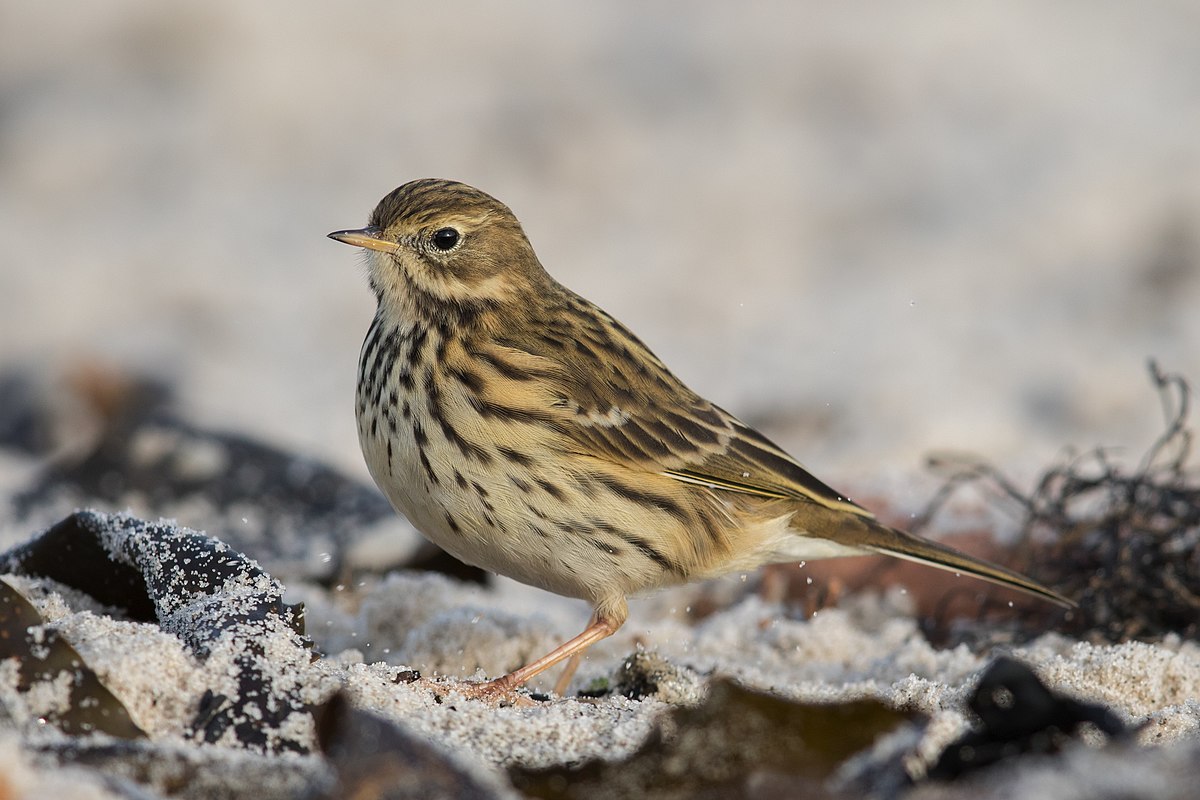 Wiesenpieper ■■
 |
einnotig fast medium (1-5 KHz) .
Single note, possibly rising at the end. (Or: long 4 second phrases, gradually louder then softer; swoopy or whoopy.) Sings in flight. BirdID: Song very similar to Rock Pipit, but tone less full and more brittle. Lacks Rock Pipit's closing trill, and beginning is less "hammering". - but what does a rock pipit sound like?
Song: Ähnlich Baumpieper, aber ohne Zia-Rufe. Vollständiger Gesang nur in flatterndem Singflug. Lange Strophen. Mittelstück meist zart und hoch [Link]Song very similar to Rock Pipit, but tone less full and more brittle. Lacks Rock Pipit's closing trill, and beginning is less "hammering". [Link] |
♫

|
| stereotypisch melodisch | ||
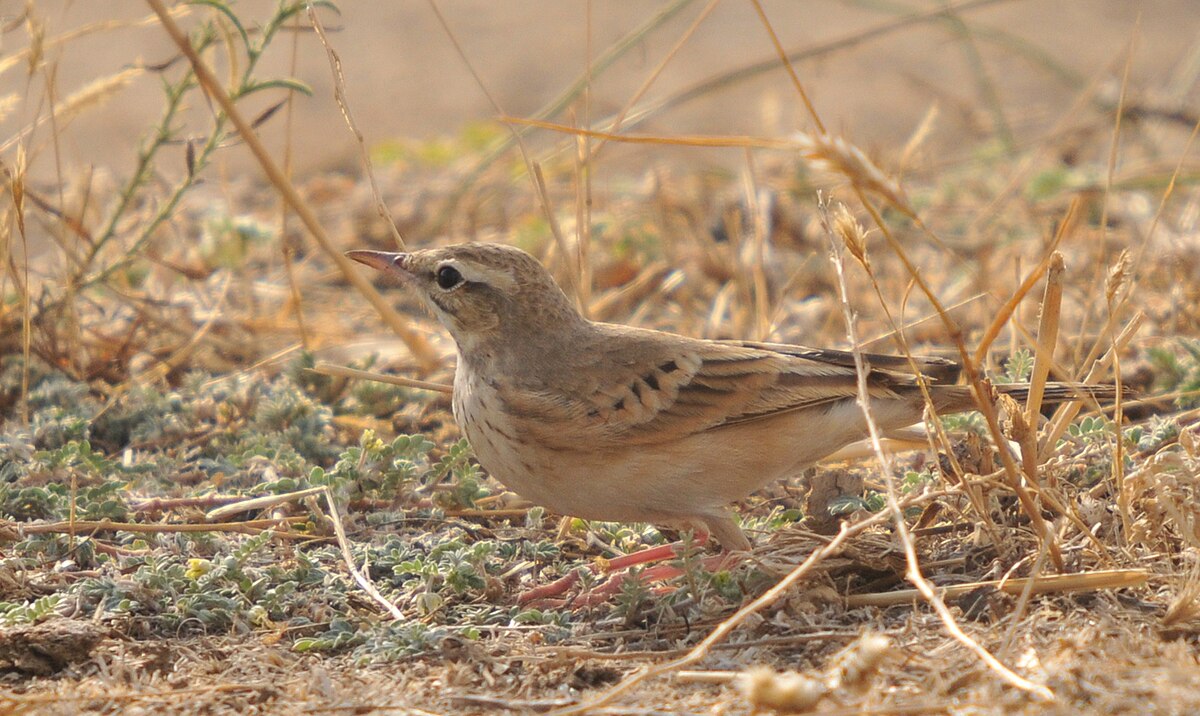 Brachpieper ❑❑
 |
stereotypisch melodisch slow medium (2-6 KHz) .
Song simple. Consists of three notes merged in a short, continuous and ringing "tsee-ro-ee", given every 1-2 seconds.
Song: Song simple. Consists of three notes merged in a short, continuous and ringing "tsee-ro-ee", given every 1-2 seconds. Timbre is wagtail-like and intonation variable, but consistent in each song. Flight call similar in timbre, like a cross between Yellow Wagtail and House Sparrow (song). Thinner and more wagtail-like than Richard's Pipit. [Link] |
♫

|
| churr | ||
 Hausrotschwanz ■■
 |
churr stereotypisch melodisch slow high (3-9 KHz) .
The song is two parts and unvarying. If it were a pop song, you'd call it ABABAB... The second part starts with a
sputtering trill. The RSPB in the UK says 'warble with crackling trills.' Vogelwarte.ch says
'Der gepresst knirschende Gesang setzt meist lange vor Sonnenaufgang ein und ist der Auftakt für das Vogelkonzert.'
BirdLife-Zuerich.ch says 'Einziger Sänger morgens um drei in den Häuserschluchten'.
Obwohl NABU.de meint, sie singen nicht mehr nach Juli, war ich angenehm überrascht sie in Oktober im Tessin zu hören.
Song: Other: Einige Arten wie der Hausrotschwanz singen zudem im Herbst, bevor sie in ihr Winterquartier ziehen. Die Männchen legen dann ihre Reviere bereits «provisorisch» fest. [Link]Am Morgen der erste Sänger: Kurzes dreiteiliges Liedchen, meist von Warte aus gesungen. Mittelstück aus rauen gequetschten Tönen. (als ob kurz die Stimme verloren)
[Link]Song consists of three parts and is distinct if heard well. It opens with some clear notes that may form a trill, which are then followed by a pause. The "gravel-part" does not carry as far as the rest of the song. [Link] |
♫

|
| Mimikry | ||
 Gartenrotschwanz ■■
 |
Mimikry stereotypisch melodisch slow high (3-9 KHz) .
I though I had these guys figured out after hearing them in Locarno several times, but they're hard to get a handle on! At BirdID they are described the first two parts of a three-part song like this: 'an ascending single note, immediately followed by a trill', whereas in Locarno I heard an initial high-low-high-low, sometimes without the final low, perhaps also a quick middle note, and no trill. Then a relatively short blackbird or warbler-like tune of maybe 5-8 notes. Listening to more recordings at XenoCanto has completely confused me now! BirdID also says the song is similar to the black redstart, which I sometimes hear at XenoCanto, but never did in Locarno! They also note a similarity to the Lesser Whitethroat (Klappergrasmücke), which I hope to hear in Maienfeld.
Song: Fängt immer mit denselben 3 Tönen an, einem „dih dede“, wobei das dih etwa ein bis zwei Töne höher liegt. Dann folgt eine kurze Strophe mehr oder weniger reine Töne. Das Ganze ist ziemlich individuell.
[Link]Song distinct, with three parts: First an ascending single note, immediately followed by a trill, then concluding with a squeaky, rattling improvisation that usually contains some mimicry. [Link] | ♫ |
| einfach rhythmisch | ||
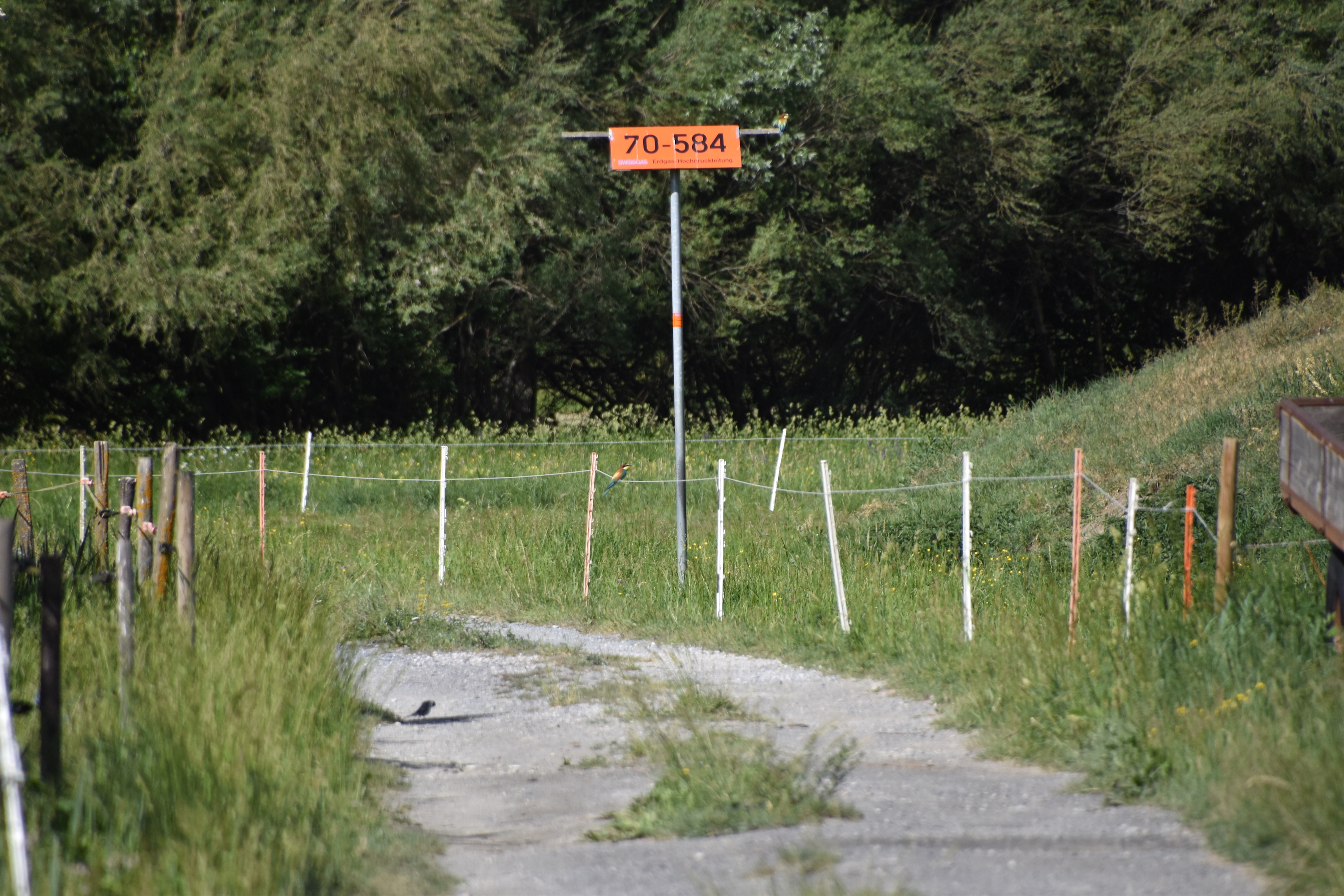 Bienenfresser ■■
 |
einfach rhythmisch slow medium (1-5 KHz) .
BirdID says multi-syllabic, rolling phrases, although it often seems to be one syllable as well. Hope to hear it and especially see it in Maienfeld.
Call: Call a short and soft "pju" often quickly repeated forming multi-syllabic, rolling phrases. [Link] | ♫ |
| Triller | ||
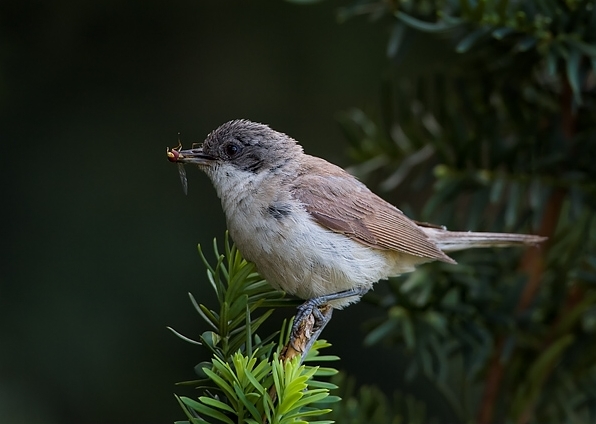 Klappergrasmücke ■■
 |
Triller einfach rhythmisch slow medium (3-5 KHz) .
Song typically consists of two parts. An indistinct chattering and warbling, subsong-like part similar to [common] Whitethroat, which is usually followed by a dry, fast and rattling trill. The trill carries much further than the chattering part. May be difficult to identify if trill is omitted. [Link]
Song: Klappernd. (Müllerchen) An Berglaubsänger erinnernd. Klappertöne (5-8) Aber oft mit leisem schwatzendem Vorgesang, der fehlen kann. Kann auch an Sumpfmeise erinnern, doch sind bei dieser die Klappertöne mehr von oben her angeschlagen.
[Link]Song typically consists of two parts. An indistinct chattering and warbling, subsong-like part similar to Whitethroat, which is usually followed by a dry, fast and rattling trill. The trill carries much further than the chattering part. May be difficult to identify if trill is omitted. [Link] |
♫

|
| improvisiert melodisch | ||
| Mimikry | ||
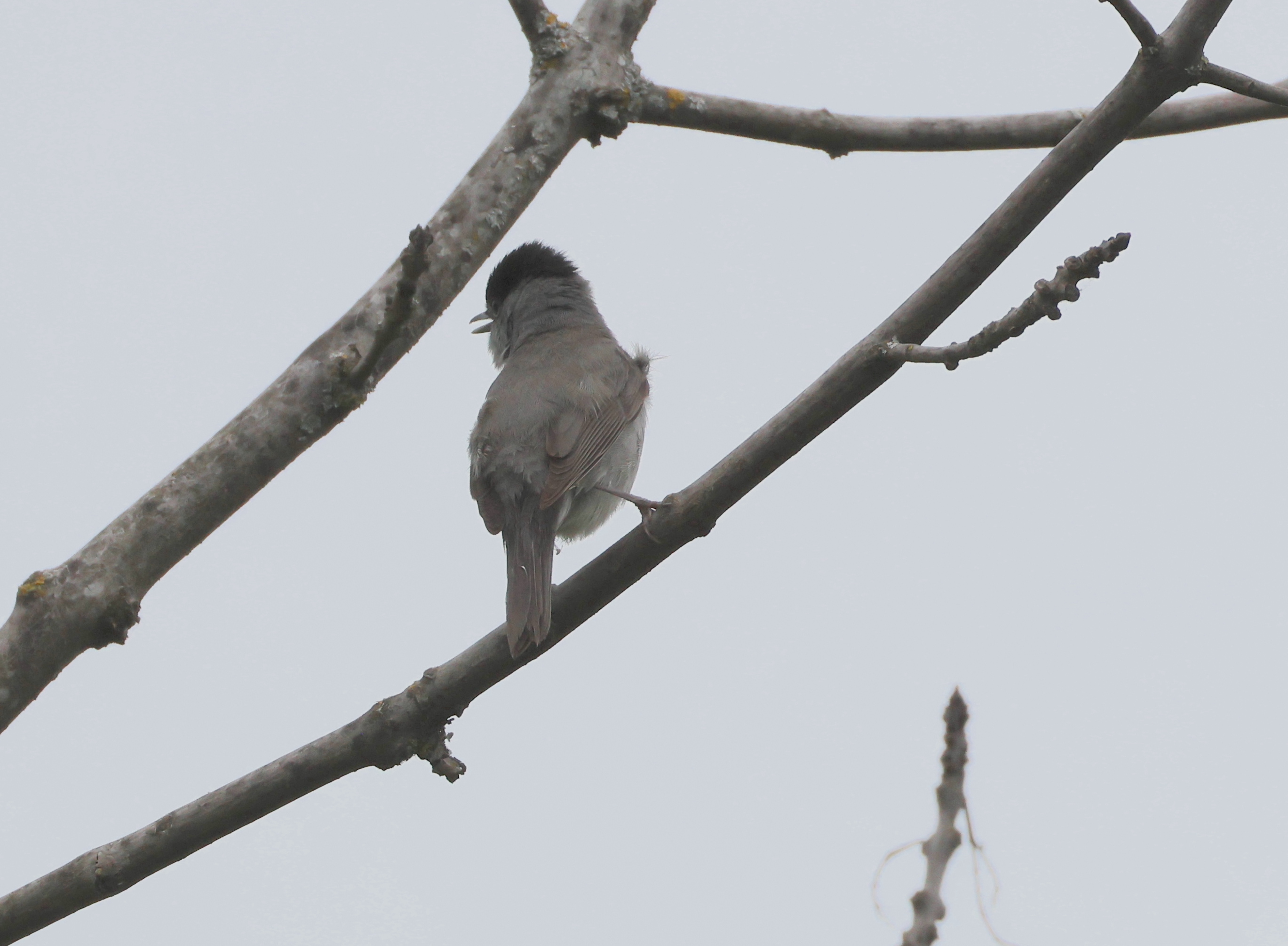 Mönchsgrasmücke hml ■■
 |
Mimikry improvisiert melodisch fast medium (2-5 KHz) .
They sometimes sing like a blackbird on speed - also non-stereotypic, seemingly improvised,
in short bursts.
Our local guy ends most of his songs with the same seven notes, which I find a good way to confirm the identification. In Ticino we often heard the 'Leiern' sound - the warblers would sing just the first 3 notes of a longer song, then stop. The order varied; high-medium-low I call 'Figaro' as in the opera, low-high-medium 'whiskey bar', as it sounded to me like the Kurt Weill lyrics, 'O-oh-show me-the-way to-the-next whis-ke-bar' - but the warbler usually stopped after 'way' or 'next' The British authors of The Sound Approach claim to hear 'a warblel and a whistle'.
Song: Mit schwätzendem Vorgesang, (kann auch kurz sein oder ganz fehlen) der dann in klare, kräftige, zum Ende hin in wehmütige Flötentöne übergeht (Überschlag)
[Link]Song pleasing, varied and loud. Sometimes very similar to Garden Warbler. A typical phrase starts with soft, staccato chattering and mimicry, which after a few seconds changes to a much louder, pure and resonant stream of notes for about 3-5 seconds. No fixed motif, but may end phrases with recurring notes. Often deviates from the characteristic type of song, and identification from song alone may be impossible. May sing first part of song for extended periods without ever reaching the characteristic ending. [Link] | ♫ |
 Schwarzkehlchen
 |
improvisiert melodisch fast low-high (2-7 KHz) .
Series of short, often squawky little bits, sometimes like a house sparrow, often repeated with only small variation. E.g. MmLMH?  Kurzer Gesang, eher steigend 8-19 slurred notes. Or 21 43 2143 [Link]
Song: The English name derives from its call, sounding like two stones knocked together. [Link]The song is a sweet stream of scratchy notes. Much more even, and less chattering than the Whinchat. Almost like a short and scratchy Dunnock phrase. [Link] Kurzer Gesang, eher steigend 8-19 slurred notes. Or 21 43 2143 [Link]
Song: The English name derives from its call, sounding like two stones knocked together. [Link]The song is a sweet stream of scratchy notes. Much more even, and less chattering than the Whinchat. Almost like a short and scratchy Dunnock phrase. [Link] |
♫

|
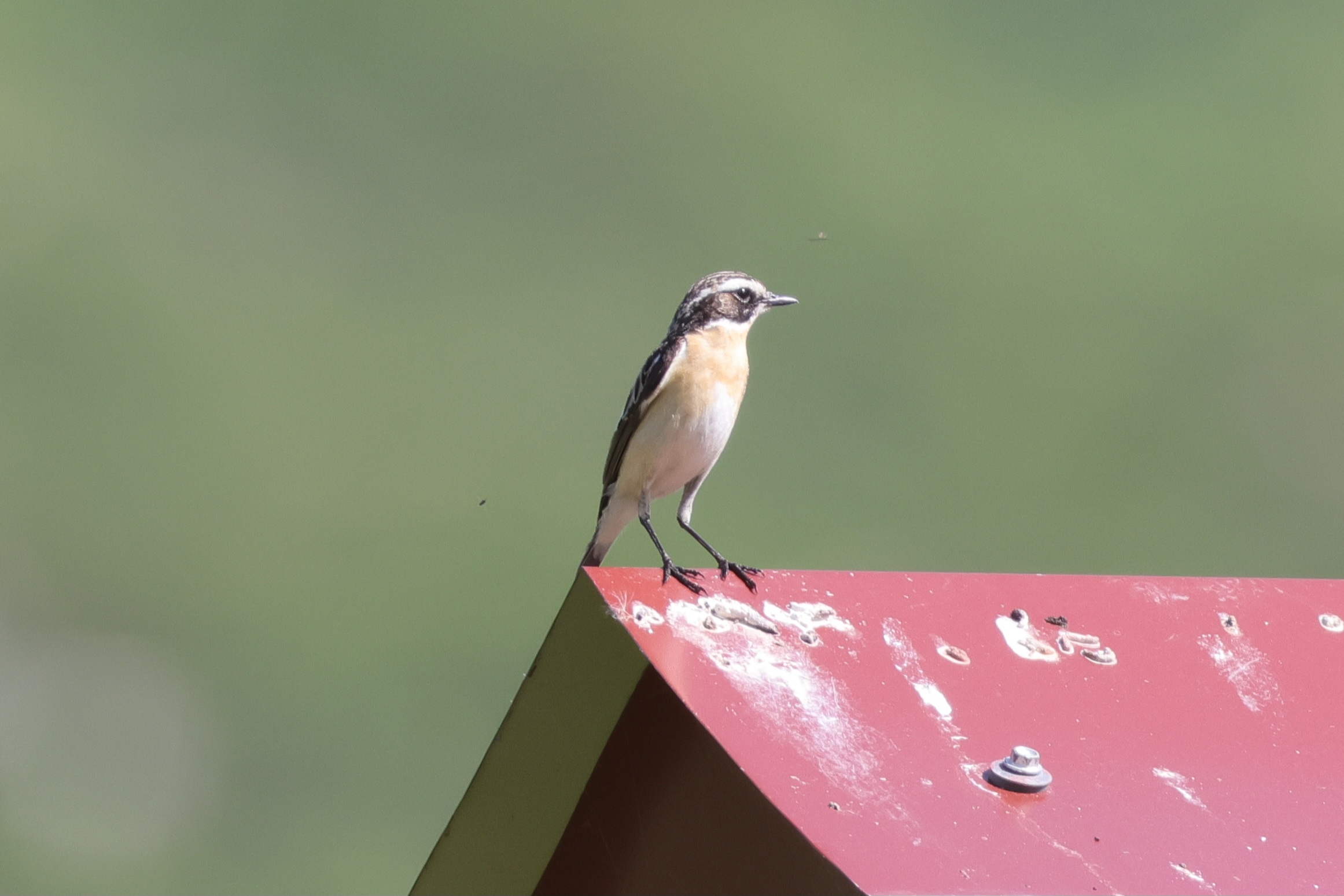 Braunkehlchen ■■
 |
Mimikry improvisiert melodisch fast high (3-9 KHz) .
General: Der Gesang (bei Vogelwarte.ch) klingt für mich ähnlich wie eine Mönchsgrasmücke, aber nur in sehr kurzen Phrasen. Song: Gesang hat zwei Teile wie erster und dritter vom Hausrotschwanz. Steigend, fallend. [Link]
Song: Kurzes (3-7 Töne) Liedchen mit 1-2 Kreischlauten, (ähnlich der Mittellaute b. Hausrotschwanz) variabel. Ahmt auch andere Vögel nach.
[Link]Song variable with lots of mimicry. The short phrases starts with dry, rattling or sneering trills, followed by clear whistling notes and expert mimicry. More varied, both in tone and tempo, than both Stonechat and Wheatear. [Link] |
♫

|
 Eisvogel ■■
 |
No details but a Xeno-Canto recording.
Call: Wikipedia says 'The common kingfisher has no song.
The flight call is a short, sharp whistle chee repeated two or three times. Anxious birds emit a harsh, shrit-it-it and nestlings call for food with a churring noise.'
The NABU app only has calls,
which seems to confirm this. Therefore I'm classifying all recordings as calls,
even though some say Song at Xeno-Canto. [Link]Most heard is the thin and penetrating contact call: A short "tzee", or disyllabic "tzee-tzu", with a ringing metallic quality. In excitement it is often alternated with ringing trills "tzeerrrrrrrrrr". [Link] |
♫

|
| singt 20 Sekunden oder länger | ||
| Mimikry | ||
 Rotkopfwürger ❑❑
 |
Mimikry singt 20 Sekunden oder länger fast medium (2-6 KHz) .
Territorial song loud and varied. Often repeats phrases and includes mimicry. Alternative [non-territorial] song a more continuous chattering with impressive mimicry similar to Red-backed and Lesser Grey Shrike, and difficult to separate from those. [Link]
Song: Territorial song loud and varied. Often repeats phrases and includes mimicry. Alternativ song a more continuous chattering with impressive mimicry similar to Red-backed and Lesser Grey Shrike, and difficult to separate from those. [Link] |
♫

|
 Neuntöter ■■
 |
Mimikry singt 20 Sekunden oder länger slow medium (1-5 KHz) .
Reminds me a bit of a Rohrsaenger/Feldlerche with its short, varied bits. BirdID says Song surprisingly varied with many expert imitations of small passerines, interwoven with bell-like ringing and dry chirping sounds. May be confusing and hard to identify if bird not seen. Song not very loud, but phrases can be very long. 'May be confusing' - tell me about it! What's not confusing about trying to tell apart 422 species of Swiss birds!
Song: Call a hard "check check" (like striking two rocks together), and a variable nasal "twee" Song surprisingly varied with many expert imitations of small passerines, interwoven with bell-like ringing and dry chirping sounds. May be confusing and hard to identify if bird not seen. Song not very loud, but phrases can be very long. [Link] |
♫

|
 Blässhuhn ■■
 |
No details but a Xeno-Canto recording.
Call: Most diagnostic call a very short, sharp and explosive "tsk". Sometimes a longer, less sharp but nasal "caw", with varying harshness. [Link] |
♫

|
 Teichhuhn ■■
 |
No details but a Xeno-Canto recording.
Song: Most typical is the territorial call (song); a sharp, loud and resonant "krrrr-ook" or "krrrk". [Link] |
♫

|
| stereotypisch melodisch | ||
| Triller, Raspel | ||
 Grünfink h m m ■■
 |
Triller, Raspel stereotypisch melodisch fast low-high (2-7 KHz) .
General: Sequence of 4-6 rhythmic elements at different pitches.
A sort of trill is often start or end of the sequence (can also be a call!),
and there are slides.
Song: Song composed of various sequences of linked sounds, repeated in a vibrating manner; "trrrrrrrrr", "chechechecheche". Sometimes resembles Brambling when making the wheezy "rrrrrrrrr" sound, but differs in being harsher and by "pulling" the pitch downwards (or sometimes upwards) at the end. [Link] | ♫ |
| einfach rhythmisch | ||
| Raspel | ||
 Bergfink ■■
 |
Raspel einfach rhythmisch slow medium (1-5 KHz) .
General: Bergfink - call cheep plus two ascending Grünfink squawks. Song? Grünfink squawk but not descending, every 3-4 seconds.
Song: Song very distinct; a soft, wheezing, drawn-out single note. Repeated at the same pitch in a monotonous manner. [Link] |
♫

|
| stereotypisch melodisch | ||
| Triller, Mimikry | ||
 Zippammer ■■
 |
Triller, Mimikry stereotypisch melodisch fast low-high (2-9 KHz) .
AppearanceAndIdentification: orange-brauner bauch, weisse brust+kopf mit 3 schwarzen streifen am kopf (unter/am/über Augen), braun+dunkelbraun auf Flügeln; aber Weibchen eher braun
Song: Notes from 2022: Short song, relatively long pause, repeated with slight variation? Has a very short triller of just 3 notes. May have heard and seen one walking parallel to the Aa on the way to Pfaeffikersee today, though the visual ID is very uncertain; the Xeno-Canto song here sounds different than my 2022 description - musical like a chaffinch but rising, not falling. Song: Song variable, but usually distinct. [Link] |
♫

|
| Mimikry | ||
 Bluthänfling ■■
 |
Mimikry stereotypisch melodisch fast low-high (2-7 KHz) .
General: Ähnlich wie ein Rohrsänger aber nur kurze Segmente mit klaren Pausen. Song: Nabu: Sein Gesang umfasst trillernde, kurze und musikalische pfeifende Laute, unter anderem „piUU“, „trrüh“ und „tu-ki-jüüh“. [Link] Song: Gesang ist fast Rohrsänger-artig, relativ hoch und zirpend. Manchmal mit kleinen Pausen. bird-song Aufnahme where kurz, llll mhllll [Link]
Song: Gesang für mich ähnlich wie Grünfink.Song a varied, sweet stream of contact calls, mimicry and trills with a staccato feel. [Link] |
♫

|
| improvisiert melodisch | ||
| absteigend | ||
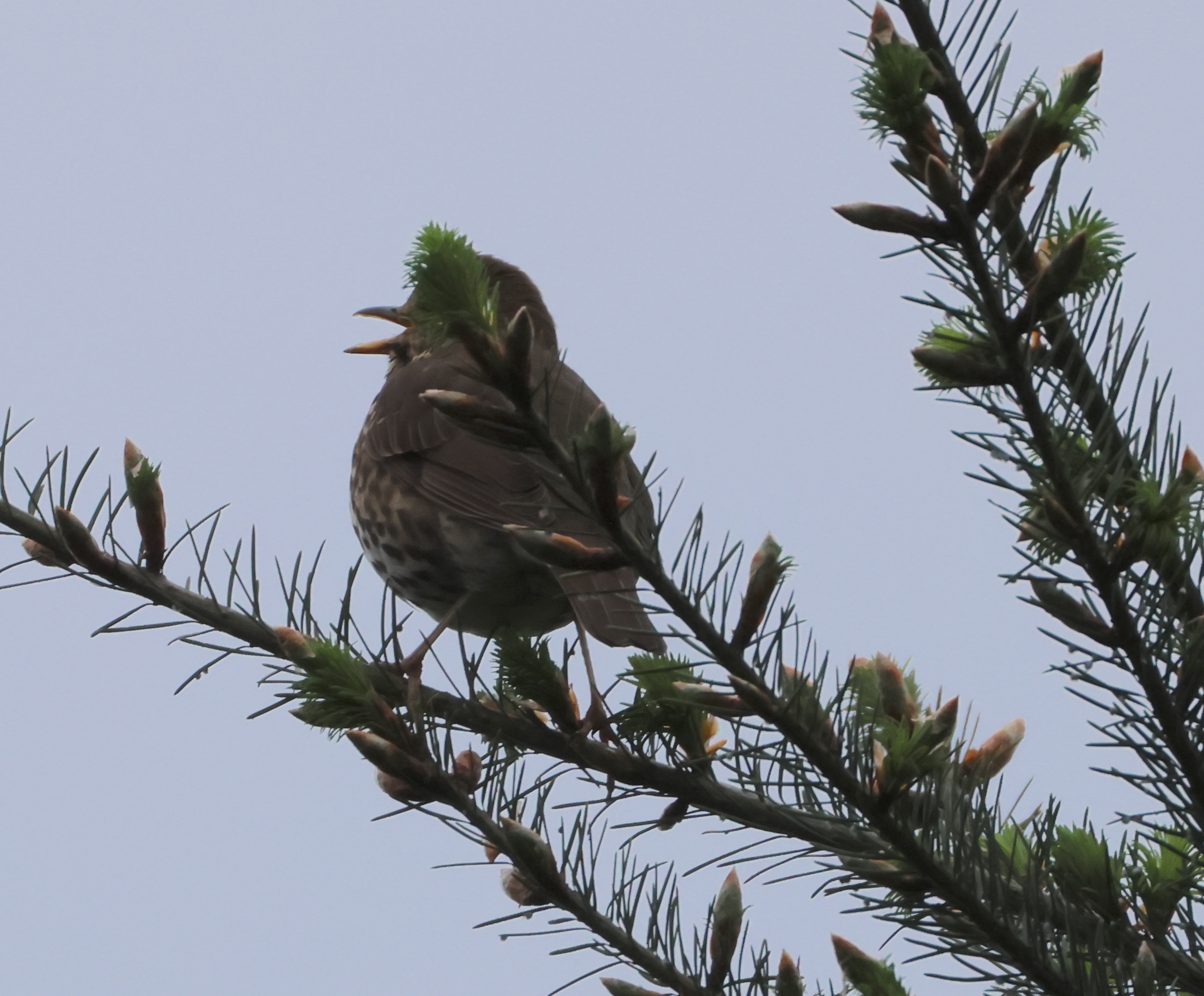 Singdrossel mhHL ■■
 |
absteigend improvisiert melodisch slow low-high (2-9 KHz) .
Paced like a blackbird, humorous mix of elements like a nightingale. Huge range, elements from 2-5 KHz, others 6.5-9 KHz. Can sing for up to 50 minutes, and a male may know 100 melodies in its repertoire.
Song: Klangfarbe ähnlich obiger Art [Amsel], aber jedes Element 2-4mal wiederholt, Pausen zwischen den Phrasen.(klingt oft wie „Philipp“, oder „Judith“) Einzige Drossel unseres Gebietes die diese Wiederholungen macht. Singt oft nicht von Baumspitze aus, sondern aus dem Geäst.
[Link] | ♫ |
| nicht musikalisch | ||
| rasseln | ||
 Misteldrossel ■■
 |
rasseln nicht musikalisch fast low-high (2-9 KHz) .
Song: Die Stimme ist ähnlich wie die vom Pirol. [Link] Gesang ähnlich Amsel, aber eintöniger mit geringerem Tonumfang [auch kürzer, kein schnirpsliges Ende -- Bill] [Link]
Song: Gesang ähnlich dem der Amsel, aber weniger abwechslungsreich und melancholisch, fast weinerlich klingend. Meist von Tannenspitze aus.
[Link]Song loud, far reaching and melodic. Most similar to Blackbird, but pitch is higher, phrases shorter (3-6 notes) and most notably, pauses between phrases are much shorter. All which gives the song a much more hurried feel than that of the Blackbird. Timbre is thinner and slightly shivering, and tonal range more limited. May have recurring favourite motifs, but does not repeat phrases like Song Thrush. Sometimes adds higher pitched parts and imitations. [Link] Gesang ähnlich Amsel, aber eintöniger mit geringerem Tonumfang [auch kürzer, kein schnirpsliges Ende -- Bill] [Link]
Song: Gesang ähnlich dem der Amsel, aber weniger abwechslungsreich und melancholisch, fast weinerlich klingend. Meist von Tannenspitze aus.
[Link]Song loud, far reaching and melodic. Most similar to Blackbird, but pitch is higher, phrases shorter (3-6 notes) and most notably, pauses between phrases are much shorter. All which gives the song a much more hurried feel than that of the Blackbird. Timbre is thinner and slightly shivering, and tonal range more limited. May have recurring favourite motifs, but does not repeat phrases like Song Thrush. Sometimes adds higher pitched parts and imitations. [Link] |
♫

|
| stereotypisch melodisch | ||
 Rotdrossel down 6+chattering ■■
 |
stereotypisch melodisch slow medium (3-5 KHz) .
Song delivered in two parts. First a simple, melodic phrase of 3 - 6 notes, usually followed by a more silent, indistinct, fast and less melodic, chattering sequence. First part highly variable from place to place, but constant in individuals. [Link]
Song: Song delivered in two parts. [Link] |
♫

|
| nicht musikalisch | ||
| Raspel | ||
 Wacholderdrossel lll lll h ■■
 |
Raspel nicht musikalisch slow medium (1-6 KHz) .
BirdID says song a mix of dry contact calls, BirdLife that it's almost only heard in flight. The XC recording is a bit of a chuckle to me.
Song: Gesang nicht melodisch,aus gepressten, quietschenden Tönen bestehend, fast nur im Flug vorgetragen.
[Link]Song a mix of dry contact calls; "trrrt trrrrt", and high pitched, drawn out, chattering improvisations. [Link] |
♫

|
| stereotypisch melodisch | ||
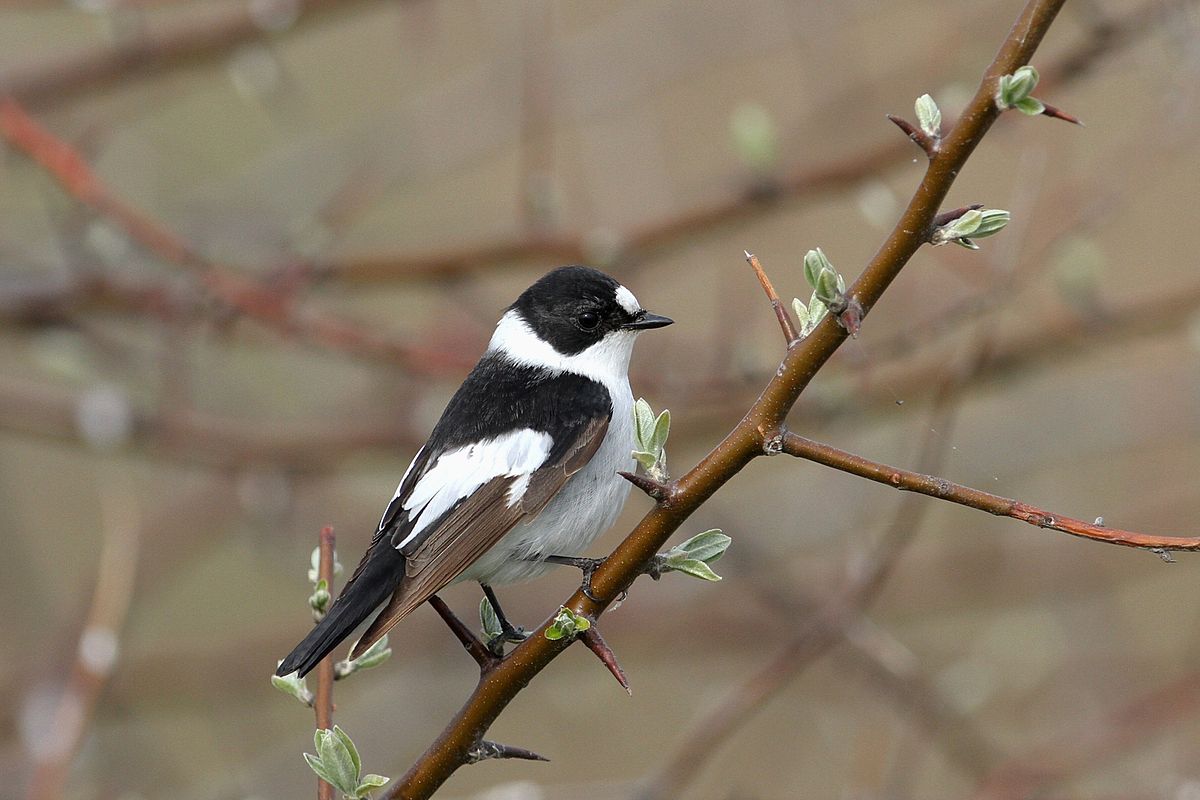 Halsbandschnäpper Mein Halsband, mein Halsband, er schnäppt ■❑
 | stereotypisch melodisch fast high (3-7 KHz) . Simple tune... |
♫

|
 Dohle ■■
 |
No details but a Xeno-Canto recording.
Call: Nabu: Ein hartes „kjack“ oder „schack“ sowie ein raues „tschräh“ hört man am häufigsten von der Dohle. Sie ist ein begabtes Stimmwunder und hat eine Vielzahl von Lauten und Imitationen auf Lager. [Link] meist angenehm klingende, kurze Rufe: "kja", oft mehrfach wiederholt, härteres "kjack!" oder gezogenes "kjaar". [Link] meist angenehm klingende, kurze Rufe: "kja", oft mehrfach wiederholt, härteres "kjack!" oder gezogenes "kjaar". [Link] | ♫ |
 Bartmeise ■■
 |
No details but a Xeno-Canto recording.
Song: Song a primitive, 3-syllable phrase, consisting of contact call-like sounds. [Link] | ♫ |
| einfach rhythmisch | ||
| Mimikry | ||
 Dorngrasmücke ■■
 |
Mimikry einfach rhythmisch fast high (3-7 KHz) .
Song: Often ends with more indistinct mimicry, or subsong. May omit characteristic phrase and sing more cryptic for periods of time, and may be more difficult to identify. [Link]Relativ kurzer gesang, an Anfang fallend, dann entweder weiter oder steigend. 7-14 notes. [Link]
Song: Gesang kurz und rau (Kürzester Name).Oft im Singflug aber auch ab Warte. Wenn im Singflug dann Strophe etwas länger.
[Link]Often ends with more indistinct mimicry, or subsong. May omit characteristic phrase and sing more cryptic for periods of time, and may be more difficult to identify. [Link] |
♫

|
| einnotig | ||
 Bergpieper ■■
 |
einnotig fast high (3-7 KHz) .
Er singt überwiegend fliegend ein ein- bis zweisilbiges „zip“ oder „tsi tsi“. [Link]
Song: Monoton, GAR NICHT BERGIG. Tsilp tsilp, gleich note, wiederholt sich über 10+ Sekunden, leicht schneller aber nicht zu viel. [Link]Meist drei nicht scharf abgesetzte lange Tonreihen. Singflug. Mittelteilstück rauer und geräuschhafter als bei obiger Art [Wiesenpieper]. [Link]Song slightly more melodious, often with Tree Pipit like glissandi at end of phrase. [Link] |
♫

|
| singt 20 Sekunden oder länger | ||
 Alpenbraunelle ■■
 |
singt 20 Sekunden oder länger fast low-high (1-8 KHz) .
Fast, long, chirpy
Song: Song is a varied stream of melodious and chattering notes, more resembling skylark than the much higher pitched Dunnock. [Link] |
♫

|
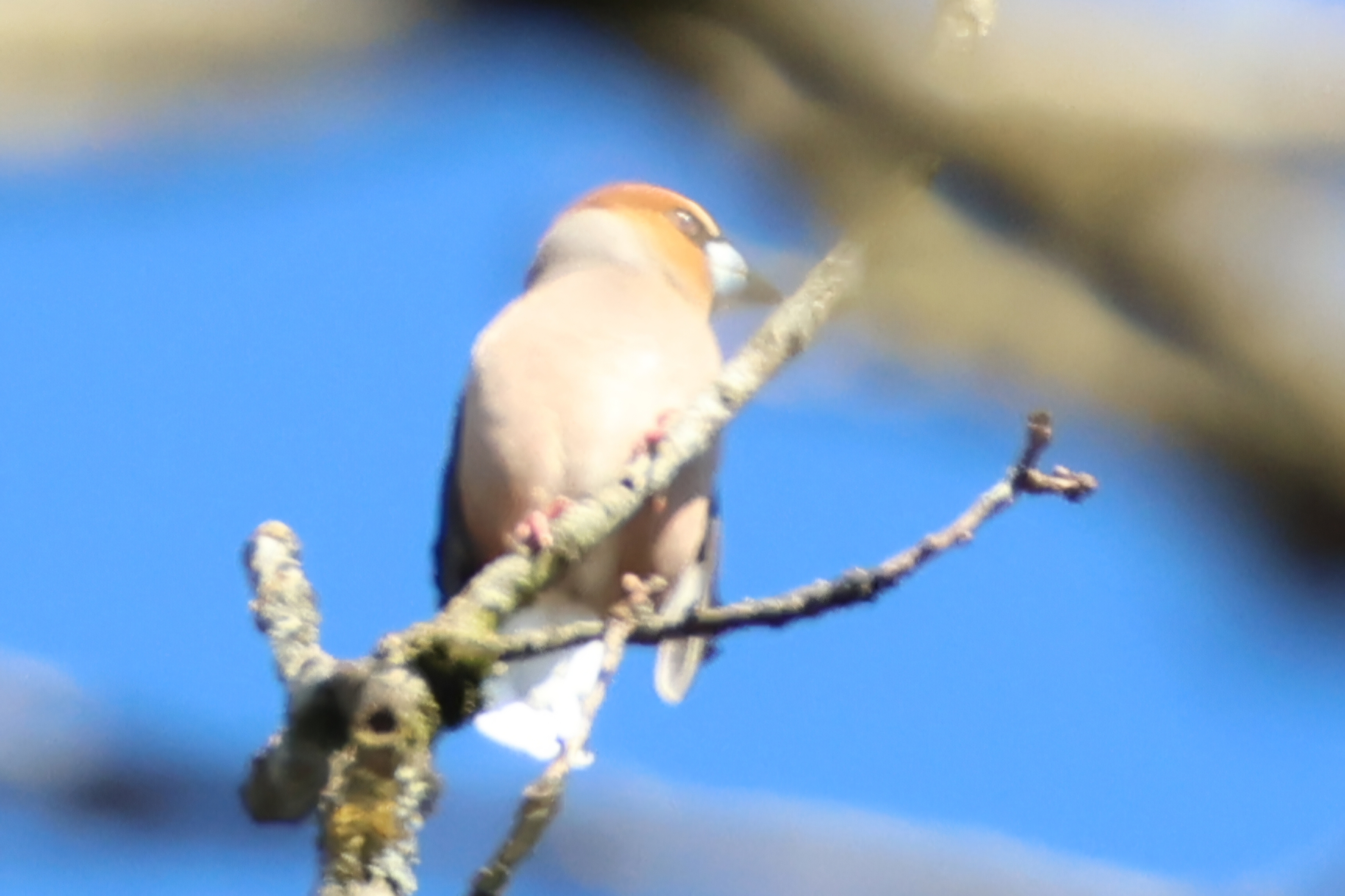 Kernbeisser ■■
 |
No details but a Xeno-Canto recording.
Call: Most typical call a sharp and explosive "tzek", with abrupt, emphasized, cut-off ending. Quite similar to Robin, but harder, with each syllable marginally longer with a slightly wheezing timbre. Repetitions are slower and more singular than Robin. Diagnostic when interspersed with high frequency notes. [Link] | ♫ |
| zweinotig | ||
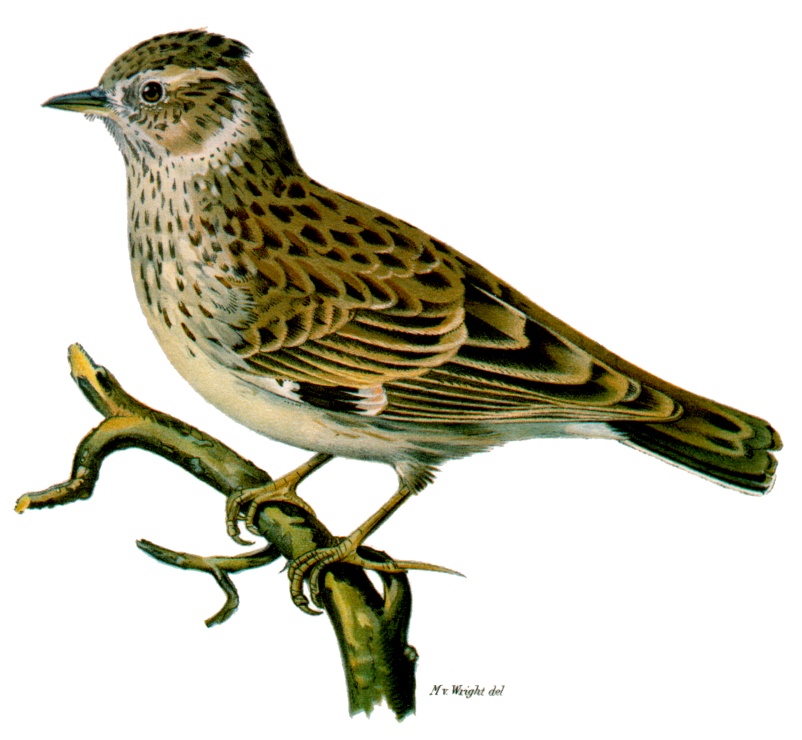 Heidelerche ■■
 |
zweinotig fast medium (3-5 KHz) .
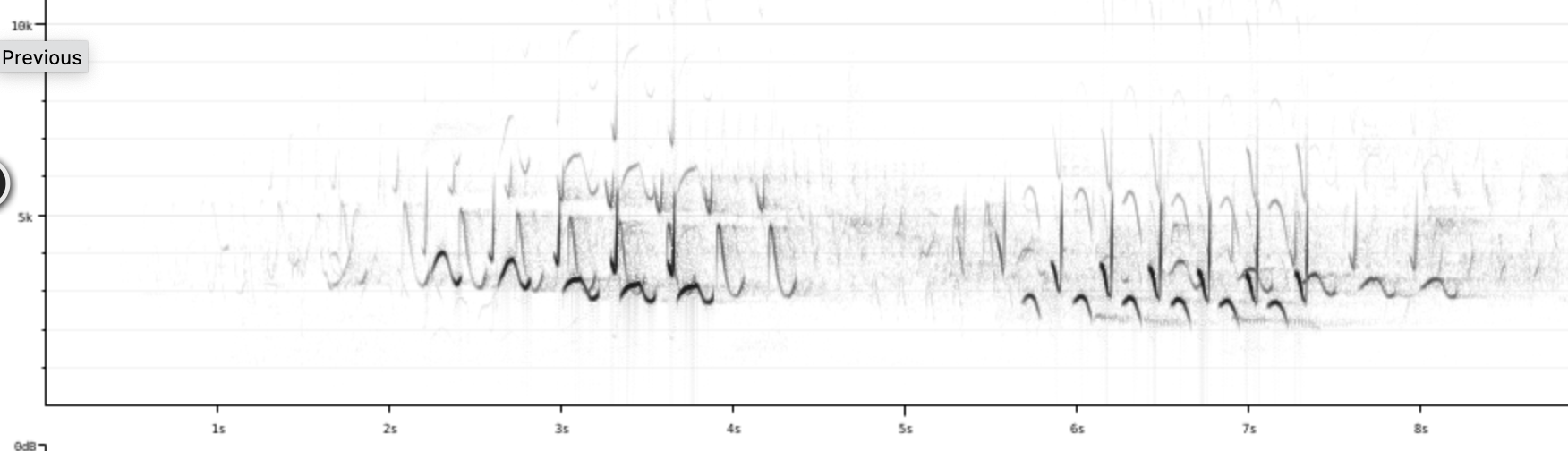
General: Slow for a lark? Fast to me. Song: Fallend dadui dadui. Or figaro figaro - picture Heidi in an opera. Wenig Variation. [Link]Der flötende Gesang der Heidelerche gehört zu den schönsten der Vogelwelt und ist tagsüber wie auch nachts zu hören. [Link]
Song: Song: Distinct and quite slow for a lark. Consists mainly of varied, disyllabic elements, or single syllables repeated in descending, accelerated phrases. Starting soft and hesitantly, then gaining in strength and speed. [Link] |
♫
|
| nicht musikalisch | ||
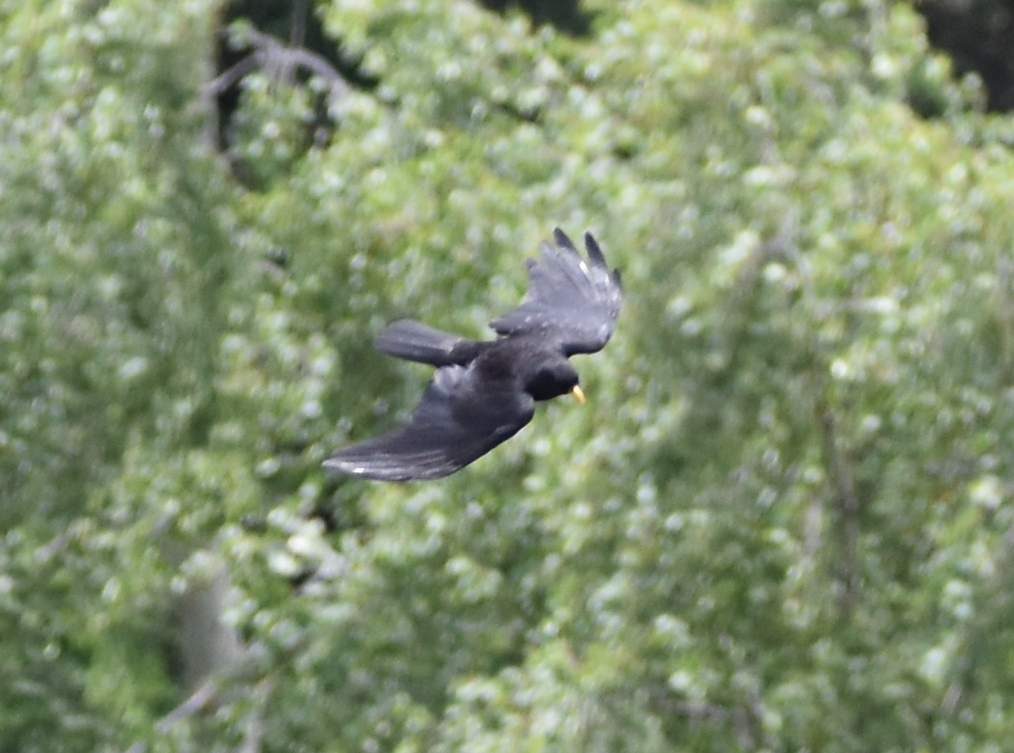 Alpendohle ■■
 | nicht musikalisch slow medium (1-5 KHz) . Komischer Ton, ein Zirpen, oft in grossen Truppen. |
♫

|
| stereotypisch melodisch | ||
 Wintergoldhähnchen W=Winter=v.a. runter, dann wieder hoch, plus melodischer Schluss ■■
 |
stereotypisch melodisch slow high (6-8 KHz) .
Vogelwarte.ch sagt, sehr hoher Gesang leicht auf- und absteigend. Hier fängt es mit flach an. [Link]
Song: Kurze Reihe von sehr hohen, leisen Tönen in auf-absteigender Tonhöhe, an das „W“-im Namen erinnernd. [Link]Song: a very high-pitched, undulating series of arpeggiated notes moving down and up again, repeated 4-5 times ending with a marked "conclusion" (like "trying to start a tiny motor and failing"). Timbre of song similar to contact call. [Link] |
♫

|
| einfach rhythmisch | ||
 weiblich.jpg) Sommergoldhähnchen Noten vom 'Sommer' steigen wie die Temperaturen ■■
Sommergoldhähnchen Noten vom 'Sommer' steigen wie die Temperaturen ■■ |
einfach rhythmisch fast high (6-8 KHz) .
Very high rhythmic repetition of about 3 seconds
Song: Wie [beim Wintergoldhähnchen] aber auf gleicher Tonhöhe bleibend. [Link]Song: Similar in timbre to Goldcrest, but much more monotonous. [Link] |
♫

|
 Sumpfmeise 1-Noter, Sumpf laenger als Kohl hhmmlll ■■
 |
einfach rhythmisch fast low-high (2-10 KHz) .
General: Higher-pitched than great tit, sometimes repetitive 1- and 2-note tunes like them, sometimes simple melodies, usually pure, sometimes chirpy or raspy. Song: 'Song: A simple one or two note call repeated in series. Usually rising slightly in pitch, and with a "liquid" quality.'. [Link]At bird-song.ch it's hl-rest-hl, or 7-8 2-noter swoops. bird-song.ch names lh-break-hl as a pistjä call and also has a series of 7 or 8 falling 'swoops'. [Link]
Song: Klapperlied - 6-8 Noten 'angeschlagen'Klapperlied. Reihe (6-8) weich angeschlagene Töne mittlerer Höhe. Ähnlich der Klappergrasmücke aber weicher. (Sumpf ist weich) Oft auch Rufe wie „psja“ zu hören. Ziemlich scharf u. gepresst. [Link] |
♫

|
 Goldammer ■■
 |
einfach rhythmisch fast high (4-8 KHz) .
Stakkato 2-Noten-Sequenz wird 10-12 mal wiederholt, mit Pause oder höhere Note und Pfiff am Ende. In der Schweiz höre ich (und andere) meistens den XlB-Dialekt, was Pavel Pipek vom yellowhammers.net Projekt erklärt heisst eine Silbe mit hoher Note und lang gezogen (Xl) und am schluss eine tiefe Frequenz (B).
Vogelwarte.ch schreibt: Bereits im zeitigen Frühjahr trägt das Männchen seinen einfachen Gesang vor:
«Wie, wie, wie, wie hab ich dich lieb». Bolzari und Gygax in Vogelarten der Schweiz sind weniger poetisch aber hilfreicher
mit der Beschreibung: vzizizizizizizi-düüüh.
Song: Kurzes Liedchen. „ Wie wie wie hab ich dich liiieb“ Das „Lieb“ ist meist etwas tiefer, kann aber auch höher sein oder doppelt, dabei das eine höher und das andere tiefer. Sehr variabel!
[Link]Song a series of 6-8 (or more) slightly ascending "tze" 's, rising in volume and ending on a sustained note, which may be lower or higher than the others. Often rendered as "little-bit-of-cheese-and-no-bread". Last note is often omitted, which may lead to confusion with Cirl Bunting. Timbre with prominent harmonics as in other bunting songs. [Link] |
♫

|
|
Zaunammer ■■ |
einfach rhythmisch fast medium (3-6 KHz) .
biologie-wissen.info: sings beg Feb to mid July; me: long trill similar to yellowhammer
Song: BirdID says song like yellowhammer with no ending. I see what they mean - it's more like 16 or so trilled repetitions of the same note, and no leap up to 'lieb' as in the German Goldammer mnemonic. Wie Goldammer, aber ohne das „lieb“.und etwas tiefer. Ähnlich Klappergrasmücke.
[Link]Song variable, but can generally be described as a Yellowhammer phrase with no ending, or an Arctic Warbler with bunting timbre. Tempo also variable, but rhythm always even. [Link] |
♫

|
| singt 20 Sekunden oder länger | ||
| Mimikry | ||
 Feldlerche ■■
 |
Mimikry singt 20 Sekunden oder länger slow medium (2-6 KHz) .
Fast chirpy improvization without a break, not very high, reminds me of a nightingale or a Eurasian reed warbler/Teichrohrsänger with the exact rhythm, but most likely sung in a cornfield. Or a Singdrossel that repeats its elements longer that that guy. Repeats elements 1-8 times. Sometimes buzzy/trilly. Can go on for minutes at a time. Ich habe es auch mit einem Amsel verwechselt, da er lang und melodisch, fast wie Amsel aber hört nicht auf.
Song: Song a pleasing energetic stream of chirping, merry trills, interspersed with mimicry. Trills quite resonant with fairly full tone. Song usually given in flight high in the air. Less characteristic, shorter, weaker and more varied song when given from ground. [Link] |
♫

|
| stereotypisch melodisch | ||
| rasseln, flöten | ||
 Stieglitz Llmh ■■
 |
rasseln, flöten stereotypisch melodisch fast low-high (2-7 KHz) .
General: Hektischer Singsang, wirkt recht chaotisch in Futtergruppen. Aber auch als Käfigvogel gehalten, es muss solo schöner klingen. Gesang hat eine Struktur (und ist langsamer als der Girlitz): Zuerst eine kleine Melodie hoch und runter; dann vielleicht ein Grünfink-Triller, dann 4 wiederholte Noten oder ein neues Melodiechen. (Oder kommen diese Elemente eher zufällig?) Song: Melodie geht meistens 2-3 Sekunden hoch und runter, meistens mit einer wiederholten 1-Noter mit ~6x die gleiche Note. [Link]
Song: My first (multilingual) notes: Stieglitz like Grünfink, fast, high, occasional trills. Occasionally ends a bit with falling note like buchfinkMir wurde erst in St. Moritz in Juli 2021 bewusst wie ähnlich der Stieglitz wie ein Grünfink klingt - beide können lange Gesang mit Trillern und rauhen sinkenden Toenen singen, und ich habe Stieglitz v.a. durch dieses Stöhnen für Grünfink gehalten. Contact-call distinct, and also constitutes a major part of the song. A sharp and explosive "witt", or "tzee-witt". Sometimes given as a single syllable, di- or trisyllabic, or as continuous series. The song is comprised of rapid series of the contact call, interrupted by drawn-out melodic notes and trills. [Link] |
♫

|
 Fichtenkreuzschnabel ■■
 |
stereotypisch melodisch slow low-high (2-10 KHz) .
Repeated hi-low pattern...well, doesn't always sound like that.
The very short beginning of my Stazersee recording before the static sets in does,
as well as a song found online.
One recording reminds me of cicada sounds.
Song: The song consist of improvised, resonant twittering, and series of contact calls with no apparent phrases. It is generally faster, with less marked pauses than in Parrot Crossbill, and the phrasing seems more random. [Link] |
♫

|
 Pirol ■■
 |
stereotypisch melodisch slow low (0-1 KHz) .
Weiches, tiefes Flöten. Meiner Meinung nach hat der Pirol eine wunderschöne Stimme aber gar keine Fantasie was Melodie betrifft - er sind immer die gleichen paar Noten.
Song: Varied repertoire, but song and common contact call very distinct. Song a series of 1-2 seconds long phrases of 3-5 yodeling, clear, fluting notes, interspersed with 2-3 second pauses. Tone very full-bodied, melodic and pleasing. [Link] |
♫

|
| einfach rhythmisch | ||
 Weidenmeise ■■
 |
einfach rhythmisch slow high (3-7 KHz) .
Songs I've heard alternate two notes and look like a sine wave on the sonogram.
Vogelwarte.ch: Apart from minor differences in diet and size, Alpine Tit and Willow Tit can only be identified by their song. The Willow Tit utters a series of long, descending notes («tyoo tyoo tyoo tyoo»), whereas the Alpine Tit’s territorial song consists of short notes on an even pitch («dee dee dee dee dee»).
See more here.
Song: 1.Gesangstyp: „ziü ziü ziü „ etwas wehmütig, die einzelnen Töne leicht absinkend, nicht klappernd. Bei Unterart Alpenmeise auf gleicher Höhe bleibend. 2.Gesangstyp: variable, schwätzende, helle Folge m. trillerndem Schluss. [Link]Song: One or two soft, clear, melancholic notes repeated in a slow, even rhythm. At first rising slightly in pitch, then gradually falling. In some areas song is evenly pitched. [Link] | ♫ |
| stereotypisch melodisch | ||
 XXXX Bei Wildert glaube ich dass das ein Fitis ist und kein Zilp-zalp aber MerlinBirdId war auch verwirrt und hat ZZ besser gefunden.JPG) Fitis Buchfink diva ■■
Fitis Buchfink diva ■■ |
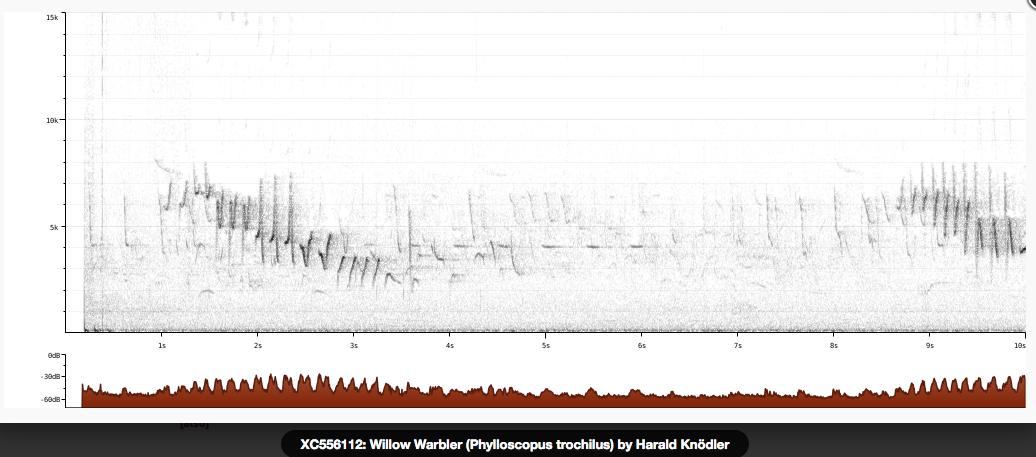
stereotypisch melodisch fast high (3-9 KHz) .
Gesang wie Buchfink aber höher, schnell, tendenz fallend aber mit mehr hoch und runter.
Song: Reihe v. Pfeiflauten (ca 12) etwas abfallend. Klingt ähnlich Buchfink, aber etwas traurig, melancholisch, wie in moll-Tonart. [Link]By far most easily identified by it's call or song. Song: A 3-5 second, falling phrase of soft, rippling "svi-svi" sounds, starting high with some attack, and then falling in a mellow manner. The phrase lacks any conclusion, and diminishes both in strength and tempo. [Link] |
♫
|
| improvisiert melodisch | ||
 Gartengrasmücke hm ■■
 |
improvisiert melodisch fast medium (1-5 KHz) .
Song: Hard to distinguish from Mönchsgrasmücke/black cap, but they sing much longer and don't end with a typical short melody like the black caps. [Link]'minutenlang anhaltenden, plaudernden und abwechslungsreichen Gesang' [Link]
Song: Sprudelnd, orgelnd, die längsten Strophen aller hiesigen Grasmücken. Mit vielen reinen, volltönenden Tönen. Ohne Überschlag der Mönchsgrasmücke.
[Link]Song: a full bodied, flowing, melodious stream of notes, distinguished by its almost constant, warbled quality and lack of clear whistling notes (see Blackcap). Tempo is fairly even. Beware confusion possibility with occasional subsong of Blackcap that never reaches the whistling part! Call a nasal "che". [Link] |
♫

|
| einfach rhythmisch | ||
 Rohrschwirl ■■
 |
einfach rhythmisch fast medium (3-5 KHz) .
Endless buzzing like an insect or machinery. Lower tone than Feldschwirl.
Song: Gesang ähnlich obiger Art [Feldschwirl]. Tiefere Tonlage, höhere Frequenz. Strophen meist kürzer
[Link]Song insect-like and high-pitched. A monotonous stream of even clicks similar to the whirring of a sewing machine. Song most similar to Grasshopper Warbler but faster (each click hard to distinguish), and lower pitched with less, ringing quality, due to less prominent high frequencies. At closer range a Robin-like, accelerating ticking is heard, introducing the actual song. [Link] |
♫

|
| singt 20 Sekunden oder länger | ||
| komisch | ||
 Teichrohrsänger ■■
 |
komisch singt 20 Sekunden oder länger fast medium (1-5 KHz) .
Weird, squeaky, urgent. Slower than Sumpfrohrsaenger.
Song: Gleichmässiges Tempo! Man kann den Takt schlagen dazu.(Metronomsänger) Oft 2-3x wiederholte kurze Motive. Viele schnarrende Töne.
[Link]By far easiest to identify by song: Characteristic, almost metric and even rhythm, very different from Sedge Warbler. Squeaky timbre with many, almost bizarre, harmonics. Phrases generally repeated 2-3 times. [Link] |
♫

|
| Mimikry, komisch | ||
 Sumpfrohrsänger ■■
 |
Mimikry, komisch singt 20 Sekunden oder länger fast medium (1-5 KHz) .
Rival Teichrohrsänger hat eher Wiederholungen, Sumpfrohrsänger auch Kohlmeise-tschurrende-Rufe und andere Geräusche und kurze Melodien von 2-5 Noten.
Song: Der Virtuose unter den Rohrsängern! Meisterhafter Imitator anderer Vogelstimmen. Viele wirbelnde und zwirlende Laute, wenig schnarrende. Variable Tempi.
[Link]Song extremely varied and full of mimicry of both European and African species. Up to 75 species imitated by the same bird. Phrases often repeated 2-4 times, and different phrases may overlap. Nevertheless, clearly defined phrases with marked pauses. Sometimes more flowing streams of notes, but less so than Icterine Warbler. Most similar to Icterine and Blyth's Reed Warbler. Softer timbre than Icterine, and not so loud. [Link] |
♫

|
| Raspel | ||
 Drosselrohrsänger ■■
 |
Raspel singt 20 Sekunden oder länger slow medium (1-5 KHz) .
General: Klingt für mich wie krächz pieps pieps.
Vogelarten der Schweiz sieht das anders:
'Laute und auffällig knarrende, rau tönende Strophe
''karre-kiet karre karre-keit.'' ' Song: In Vergleich zu Teichrohrsänger langsamer und lauter. [Link]
Song: Gesang ähnlich Teichrohrsänger, aber viel lauter, Tonhöhenunterschiede 2-3 Oktaven. Karre-Kit-Sänger.. Sehr taktmässig.
[Link]Song similar to Reed Warbler in timbre, but much deeper and slower. [Link] |
♫

|
| Mimikry | ||
 Schilfrohrsänger ■■
 |
Mimikry singt 20 Sekunden oder länger slow medium (1-5 KHz) .
Das Beispiel auf vogelwarte.ch ist eher ein knarren und trillern,
ähnlicher Rhythmus und Klänge wie der Teichrohrsänger.
Song: Gesang sehr ähnlich dem Teichrohrsänger. Aber nicht so im Takt. Bevorzugte Tongebilde werden mehrmals wiederholt. Des öftern Singflug über dem Schilf.
[Link]Song vigorous and varied. [Link] |
♫

|
 Waldkauz ■■
 |
No details but a Xeno-Canto recording.
Song: Song a resonant descending "hoooooo". After 2-3 sec. [Link] | ♫ |
 Haubentaucher ■■
 | No details but a Xeno-Canto recording. | ♫ |
 Gänsesäger ■■
 | No details but a Xeno-Canto recording. | ♫ |
 Krickente ■■
 | No details but a Xeno-Canto recording. |
♫

|
 Pfeifente ■■
 | No details but a Xeno-Canto recording. |
♫

|
 Schnatterente ■■
 |
No details but a Xeno-Canto recording.
Call: Males display-call a short dry rattling or croaking sound and some high whistling notes. Female quacking similar to Mallard, but drier and shriller. [Link] | ♫ |
 Wasserralle ■■
 |
No details but a Xeno-Canto recording.
Song: Most heard is the territorial song consisting of short, nasal, sharp grunts "tuck- tuck-tuck", ending with a drawn-out trill rising and falling in pitch "kiiiieeerrrr". [Link] |
♫

|
 Kiebitz ■■
 |
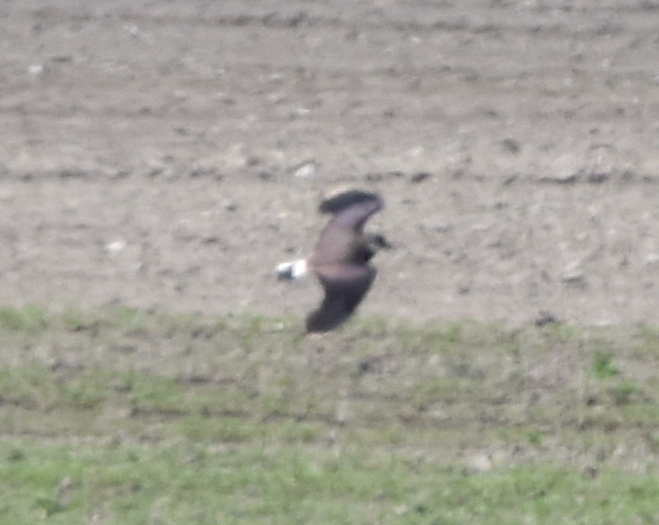
No details but a Xeno-Canto recording.
Call: Ruf ist entweder mhhhh oder Bogen-artiges hoch und runter. [Link]Territorial call: Dry, introductory phrases followed by drawn-out mewing sounds; "wyrrr-peeeoo-weeep". Alarm call "pee-wit". [Link] | ♫ |
_probing_mud_banks_in_Kolkata_I_IMG_4169, by J.M.Garg - Own work.jpg) Flussuferläufer ■■
Flussuferläufer ■■ |
No details but a Xeno-Canto recording.
Call: Very vocal with characteristic repertoire of very high-pitched calls. Often heard is a disyllabic call, drawn out and slightly rising in pitch in the second part. This is often repeated in a series of rising tones in a cyclic manner, with approx 5 tones in each cycle. [Link] | ♫ |
 Grosser Brachvogel ■■
 |
No details but a Xeno-Canto recording.
Song: Song starts similar to Whimbrel, with long wailing notes "kluuueee", but takes on a different ending as it accelerates to an ascending phrase repeated in rapid cycles . [Link] |
♫

|
| stereotypisch melodisch | ||
| Triller, aufsteigend | ||
 Grauammer ■■
 |
Triller, aufsteigend stereotypisch melodisch fast high (4-8 KHz) .
General: Song is an ascending trill or buzz that climbs about an octave - 4-8 KHz. Song: Gesang steigend und immer schneller wie .... was? [Link]
Song: Sieht für mich eher braun aus als der Grau im Namen, mit einem Finken-Schnabel und Striche oben auf der Brust wie ein Drossel [Link]Song diagnostic. A brittle, jingling and accelerating phrase of about 2 seconds duration. [Link] |
♫

|
| Triller | ||
 Rohrammer mllllm ■■
 |
Triller stereotypisch melodisch slow high (3-7 KHz) .
General: At Fanel I heard sequences of whistles and trills (buzzes?), just a few notes, but wandering up and down: m h lll, or l m hhh m. Listen to recording of 2022-06-25 13.37.28 Song: Oft 4 Noten: mlhl [Link]BirdID: A short sequence of 3-5 brittle and buzzing sounds, repeated consistently with marked pauses. Last sound in phrase often has a conclusive feel, but not always. [Link]
Song: Song variable between individuals and breeding status: A short sequence of 3-5 brittle and buzzing sounds, repeated consistently with marked pauses. Last sound in phrase often has a conclusive feel, but not always. Paired males sing slower than unpaired. Unpaired male song also more contracted, making the pauses between each phrase stand out. [Link] |
♫

|
| einfach rhythmisch | ||
 Mauersegler ■■
 |
einfach rhythmisch fast high (5-7 KHz) .
Song: Sie singen im Flug (eigentlich LEBEN sie im Flug), und wenn du sie nicht siehst, schau weiter hoch, dann noch einmal - sie können mehrere 100m hoch fliegen oft in Gruppen von 3-10. Kappe abziehen wenn nötig! [Link]A shrilling trill "zreeeee" of about 1 -2 seconds length, gradually rising in pitch with accentuated firs half, then falling from the middle of phrase. Often continued with a dry lower pitched "trrrrrr" before calling again. [Link]
Call: Often continued with a dry lower pitched "trrrrrr" before calling again. Very vocal at breeding area, and often a flock will call together. Despite being quite similar to Pallid Swift, the call is probably the best field character to separate the two. Pallid puts the stress on the ending of the call, followed by a quick fall in pitch (dynamics like moaning with a quick release). Plain Swift calls similar to Common Swift, but differs in slightly fluctuating pitch during the call, and a loss of resonance towards the ending (thinner sounding). [Link] |
♫

|
| singt 20 Sekunden oder länger | ||
| Mimikry | ||
 Erlenzeisig ■■
 |
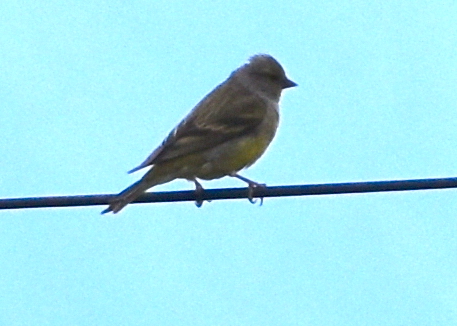
Mimikry singt 20 Sekunden oder länger fast high (3-9 KHz) .
bird-song.ch sagt Gesang zwitschernd und trillernd und ähnlich wie Girlitz - ich finde auch, es hat das hohe chaotische von den mit ab und zu was rohem. [Link]
Song: Distinct calls and song. The contact call is also prominent in the improvised song. Other typical sounds in the song includes a peculiar wheeze, like someone sucking their teeth, and lots of expert mimicry. [Link] |
♫

|
 Lachmöwe ■■
 |
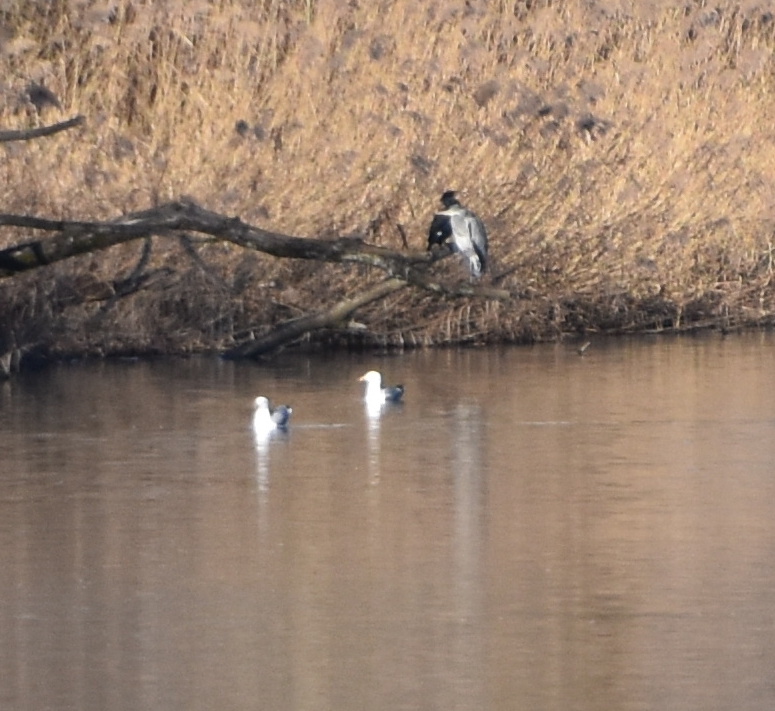
No details but a Xeno-Canto recording.
Call: Distinct, harsh calls. A rasping "kreearr", and shorter, sharp warning calls; "kek". [Link] | ♫ |
 Mittelmeermöwe ■■
 | No details but a Xeno-Canto recording. | ♫ |
 Flussseeschwalbe ■■
 |
No details but a Xeno-Canto recording.
Call: Lacks latter's high pitched "tip-tip-tip" call, and the drawn out "kree-aaahh" call falls more distinctly in pitch. [Link] | ♫ |
| stereotypisch melodisch | ||
 Raubwürger lmh ■■
 |
stereotypisch melodisch slow medium (2-5 KHz) .
I'd have called the song a call myself.
Song: Song varied. During breeding season a varied subdued song is heard from both sexes. [Link] |
♫

|
 Kormoran ■■
 |
No details but a Xeno-Canto recording.
Call: Coarse, vibrating calls "hahahahaharo". [Link] | ♫ |
| improvisiert melodisch | ||
| Triller, aufsteigend, komisch | ||
 Nachtigall ■■
 |
Triller, aufsteigend, komisch improvisiert melodisch slow medium (1-5 KHz) .
Can be a sequence of unrelated weird but musical sounds - trills, churrs, human-like whistles - very amusing.
Song: The song is the best characteristic to separate it from T. Nightingale. [Link] |
♫

|
| stereotypisch melodisch | ||
 Schwanzmeise Diddly doot-doot-doot-doot hhmll ■■
 |
stereotypisch melodisch slow high (3-9 KHz) .
General: Meistens hört man das Pfief...chk..chk..Pfief von den Rufen, siehe dort. Song: Nabu: Der Gesang ist ein feines Trillern und selten zu hören (someone at XenoCanto compares it to a blue tit trill). [Link] Song: Song: high tsee-tsee; funny downhill trill Song: Rapid, continuous, randomly composed sequence of bubbling,chirping sounds. [Link] |
♫

|
| einfach rhythmisch | ||
| lallen | ||
 Tannenmeise lhlhlhl ■■
 |
lallen einfach rhythmisch fast high (3-9 KHz) .
Higher-pitched than great tit,
with more slurs instead of pure notes.
Usually 2 or 3 notes in varied order.
To me it seems they have a repertoire of songs, like their 'big brothers', the great tits.
Song: Song: Various repeated motifs, consisting of two to three notes with alternating accents. Slightly similar to Great Tit, but faster, not so metallic and with a less full tone. Can be mistaken for Marsh Tit when singing single or double notes, but tone is softer and notes more clearly separated (if disyllabic). [Link] | ♫ |
 Haubenmeise lhlhhh ■■
 |
lallen einfach rhythmisch fast high (3-9 KHz) .
Higher-pitched than great tit - how distinguish from coal tit, etc?
Song: Song: an improvisation over previously described calls. [Link] | ♫ |
| stereotypisch melodisch | ||
 Gartenbaumläufer 'Gar-ten-baum-LÄU-FER' mlLh ■■
 |
stereotypisch melodisch slow high (4-7 KHz) .
It sounds to me like a 5-7 note song like 'five k low high higher', 'short song in the gar-DEN'. The individual notes have the same backward checkmark shape as the call. It's basically the same across Europe.The song of the nominate subspecies is an evenly spaced sequence of notes teet-teet-teet-e-roi-tiit. [Link]Its song is short, loud and rhythmic. [Link] [In comparison with the visually similar Eurasian treecreeper, it] has a clearer, louder more staccato contact call of ‘sreet’ or ‘sree’ and a short ‘wit’ during normal activity [Link]
Song: Kurz u. bündig! (Gartenwege sind kurz.) Tonreihe am Schluss ansteigend. „Hesch du gseh woni bi?
[Link]Song diagnostic, and introductory notes often used singly when interacting. Full song starts with one or two staccato introductory notes, the first higher pitched than the second, followed by a rapid, ascending crescendo ending in a drawn-out, less pure "sree". The tone is loud and much more penetrating and clear than C. familiaris. [Link] [In comparison with the visually similar Eurasian treecreeper, it] has a clearer, louder more staccato contact call of ‘sreet’ or ‘sree’ and a short ‘wit’ during normal activity [Link]
Song: Kurz u. bündig! (Gartenwege sind kurz.) Tonreihe am Schluss ansteigend. „Hesch du gseh woni bi?
[Link]Song diagnostic, and introductory notes often used singly when interacting. Full song starts with one or two staccato introductory notes, the first higher pitched than the second, followed by a rapid, ascending crescendo ending in a drawn-out, less pure "sree". The tone is loud and much more penetrating and clear than C. familiaris. [Link] |
♫

|
 Waldbaumläufer Waldwege sind lang ■■
 |
stereotypisch melodisch slow medium (1-5 KHz) .
Ich sage: es klingt wie ein schneller, hoher Buchfink. Wikipedia sagt: Die kurze Gesangsstrophe ist eine abfallende, zum Ende wieder ansteigende Reihe von leisen Pfeiftönen und erinnert an die Lautäußerungen von Blaumeise und Fitis. The example at bird-song.ch is a series of 5 notes falling 3x and rising back 2x, then 5 or so fast falling notes.
Song: Lang u. klar! (Waldwege sind lang). Tonreihe im Ganzen absinkend, nur letzter Ton höher. [Link]Song a short, continuous three-part phrase. [Link] |
♫

|
| improvisiert melodisch | ||
| Triller | ||
 Zaunkönig ■■
 |
Triller improvisiert melodisch fast high (3-9 KHz) .
High-pitched, melodic, very variable with many trills and whistles. At least 3 seconds long, switching low to high 6 times or more, always a trill in the mix. Der deutsche Kalendar für 2025 sagt, sie könnten ab Drei-Königs-Tag singen, d.h. ab 6. Januar. nabu.de sagt ab 1. Februar, Drei-Königs-Tag ist eventuell nur wegen dem Namen Zaunkönig? Song: Auffällig laut für den kleinen Vogel. Singt auch im Winter! Schmetternd, mit einem bis zwei Trillern als letztes oder vorletztes Glied.
[Link]Song surprisingly loud. A high-pitched stream of clear notes resembling Robin and Dunnock in timbre. Differs from those in showing frequent shifts in pitch with much larger register than Dunnock, and by the unique, numerous, interspersed long trills. [Link] |
♫

|
| nicht musikalisch | ||
| trommeln | ||
 Buntspecht ■■
 |
trommeln nicht musikalisch fast low (1-3 KHz) .
Song: Other: ‘Drumming’ is the sound that Great Spotted Woodpeckers make by hammering their bills against dead wood 10-20 times over 2-3 seconds. The sound resonates in the dead wood and can be heard over large distances. This drumming acts as an advert and is used by Great spotted Woodpeckers and other woodpecker species instead of a song. [From the GardenBird web site] Nabu: Manchmal, bei strahlendem Sonnenschein, fangen die Spechte schon im Dezember an zu trommeln. [NABU Vogel des Jahres 1997] Call: Nabu: Das bekannteste Geräusch des schwarz-weißen Spechtes ist aber wohl sein kurzes, aber häufiges Trommeln. [Link]  In a sonogram I can see about 13 taps in just over half a second, but you can never distinguish so many.
It's short but intense, and the second half trails off,
especially contrasted with the constant drumming of the three-toed woodpecker. [[Listen here.]]
Call: Typically it lasts 0.5 seconds, sometimes slightly longer. Contact call frequently hear throughout the year. A short hiccup "kek", sometimes in series. When excited this may escalate into a trill. [Link] In a sonogram I can see about 13 taps in just over half a second, but you can never distinguish so many.
It's short but intense, and the second half trails off,
especially contrasted with the constant drumming of the three-toed woodpecker. [[Listen here.]]
Call: Typically it lasts 0.5 seconds, sometimes slightly longer. Contact call frequently hear throughout the year. A short hiccup "kek", sometimes in series. When excited this may escalate into a trill. [Link] |
♫

|
 Mittelspecht ■■
 |
No details but a Xeno-Canto recording.
Song: Im Gegensatz zu anderen Spechten trommelt der Mittelspecht nur sehr selten. [Link]Song is a series of short, mewing and nasal "peeaa peeaa peeaa ", where each syllable quickly rises in pitch, but the overall phrase is fairly constant. [Link] |
♫

|
 Schwarzspecht ■■
 |
No details but a Xeno-Canto recording.
Song: Beide Geschlechter ähnlich Grünspecht aber klangvoller. „klückklückklück“ 10-20 Laute. Die „klück“ werden etwas von unten heraufgeholt, vor allem gegen den Schluss zu. Häufiger hört man „kliüüh“ von am Stamme sitzenden Vogel. Bei Platzwechsel ruft er „krükrükrü“.
[Link]Song a quick series of "klee" calls resembling Green Woodpecker, but with a purer tone and upward infliction at end of each syllable. [Link] | ♫ |
| einfach rhythmisch | ||
| trommeln | ||
 Kleinspecht ■■
 |
trommeln einfach rhythmisch fast medium (0-4 KHz) .
Drumming in lieu of song. Fast, constant.
Call: Most common call a series of merlin-like "ke-ke-ke-ke-ke-ke" given at fairly stable pitch, and less hoarse than Merlin. Differs from Wryneck in lacking marked rise and fall in pitch, and being less plaintive. [Link] |
♫

|
 Zwergtaucher ■■
 |
einfach rhythmisch fast medium (1-5 KHz) .
Der Gesang ist ein lautes, hohes Trillern. Männchen und Weibchen tragen ihn häufig im Duett vor. [Link]
Call: Call; sometimes a single quite clear high pitched "dydlylyyt". More often combined into longer phrases with harsher quality, oscillating like laughter and travelling up and down in pitch in agitated motion. Reminiscent of female Cuckoo. [Link] |
♫

|
 Grauspecht ■■
 |
trommeln einfach rhythmisch fast medium (0-4 KHz) .
Drumming in lieu of song. Fast, constant, somehow less harsh than great and middle spotted woodpeckers.
Song: Deutlich abfallende Tonreihe. 4-10 Töne. Absinken beginnt
gewöhnlich erst mit dem dritten oder vierten Ton und wird etwas langsamer.
Klingt etwas klagend (moll). Vor allem gegen den Schluss. Kann nachgepfiffen werden. (beim Grünspecht nicht )
[Link]Song similar to Green Woodpecker, but general tone is soft and melancholic. Phrases consists of series of 5-8 clear notes falling both in pitch and intensity, and with diagnostic ritardando at the end. Short "kek" uttered if excited. Rarely drums. [Link] |
♫
|
| nicht musikalisch | ||
 Wendehals ■■
 |
nicht musikalisch slow medium (1-6 KHz) .
Woodpecker-like series of up to 25 slightly rising calls.
Song: Reihe von 8-12 Pfeiftönen. Klingt fast etwas heiser., Jeder Ruf etwas absinkend. Die Tonhöhe kann innerhalb der Reihe etwas schwanken, etwas zunehmen und eindringlicher werden. Klangfarbe weich, obertönig.
[Link]Song (both sexes): an insisting, Merlin- or Lesser Spotted Woodpecker-like series of plaintive "kee kee kee kee kee ". First slightly ascending, then descending. [Link] |
♫

|
 Grünspecht ■■
 |
nicht musikalisch slow medium (1-6 KHz) .
Spooky laugh.
Song: Helles Lachen. Weiche, oft leicht abfallende Tonreihe. Variabel in Lautstärke und Silbenzahl. je nach Stimmung. Wenn abfallend dann vom Anfang der Rufreihe an. Auch dreisilbig „kiäckkiäckkiäck“.
[Link]Song similar to Grey-headed Woodpecker, but not as soft and fluty. Each phrase consist of a series of short "klee", with a laughing quality. Pitch drops slightly throughout the phrase, but not as markedly as in Grey-headed, and tempo is fairly constant (no ritardando). [Link] | ♫ |
| einfach rhythmisch | ||
| trommeln | ||
 Dreizehenspecht ■■
 |
trommeln einfach rhythmisch fast low (1-3 KHz) .
Fast drumming, constant volume, longer than great spotted woodpecker's.
Call: Contact call similar to Great Spotted, but deeper and softer. Not very vocal. [Link] |
♫

|
| nicht musikalisch | ||
| Krächzen, Mimikry | ||
 XXXX Eichelhaeher close-up.JPG) Eichelhäher ■■
Eichelhäher ■■ |
Krächzen, Mimikry nicht musikalisch fast medium (1-5 KHz) .
Harsh crow-like call, or quiet questioning, 'grumbling', or plaintive cries.
Song: Quiet and varied subsong with mimicry, resembling a small passerine heard from both sexes. [Link] |
♫
|
 Mäusebussard ■■
 |
No details but a Xeno-Canto recording.
Call: Most typical call a wailing, mewing "peeoooo". Quite similar to Rough-legged Buzzard, but the pitch falls more rapidly and is then sustained for the last part of the call. [Link] | ♫ |
| einfach rhythmisch | ||
| Triller | ||
 Blaumeise h ll ■■
 |
Triller einfach rhythmisch slow high (3-9 KHz) .
General: High-pitched, often descending (hhll), occasionally ascending. "Christina compares it to a ping-pong ball dropping. [In Januar singt die Kohlmeise als erster Vogel in Deutschland], dann kommt die Blaumeise dazu. Song: Song: Characteristic, clear, high-pitched, vibrating call. Usually introduced by a couple of accenting syllables, followed by ringing vibrating notes: "ti ti chuhuhuhuhuhuhuhuhuhu". [Link] | ♫ |
| improvisiert melodisch | ||
| Schnörkel | ||
 Amsel lmh ■■
 |
Schnörkel improvisiert melodisch slow low-high (1-7 KHz) .
Other: Gut zu erkennen ist die Amsel.
Sie singt melodiös, erklärt Heller, «zuerst flötend und dann gegen Schluss so schnirpslig».
Die Amsel singe gerne dort, wo sie gut gehört werde, etwa vor Hauswänden, die den Schall nicht schlucken.
Ich wollte schauen was schnirpslig heisst, aber diese ist diese einzige Verwendung, die Google kennt!
Der flötende Teil ist relativ tief, 1.5-3 KHz, der schnirpslige aber 2.5-7 KHz.
(Schnirpslig ist ein schones Wort das der Redner erfunden hat - Google findet nur diese eine Webseite mit dem Wort!) [Von der SRF Webseite:]
Song: Melodisch flötend dazwischen auch zerquetschte Töne. Die Elemente werden nicht wiederholt. Singt von Singwarte aus. Ca. 100 verschiedene Strophentypen.
[Link]One of the most appreciated song birds. Very melodious and resonant, with long mellow notes and a large register. Less high pitched sounds than Song Thrush, and seldom repeats a phrase. Timbre fuller than both Song Thrush and Mistle Thrush. Well defined pauses between phrases, giving the song a relaxed pace. [Link] | ♫ |
| einfach rhythmisch | ||
 Haussperling mh mh mh ■■
 |
einfach rhythmisch slow medium (2-5 KHz) .
Monotones Zirpen. Hauptsächlich 2-5 KHz mit Übertönen.
Song: Song a primitive, monosyllabic, or slightly disyllabic "chilp", hard to distinguish from Tree Sparrow. [Link] | ♫ |
 Rabenkrähe ■■
 | No details but a Xeno-Canto recording. |
♫

|
 Kolkrabe ■■
 | No details but a Xeno-Canto recording. | ♫ |
, surprisingly good photo considering I shot it through the screen.JPG) Rotschnabel-Sonnenvogel
Rotschnabel-Sonnenvogel | No details but a Xeno-Canto recording. | ♫ |
| einfach rhythmisch | ||
| Seidenschwanz ❑❑ |
einfach rhythmisch fast high (5-7 KHz) .
Lots of trills. [Link]
Song: Song more or less a variation on the contact call. [Link] |
♫

|
| stereotypisch melodisch | ||
 Karmingimpel ■❑
 |
stereotypisch melodisch fast medium (2-6 KHz) .
Einfacher, flötender Gesang: variations on a slurring hHmML. [Link]
Song: Song very characteristic. A melodious, pure and short whistle, often rendered as "pleased to meet you". Each note with a smooth gliding change of pitch. Number of syllables may vary. [Link] |
♫

|
 Bekassine ■■
 |
No details but a Xeno-Canto recording.
Song: Song an unmistakable bleating, drumming sound produced by vibrating tail feathers in sky-dives. [Link] |
♫

|
| einfach rhythmisch | ||
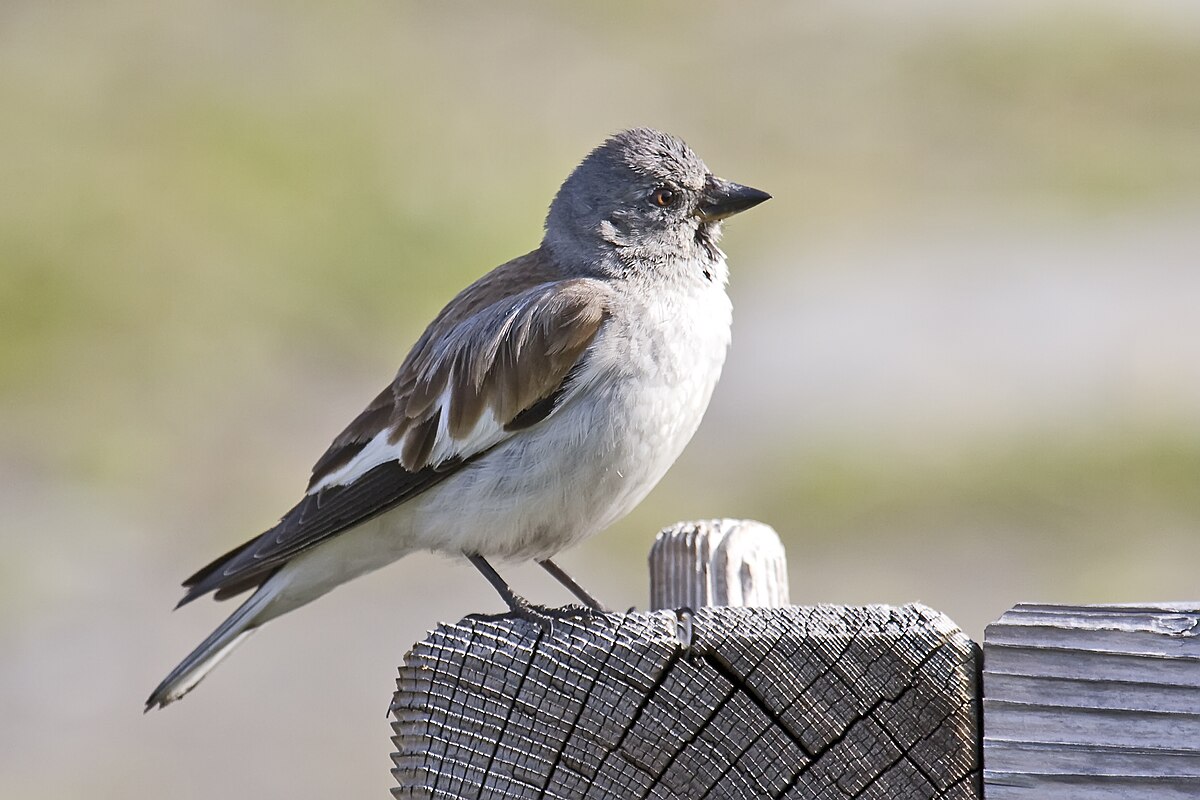 Schneesperling ■■
 |
einfach rhythmisch slow medium (4-6 KHz) .
The XC song I downloaded is a faint chirping. Should follow up on song - most talk about calls.
Song: Song a staccato, variable phrase, consisting of short burst of sharp chattering in uneven tempo. The timbre is ringing, rich in harmonics and partly rolling. [Link] |
♫

|
 Kuckuck ■■
 |
einfach rhythmisch slow low (0-1 KHz) .
Two-noter
Song: Männchen: Unverwechselbarer Ruf. Weibchen: im Frühling eine kichernde Rufreihe,
[Link]Song: the well known disyllabic "cuck-coo" with emphasis on first note, and the second note a third lower than the first one. Also a harsh "tchaa tchaa", and a bubbly trill, reminiscent of Little Grebe, uttered by the female. [Link] |
♫

|
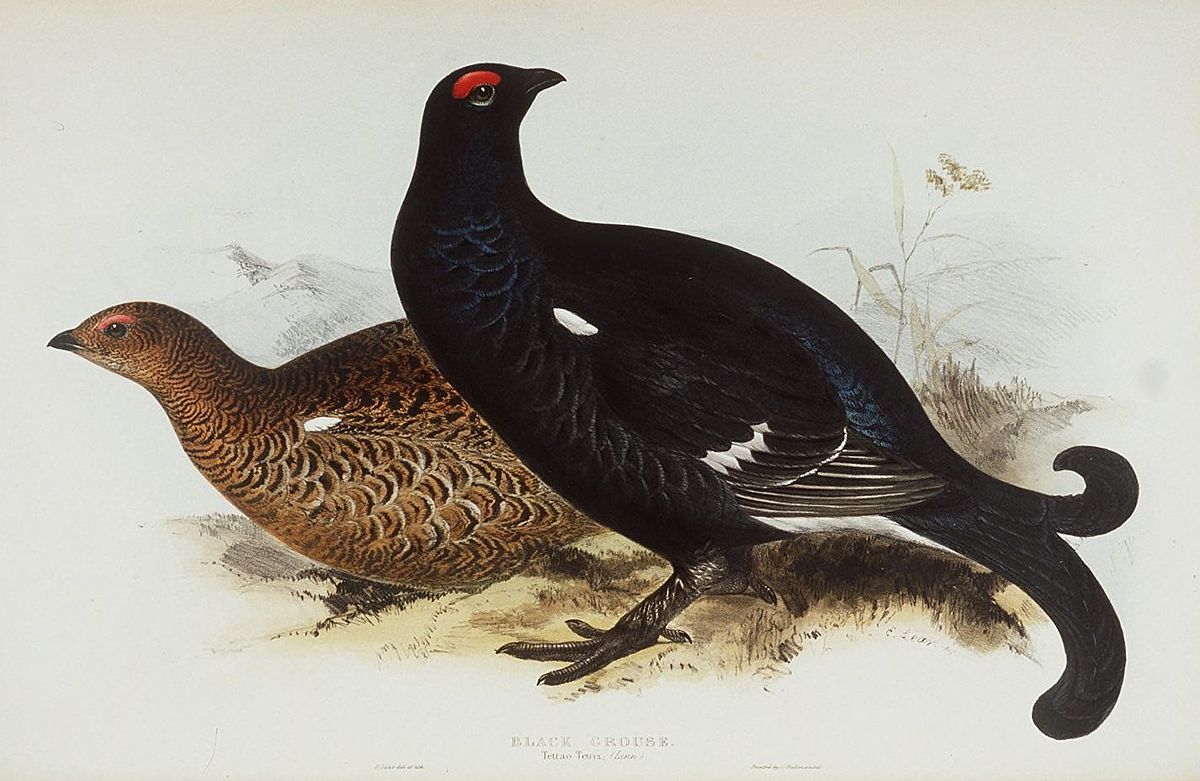 Birkhuhn ■■
 | einfach rhythmisch slow low (0-1 KHz) . Song can be a rapid dove-like cooing that goes up, then repeats. |
♫

|
 Nebelkrähe ■■
 |
No details but a Xeno-Canto recording.
Song: Has a large repertoire of seldom heard calls, and even sub-song. [Link] | ♫ |
| nicht musikalisch | ||
| komisch | ||
 Saatkrähe ■■
 |
komisch nicht musikalisch fast low (0-3 KHz) .
Gurgling and rattling, but mostly calls
Song: Also gives a varied song of soft gurgling and rattling sounds, interwoven with calls at breeding ground. [Link] |
♫

|
| improvisiert melodisch | ||
| aufsteigend, Mimikry, komisch | ||
 Star ■■
 |
aufsteigend, Mimikry, komisch improvisiert melodisch slow medium (1-5 KHz) .
Ich find ihren Gesang lustig, wenn sie einzel sind. In Gruppen machen sie einen ziemlichen Lärm. 2025 habe ich tolle Imitationen von Rabenkrähen und Amsel gehört.
Song: Song a highly varied mix of falling whistles, bill-clappering and various masterful mimicry. [Link] | ♫ |
| einfach rhythmisch | ||
 Hohltaube ■■
 |
einfach rhythmisch slow low (0-1 KHz) .
Song: Song a two-syllable, cooing. Much louder and more accentuated first syllable than in Feral Pigeon. First a short ascending "oooh", immediately followed by a short descending "oohh". Tone quite pure, mostly lacking the rolling quality of Feral Pigeon. [Link]Jede Note ein gleitender hlm, klingt wir hu-u-u [Link]
Song: „Huuh-hup“ . Das „huuh“ fast zweisilbig, erste Silbe höher, das „hup“ noch höher. Fast wie „Hooh ruck“
[Link]Song a two-syllable, cooing. Much louder and more accentuated first syllable than in Feral Pigeon. First a short ascending "oooh", immediately followed by a short descending "oohh". Tone quite pure, mostly lacking the rolling quality of Feral Pigeon. [Link] |
♫

|
 Türkentaube ■■
 |
No details but a Xeno-Canto recording.
Song: Gu-guh-gu, klingt wie „ Gross-mue-ti“ Dazu auch „chräi“ oder „chwii“
[Link]Song a characteristic, rhythmic cooing, consisting of three syllables with emphasis on the second. The third lower pitched than the rest. Can be rendered as "su-do-ku" (or "deca-oc-to", latin name derived from song). [Link] | ♫ |
| einnotig | ||
.jpg) Turteltaube ■■
Turteltaube ■■ |
einnotig slow low (1-3 KHz) .
Trilling coo.
Song: Song: a deep, rolling, and slightly ascending cooing; "trrrrrrrrrrrrrrrrr trrr-trrrr" with variations in rhythm. Sometimes birds sticks to a phrase, but phrases varies between individuals. [Link] |
♫

|
 Schwarzmilan ■■
 | No details but a Xeno-Canto recording. | ♫ |
 Rotmilan ■■
 |
No details but a Xeno-Canto recording.
Call: Differs from Black Kite in being a clear whistle all the way through the call, without "shivering". Higher pitched than Buzzard, and with less pause between calls. [Link] | ♫ |
| nicht musikalisch | ||
| rasseln | ||
 Elster ■■
 |
rasseln nicht musikalisch slow low (1-3 KHz) .
Familiar rattle
Song: Rich repertoire includes soft and surprisingly varied sub-song. [Link] | ♫ |
| einfach rhythmisch | ||
 Kohlmeise llhllh ■■
 |
einfach rhythmisch slow medium (1-5 KHz) .
Said to have a repertoire as a species of 50 or more different songs, albeit simple ones, up to 10 per individual.
Females prefer a male with a large repertoire. One two-note song sounds like a squeaky bed.
Song: Nabu: Die erste Vogelart, die wir im Jahr hören, ist meistens die Kohlmeise mit ihrem typischen Läuten: "Zip Zäh" oder "Zip zip Zäh". [NABU Experte Lars Lachmann bei Deutschlandfunk Nova]Song highly variable, but usually consisting of two to three notes repeated in a motif. Same birds have many different motifs but generally repeat them many times before switching. Identified by its timbre and often metallic resonant quality, more than by actual phrasing (which is very variable). Often includes buzzing sounds in song. [Link] | ♫ |
| einnotig | ||
 Kleiber 6x steigt, wie 6-Buchstaben 'Kleber' ll ■■
 |
einnotig fast medium (1-5 KHz) .
Song: Song a simple series of loud notes [Link]
Song: Other: The song is very variable, with rising and falling notes, sometimes with repetition of excitement calls. [Link]The song is a slow whistled pee-pee-pee with many variants, including a faster version, and may be intermingled with the call. [Link] Other: Song a simple series of loud notes. [Link] Song a simple series of loud notes. [Link] |
♫

|
| improvisiert melodisch | ||
| flöten | ||
 Rotkehlchen ■■
 |
flöten improvisiert melodisch fast high (3-9 KHz) .
General: Hoch aber auch bis tief, z.B. 2.9-7.7 KHz.
Wikipedia sagt, 'Der Gesang des Rotkehlchens ist mit 275 nachgewiesenen,
sich fortlaufend ändernden Motiven äußerst variabel.
[Ein einzelner Vogel lernt teilweise mehr als 30 verschiedene Strophen, sagteChristina Ebneter in BirdLife Feldornithologie-Kurs.]
Er wird mit vorgestreckter, das Rot betonender Brust, in der Regel von einer hohen Singwarte aus, vorgetragen. Er beginnt etwa eine Stunde vor Sonnenaufgang und ist noch eine gute Zeit nach Sonnenuntergang zu hören, hauptsächlich jedoch während der Dämmerung. Der Revieranzeigegesang wird normalerweise mit perlenden reinen Tönen und Trillern eingeleitet und fällt gegen Ende langsam ab; hohe metallische Töne werden oft dazwischen eingeschoben. Häufig sind in die 2,5 Sekunden langen Strophen auch undeutliche Imitationsphrasen eingelegt. Auf den Menschen wirkt der Reviergesang lieblich und schwermütig melodiös. Ist das Rotkehlchen hochgradig erregt, verdeutlicht es seinen Willen zur Eskalation durch übertönendes oder störendes Singen.' Ich habe in Ticino und Falera festgestellt, dass die Rotkehlchen immer noch singen und habe es nachher auch daheim im Zürcher Oberland gehört; das Ende des Singen Ende Juli ist anscheinend relativ. Seitdem weiss ich dass es eine der wenigen Vogelarten ist, die auch in Winter ein Territorium verteidigt...darum. Song:  Only for a short period in late summer while they are moulting and inconspicuous do robins stop singing. Both sexes sing. [RSPB article]
Song: Song medium to very high pitched, with mostly clear tones with a liquid quality. Timbre reminiscent of Wren or Dunnock, but with a much more varied structure and tempo. Pitch ranges from very high to low, almost thrush-like, notes. No recognizable motifs. Often ends on a rising or falling pitch, giving it a "Chinese" accent. [Link] Only for a short period in late summer while they are moulting and inconspicuous do robins stop singing. Both sexes sing. [RSPB article]
Song: Song medium to very high pitched, with mostly clear tones with a liquid quality. Timbre reminiscent of Wren or Dunnock, but with a much more varied structure and tempo. Pitch ranges from very high to low, almost thrush-like, notes. No recognizable motifs. Often ends on a rising or falling pitch, giving it a "Chinese" accent. [Link] |
♫

|
| stereotypisch melodisch | ||
 Buchfink mmmmmmmmLlhH ■■
 |
stereotypisch melodisch slow medium (1-5 KHz) .
General: A medium long phrase that slowly descends (I think of it bouncing down a staircase), then usually takes a
jump up before a final descent. Song: In Bayern gilt als Merksatz des Buchfinken: „Ich hätte gerne ein Weizenbier“ [DasHaus]
Song: Song a falling 5 sec. phrase "zitt-zitt-chep-chepp-chu-chu-churrurrwitt". Structurally similar to Willow Warbler, but with a conclusive, ascending and accented ending, and with a much harder, finch-like, timbre. [Link] | ♫ |
 Gimpel ■■
 |
stereotypisch melodisch slow low-high (2-8 KHz) .
3-note long M, pause, HL (somewhat falling)...Gim! Gim-peeel! Sounds a bit like a pirol.
Song: Song a quiet, modest mix of contact call and various chirping sounds, with peculiar harmonics. [Link] |
♫

|
| einfach rhythmisch | ||
 Zilpzalp ■■
 |
einfach rhythmisch slow high (3-9 KHz) .
Seems to consist of 3 notes repeated randomly, occasionally just 2 notes.
Though NABU.de says they stop singing at the end of July, I do hear their 3-note song occasionally in October,
but just one or two repetitions.
Song: Von Mitte August bis Ende September bringt der Zilpzalp regelmäßig Herbstgesang dar. [Link]Lange Reihen (6-20) von „zilp-zalp“-Rufen, meist abwechselnd in Tonhöhe. (Als bemühe sich der Sänger vergeblich den ersten Ton wieder zu treffen , ohne jedoch weit zu verfehlen.) „Zins zahl, Zins zahl, zahl Zins, Zins Zins zahl“ („Zins“ etwas höher als „zahl“) [Link]Song a very distinct: "chiff-chaff-chiff-chiff-chaff-chiff", in a regular clock-like rhythm. Each syllable at seemingly random pitch, but no large intervals tonally. Sometimes "get stuck" at one note. [Link] | ♫ |
| stereotypisch melodisch | ||
 Bachstelze Plaetschert wie ein Bach ■■
 |
stereotypisch melodisch slow low-high (2-7 KHz) .
General: Usually just calls. This song is just a few chirpy slurs, sometimes rising-rising-falling. Song: Zirpt wie ein Sperling aber weniger Noten. Lh lh lh [Link]
Song: Song either slow and primitive, consisting of sharp falling notes given by perched birds, or longer fast and energic bursts in excited song-flight. [Link] |
♫

|
 Schafstelze ■■
 |
stereotypisch melodisch slow high (3-9 KHz) .
Just a few notes, call seems to be common but song rare. Very short chirp of ~ 1 sec, long pause of 3 secs. At Wauwilermoos it seemed to be 'Twee tweetwee (higher note:) twee!'
Song: Song primitive and less striking. Beware differences in calls and songs between different subspecies. [Link] |
♫

|
 Italiensperling ■■
 | stereotypisch melodisch slow medium (2-5 KHz) . Sounds like house sparrow to me |
♫

|
| einfach rhythmisch | ||
 Feldsperling ■■
 |
einfach rhythmisch slow low-high (2-7 KHz) .
Monotones Zirpen, rauher als Haussperling. Hauptsächlich 2-7 KHz mit vielen Übertönen.
Song: Chattering sounds are generally harder, and song slightly higher pitched than House Sparrow. [Link] |
♫

|
| stereotypisch melodisch | ||
| Mimikry | ||
 Blaumerle ■■
 |
Mimikry stereotypisch melodisch fast medium (2-4 KHz) .
Pretty short up-and-down song heard in Mallorca
Song: The song is a beautiful, melodious fluting which can be very difficult to distinguish from M. saxatilis. It generally has a more melancholic feel, with more tremulous fluting than the latter, with less lingering in the higher register. The structure is variable and simple, but sometimes more elaborate in song-flight or when including mimicry. Both sexes sing, but male most actively. [Link] |
♫

|
| Triller | ||
 Gebirgsstelze ■■
 |
Triller stereotypisch melodisch fast high (3-9 KHz) .
BirdID says Song simple but variable. I hear trills up to 2 seconds long and chirps. Another description says a series of calls, not very melodic. I noted zwitx3, sometimes hhhhhll. [Link]
Song: Song simple but variable. Sometimes with more elaborate song-flight like White Wagtail. [Link] |
♫

|
 Ringeltaube ■■
 |
No details but a Xeno-Canto recording.
Song: Gu-guh-guh-guh guh-gugugu –gu. „ Hansrüdi wo geisch hi, ga Thun, was ga mache, ga Mähl hole, wiviel, es mutt“
[Link]Song a 5 syllable cooing phrase, with emphasis on first syllable (1.st also higher pitched). Fift syllable functions as an introduction to next phrase. [Link] | ♫ |
| stereotypisch melodisch | ||
 Heckenbraunelle ■■
 |
stereotypisch melodisch fast high (4-8 KHz) .
General: High-pitched, repetitive but complex little tune, 3 seconds long with about 15 notes rising and falling, falling at the end, then 3 second pause. Song: Melodisch, slowly rising, roughly like black-cap warbler, which I guessed in the bird-song.ch quiz. [Link]Schnell wie ein Rotkehlchen aber nicht herunter plätschernd, hoch und runter zwischen 3 und 7 kHz. [Link]
Song: Singt schon im Vorfrühling. Klangfarbe ähnlich Gartenbaumläufer. Aufbau ähnlich Zaunkönig, aber ohne Triller. Viel leiser und dünner.
[Link]Song a fast and evenly paced, high pitched stream of clear notes. No consistent phrasing. Similar in timbre to Robin, but does not vary tempo or pitch nearly as much. Often compared to the sound of a squeaky wheelbarrow. [Link] |
♫

|
| nicht musikalisch | ||
| Raspel | ||
 Uferschwalbe ■■
 |
Raspel nicht musikalisch fast low-high (1-7 KHz) .
Fast raspy one-noter.
Song: Song a primitive improvisation on the contact call. [Link] |
♫

|
| stereotypisch melodisch | ||
 Mehlschwalbe ■■
 |
stereotypisch melodisch fast low-high (2-7 KHz) .
Song: Mehlschwalbe klingt weniger melodisch als der Rauchschwalbe [Link]Merry improv of chirping, contact call [Link]
Song: Song a merry improvisation of chirping, contact call-like sounds (sometimes recalling a budgerigar). [Link] |
♫

|
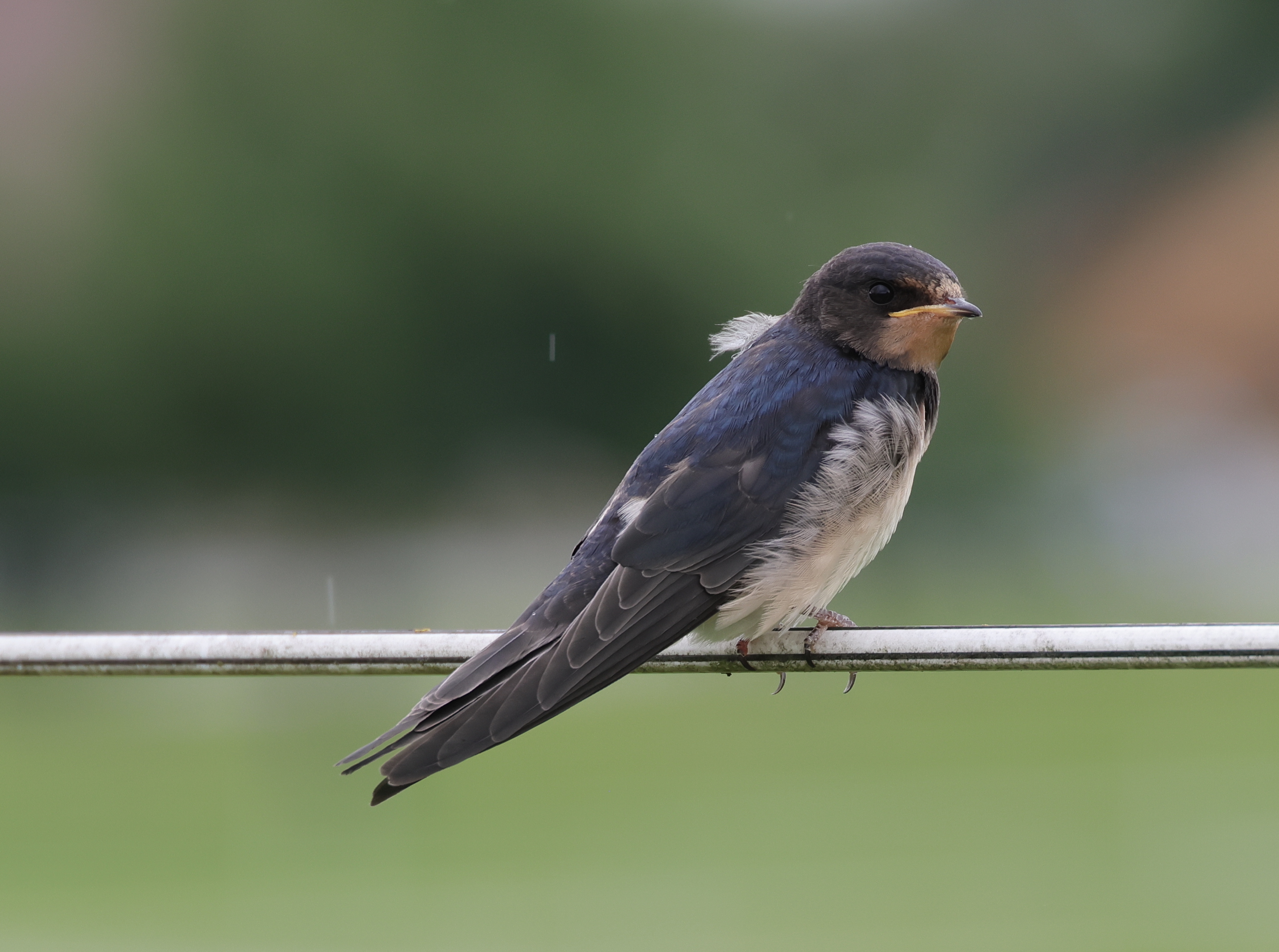 Rauchschwalbe ■■
 |
stereotypisch melodisch fast medium (2-6 KHz) .
General: Squeaky with occasional buzzes, usually heard in flock. Song: Kann melodisch sein wenn einzeln gehört statt viele zusammen. [Link]
Song: Characteristic calls and song. Song a sparkling, squeaky energetic improvisation with interspersed contact calls, often with diagnostic ending; an electric and drawn-out "su-eerrrrrrrrrrrrrrr". [Link] |
♫

|
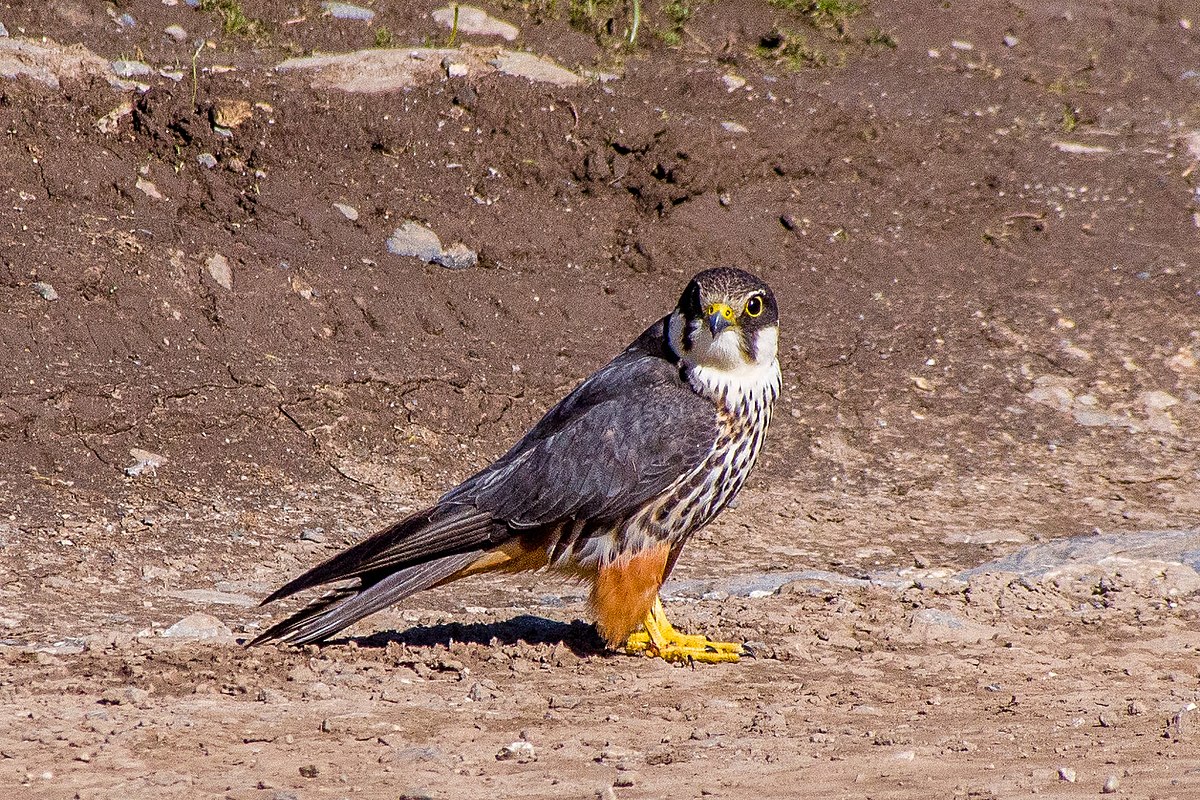 Baumfalke ■■
 |
No details but a Xeno-Canto recording.
Call: Calls when courting and at breeding ground. Most common sound a high-pitched "tew-tew-tew". Similar to Wryneck, but less pleading. Also a sneezing "ktcho". [Link] | ♫ |
 Turmfalke ■■
 |
No details but a Xeno-Canto recording.
Call: Turmfalke kann auch wie einen Specht tönen, scharf und relativ hoch [Link]Most common call a fast series of short, high-pitched "ke-ke-ke". Much less raucous than Merlin or Peregrine. [Link] | ♫ |
 Sperber ■■
 |
No details but a Xeno-Canto recording.
Song: Meist in Horstnähe zu hören. Eine Reihe von kurzen Einzellauten,
[Link] |
♫

|
 Zistensänger
 |
No details but a Xeno-Canto recording.
Song: Male song a diagnostic, monosyllabic, high-pitched "cist", repeated in an even rhythm about once every second, while in bounding song-flight or perched. [Link] | ♫ |
| nicht musikalisch | ||
| rasseln | ||
 Weissstorch ■■
 | rasseln nicht musikalisch slow low (1-3 KHz) . Das berühmte Klappern. Im FOK-Kurs hat man erwähnt, dass dies ein Beispiel von einem 'Instrumentallaut' ist. | ♫ |
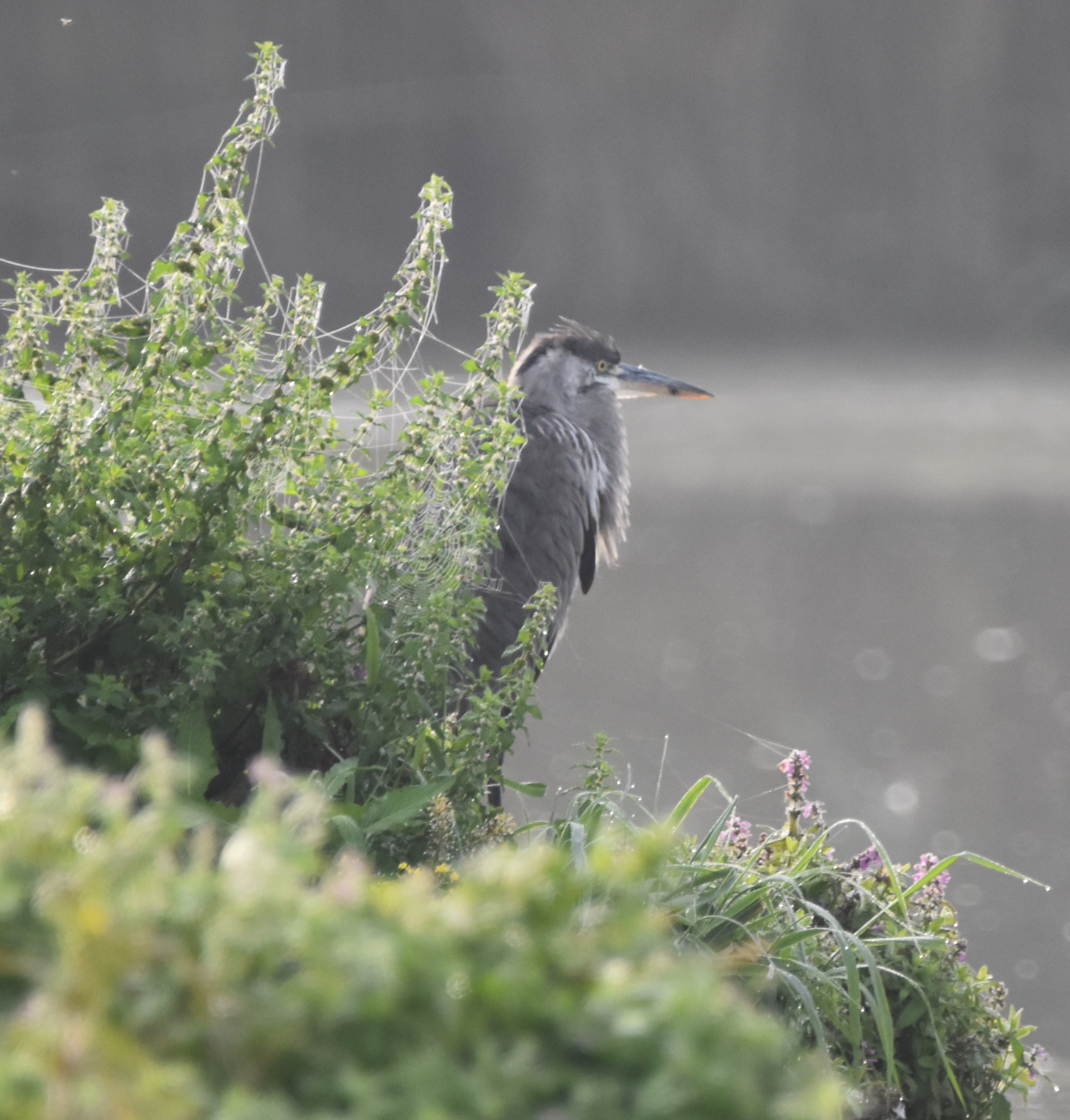 Graureiher ■■
 |
No details but a Xeno-Canto recording.
Call: Most common call a short, far reaching and extremely harsh, rasping sound. [Link] | ♫ |
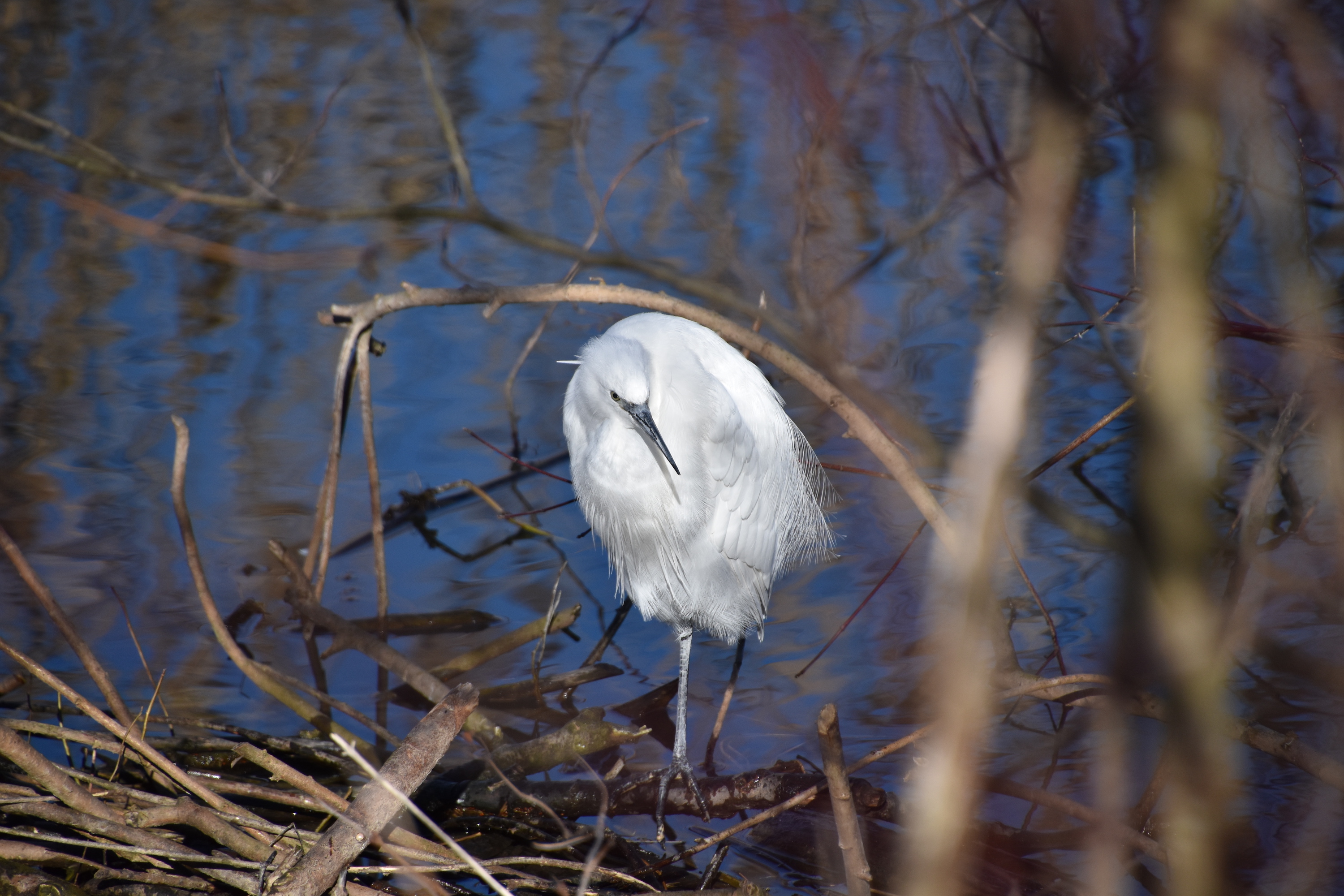 Seidenreiher ■■
 | No details but a Xeno-Canto recording. |
♫

|
| einfach rhythmisch | ||
| Triller | ||
 Waldlaubsänger hl hl hl ■■
 |
Triller einfach rhythmisch fast high (5-8 KHz) .
Sid-sid-sid-sirrrr. 3 secs, then 5 secs pause. At bird-song.ch I hear a slow-fast one-noter, about 8 slow ones in 1.5 seconds, then a trill of 25 fast ones.
Song: kurze Reihe (4-10) v. Stakkatotönen, gefolgt von abfallendem Schwirrroller. (Tönt wie das Anlassen eines Velosolex) Während des Gesanges schwebender Schwirrflug. Dazu hört man eine Reihe angenehmer Pfeiflaute wie „djü“ [Link]Song distinct. An accelerating series of sharp, metallic "swee-swee-swee-swee". Alternative (piping) song a series of 4-6 piping, plaintive and descending "pew - pew" calls. Resembles Willow Tit's song, but is softer with each note more evenly pitched. Contact call similar to individual syllables of piping song, but with heavier accent on the ending. [Link] |
♫

|
 Grauschnäpper ■■
 |
einfach rhythmisch slow high (6-8 KHz) .
High (6-8 KHz?) short sound repeated every half to 5 seconds.
Song: Gesang 'unauffällig' - zirp x 2-3, mal steigender tWITSong a primitive, slow series of various buzzing and very high pitched sounds. No recurring phrases. [Link] |
♫

|
| improvisiert melodisch | ||
| Raspel, komisch | ||
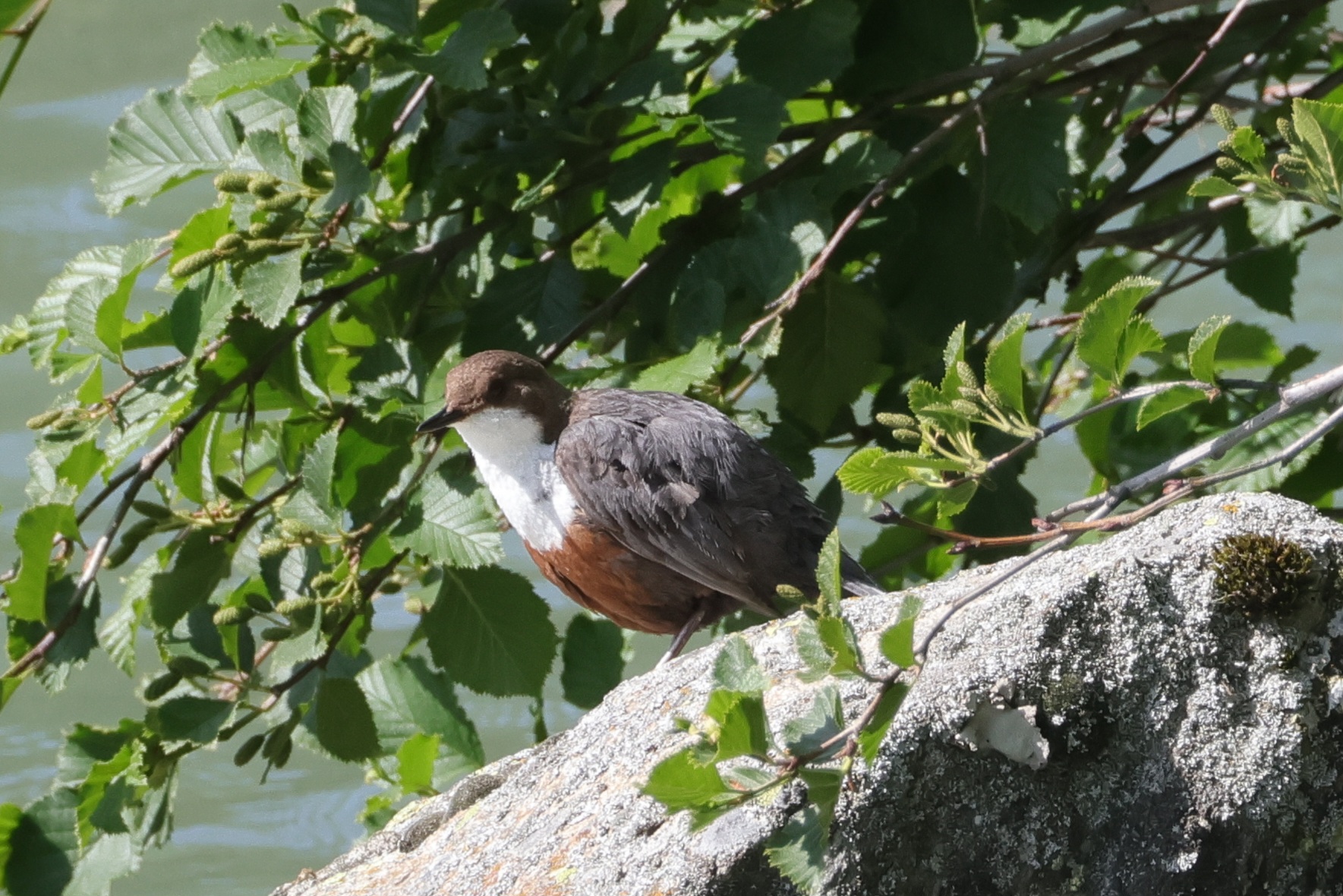 Wasseramsel ■■
 |
Raspel, komisch improvisiert melodisch fast low-high (1-7 KHz) .
Wonderfully weird sequence of chirps, cheeps, growls. Elements often repeated twice. In a quiz, I mistook it for a starling. This recording reminds me of other water songbirds like the Marsh warbler and various reed warblers.
Song: Song a mid tempo, staccato improvisation on contact call-like sounds. Not unlike a budgerigar. Both sexes sing, the female less melodic and more staccato than the male. [Link] |
♫

|
| Mimikry | ||
 Gelbspötter ■■
 |
Mimikry improvisiert melodisch fast low-high (2-10 KHz) .
Short bits 4-8 notes, sometimes with a little pause, overall a greenfinch feel. Some whoops, some chucks like a great tit, some bits like a house sparrow, even a meow. BirdLife Schweiz says full of vigor, includes some mis-tones and creaky calls; eBird says Song is fast, loud, and melodious with lots of mimicry.Can sing low (2k) or high (10k)
Song: Sein lauter, lebhafter und variabler Gesang setzt sich aus flötenden, zwitschernden und nasalen Tönen sowie Imitationen anderer Vogelarten wie Drosseln, Meisen, Schwalben oder Pirol zusammen. [Scheint mir aus Segmente von ~2 Sekunden zu bestehen.] [Link]Song very virtuous and varied. Most similar to Marsh Warbler, but timbre and attack harder and more powerful. Tempo varied with many pauses, but includes longer, and more flowing sequences than Marsh Warbler. Song frequently interrupted by characteristic, nasal, high-pitched squeaks unlike Marsh Warbler. Master of mimicry. Imitations are often repeated several times before changing to melodious motifs or more "noisy" phrases. [Link] |
♫

|
| stereotypisch melodisch | ||
 Trauerschnäpper Schwarzer Kopf aber nicht traurig ■■
 |
stereotypisch melodisch fast high (3-10 KHz) .
Nice short melody, often with 2-note parts. Blackbird-like but little variation (though differs in dialect).
Song: Song a pleasant, tuneful, simple but varied phrase. [Link] |
♫

|
| improvisiert melodisch | ||
| Triller | ||
 Orpheusspötter ■■
 | Triller improvisiert melodisch veryFast low-high (2-8 KHz) . Repeats bits 6-9 times, makes pauses, but also sings like mad with a distorted chirpy voice. Sometimes sings a descending trill that could be a giveaway. Can sing low (2k) or fairly high (8k) |
♫
|
 Blaukehlchen ■■
 |
Triller improvisiert melodisch fast high (3-8 KHz) .
Often one little phrase or even a single note repeated, a bit like a nightingale? Occasional figaro?
Song: Song: Structure slightly similar to Nightingale, but tone much thinner and less full-bodied. A good impersonator and various imitations are interwoven among metallic, ringing sounds to form a complex, intriguing song. [Link] |
♫

|
| einfach rhythmisch | ||
 Feldschwirl ■■
 |
einfach rhythmisch fast high (5-8 KHz) .
Buzzing like an insect or machinery. BirdLife Schweiz says like a grasshopper (which is after all the English name).
Song: Sehr lang anhaltendes Schwirren. Die einzelnen Schlage noch zu erkennen. Der Klang erinnert etwas an Heuschreckenzirpen (alter Name Heuschreckenrohrsänger, langer Name, lange Strophe) und klingt etwas blechern., d.h. Mit Oberton. (fast wie ein Wecker bei dem man den Finger etwas auf die Glocke hält)
[Link]Song insect-like and high-pitched. A monotonous stream of even clicks similar to a running fishing line. Maintained for seemingly endless periods, and often hard to locate. Song most similar to Savi's Warbler but is slower (each click more separated), and higher pitched with a metallic, ringing quality. Short sequences of song also functions as contact call. Also a Robin-like "tick". [Link] |
♫

|
 Ziegenmelker ■■
 |
einfach rhythmisch fast medium (2-4 KHz) .
Buzzing like machinery or a (BirdID says) a cricket. Changes pitch at times.
Song: Song unique among birds, but quite similar to Mole cricket. A mechanical, continuous slur, like the sound of a distant motorbike. As opposed to the Mole Cricket, it often "shifts gear" by changing pitch to a note approximately a fourth below the drone. [Link] |
♫

|
|
|
einfach rhythmisch slow medium (1-5 KHz) .
BirdID says Song a primitive, plaintive series of short phrases, often with only 1-2 syllables (I heard 2-3 in Amden, sometimes chirpy, sometimes less musical).
Song: Habe mit dem Buntspecht verwechselt - Ringdrossel singt 2-3 Noten - hilft das? [Link]Song a primitive, plaintive series of short phrases. Often with only one or two syllables. Interspersed with eerie, higher pitched sounds, reminiscent of Song Thrush. [Link] |
♫

|
 Schwarzkehlchen ■■
 |
No details but a Xeno-Canto recording.
Song: Gesang ähnlich obiger Art [Braunkehlchen]. Reine und kratzende Laute abwechselnd, wellenförmig
[Link] |
♫

|
 Kanarengirlitz
 | No details but a Xeno-Canto recording. | ♫ |
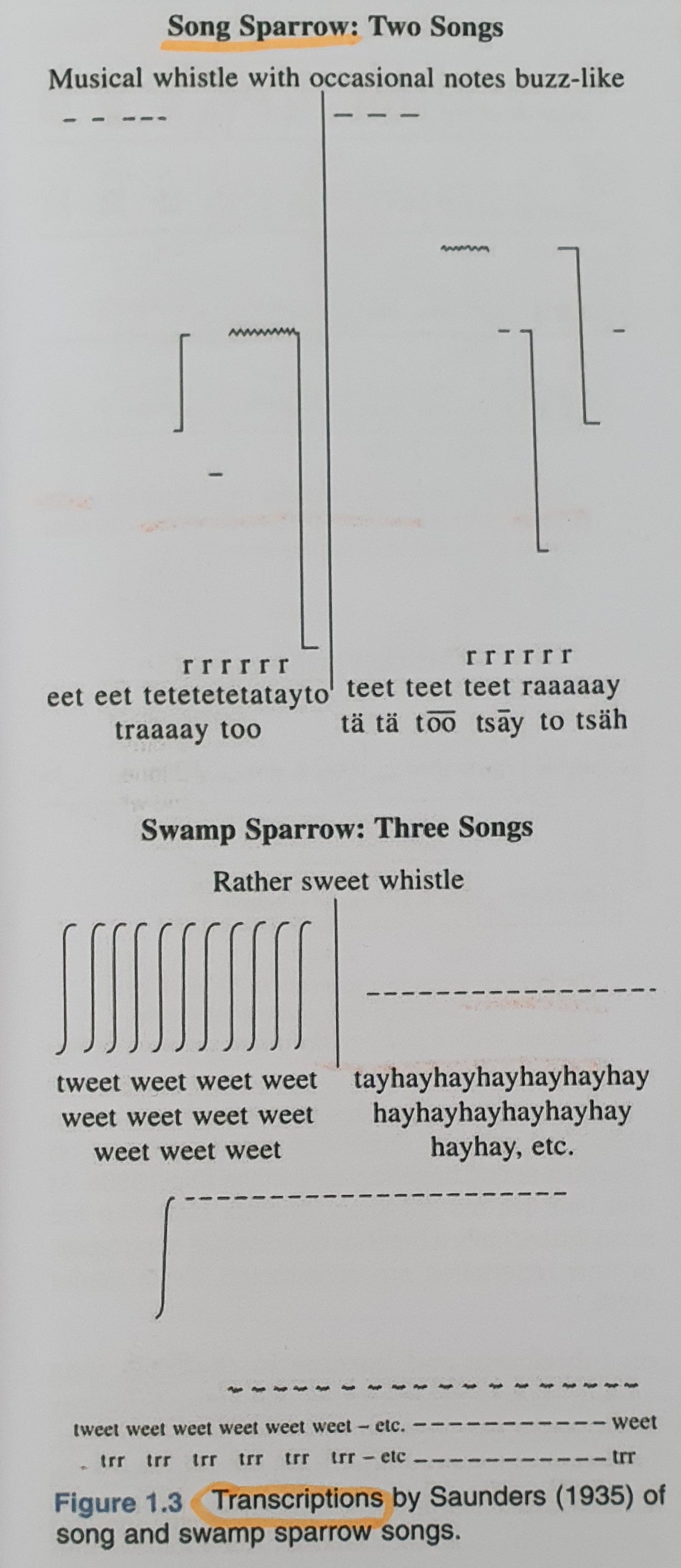 Singammer
 |
No details but a Xeno-Canto recording.
Song:  In this study it was found that young song sparrows recognize both a typical sound type, a trill, and the temporal pattern of the song, whereas swamp sparrows only listen for the trill, having no complex song. [page 82: acoustic cues for species-selective song learning]The authors describe the singing with amusing terms, puff-sing-wave used to drive off a territorial intruder, and the aggressive 'zhee' call used throughout the year to threaten other species or other song sparrows. [page 165]It was seen (by Hiebert et al in 1989) that song sparrows with a larger repertoire acquired a territory more quickly and survived longer. [page 48]It was seen that song sparrows matched the song repertoire of a neighbor to show that they were recognized. The authors (Beecher et al 1996) said that though not very aggressive, echoing the song of a neighbor's repertoire is more aggressive than singing a completely different song. [page 50]Another theory is that knowing all the songs of a neighbor means that it is sufficient to just responds those songs. If a bird has had to move to a more distant area or knows fewer songs himself, he may need to fight more often to prove the same point. [page 51-52]Young birds are said to learn songs from either one adult male after hatching, therefore in the area his parents did their breeding, or after migration the following spring, in which case it learns other songs from a male there. Dialects happen because birds tend to breed and therefore to sing in the same local area where they learned their songs. [page 115-116]One study shows that birds under stress during song learning in early development produce poor quality songs with fewer copied notes. Females prefer songs learned with accuracy, so these poor stress-out kids are out of luck. [page 324]Beecher 2008 notes that song sparrows always learn an entire song and don't link two different songs; and that they tend to learn songs sung by many different males in their new neighbohood, making the song more useful to them. [page 375]Stoddard et all 1991 noted that though each song sparrow has a repertoire of 10 songs, the set of neighbors will have about 50 all in all, but each can recognize the individuals. As I understood from the discussion before that, the point is that each can recognize the other's voice if they both sing the same song [page 384]Here it's mentioned that birds with more songs in their repertoire live longer - whether song sparrows in North America or great tits, which live right by our home. [page 396]Some birds like white-crowned sparrows are "open ended learners", and could learn song sparrow songs but prefer those of their own species. These open ended learners continue to learn songs well into adulthood or even throughout their lives. [page 371] In this study it was found that young song sparrows recognize both a typical sound type, a trill, and the temporal pattern of the song, whereas swamp sparrows only listen for the trill, having no complex song. [page 82: acoustic cues for species-selective song learning]The authors describe the singing with amusing terms, puff-sing-wave used to drive off a territorial intruder, and the aggressive 'zhee' call used throughout the year to threaten other species or other song sparrows. [page 165]It was seen (by Hiebert et al in 1989) that song sparrows with a larger repertoire acquired a territory more quickly and survived longer. [page 48]It was seen that song sparrows matched the song repertoire of a neighbor to show that they were recognized. The authors (Beecher et al 1996) said that though not very aggressive, echoing the song of a neighbor's repertoire is more aggressive than singing a completely different song. [page 50]Another theory is that knowing all the songs of a neighbor means that it is sufficient to just responds those songs. If a bird has had to move to a more distant area or knows fewer songs himself, he may need to fight more often to prove the same point. [page 51-52]Young birds are said to learn songs from either one adult male after hatching, therefore in the area his parents did their breeding, or after migration the following spring, in which case it learns other songs from a male there. Dialects happen because birds tend to breed and therefore to sing in the same local area where they learned their songs. [page 115-116]One study shows that birds under stress during song learning in early development produce poor quality songs with fewer copied notes. Females prefer songs learned with accuracy, so these poor stress-out kids are out of luck. [page 324]Beecher 2008 notes that song sparrows always learn an entire song and don't link two different songs; and that they tend to learn songs sung by many different males in their new neighbohood, making the song more useful to them. [page 375]Stoddard et all 1991 noted that though each song sparrow has a repertoire of 10 songs, the set of neighbors will have about 50 all in all, but each can recognize the individuals. As I understood from the discussion before that, the point is that each can recognize the other's voice if they both sing the same song [page 384]Here it's mentioned that birds with more songs in their repertoire live longer - whether song sparrows in North America or great tits, which live right by our home. [page 396]Some birds like white-crowned sparrows are "open ended learners", and could learn song sparrow songs but prefer those of their own species. These open ended learners continue to learn songs well into adulthood or even throughout their lives. [page 371] | ♫ |
 Mönchssittich
 | No details but a Xeno-Canto recording. | ♫ |
 Waldpieper
 |
No details but a Xeno-Canto recording.
Song: Song similar to Tree Pipit, but tempo more even and with a timbre resembling Dunnock. [Link] |
♫

|
 Doppelhornvogel
 | No details but a Xeno-Canto recording. |
♫
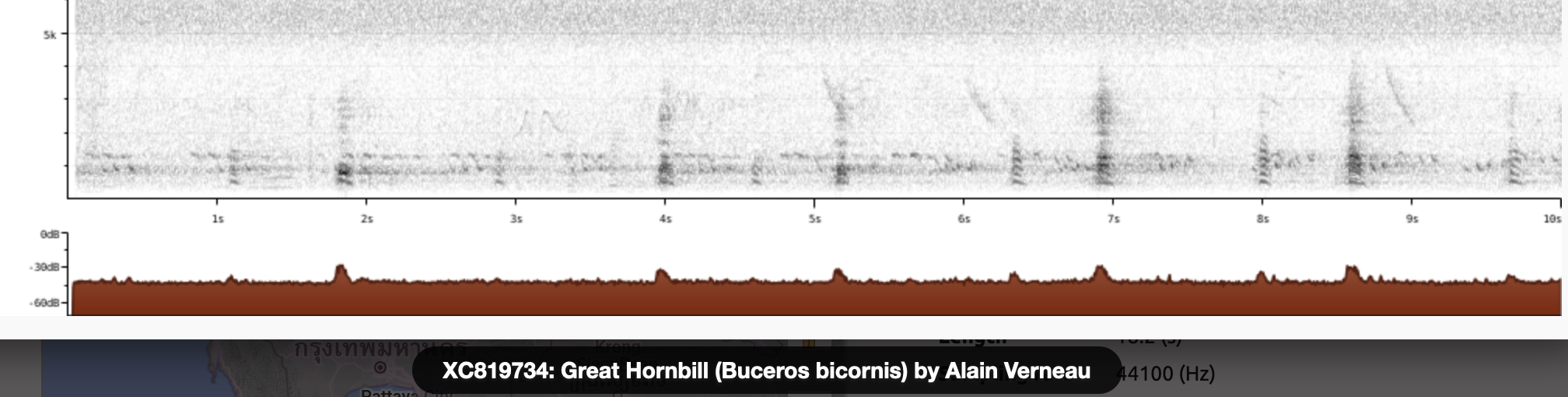
|
 Säbelschnäbler ❑❑
 |
No details but a Xeno-Canto recording.
Call: Most common contact call a soft, short "kluitt" reminiscent of Ringed Plover, but harder and less varied. Also sometimes followed by repeated chattering: "kluitt-trt-trt-trt-trt-trt-trt". [Link] | ♫ |
 Rotohrbülbül
 | No details but a Xeno-Canto recording. |
♫

|
 Schwarzhalsstar
 | No details but a Xeno-Canto recording. |
♫
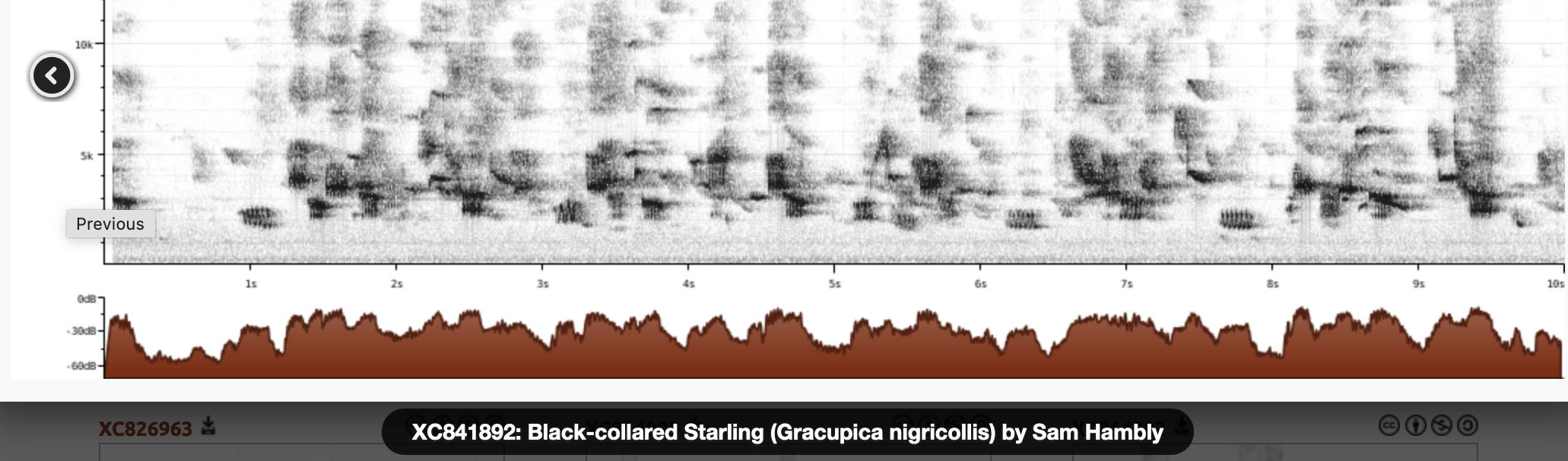
|
 Bayaweber
 | No details but a Xeno-Canto recording. |
♫

|
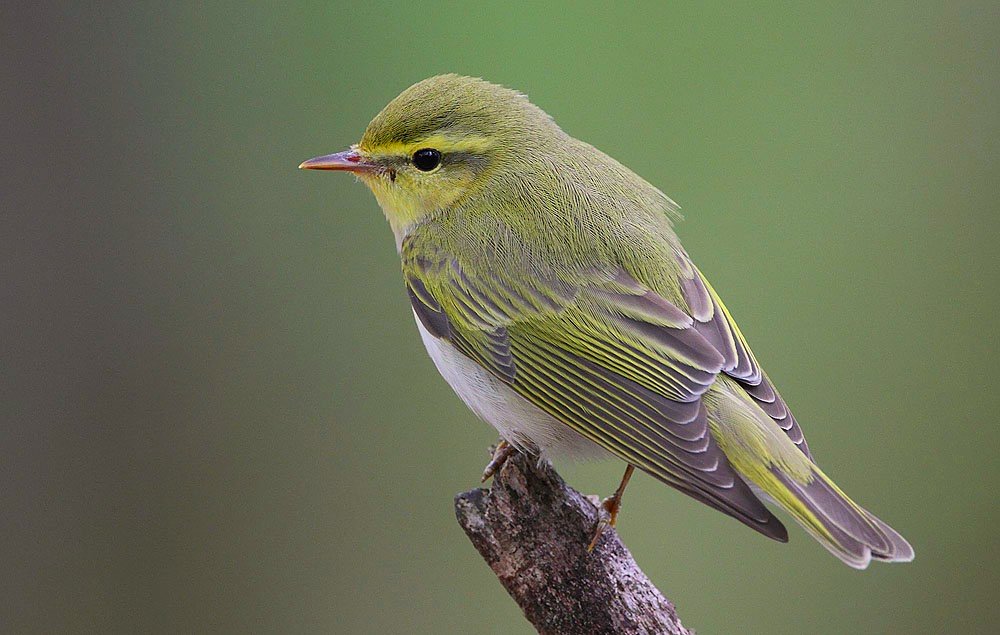 Rhadina sibilatrix
 | No details but a Xeno-Canto recording. |
♫
|
 Scharlachmistelfresser
 | No details but a Xeno-Canto recording. |
♫

|
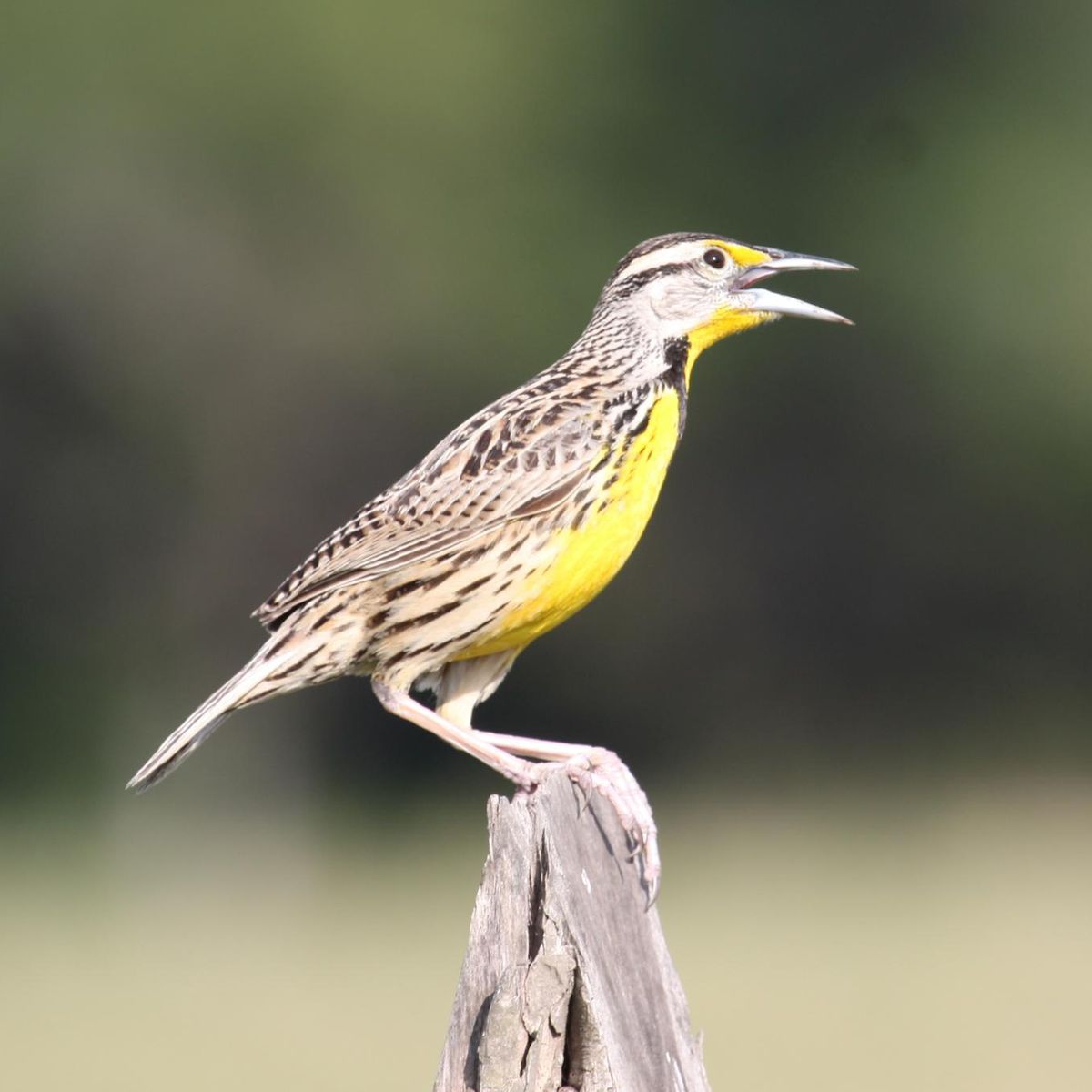 Östlicher Lerchenstärling
 | No details but a Xeno-Canto recording. | ♫ |
 Schreiadler
 | No details but a Xeno-Canto recording. | ♫ |
 Dickschnabelkrähe
 | No details but a Xeno-Canto recording. |
♫

|
 Carolinameise
 | No details but a Xeno-Canto recording. | ♫ |
 Psilopogon haemacephalus
 | No details but a Xeno-Canto recording. |
♫

|
 Kanadagans
 | No details but a Xeno-Canto recording. | ♫ |
 Langschopfmaina
 | No details but a Xeno-Canto recording. |
♫

|
 Zwergohreule ■❑
 |
No details but a Xeno-Canto recording.
Song: Song: a slightly descending, short "klooit". The tone is resonant, clear and pure, unlike Little Owl. [Link] | ♫ |
 Halsbandsittich
 | No details but a Xeno-Canto recording. | ♫ |
 Coracias affinis
 | No details but a Xeno-Canto recording. |
♫
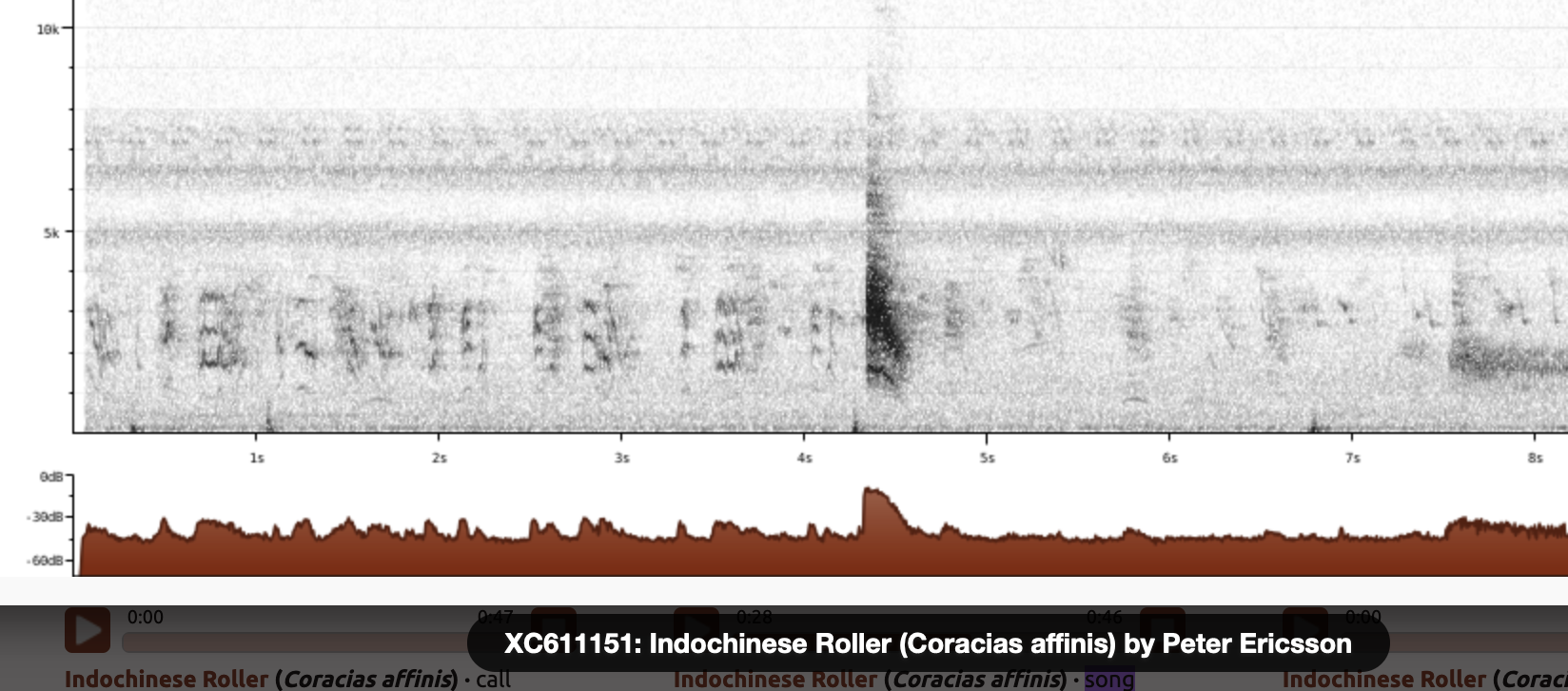
|
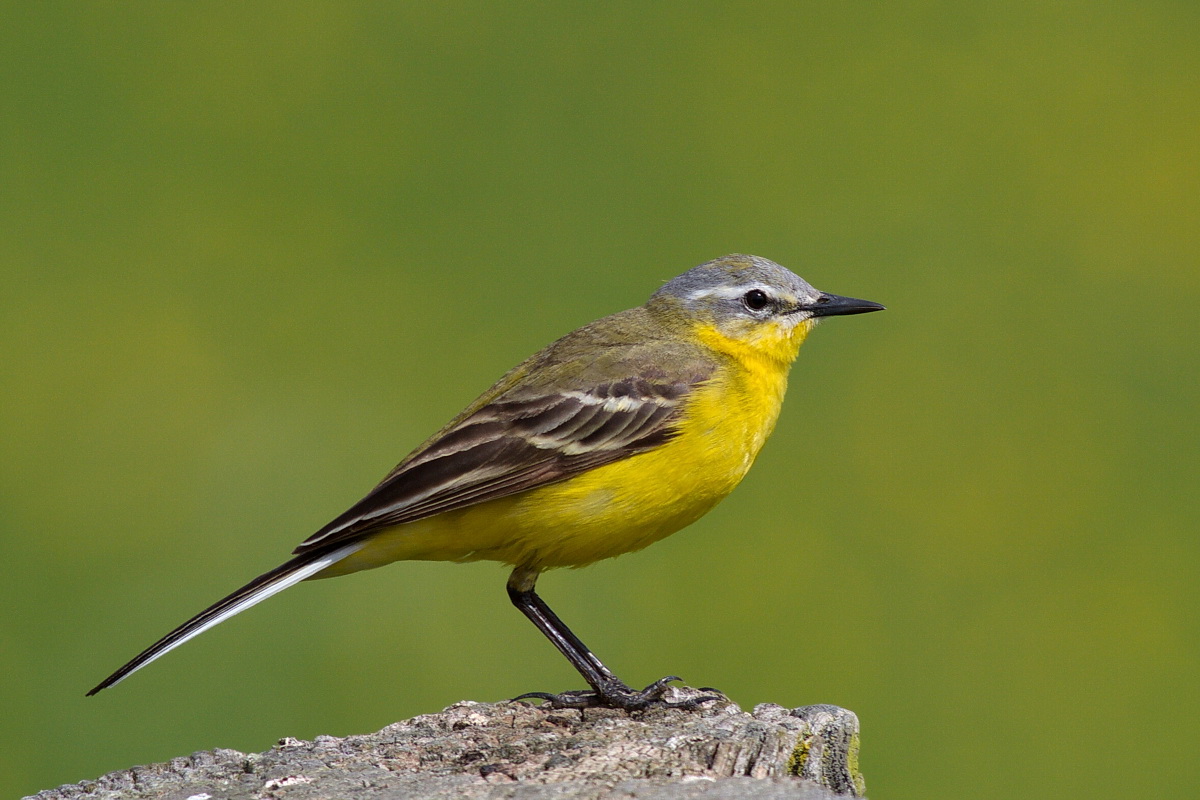 Thunbergschafstelze
 | No details but a Xeno-Canto recording. |
♫
|
 Dickschnabelspötter
 | No details but a Xeno-Canto recording. |
♫

|
 Heckenkuckuck
 | No details but a Xeno-Canto recording. |
♫

|
 Hausgimpel
 | No details but a Xeno-Canto recording. | ♫ |
 Weißkehlammer
 | No details but a Xeno-Canto recording. | ♫ |
 Schwarzkopfbülbül
 | No details but a Xeno-Canto recording. |
♫

|
 Alpensegler ■■
 | No details but a Xeno-Canto recording. | ♫ |
| Mimikry | ||
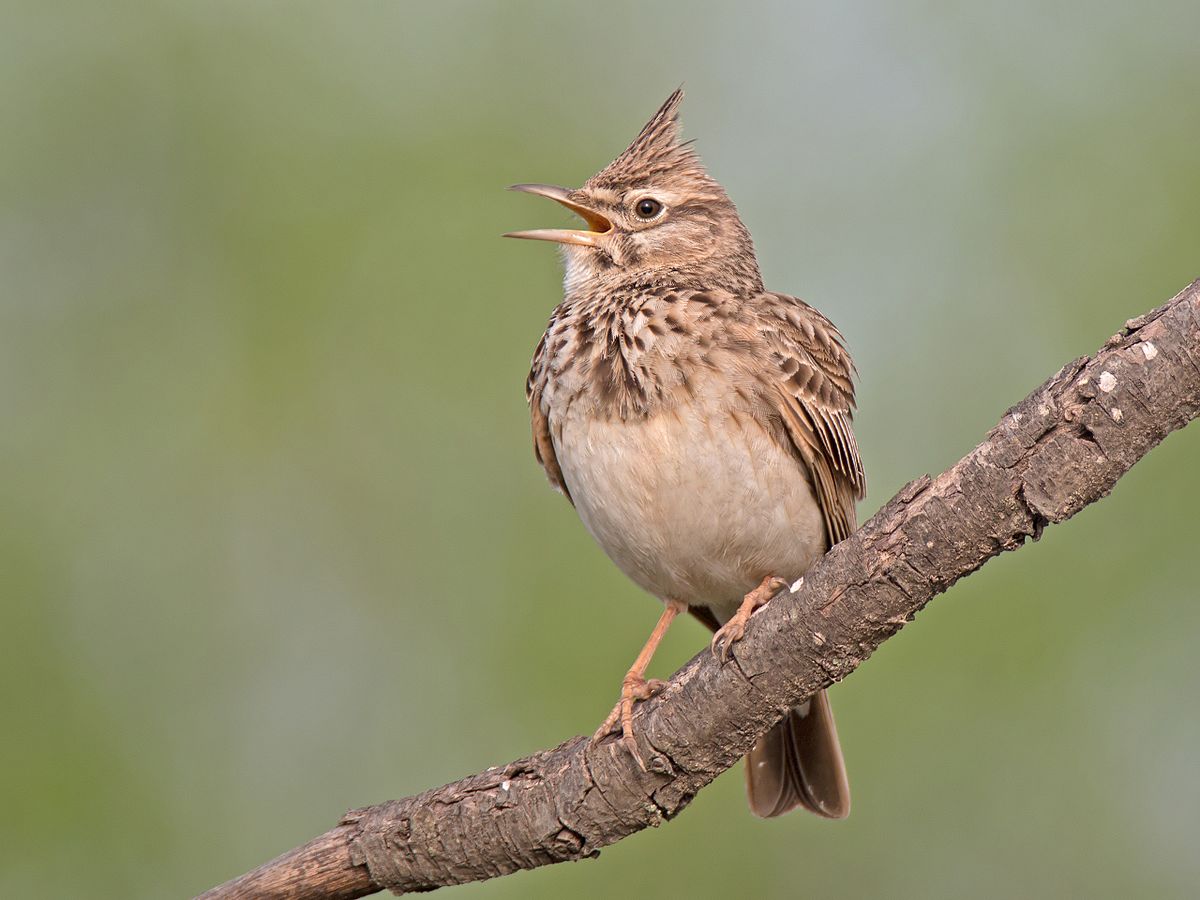 Haubenlerche
 |
Mimikry .
No details but a Xeno-Canto recording.
Song: Song: a mix of long whistling, fluting sounds, trills and mimicry. Full song quite similar to Thekla Lark. Rudiments of song are often heard and includes more melancholic whistling than Thekla. [Link] | ♫ |
 Streifenkehlbülbül
 | No details but a Xeno-Canto recording. |
♫

|
 Walddrossel
 | No details but a Xeno-Canto recording. | ♫ |
 Oustaletsalangane
 | No details but a Xeno-Canto recording. |
♫

|
 Gelbbrauen-Laubsänger
 |
No details but a Xeno-Canto recording.
Song: Contact call and song both distinct. Song an ornamented, drawn out, slow-motion version of the contact call, with similar timbre and pitch. [Link] | ♫ |
 Samtkopfgrasmücke
 | No details but a Xeno-Canto recording. | ♫ |
 Kernbeißerweber
 | No details but a Xeno-Canto recording. |
♫
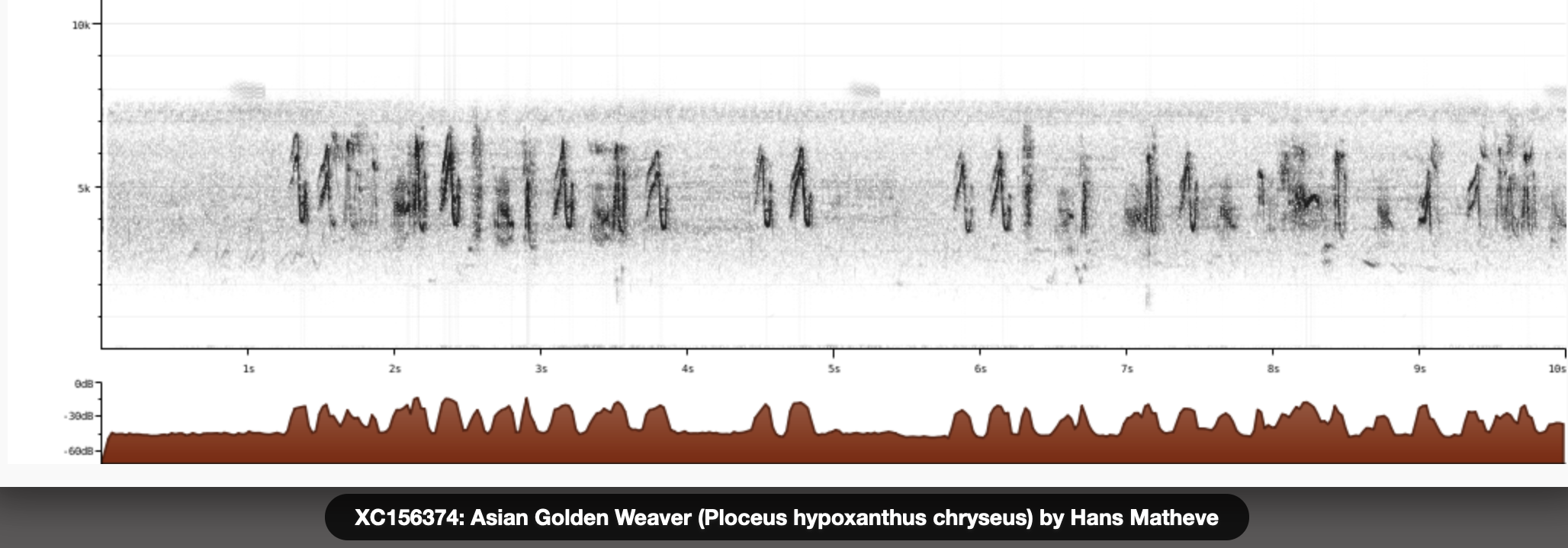
|
 Westliche Weissbart-Grasmücke
 | No details but a Xeno-Canto recording. | ♫ |
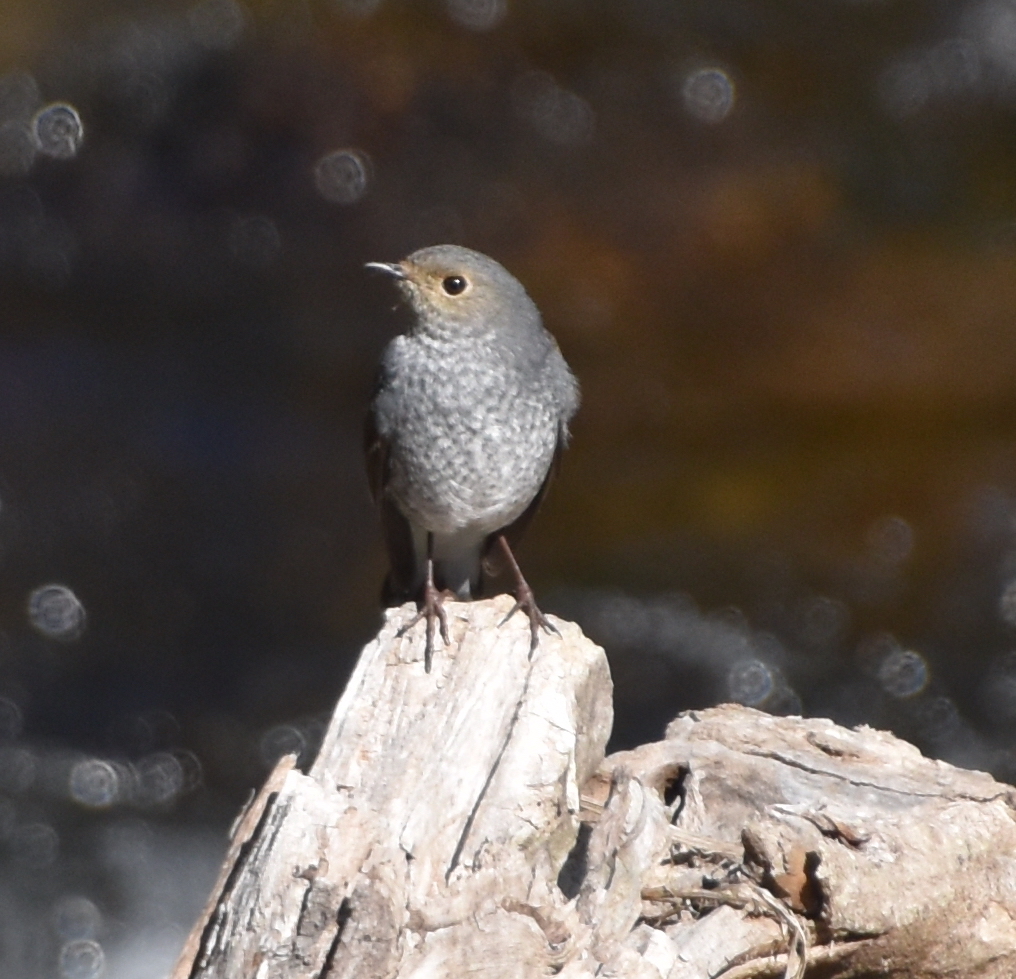 Einfarb-Mistelfresser
 | No details but a Xeno-Canto recording. |
♫

|
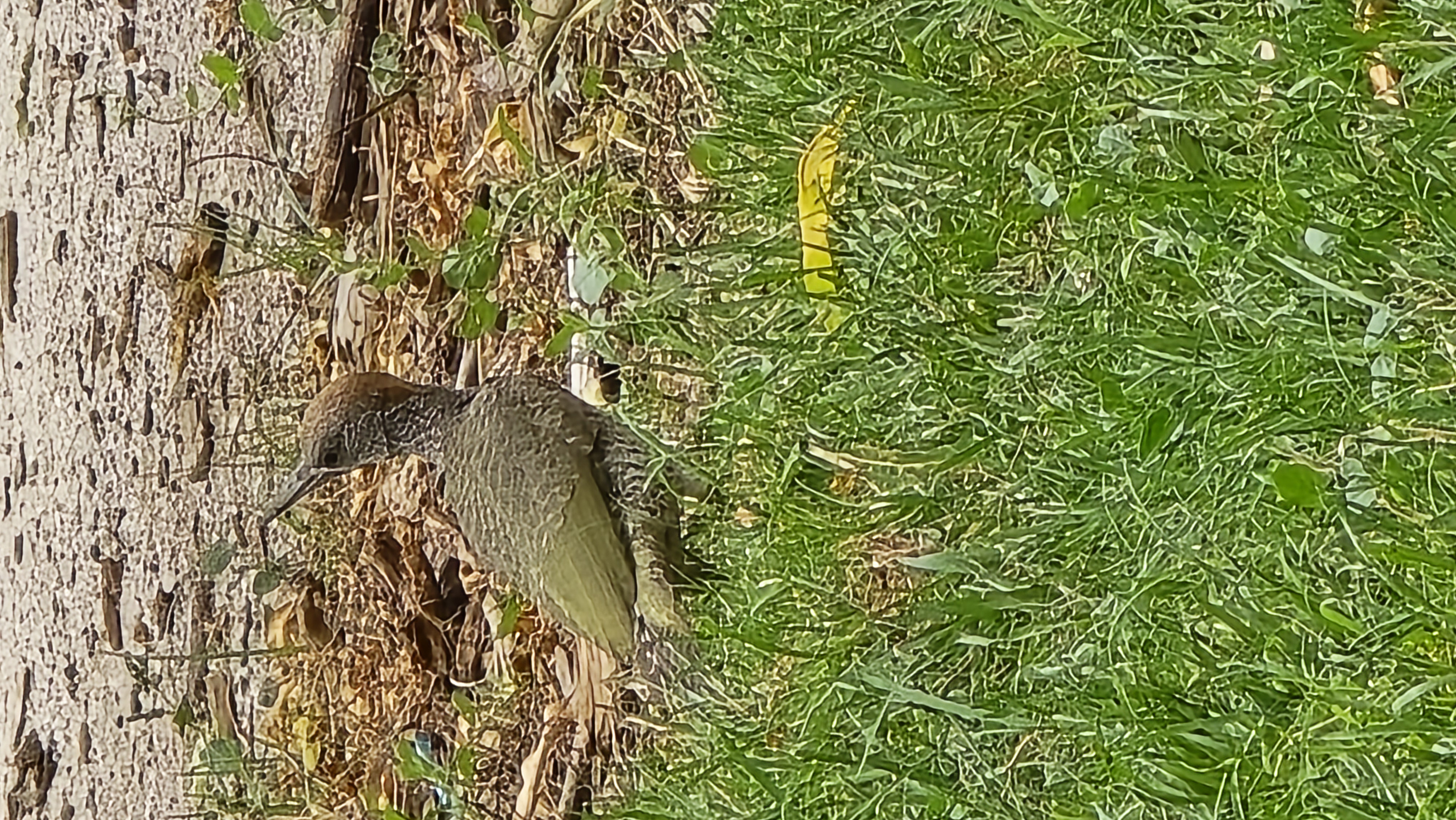 Iberiengrünspecht
 | No details but a Xeno-Canto recording. |
♫
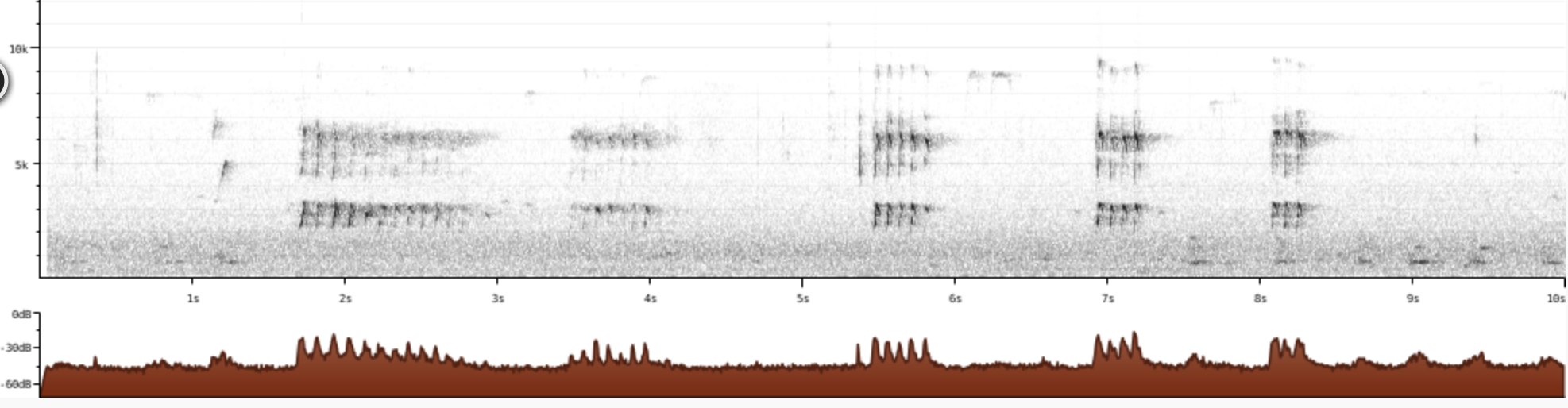
|
 Braunkehl-Nektarvogel
 | No details but a Xeno-Canto recording. | ♫ |
 Königsdrongo
 | No details but a Xeno-Canto recording. |
♫

|
 Mittelreiher
 | No details but a Xeno-Canto recording. |
♫

|
 Goldkopf-Zistensänger
 | No details but a Xeno-Canto recording. |
♫
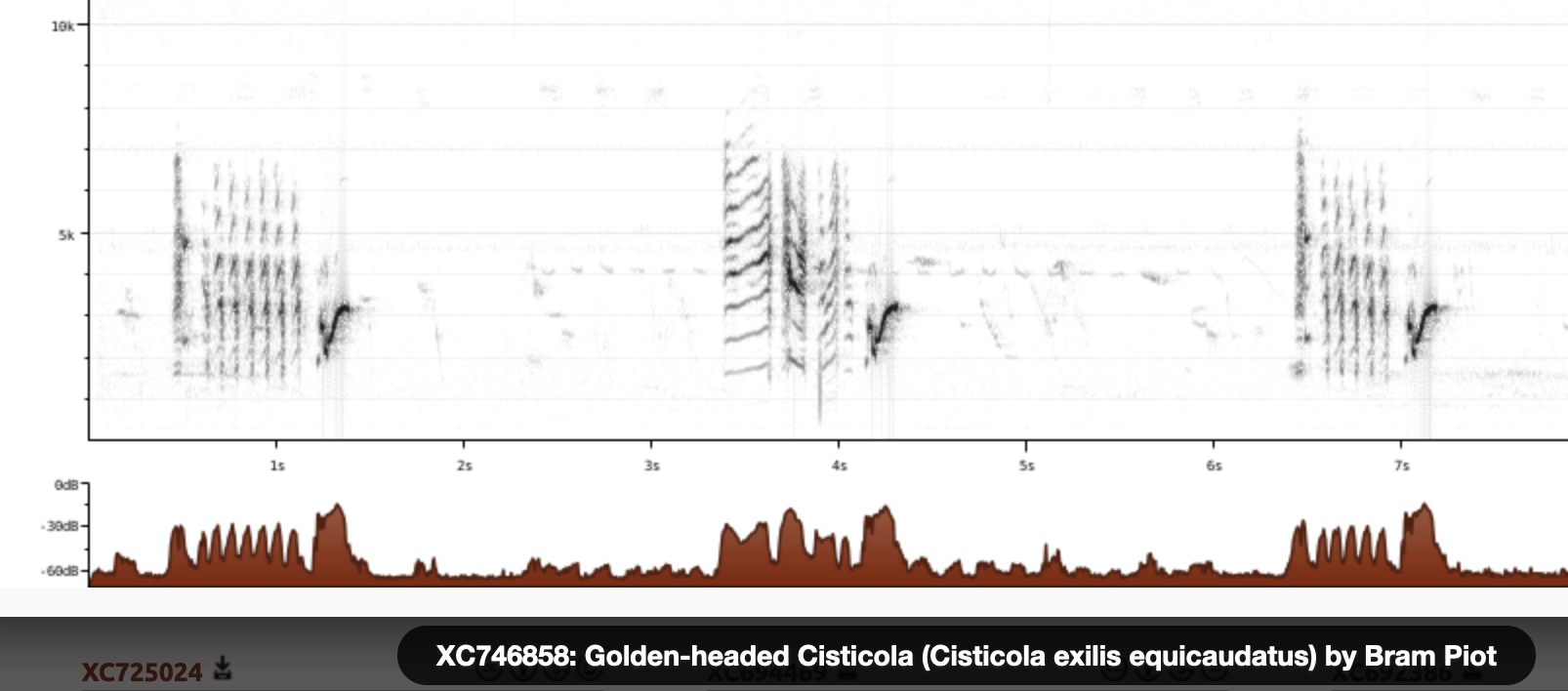
|
 Perlhalstaube
 | No details but a Xeno-Canto recording. |
♫

|
 Rotspottdrossel
 | No details but a Xeno-Canto recording. | ♫ |
 Blaumückenfänger
 | No details but a Xeno-Canto recording. | ♫ |
 Flussregenpfeifer ■■
 |
No details but a Xeno-Canto recording.
Call: Common calls are a two syllable "krrll-uuit" with a rising pitch or just a sharp, rolling "krrri-krrri". Also a longer rolling "krree-looo" with pitch rising in first syllable and falling in the second. [Link] | ♫ |
 Rotflügelstärling
 | No details but a Xeno-Canto recording. | ♫ |
 Saxicola stejnegeri
 | No details but a Xeno-Canto recording. |
♫
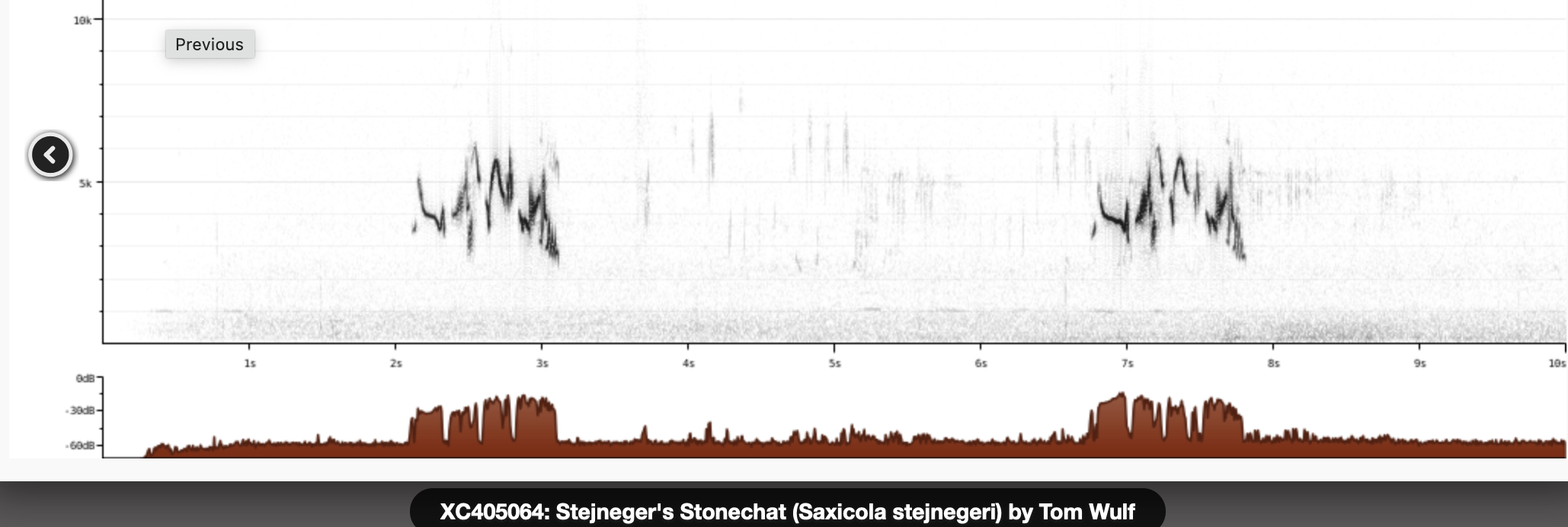
|
 Rotaugenvireo
 | No details but a Xeno-Canto recording. | ♫ |
 Schlangenweihe
 | No details but a Xeno-Canto recording. |
♫

|
 Malaienfächerschwanz
 | No details but a Xeno-Canto recording. |
♫

|
 Pica serica
 | No details but a Xeno-Canto recording. | ♫ |
 Rohrweihe ■■
 |
No details but a Xeno-Canto recording.
Call: Call: A sharp "kwii-uuu" of about a seconds length, rapidly ascending in pitch, and ending on a falling tone. [Link] |
♫

|
 Furchenhornvogel
 | No details but a Xeno-Canto recording. |
♫

|
 Felsentaube ■■
 |
No details but a Xeno-Canto recording.
Song: Song a two-syllable, but continuous cooing. First a rolling ascending "orrrrrr" immediately followed by a short descending "oohh". Wings produce a quite audible whistling sound. [Link] |
♫

|
 Schnäpperwaldsänger
 | No details but a Xeno-Canto recording. | ♫ |
 Graukopfkiebitz
 | No details but a Xeno-Canto recording. |
♫

|
 Blauschwanzspint
 | No details but a Xeno-Canto recording. |
♫

|
 Sepiasturmtaucher
 | No details but a Xeno-Canto recording. | ♫ |
 Carolinataube
 | No details but a Xeno-Canto recording. | ♫ |
 Silberklaffschnabel
 | No details but a Xeno-Canto recording. |
♫

|
 Meisenwaldsänger
 | No details but a Xeno-Canto recording. | ♫ |
 Dohlengrackel
 | No details but a Xeno-Canto recording. | ♫ |
 Indianermeise
 | No details but a Xeno-Canto recording. | ♫ |
 Singschwan ■■
 | No details but a Xeno-Canto recording. | ♫ |
 Eastern wood pewee, last new bird we discovered - at the parking lot shortly before leaving, Oregon Ridge.JPG) Östlicher Waldtyrann
Östlicher Waldtyrann | No details but a Xeno-Canto recording. | ♫ |
 Braunkopfspint
 | No details but a Xeno-Canto recording. |
♫

|
 Fischadler ■■
 |
No details but a Xeno-Canto recording.
Call: Calls with sequences of short, soft and clear whistling notes. Often in series with rising pitch, then ending with a few lower pitched notes. [Link] | ♫ |
| Kanarenmeise | No details but a Xeno-Canto recording. | ♫ |
 Indischer Schlangenhalsvogel
 | No details but a Xeno-Canto recording. |
♫

|
 Carolinaspecht
 | No details but a Xeno-Canto recording. | ♫ |
 Sperbertaube
 | No details but a Xeno-Canto recording. |
♫

|
 Amerikanerkrähe
 | No details but a Xeno-Canto recording. | ♫ |
 Graumennigvogel
 | No details but a Xeno-Canto recording. |
♫

|
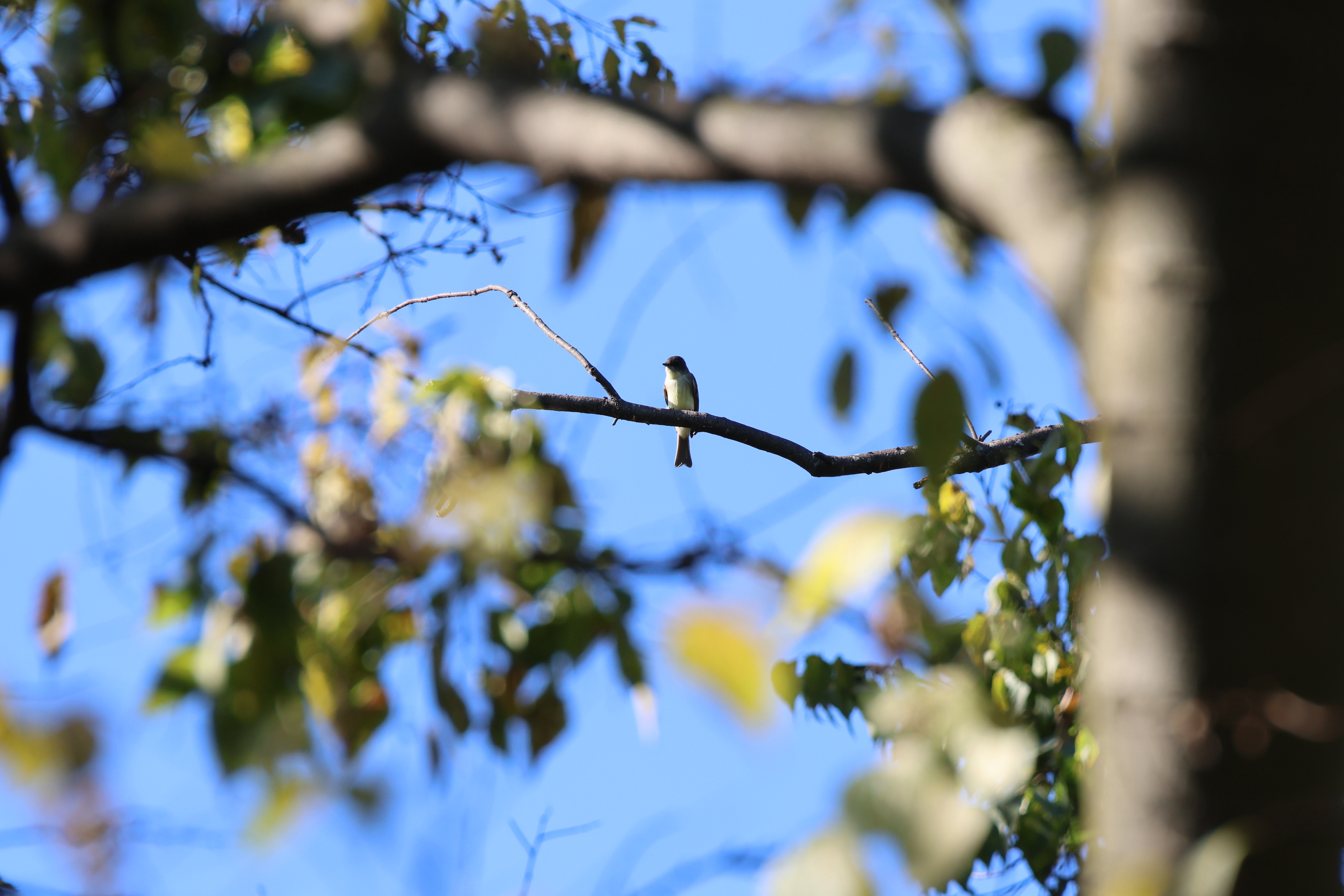 Weißbauch-Phoebetyrann
 | No details but a Xeno-Canto recording. | ♫ |
 Muskatbronzemännchen
 | No details but a Xeno-Canto recording. |
♫

|
 Gelbbauchsperling
 | No details but a Xeno-Canto recording. |
♫

|
 Mangrovereiher
 | No details but a Xeno-Canto recording. |
♫
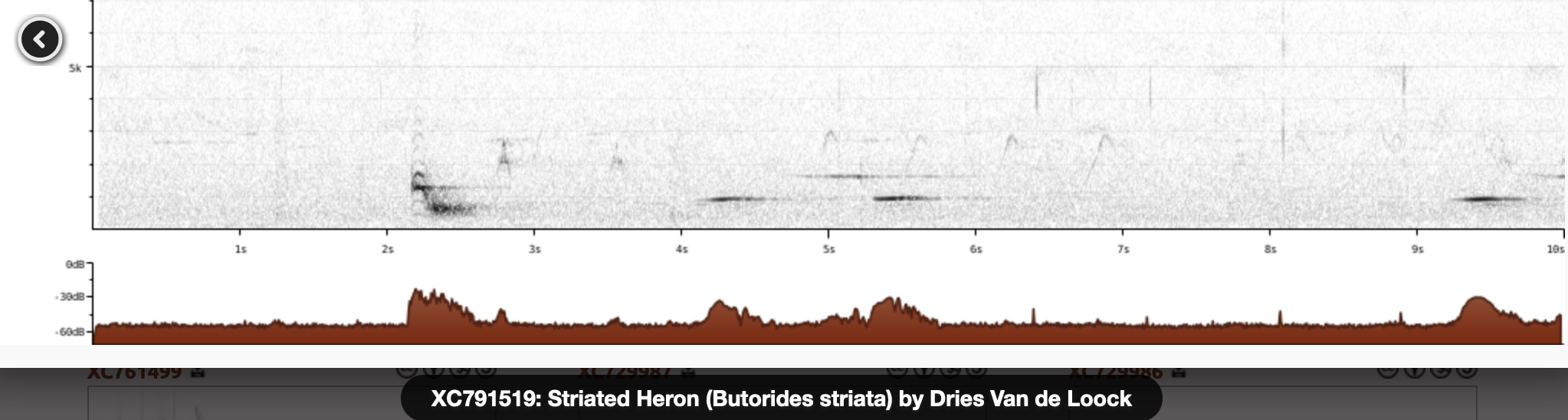
|
 Wanderbaumelster
 | No details but a Xeno-Canto recording. |
♫

|
 Schnäppertyrann
 | No details but a Xeno-Canto recording. | ♫ |
 Blauhäher
 | No details but a Xeno-Canto recording. | ♫ |
 Steinlerche
 | No details but a Xeno-Canto recording. | ♫ |
 Grauschwalbenstar
 | No details but a Xeno-Canto recording. |
♫

|
 Weißaugenvireo
 | No details but a Xeno-Canto recording. | ♫ |
 Bruchwasserläufer ■■
 |
No details but a Xeno-Canto recording.
Call: Flight call a soft, but explosive "whiff whiff" , sometimes with only one syllable. Display call similar to redshank but with only two accented beats; a fast melodious "dee-loo", repeated in cycles. [Link] | ♫ |
 Blanfordbülbül
 | No details but a Xeno-Canto recording. |
♫

|
 Maina
Maina | No details but a Xeno-Canto recording. |
♫

|
 Kapuzenwaldsänger
 | No details but a Xeno-Canto recording. | ♫ |
 Kabylenkleiber
 | No details but a Xeno-Canto recording. | ♫ |
 Rotkardinal
 | No details but a Xeno-Canto recording. | ♫ |
 Bootschwanzgrackel
 | No details but a Xeno-Canto recording. | ♫ |
 Provencegrasmücke
 |
No details but a Xeno-Canto recording.
Song: Song similar to Sardinian Warbler, but usually identifiable by frequently interspersed contact calls. Phrases are quite short, and pauses are as long or longer than the actual phrases. [Link] | ♫ |
 Buntstorch
 | No details but a Xeno-Canto recording. |
♫

|
 Augenstreifbülbül
 | No details but a Xeno-Canto recording. |
♫

|
 Wanderfalke ■■
 |
No details but a Xeno-Canto recording.
Call: Also shorter, coarse warning-calls. [Link] |
♫

|
 Fasanblatthühnchen
 | No details but a Xeno-Canto recording. | ♫ |
 Graubrustprinie
 | No details but a Xeno-Canto recording. | ♫ |
 Rubinkehlchen
 | No details but a Xeno-Canto recording. |
♫

|
 Prinia inornata
 | No details but a Xeno-Canto recording. |
♫

|
 Helmspecht
 | No details but a Xeno-Canto recording. | ♫ |
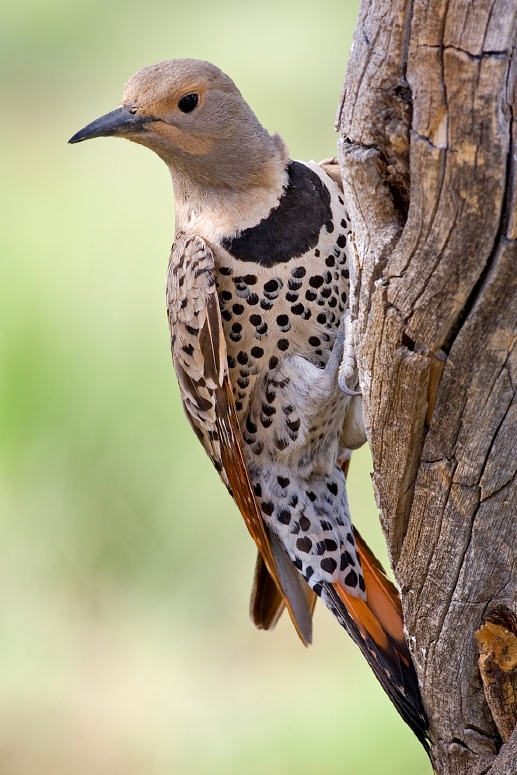 Goldspecht
 | No details but a Xeno-Canto recording. | ♫ |
 Gangesbrillenvogel
 | No details but a Xeno-Canto recording. | ♫ |
 Sibirisches Schwarzkehlchen
 | No details but a Xeno-Canto recording. | ♫ |
 Wanderdrossel
 | No details but a Xeno-Canto recording. | ♫ |
 Purpurnektarvogel
 | No details but a Xeno-Canto recording. |
♫

|
 Katzendrossel
 | No details but a Xeno-Canto recording. | ♫ |
 XXXXX Northern mockingbird with its very long legs and tails, Cherrywood Court.JPG) Gartenspottdrossel
Gartenspottdrossel | No details but a Xeno-Canto recording. | ♫ |
 Carolina wren, Cromwell Valley Park.JPG) Carolinazaunkönig
Carolinazaunkönig | No details but a Xeno-Canto recording. | ♫ |
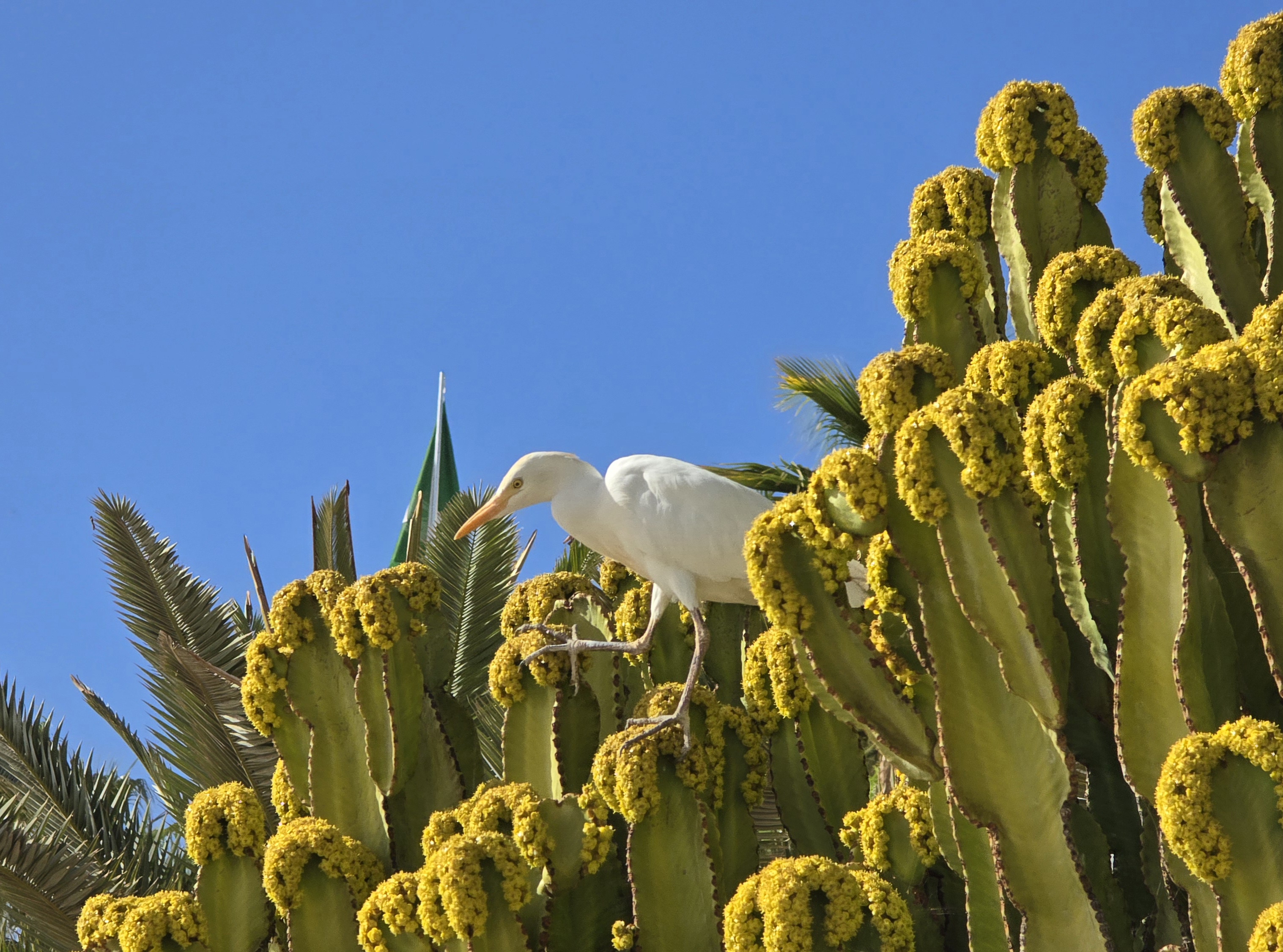 Kuhreiher
 | No details but a Xeno-Canto recording. |
♫

|
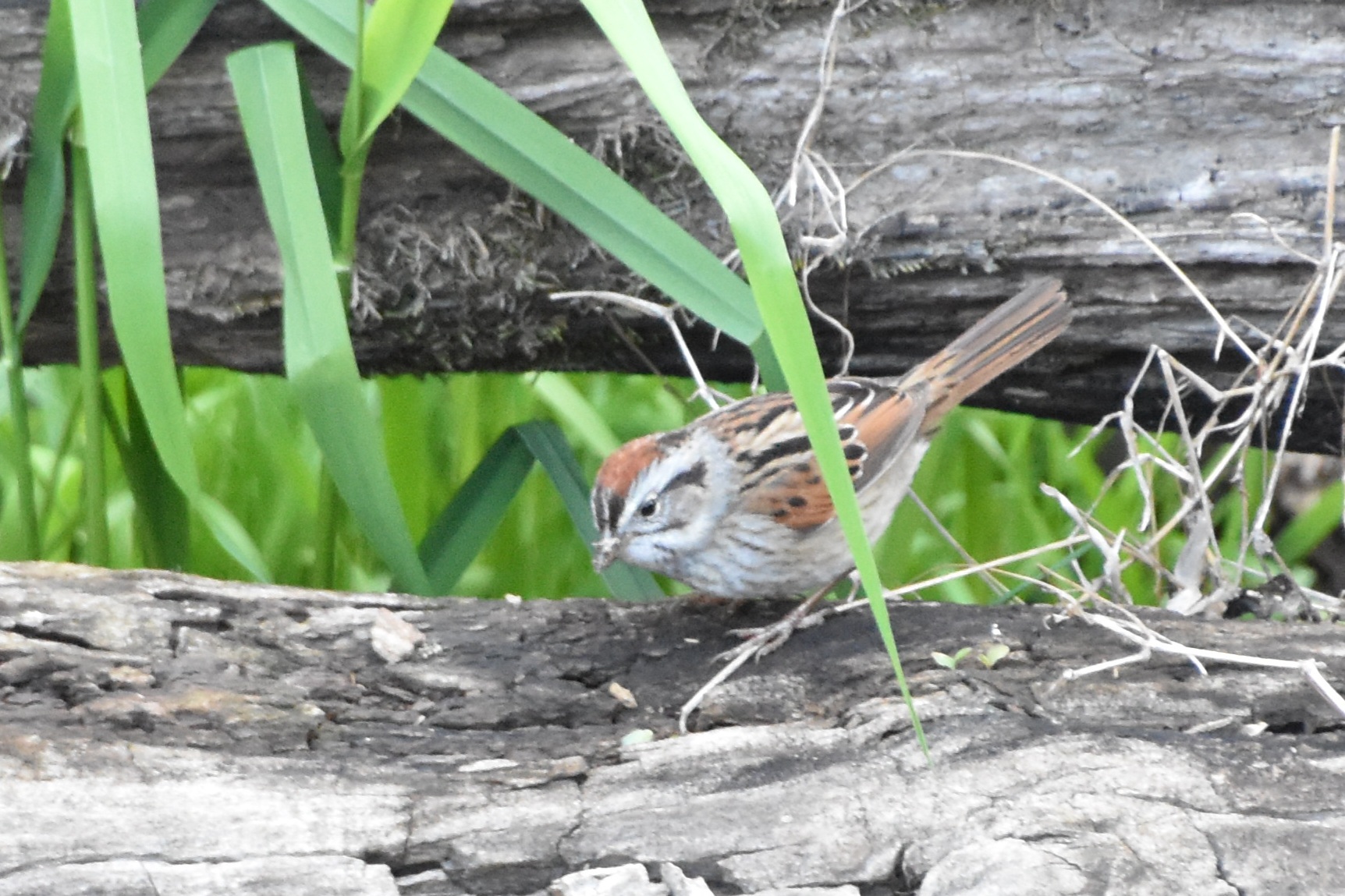 Schwirrammer
 | No details but a Xeno-Canto recording. | ♫ |
 Kornweihe ■❑
 |
No details but a Xeno-Canto recording.
Call: Calls with quite soft series of "ke-ke-ke-ke". Also a wailing, squealing whistle, with emphasized first syllable. [Link] |
♫

|
 Bartsittich
 | No details but a Xeno-Canto recording. |
♫

|
 Hauszaunkönig
 | No details but a Xeno-Canto recording. | ♫ |
 Winterammer
 | No details but a Xeno-Canto recording. | ♫ |
 Seidensänger
 |
No details but a Xeno-Canto recording.
Song: Song diagnostic, and readily given throughout the year. Phrases last from 2 - 5 seconds, consisting of a few loud, clear and rapid glissandi, given in approximately same register. E.g. "cetti cetti cetti", usually with a few introductory notes, and some variation to the phrase. Overall a very explosive, and with a staccato rhythm. [Link] | ♫ |
Übung
♫
Lösung
Rabenkrähe Goldammer Gesang plus Rabenkrähe Rufe, weitere Rufe TBI.
♫
Lösung
Weißbauch-Phoebetyrann Birdnet - Eastern Phoebe - 2022-04-28 11:33:45 - birdnet mobile 5867288364 recording 3278.wav.
♫
Lösung
Neuntöter XC570644 - Marsh Warbler - Acrocephalus palustris - song.
♫
Lösung
Singschwan Whooper swan, Altnau am Bodensee.
♫
Lösung
Purpurnektarvogel XC472641 - Purple Sunbird - Cinnyris asiaticus - song, Sultanpur Bird Sanctuary, India.
♫
Lösung
Halsbandschnäpper XC727811 - Collared Flycatcher - Ficedula albicollis - song, recorded in Croatia.
♫
Lösung
Bergfink XC731031 - Brambling song - Fringilla montifringilla.
♫
Lösung
Seidenreiher XC799679 - Little Egret - Egretta garzetta - call that sounds like its vomiting - Catalunya, Spain.
♫
Lösung
Schwarzkehlchen XC633658 - European Stonechat - Saxicola rubicola - song.
♫
Lösung
Alpendohle XC769199 - Alpine Chough - Pyrrhocorax graculus graculus - song recorded in Morocco.
♫
Lösung
Waldlaubsänger XC727564 - Wood Warbler - Phylloscopus sibilatrix - song.
♫
Lösung
Wanderbaumelster XC810503 - Rufous Treepie - Dendrocitta vagabunda - pir-ol-like song - Bardiya National Park, Bardiya, Lumbini Province, Nepal.
♫
Lösung
Rohrammer XC723277 - Common Reed Bunting - Emberiza schöniclus - song.
♫
Lösung
Gelbspötter XC772854 - Icterine Warbler - Hippolais icterina - song, recorded in Sweden.
♫
Lösung
Weißaugenvireo Birdnet - White-eyed Vireo - 2022-05-01 09:28:06 - White-eyed Vireo - Cockeysville.
♫
Lösung
Gelbbauchsperling XC878331 - Plain-backed Sparrow - Passer flaveolus - song - Donkoi, Vientiane Prefecture, Laos.
♫
Lösung
Schnäpperwaldsänger Birdnet - American Redstart - 2022-05-02 08:57:40 - American Redstart - Cockeysville.
♫
Lösung
Bluthänfling XC705526 - Common Linnet - Linaria cannabina cannabina - song, recorded in England.
♫
Lösung
Perlhalstaube XC884362 - Spotted Dove - Spilopelia chinensis.
♫
Lösung
Mauerläufer XC569274 - Wallcreeper - Tichodroma muraria - song, this one sounds likes a pi-rol.
♫
Lösung
Pfeifente XC613742-Pfeifente von Adrien Mauss.
♫
Lösung
Graubrustprinie XC541994 - Grey-breasted Prinia - Prinia hodgsonii erro - call, song - Vientiane prefecture, Laos.
♫
Lösung
Schilfrohrsänger XC661577 - Sedge Warbler - Acrocephalus schönobänus - song.
♫
Lösung
Zwergohreule MerlinBirdID hat eine Zwergohreule gehört vor 4 Uhr morgens, eine einzelne Note weit im Hintergrund, wie auch ein Amsel, einen Misteldrossel und eine Mittelmeermöwe.
♫
Lösung
Amerikanerkrähe MerlinSoundId American crow, Carolina wren, Blue jay, Northern cardinal - Annandale, Virginia.
♫
Lösung
Rauchschwalbe XC768452 - Barn Swallow - Hirundo rustica - song recorded in Denmark, rare recording with just a single bird.
♫
Lösung
Schreiadler Four note call - birdnet suggested lesser spotted eagle which doesnt occur here, next song thrush.
♫
Lösung
Baumfalke MerlinBirdId meint Baumfalke bei Rosinli, Hittnau.
♫
Lösung
Girlitz XC637940 - European Serin - Serinus serinus - song, recorded in France.
♫
Lösung
Nebelkrähe MerlinSoundId Hooded crows, eurasian blackbirds, European serin, Sardinian warbler, European goldfinch, common wood-pigeon on Stromboli.
♫
Lösung
Katzendrossel Morning at Cherrywood Court - northern cardinal, gray catbirds, song sparrow.
♫
Lösung
Bartsittich XC35744 - Red-breasted Parakeet - Psittacula alexandri - song - Cat Tien National Park, Cochinchina, Vietnam.
♫
Lösung
Braunkehlchen XC775379 - Whinchat - Saxicola rubetra - song, recorded in Sweden.
♫
Lösung
Gartenspottdrossel MerlinSoundId Northern mockingbird - New Jersey.
♫
Lösung
Kolkrabe Kolkraben bei Agasul.
♫
Lösung
Augenstreifbülbül XC477488 - Yellow-vented Bulbul - Pycnonotus goiavier - song - Davao City, Davao del Sur, Davao Region, Philippines.
♫
Lösung
Wendehals XC800958 - Eurasian Wryneck - Jynx torquilla.
♫
Lösung
Hausgimpel Birdnet 1622 - House Finch plus northern cardinal - House Finch - Cockeysville.
♫
Lösung
Braunkehl-Nektarvogel XC784603 - Brown-throated Sunbird - Anthreptes malacensis - song h,l, h,l, - Kum Nang Phaya Resort and environment, Thailand.
♫
Lösung
Rotkehlchen XC782997 - European Robin - Erithacus rubecula - song recorded in Italy.
♫
Lösung
Carolinaspecht Birdnet - Red-bellied Woodpecker - Red-bellied Woodpecker - Towson.
♫
Lösung
Streifenkehlbülbül XC298504 - Stripe-throated Bulbul - Pycnonotus finlaysoni - song, Thailand.
♫
Lösung
Streifenkauz Barred owl at Windham Hill Inn, monkey call from 20 seconds on.
♫
Lösung
Flussregenpfeifer Birdnet - Flussregenpfeifer - Flussregenpfeifer - Felanitx.
♫
Lösung
Kapuzenwaldsänger Birdnet 1638 - No confident detection, wild guess hooded warbler or yellow backed warbler - No confident detection - Cockeysville.
♫
Lösung
Östlicher Waldtyrann Birdnet - Eastern Wood-Pewee - 2022-05-01 08:44:50 - Eastern Wood-Pewee - Cockeysville.
♫
Lösung
Sibirisches Schwarzkehlchen XC236691 - Siberian Stonechat - Saxicola maurus - song, Kazakhstan.
♫
Lösung
Wintergoldhähnchen Wintergoldhähnchen
♫
Lösung
Teichhuhn XC946631 - Common Moorhen call, like a quack - Gallinula chloropus.
♫
Lösung
Gartenrotschwanz Common redstart an hour before dawn at Casa Egner, Locarno-Muralto.
♫
Lösung
Steinlerche Birdnet - Steinlerche - Steinlerche - Campos.
♫
Lösung
Gänsesäger Birdnet 1539 - Common Merganser plus Golden Oriole - = - Common Merganser - Locarno.
♫
Lösung
Kanarengirlitz Quinta San Antonio da Serra, Madeira - Kanarengirlitz Gesang.
♫
Lösung
Gartengrasmücke XC728379 - Garden Warbler - Sylvia borin - song.
♫
Lösung
Karmingimpel XC654449 - Common Rosefinch - Carpodacus erythrinus - song.
♫
Lösung
Einfarb-Mistelfresser XC706158 - Plain Flowerpecker - Dicäum minullum olivaceum - song - Phou Hin Poun NPA, Khammouane, Laos.
♫
Lösung
Mönchsgrasmücke Birdnet 1356 - Eurasian Blackcap hml - 2021-03-31 19:12:00 - Eurasian Blackcap - Lugano.
♫
Lösung
Birkenzeisig XC703947 - Common Redpoll - Acanthis flammea - song.
♫
Lösung
Blauschwanzspint XC779879 - Blue-tailed Bee-eater - Merops philippinus - call - Gandhinagar, Gujarat, India.
♫
Lösung
Steinschmätzer XC730221 - Northern Wheatear - Oenanthe oenanthe - song recorded in France, just 2-3 notes, then long pause.
♫
Lösung
Langschopfmaina XC607250 - Great Myna - Acridotheres grandis - song - Thai Samakkhi Village, Amphoe Wang Nam Khiao, Chang Wat Nakhon Ratchasima, Thailand.
♫
Lösung
Fischadler Surprising sound of an osprey.
♫
Lösung
Stieglitz XC638230 - European Goldfinch - Cardülis cardülis.
♫
Lösung
Singdrossel MerlinBirdId meint Singdrossel, meistens mhHL, aber 1m08 auch Kohlmeise.
♫
Lösung
Wanderfalke XC942609 - Peregrine Falcon call - Falco peregrinus.
♫
Lösung
Kornweihe XC658950 - Hen Harrier - Circus cyaneus - 2-second melodic call.
♫
Lösung
Bruchwasserläufer Birdnet 1940 - Wood Sandpiper, saw a bird flying, check reports in Ornitho - Wood Sandpiper - Uznach.
♫
Lösung
Graureiher Birdweather-Gray Heron call.
♫
Lösung
Teichrohrsänger XC653035 - Eurasian Reed Warbler - Acrocephalus scirpaceus - song.
♫
Lösung
Bergpieper XC716570 - Water Pipit - Anthus spinoletta - song, recorded in Spain.
♫
Lösung
Wasseramsel Song recorded in Bern from Xeno-Canto Wonderfully weird sequence of chirps, cheeps, growls with repeated elements.
♫
Lösung
Birkhuhn XC731604 - Black Grouse - Lyrurus tetrix.
♫
Lösung
Blässhuhn XC841364 - Eurasian Coot song - Fulica atra.
♫
Lösung
Zilpzalp Birdnet 968 saw kohlmeise as part of this conversation - Common chiffchaff - Fehraltorf.
♫
Lösung
Rubinkehlchen XC843510 - Siberian Rubythroat - Calliope calliope - song, Vientiane Prefecture, Laos.
♫
Lösung
Heckenbraunelle XC778759 - Dunnock - Prunella modularis - song recorded in Spain.
♫
Lösung
Rhadina sibilatrix XC727564 - Wood Warbler - Phylloscopus sibilatrix - song.
♫
Lösung
Haubenmeise Haubenmeise Ruf lhlhhh bei Hirzli.
♫
Lösung
Kernbeißerweber XC156374 - Asian Golden Weaver - Ploceus hypoxanthus chryseus - song - Cát Tiên National Park, Vietnam.
♫
Lösung
Trauerschnäpper XC723965 - European Pied Flycatcher - Ficedula hypoleuca - song.
♫
Lösung
Singammer Morning at Cherrywood Court - northern cardinal, gray catbirds, song sparrow.
♫
Lösung
Heidelerche XC769994 - Woodlark - Lullula arborea - 2-note song recorded in the Netherlands.
♫
Lösung
Baumpieper XC570506 - Tree Pipit - Anthus trivialis - song.
♫
Lösung
Dreizehenspecht Dreizehenspecht trommelt
♫
Lösung
Krickente Krickente Ruf von XenoCanto
♫
Lösung
Mittelspecht Mittelspecht bei Seegräben, heavily edited with noise reduction, hipass, etc.
♫
Lösung
Bekassine XC812599 - Common Snipe song, one note, 4x per sec - Gallinago gallinago.
♫
Lösung
Fitis XC556112-Fitis 1 Laubsänger 2 song.
♫
Lösung
Wiesenpieper XC722919 - Meadow Pipit - Anthus pratensis - song.
♫
Lösung
Dohlengrackel Birdnet 16 - Great-tailed Grackle - 2020-02-25 18:35:12 - birdnet mobile 5867288364 recording 22.wav.
♫
Lösung
Gelbbrauen-Laubsänger XC894390 - Yellow-browed Warbler - Phylloscopus inornatus - song, lLMmh - Krung Thep Maha Nakhon, Thailand.
♫
Lösung
Italiensperling XC729736 - Italian Sparrow - Passer italiae - song recorded in Italy.
♫
Lösung
Thunbergschafstelze XC721189 - Western Yellow Wagtail - Motacilla flava cinereocapilla - song.
♫
Lösung
Doppelhornvogel XC819734 - Great Hornbill - Buceros bicornis - song, sounds like a frog.
♫
Lösung
Schnatterente Schnatterenten, Möwen und an 29 Sekunden eindeutig ein Jet von Swiss, da wir in Neeracherried sehr nach am Kloten Flughafen sind, BirdNet schlägt auch Teichrohrsänger vor, wie auch ein Möwe-Typ aus Kalifornien.
♫
Lösung
Buchfink Fehraltorf - Buchfink Gesang-Variante, steigt am Schluss - mmmmmmmmLlhH.
♫
Lösung
Brachpieper XC726515 - Tawny Pipit - Anthus campestris - song.
♫
Lösung
Elster Elster in Illnau.
♫
Lösung
Rotmilan Rotmilan.
♫
Lösung
Zitronenzeisig XC372554 - Citril Finch - Cardülis citrinella - song.
♫
Lösung
Dickschnabelkrähe XC854761 - Large-billed Crow - Corvus macrorhynchos.
♫
Lösung
Carolinazaunkönig Carolina wren sings Figaro.
♫
Lösung
Feldsperling Feldsperling zirpen
♫
Lösung
Kohlmeise Kohlmeise gesang in Fehraltorf llhllh.
♫
Lösung
Buntstorch XC460217 - Painted Stork - Mycteria leucocephala - plaintive, abrasive call - Keoladeo National Park, Bharatpur, Rajasthan, India.
♫
Lösung
Seidenschwanz XC749574 - Bohemian Waxwing - Bombycilla garrulus - song recorded in Norway, a long series of trills.
♫
Lösung
Blaumeise Blaumeise h-ll, in Zelgli, Fehraltorf.
♫
Lösung
Grünfink Birdnet 1877 - European Greenfinch, h trill, m trill, 4x m swoop - European Greenfinch - Fehraltorf.
♫
Lösung
Bayaweber XC825824 - Baya Weaver - Ploceus philippinus angelorum - call flock of 75-100 - Chiang Rai, Thailand.
♫
Lösung
Mauersegler XC813064 - Common Swift song - Apus apus.
♫
Lösung
Mangrovereiher XC791519 - Striated Heron - Butorides striata - song, sounds like Ow plus pi-rol lhl, Copperbelt Province, Zambia.
♫
Lösung
Mehlschwalbe XC730813 - Common House Martin - Delichon urbicum - song and call according to recordist Fernando Aranguren Jiménez, recorded in Spain.
♫
Lösung
Gebirgsstelze XC767550 - Grey Wagtail - Motacilla cinerea - song with trills and a cheek-cheek.
♫
Lösung
Kuhreiher XC794287 - Eastern Cattle Egret - Bubulcus coromandus - call - Hong Kong, China.
♫
Lösung
Kleiber Is the brevity what makes it a song, whereas calls seem to go on endlessly?
♫
Lösung
Drosselrohrsänger XC661392 - Great Reed Warbler - Acrocephalus arundinaceus - song.
♫
Lösung
Sumpfmeise XC727754 - Marsh Tit - Poecile palustris.
♫
Lösung
Wanderdrossel Melodic appearance of Oriental Magpie Robin Male 🕊️🌄#birds #viral #morning #song.
♫
Lösung
Blaumerle XC659831 - Blue Rock Thrush - Monticola solitarius - song is a variable up and down - recorded in France.
♫
Lösung
Grauschnäpper KLingt für mich bisher wie alle 1-notige Rufe.
♫
Lösung
Graukopfkiebitz XC114440 - Grey-headed Lapwing - Vanellus cinereus - call, Inner Mongolia, nr Tumuji Town, China.
♫
Lösung
Kanadagans Birdnet - Canada Goose - 2022-05-03 10:44:14 - Canada Goose - Cockeysville.
♫
Lösung
Flussseeschwalbe Birdnet 430 - Common tern.
♫
Lösung
Oustaletsalangane XC855353 - Germain's Swiftlet - Ärodramus germani - call - Nong Pen, Vientiane Prefecture, Laos.
♫
Lösung
Wacholderdrossel XC769296 - Fieldfare - Turdus pilaris - song, a series of contactcalls.
♫
Lösung
Zwergtaucher XC648836 - Little Grebe song in South Africa, sounds like what I heard in Altstätten - Tachybaptus ruficollis capensis.
♫
Lösung
Rotspottdrossel Birdnet - Brown Thrasher - Brown Thrasher - Cockeysville.
♫
Lösung
Mittelreiher XC460203 - Intermediate Egret - Ardea intermedia - call - Bharatpur, Rajasthan, India.
♫
Lösung
Haubenlerche MerlinSoundId said Crested larks in the fields bei MadCool, unforunately with a lot of other noise so the sound is not good.
♫
Lösung
Sepiasturmtaucher Cory's Shearwaters meowing at Hotel Jardin Tecina in Playa Santiago, La Gomera edited down.
♫
Lösung
Erlenzeisig XC714393 - Eurasian Siskin - Spinus spinus.
♫
Lösung
Hauszaunkönig Birdnet - House Wren - 2022-05-03 10:31:53 - House Wren - Cockeysville.
♫
Lösung
Alpenbraunelle XC688398 - Alpine Accentor - Prunella collaris - long song recorded in France.
♫
Lösung
Schlangenweihe XC809894 - Crested Serpent Eagle - Spilornis cheela - song - Lumbini Province, Nepal.
♫
Lösung
Grauschwalbenstar XC823422 - Ashy Woodswallow - Artamus fuscus - song, That Luang lake & fields, Vientiane Prefecture, Laos.
♫
Lösung
Tannenhäher XC641465 - Spotted Nutcracker - Nucifraga caryocatactes - song is a series of calls.
♫
Lösung
Winterammer MerlinSoundId Dark-eyed junco, White-throated sparrow, Northern cardinal, American redstart - New York City, NY.
♫
Lösung
Schwirrammer Birdnet 1620 - Chipping Sparrow, sounds like chaff. - Chipping Sparrow - Cockeysville.
♫
Lösung
Grauspecht XC552636 Kleinspecht drumming.
♫
Lösung
Kernbeisser Birdweather-Hawfinch.
♫
Lösung
Westliche Weissbart-Grasmücke MerlinSoundId says western subalpine warbler, plus Eurasian linnet, etc.
♫
Lösung
Östlicher Lerchenstärling Birdnet 24 - Eastern Meadowlark - 2020-03-02 22:02:35 - Eastern Meadowlark - Bajo Boquete.
♫
Lösung
Säbelschnäbler Birdnet - Säbelschnäbler - Säbelschnäbler - Campos.
♫
Lösung
Sommergoldhähnchen XC769178 - Common Firecrest - Regulus ignicapilla - song recorded in the Netherlands.
♫
Lösung
Rohrweihe XC884134 - Western Marsh Harrier - Circus äruginosus - whooping, swooping call.
♫
Lösung
Goldspecht Birdnet - Northern Flicker - Northern Flicker - Baltimore.
♫
Lösung
Feldschwirl XC557238 - Common Grasshopper Warbler - Locustella naevia - song.
♫
Lösung
Schwarzkopfbülbül XC665354 - Black-headed Bulbul - Brachypodius melanocephalos - song, Central Catchment Nature Reserve, Singapore.
♫
Lösung
Grosser Brachvogel XC625195-grosser brachvogel, michal jezierski, uk.
♫
Lösung
Zippammer XC653755 - Rock Bunting - Emberiza cia - song, recorded in Spain.
♫
Lösung
Grauammer XC632949 - Corn Bunting - Emberiza calandra - song.
♫
Lösung
Eisvogel XC839045 - Common Kingfisher - Alcedo atthis - song - Viana do Castelo, Portugal.
♫
Lösung
Kiebitz MerlinSoundId MBI says Northern Lapwing, Great Reed Warbler.
♫
Lösung
Türkentaube Quinta das Vinhas, Calheta, Madeira - Kanarengirlitz Gesang, Türkentauben, Frösche, Hahn kräht.
♫
Lösung
Ringdrossel XC721589 - Ring Ouzel - Turdus torquatus - song.
♫
Lösung
Uferschwalbe XC344092 - Sand Martin - Riparia riparia - raspy song but note, does not sing often.
♫
Lösung
Rotschnabel-Sonnenvogel Rotschnabel-Sonnenvogel, Eichelhäher beim Olivenhain.
♫
Lösung
Rotkardinal Morning at Cherrywood Court - northern cardinal, gray catbirds, song sparrow.
♫
Lösung
Zaunammer XC758664 - Cirl Bunting - Emberiza cirlus - one-note song recorded in Spain.
♫
Lösung
Rotkopfwürger XC722557 - Woodchat Shrike - Lanius senator - song.
♫
Lösung
Iberiengrünspecht XC965099 - Iberian Green Woodpecker - Picus sharpei.
♫
Lösung
Prinia inornata XC891889 - Plain Prinia - Prinia inornata herberti - chirpy song - Phnom Krom rice fields, Cambodia.
♫
Lösung
Bartmeise Bartmeise, blaumeise, grünfink calls in Fanel.
♫
Lösung
Haubentaucher Birdnet 1470 - Great Crested Grebe - 2021-04-21 10:31:08 - Great Crested Grebe - Pf=C3=A4ffikon.
♫
Lösung
Lachmöwe Birdnet 1485 - Black-headed Gull racket at Chlisee - No confident detection - Wetzikon.
♫
Lösung
Bachstelze XC694995 - White Wagtail - Motacilla alba - song recorded in Spain.
♫
Lösung
Braunkopfspint XC639690 - Chestnut-headed Bee-eater - Merops leschenaulti leschenaulti - call - Doi Inthanon National Park, Thailand.
♫
Lösung
Meisenwaldsänger Birdnet - Northern Parula - 2022-05-01 09:06:58 - Northern Parula - Cockeysville.
♫
Lösung
Saxicola stejnegeri XC405064 - Stejneger's Stonechat - Saxicola stejnegeri - song - Muraviovka Park, Russian Federation.
♫
Lösung
Furchenhornvogel XC292842 - Wreathed Hornbill - Rhyticeros undulatus - barking call - Borneo, Malaysia.
♫
Lösung
Mäusebussard Mäusebussard Rufe.
♫
Lösung
Heckenkuckuck XC862888 - Greater Coucal - Centropus sinensis intermedius - song, pigeon-like.
♫
Lösung
Haussperling Haussperling ruf mit 2 Noten - mh mh mh Fehraltorf.
♫
Lösung
Pirol XC567973 eurasian golden oriole song.
♫
Lösung
Schwarzkehlchen XC710467 - European Stonechat - Saxicola rubicola rubicola.
♫
Lösung
Misteldrossel XC800869 - Mistle Thrush - Turdus viscivorus.
♫
Lösung
Rotflügelstärling Birdnet - Red-winged Blackbird - 2022-05-01 10:18:45 - Red-winged Blackbird - Cockeysville.
♫
Lösung
Königsdrongo XC814830 - Black Drongo - Dicrurus macrocercus cathöcus - song, Hong Kong, China.
♫
Lösung
Ortolan XC726530 - Ortolan Bunting - Emberiza hortulana - song recorded in Spain, first 4 hlhlhlhl then a single higher note.
♫
Lösung
Carolinataube Birdnet 1663 - Mourning Dove, at the trail - Mourning Dove - Cockeysville.
♫
Lösung
Bootschwanzgrackel MerlinSoundId Boat-tailed grackle - New Jersey.
♫
Lösung
Buntspecht Great spotted woodpecker drumming
♫
Lösung
Malaienfächerschwanz XC855225 - Malaysian Pied Fantail - Rhipidura javanica longicauda - song - Krung Thep Maha Nakhon, Thailand.
♫
Lösung
Blauhäher Birdnet - Blue Jay - 2022-05-02 16:11:40 - Blue Jay - Cockeysville.
♫
Lösung
Blaumückenfänger Birdnet - Blue-gray Gnatcatcher - 2022-04-29 11:25:08 - Blue-gray Gnatcatcher - Baltimore.
♫
Lösung
Hausrotschwanz XC745021 - Black Redstart - Phönicurus ochruros - typical song recorded in Calabria, Italy.
♫
Lösung
Schwanzmeise XC572437 - Long-tailed Tit - Aegithalos caudatus - song.
♫
Lösung
Schwarzmilan Schwarzmilan beim Frühstück.
♫
Lösung
Walddrossel Birdnet - Wood Thrush - 2022-05-05 16:36:15 - Wood Thrush - Cockeysville.
♫
Lösung
Goldkopf-Zistensänger XC746858 - Golden-headed Cisticola - Cisticola exilis equicaudatus - song, Vientiane Prefecture, Laos.
♫
Lösung
Flussuferläufer Birdweather-Common Sandpiper call.
♫
Lösung
Graumennigvogel XC842169 - Ashy Minivet - Pericrocotus divaricatus - song - Bangkok, Thailand.
♫
Lösung
Mittelmeermöwe Mittelmeermöwe in Chioggia.
♫
Lösung
Feldlerche XC685846 - Eurasian Skylark - Alauda arvensis - song, recorded in France.
♫
Lösung
Silberklaffschnabel XC369048 - Asian Openbill - Anastomus oscitans.
♫
Lösung
Wasserralle XC943956 - Water Rail - Rallus aquaticus - squeaky call.
♫
Lösung
Grünspecht Singdrossel, Buchfink, Rotkehlchen, Eichelhäher, Rabenkrähe, bei 39s und 53s Specht - evtl Grünspecht.
♫
Lösung
Amsel Repetitiver, einfallsloser Amsel den ich für einen Misteldrossel gehalten habe, dazu eine Kohlemeise der lmh singt und ich mit einer Tannen-meise gewechselt habe.
♫
Lösung
Blaukehlchen XC131272 - Bluethroat - Luscinia svecica volgae - song.
♫
Lösung
Blanfordbülbül XC598483 - Ayeyarwady Bulbul - Pycnonotus blanfordi.
♫
Lösung
Zistensänger Birdnet - Zistensänger - Zistensänger.
♫
Lösung
Halsbandsittich 2025-11-19 13 05 Halsbandsittich.
♫
Lösung
Kabylenkleiber Birdnet 15 - Algerian Nuthatch - 2020-02-25 18:33:12 - birdnet mobile 5867288364 recording 21.wav.
♫
Lösung
Sperbertaube XC844626 - Zebra Dove - Geopelia striata.
♫
Lösung
Samtkopfgrasmücke MerlinSoundId Sardinian warbler calls on Stromboli.
♫
Lösung
Bienenfresser Bienenfresser.
♫
Lösung
Pica serica Melodic appearance of Oriental Magpie Robin Male 🕊️🌄#birds #viral #morning #song.
♫
Lösung
Berglaubsänger XC720128 - Western Bonelli's Warbler - Phylloscopus bonelli - song, recorded in France.
♫
Lösung
Rotdrossel XC320315 - Redwing - Turdus iliacus.
♫
Lösung
Gartenbaumläufer XC625133 - Short-toed Treecreeper - Certhia brachydactyla - song.
♫
Lösung
Sperber XC818384 - Eurasian Sparrowhawk - Accipiter nisus - call, Brandenburg, Germany.
♫
Lösung
Schwarzspecht XC554337 Black woodpecker song.
♫
Lösung
Sumpfrohrsänger XC728884 - Marsh Warbler - Acrocephalus palustris - song.
♫
Lösung
Dorngrasmücke XC344648 - Common Whitethroat - Sylvia communis communis - song, recorded in Germany.
♫
Lösung
Fichtenkreuzschnabel XC775798 - Red Crossbill - Loxia curvirostra - song.
♫
Lösung
Alpensegler Birdnet 688 - Alpine swift.
♫
Lösung
Kanarenmeise Birdnet - Kanarenmeise - 2022-03-13 14:17:39 - Kanarenmeise - Valle Gran Rey.
♫
Lösung
Kleinspecht XC552636 Kleinspecht drumming.
♫
Lösung
Klappergrasmücke XC652419 - Lesser Whitethroat - Sylvia curruca - song.
♫
Lösung
Star 2025-11-19 13 19 Halsbandsittich, Star in Florenz.
♫
Lösung
Ziegenmelker XC768849 - European Nightjar - Caprimulgus europäus - song.
♫
Lösung
Zaunkönig XC916662 - Eurasian Wren song in China - Troglodytes troglodytes.
♫
Lösung
Coracias affinis XC611151 - Indochinese Roller - Coracias affinis - song, Chon Buri, Thailand.
♫
Lösung
Mönchssittich MerlinSoundId said Monk parakeets and Iberian green woodpecker - in the Parque de el Retiro.
♫
Lösung
Weissstorch Birdnet 521 - White stork.
♫
Lösung
Rohrschwirl XC710242 - Savi's Warbler - Locustella luscinioides - song.
♫
Lösung
Weißkehlammer Birdnet - White-throated Sparrow - 2022-04-30 09:48:51 - White-throated Sparrow - Cockeysville.
♫
Lösung
Waldbaumläufer XC656422 - Eurasian Treecreeper - Certhia familiaris - song, recorded in Sweden.
♫
Lösung
Rotaugenvireo Birdnet 1658 - Red-eyed Vireo, two-part song - Red-eyed Vireo - Cockeysville.
♫
Lösung
Indianermeise Birdnet - Tufted Titmouse - Tufted Titmouse - Cockeysville.
♫
Lösung
Indischer Schlangenhalsvogel XC311148 - Oriental Darter - Anhinga melanogaster - quacky call - Tissamaharama area, Sri Lanka.
♫
Lösung
Seidensänger Birdnet - Seidensänger - Seidensänger - Muro.
♫
Lösung
Kuckuck XC801215 - Common Cuckoo - Cuculus canorus.
♫
Lösung
Schwarzhalsstar XC841892 - Black-collared Starling - Gracupica nigricollis - call, song - Krung Thep Maha Nakhon, Thailand.
♫
Lösung
Psilopogon haemacephalus XC857059 - Coppersmith Barbet - Psilopogon haemacephalus indicus - song but just one repeated note - Chang Wat Nonthaburi, Thailand.
♫
Lösung
Felsentaube XC661807 - Rock Dove call - Columba livia.
♫
Lösung
Scharlachmistelfresser XC663560 - Scarlet-backed Flowerpecker - Dicäum crüntatum crüntatum - song, Nong Pen, Vientiane Prefecture, Laos.
♫
Lösung
Gangesbrillenvogel Indian White Eye dawn song in Southern India from Wikipedia.
♫
Lösung
Beutelmeise XC357228 - Eurasian Penduline Tit - Remiz pendulinus - song, 3 second melody mixed with occasional swoop calls.
♫
Lösung
Kormoran Birdnet 1559 - Great Cormorant - 2021-05-19 07:39:23 - Great Cormorant - Cudrefin.
♫
Lösung
Nachtigall XC505897 - Common Nightingale - Luscinia megarhynchos - song, recorded in Spain.
♫
Lösung
Schafstelze XC721189 - Western Yellow Wagtail - Motacilla flava cinereocapilla - song.
♫
Lösung
Tannenmeise Tannenmeise lhlhlhl Gesang plus 2 andere TBI von etwas 19 bis 22 Sekunden.
♫
Lösung
Waldpieper XC832521 - Olive-backed Pipit - Anthus hodgsoni - song, Ulaanbaatar, Mongolia.
♫
Lösung
Turmfalke Vogelgesang im Friedhof Sihlfeld, Zürich - MerlinBirdID hat Girlitz, Buchfink, Amsel, Star, Mönchsgrasmücke, Turmfalke und Haussperling gehört.
♫
Lösung
Dohle Jackdaw, etc in Illnau.
♫
Lösung
Rotohrbülbül XC776525 - Red-whiskered Bulbul - Pycnonotus jocosus pattani.
♫
Lösung
Muskatbronzemännchen XC797137 - Scaly-breasted Munia - Lonchura punctulata topela - song, Pha Chang Park, Wiang Chai District, Chiang Rai, Thailand.
♫
Lösung
Waldkauz Waldkauz in Carona.
♫
Lösung
Carolinameise Birdnet - Carolina Chickadee - 2022-05-02 10:54:12 - Carolina Chickadee - Cockeysville.
♫
Lösung
Fasanblatthühnchen XC190863 - Pheasant-tailed Jacana - Hydrophasianus chirurgus - song, sounds like pir-ol.
♫
Lösung
Dickschnabelspötter XC805623 - Thick-billed Warbler - Arundinax ädon - song - Khabarovsk Krai, Russian Federation.
♫
Lösung
Gimpel XC637392 - Eurasian Bullfinch - Pyrrhula pyrrhula - song, recorded in France.
♫
Lösung
Hohltaube XC757032 - Stock Dove song in Germany - Columba önas.
♫
Lösung
Raubwürger XC30172 - Great Grey Shrike - Lanius excubitor königi - three-note-song lmh recorded in Spain.
♫
Lösung
Saatkrähe XC749507 - Rook - Corvus frugilegus - song.
♫
Lösung
Provencegrasmücke Birdnet - Provencegrasmücke - Provencegrasmücke - Felanitx.
♫
Lösung
Turteltaube XC728296 - European Turtle Dove - Streptopelia turtur.
♫
Lösung
Ringeltaube MerlinSoundId MerlinBirdID says European Goldfinch Eurasian Blackbird Common Wood-Pigeon Mistle Thrush Great Tit - from the amphitheater in Syracusa - TBI what's the funny clicking noise after the goldfinch song?
♫
Lösung
Schneesperling XC736093 - White-winged Snowfinch - Montifringilla nivalis - song recorded in Switzerland.
♫
Lösung
Maina XC729094 - Common Myna - Acridotheres tristis tristis.
♫
Lösung
Helmspecht Birdnet - Pileated Woodpecker - 2022-05-05 08:16:33 - Pileated Woodpecker - Cockeysville.
♫
Lösung
Goldammer XC29721 - Yellowhammer - Emberiza citrinella - song with XlB dialect, recorded in Cudrefin, Switzerland.