Birds of Madiera listed by their systematic.
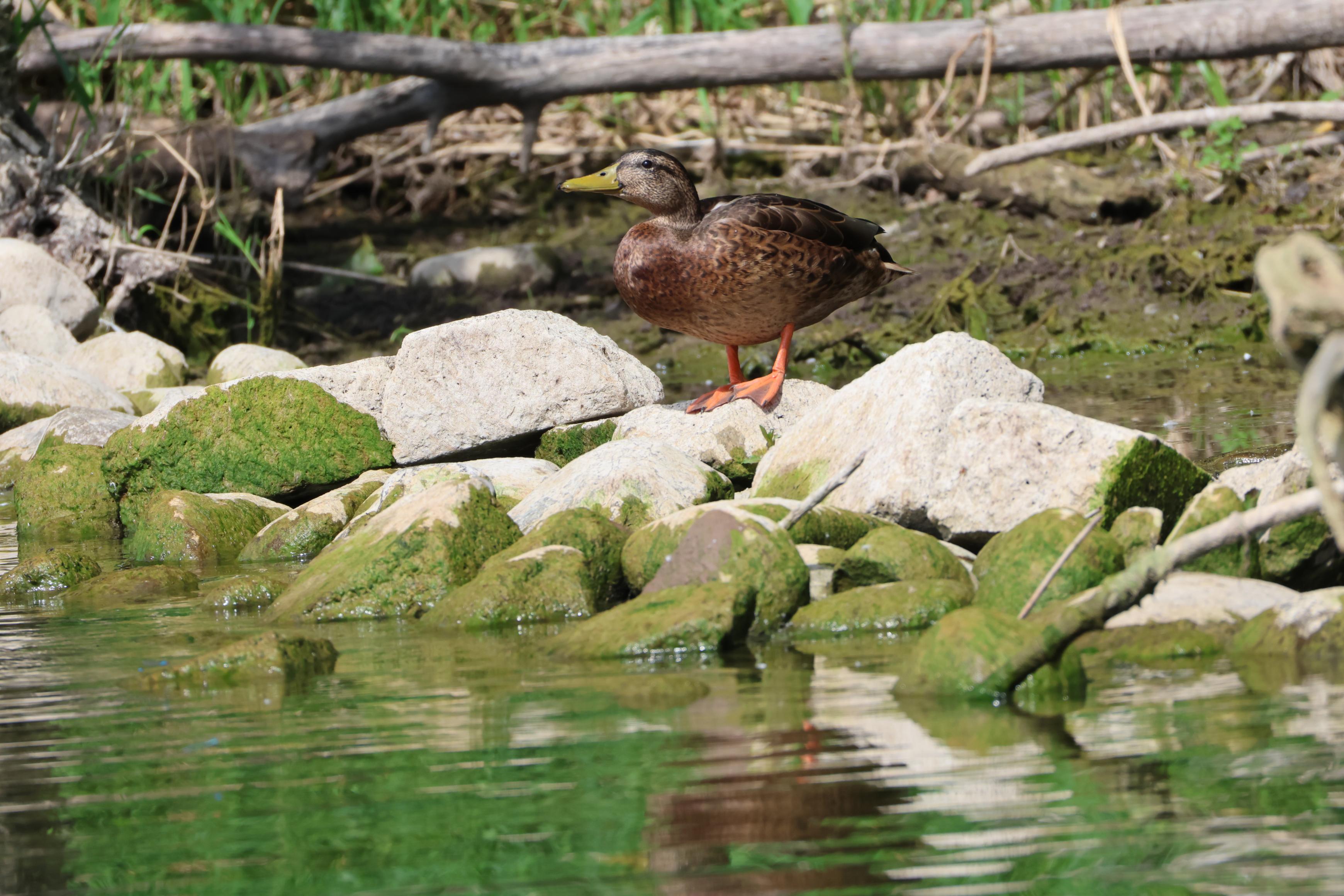
Stockente Weibchen. 2024-08-02 15:56:02 Greifensee
First observed in 🇨🇭 on 2020-05-20.
Description
Geography: This bird appears across the great seas in the following continents: Europe, North America, South America, Africa, Asia.General: Common waterbird at Pfäffikersee
General: Deutschland: Brut-, Jahres-, Zugvogel, Wintergast
Etymology:
 Der heutige Name kann als Hinweis auf ihre Brutplätze verstanden werden, zu denen auf Stock gesetzte Weiden, Weidengebüsch oder auch Reisighaufen gehören.
['Stock' wird weiter erklärt: Als Stockausschlag bezeichnet man bei Bäumen und Sträuchern Triebe, die nach dem Verlust der primären Sprossachse
neu aus dem Stumpf oder Stubben (der dann „Stock“ genannt wird) austreiben.] [Link]
The name 'was derived from the Old French malart or mallart for "wild drake"' [Link]
Dazu zählt der charakteristische Grunzpfiff der Männchen, der lautmalerisch mit „gerijib“ oder „fihb“ umschrieben wird. [Link]
Der heutige Name kann als Hinweis auf ihre Brutplätze verstanden werden, zu denen auf Stock gesetzte Weiden, Weidengebüsch oder auch Reisighaufen gehören.
['Stock' wird weiter erklärt: Als Stockausschlag bezeichnet man bei Bäumen und Sträuchern Triebe, die nach dem Verlust der primären Sprossachse
neu aus dem Stumpf oder Stubben (der dann „Stock“ genannt wird) austreiben.] [Link]
The name 'was derived from the Old French malart or mallart for "wild drake"' [Link]
Dazu zählt der charakteristische Grunzpfiff der Männchen, der lautmalerisch mit „gerijib“ oder „fihb“ umschrieben wird. [Link]
Vocalization:
 Female: A distinct coarse, laughing quacking; "haaa ha ha ha ha ha", with first note accented and then descending in pitch. Male: a more silent, very nasal "rriib". [Link]
Seasonal behavior
Year-round bird Breeding: 03-12 - 07-29 Migration in: 02-01 - 05-01 Migration out: 07-29 - 12-31 More details at Vogelwarte.ch
Other Details
Physical details
Physical details: length=50-65 cm, wingspan=81-98 cm, weight=750-1450 gHabitats: River and lake Details

Krickente Männchen, Klingnauerstausee. 2022-02-05 12:51:34 Klingnauer Stausee (man-made lake)
First observed in 🇨🇭 on 2021-01-26.
Description
Geography: This bird appears across the great seas in the following continents: Europe, North America, South America, Africa, Asia.General: Wintergast am Teich am Aa-Bach beim Südende des Pfäffikersee
General: Deutschland: Brut-, Jahres-, Zugvogel, Wintergast RL 3
Etymology:
Die hellen «krrik»-Rufe der stimmfreudigen Erpel verhalfen dieser Art zu ihrem deutschen Namen. [Link]
Vocalization:
Male: characteristic, short, highly resonant and metallic "plytt". A bit similar to Pintail, but higher pitched and lacking accompanying whistling sound. Female: various quacking sounds generally quicker paced, more nasal and noticeably higher pitched than Mallard. [Link]
Other Details
Physical details
Physical details: length=34-38 cm, wingspan=58-64 cm, weight=200-450 gHabitats: River and lake
Vocalisation
Song: No details but a Xeno-Canto recording. Song attributes: Frequency:♫ Source: XENOCANTO XC619133-Krickente von Peter Bosman, Belgium.mp3 (song)

Blup blup, fast wie vom Computer generiert, fur mich nohe Noten (obwohl Sonogram nur 2.5 KHz zeigt)
Call attributes: Call melody: simple rhythmic, slow, Frequency: low (1-3 KHz),
Details

Wikipedia: American wigeon Source: WIKIPEDIA
1200px-Anas_americana_-_drake.jpg
🔍
Never observed (yet!)
Description
Geography: This bird appears across the great seas in the following continents: Europe, North America, South America.General:
The American wigeon (Mareca americana), also known as the baldpate, is a species of dabbling duck found in North America. Formerly assigned to Anas, this species is classified with the other wigeons in the dabbling duck genus Mareca. It is the New World counterpart of the Eurasian wigeon. Mareca is from the Brazilian-Portuguese word Marréco for a small duck and americana refers to America.[2][3]
[more]
Details

The crowd hanging out at the one island by La Sauge - mute swans, a carrion crow, cormorants, yellow-legged gulls, and two Eurasian curlews at the left. 2025-04-21 14:04:37 Fanel/Chablais de Cudrefin und La Sauge
First observed in 🇨🇭 on 2021-02-12.
Description
Geography: This bird appears across the great seas in the following continents: Europe, North America, Africa.General: Common waterbird at Pfäffikersee, very common on Lake Zurich.
General: Deutschland: Brut-, Jahres-, Zugvogel, Wintergast
Etymology:
Ein Schwanenweibchen, das Junge führt, lässt bei Annäherung eines fliegenden Fressfeindes mehrsilbige ächzende Laute hören, die lautmalerisch mit krrr-wip-wip, chh oder einem tiefen chorr umschrieben werden können. [Link]
Vocalization:
Silent compared to other swans. A repertoire of snorting, grunting and hissing sound when interacting. No far carrying sounds. [Link]
Seasonal behavior
Year-round birdOther Details
Physical details
Physical details: length=145-160 cm, wingspan=208-238 cm, weight=7000-14000 gHabitats: River and lake Details
Great egret / Silberreiher (Ardea alba)

Silberreiher in Deutschland, von WikiCommons Von Andreas Eichler, CC BY-SA 4.0, https://commons.wikimedia.org/w/index.php?curid=59954907 Source: OTHER
Wikicommons 2016.10.30--Silberreiher.jpg
First observed in 🇨🇭 on 2021-02-24.
Description
Geography: This bird appears across the great seas in the following continents: Europe, North America, South America, Africa, Asia.General: Auf dem Heimweg von Schwanden haben wir bei Benken ganz weisse Reiher gesehen. Laut ornitho.ch waren sie Silberreiher.
General: Bei den meisten Quellen heisst es, sie sind in der Schweiz nur Durchzüger oder Wintergäste. Aber laut Balzari und Gygax, brüten auch einige Vögel am Lac Neuchatel seit 2013.
General: Deutschland: Zugvogel, Wintergast
Vocalization:
Silent outside breeding ground. [Link]
Seasonal behavior
Year-round bird Migration in: 03-01 - 05-31 Migration out: 08-09 - 11-15More details at Vogelwarte.ch
Other Details
Physical details
Physical details: length=85-102 cm, wingspan=140-170 cm, weight=960-1030 gHabitats: Wetland
Vocalisation
Calls:In colonies various harsh calls like a dry, and mechanical "kerrrrrrr", and a very nasal "geet" or "ga-geet ga-geet" are heard. [Link]
1:
Partly an awkward quack: uck uck. Rattles. Deep-toned urrr. Higher-toned trill.
2: No details but a Xeno-Canto recording.
XC751146 - Great Egret - Ardea alba - call and flight call - Shanghai, China.
♫ Source: XENOCANTO XC751146 - Great Egret - Ardea alba - call and flight call - Shanghai, China.mp3 (flight call)

Call attributes: Call melody: non-musical, slow, Frequency: low (1-3 KHz),
Details
Grey heron / Graureiher (Ardea cinerea)
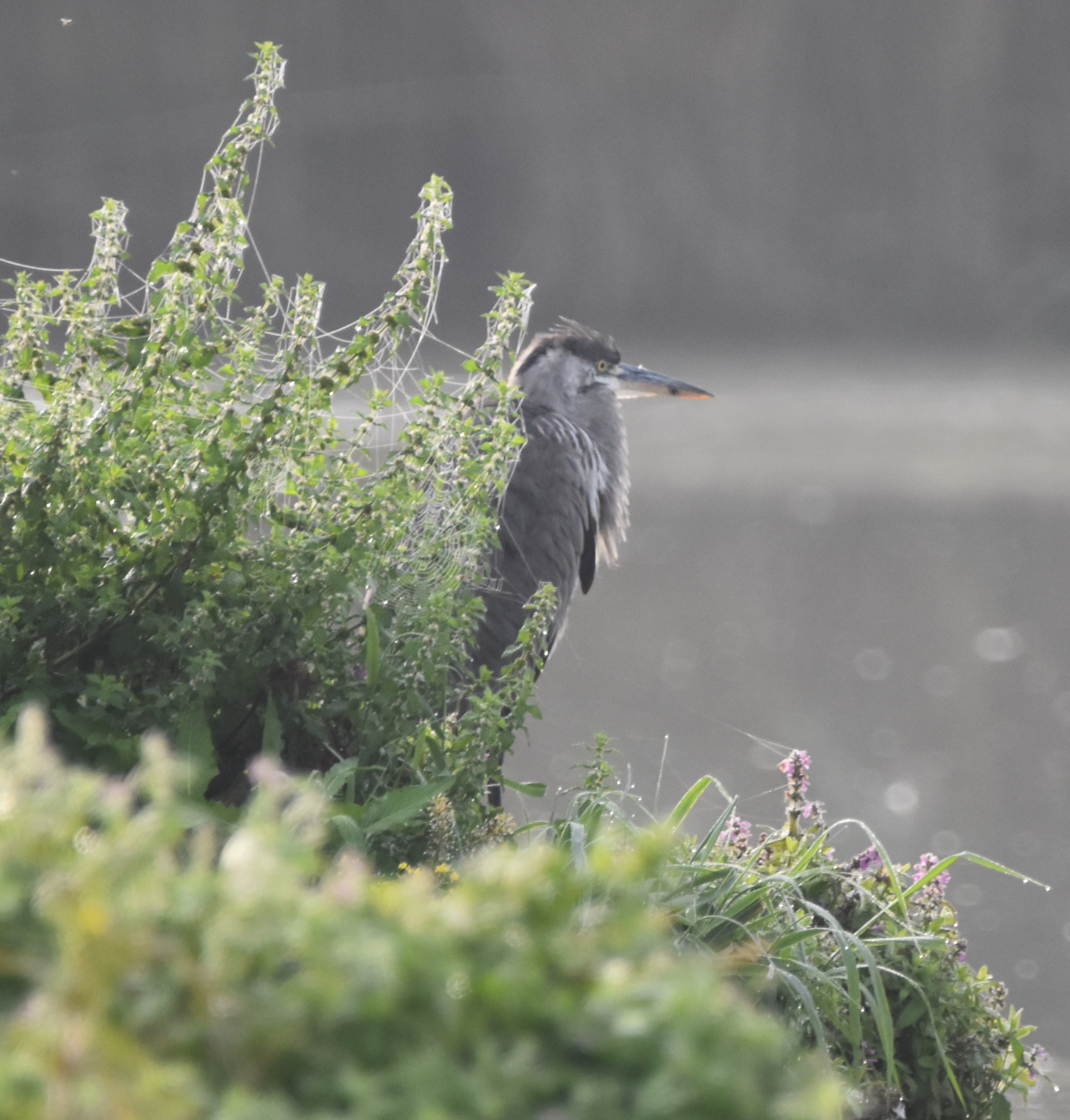
Graureiher auf der Insel, Neeracherried. 2022-09-04 08:03:50 Neeracherried
First observed in 🇨🇭 on 2019-11-22.
Description
General: Frequent visitor.General: Normally in the fields looking for food, also seen flying over or standing in the Luppmen (brook).
General: Deutschland: Brut-, Jahres-, Zugvogel, Wintergast
Vocalization:
Quite vocal. At breeding ground a varied repertoire of harsh and clattering sounds. [Link]
Seasonal behavior
Year-round bird Breeding: 02-01 - 08-29 Migration in: 02-01 - 04-11 Migration out: 07-10 - 10-27More details at Vogelwarte.ch
Other Details
Physical details
Physical details: length=90-98 cm, wingspan=175-195 cm, weight=1020-2073 gHabitats: Wetland
Vocalisation
Song: No details but a Xeno-Canto recording. Song attributes: Frequency:♫ 2024-11-01 08:26:54 Source: BIRDWEATHER 20241101_082654-Birdweather-Gray_Heron call.mp3 Greater Fehraltorf (call)
Calls:
Most common call a short, far reaching and extremely harsh, rasping sound. [Link]
General: Mechanical-sounding sort-of-a-quackCall:
Quite vocal. Most common call a short, far reaching and extremely harsh, rasping sound. At breeding ground a varied repertoire of harsh and clattering sounds. [Link]
XC876171 - Grey Heron - Ardea cinerea - call - Manyeleti Game Reserve, South Africa.
♫ Source: XENOCANTO XC876171 - Grey Heron - Ardea cinerea - call - Manyeleti Game Reserve, South Africa.mp3 (call)

Call attributes: Call melody: non-musical, slow, Frequency: low (1-3 KHz), Special sounds: rasp.
Details
Little egret / Seidenreiher (Egretta garzetta)
Profile Wikipedia Vogelwarte BirdLife ZH ornitho.ch Xeno-Canto BirdID NABU YouTube
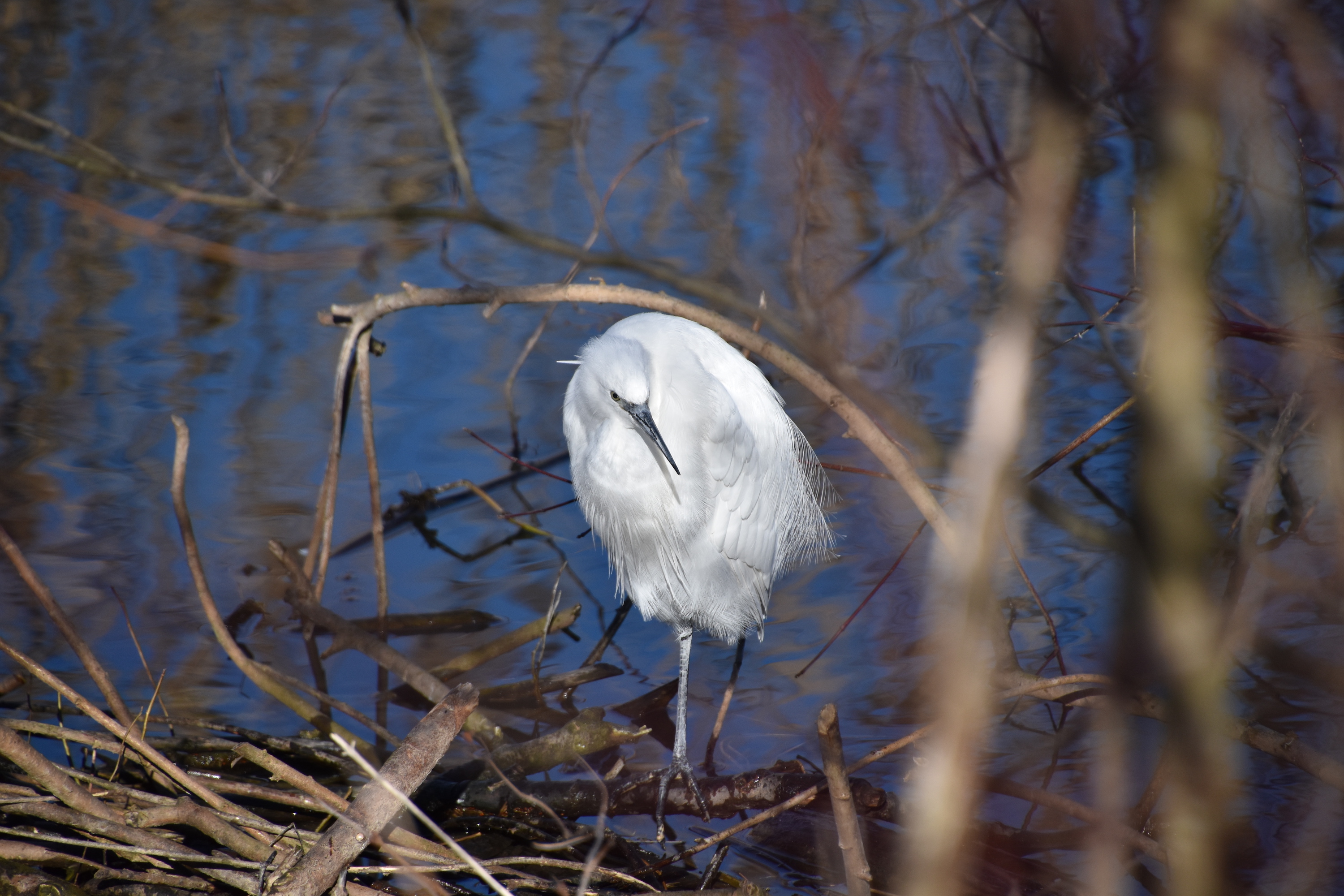
Seidenreiher. 2022-02-05 11:42:26 Klingnauer Stausee (man-made lake)
First observed in 🇨🇭 on 2019-11-22.
Description
Appearance and identification: The little egret has yellow feet but dark gray legs and beak
Vocalization:
Sometimes utters a dry, rasping "kerrr" when flushed, but is mostly silent away from breeding ground. In colonies a peculiar gurgling and vibrating sound is heard; "ghala-la-la-la". [Link]
Seasonal behavior
Year-round bird Migration in: 09-28 - 10-07 Migration out: 09-28 - 10-05More details at Vogelwarte.ch
Other Details
Physical details
Physical details: length=55-65 cm, wingspan=88-95 cm, weight=350-550 gHabitats: Wetland
Vocalisation
Song: No details but a Xeno-Canto recording. Song attributes: Frequency:♫ Source: XENOCANTO XC799679 - Little Egret - Egretta garzetta - call that sounds like its vomiting - Catalunya, Spain.mp3 Spain (call)

Sort of a quack, brighter and higher than grey heron, with a bit of wawa.
Call attributes: Call melody: non-musical, slow, Frequency: low (1-3 KHz),
Details

Teichrohrsänger. 2024-05-20 08:58:41 Klingnauer Stausee (man-made lake)
First observed in 🇨🇭 on 2020-04-27.
Description
General: 2-5 repetitions of each sound. Is the tone a bit lower than the other reed warblers?General: Deutschland: Brut-, Zugvogel
Seasonal behavior
Presence: 04-11 - 10-18 Breeding: 05-10 - 08-18 Migration in: 04-11 - 05-31 Migration out: 07-29 - 10-18More details at Vogelwarte.ch
Other Details
Physical details
Physical details: length=13 cm, wingspan=17-21 cm, weight=10-16 gHabitats: Wetland
Vocalisation
Song: Weird, squeaky, urgent. Slower than Sumpfrohrsaenger. Song: Gleichmässiges Tempo! Man kann den Takt schlagen dazu.(Metronomsänger) Oft 2-3x wiederholte kurze Motive. Viele schnarrende Töne.
[Link]
By far easiest to identify by song: Characteristic, almost metric and even rhythm, very different from Sedge Warbler. Squeaky timbre with many, almost bizarre, harmonics. Phrases generally repeated 2-3 times. [Link]
Song attributes:
Melody: sings 30 seconds or longer, fast, Frequency: medium (1-5 KHz) Special sounds: weird
Gleichmässiges Tempo! Man kann den Takt schlagen dazu.(Metronomsänger) Oft 2-3x wiederholte kurze Motive. Viele schnarrende Töne.
[Link]
By far easiest to identify by song: Characteristic, almost metric and even rhythm, very different from Sedge Warbler. Squeaky timbre with many, almost bizarre, harmonics. Phrases generally repeated 2-3 times. [Link]
Song attributes:
Melody: sings 30 seconds or longer, fast, Frequency: medium (1-5 KHz) Special sounds: weird
♫ Source: XENOCANTO XC653035 - Eurasian Reed Warbler - Acrocephalus scirpaceus - song.mp3 (song)

Details
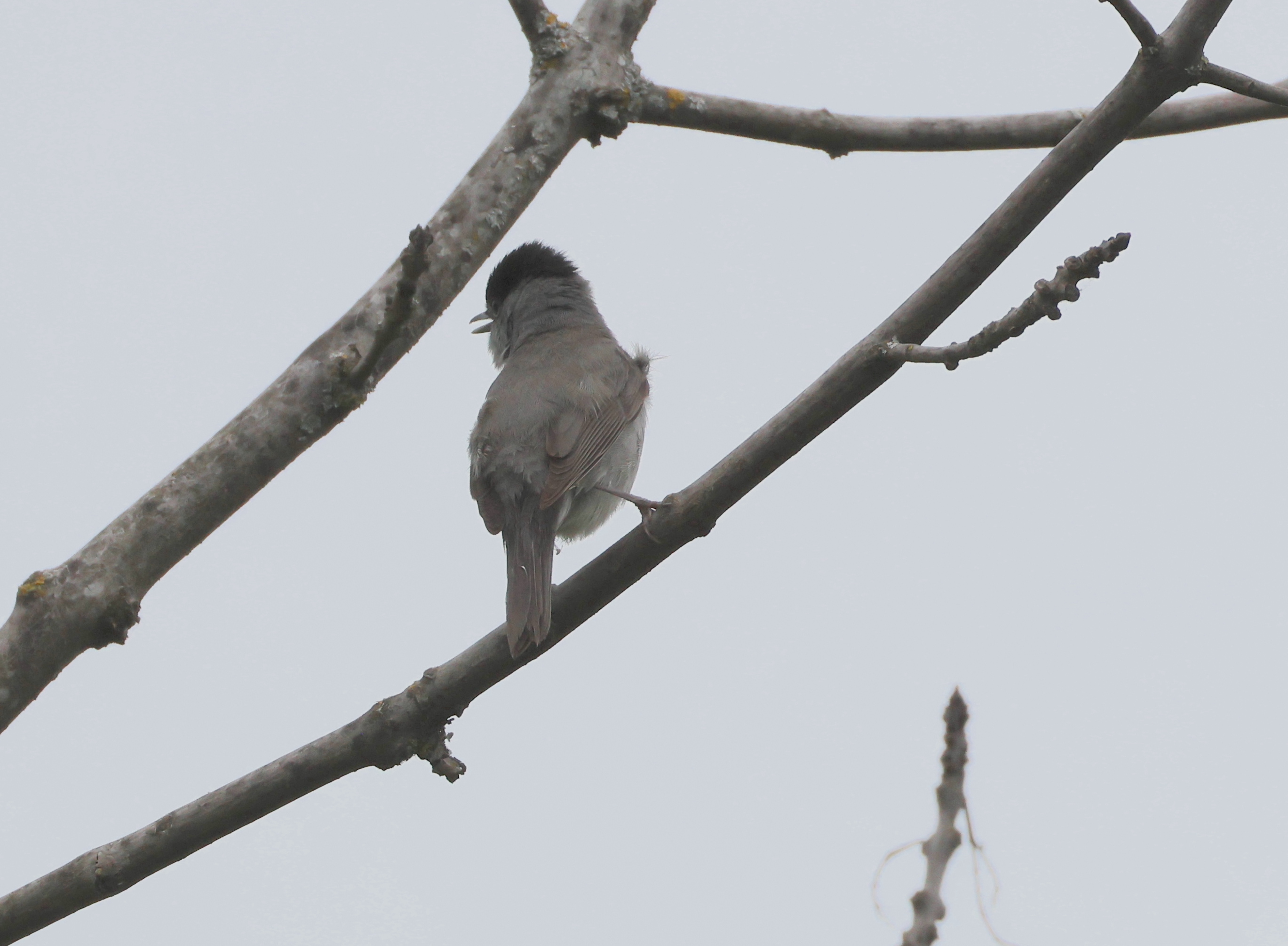
Mönchsgrasmücke. 2024-05-16 12:18:58 Kaltbrunner-Riet
First observed in 🇨🇭 on 2019-08-30.
Description
General: On a tree branch, but not usually on the treetop.General: Deutschland: Brut-, Zugvogel
Etymology:
Grayish bird with black cap (or brown in the case of females), for which reason the German
name refers to them as monks. [Link]
Seasonal behavior
Year-round bird Breeding: 04-20 - 08-09 Migration in: 02-20 - 05-10 Migration out: 08-18 - 10-27More details at Vogelwarte.ch
Other Details
Physical details
Physical details: length=13 cm, wingspan=20-23 cm, weight=16-25 gHabitats: Forest, Agricultural
Vocalisation
Song: They sometimes sing like a blackbird on speed - also non-stereotypic, seemingly improvised, in short bursts. Our local guy ends most of his songs with the same seven notes, which I find a good way to confirm the identification. In Ticino we often heard the 'Leiern' sound - the warblers would sing just the first 3 notes of a longer song, then stop. The order varied; high-medium-low I call 'Figaro' as in the opera, low-high-medium 'whiskey bar', as it sounded to me like the Kurt Weill lyrics, 'O-oh-show me-the-way to-the-next whis-ke-bar' - but the warbler usually stopped after 'way' or 'next' The British authors of The Sound Approach claim to hear 'a warblel and a whistle'. Song:Mit schwätzendem Vorgesang, (kann auch kurz sein oder ganz fehlen) der dann in klare, kräftige, zum Ende hin in wehmütige Flötentöne übergeht (Überschlag)
[Link]
Song pleasing, varied and loud. Sometimes very similar to Garden Warbler. A typical phrase starts with soft, staccato chattering and mimicry, which after a few seconds changes to a much louder, pure and resonant stream of notes for about 3-5 seconds. No fixed motif, but may end phrases with recurring notes. Often deviates from the characteristic type of song, and identification from song alone may be impossible. May sing first part of song for extended periods without ever reaching the characteristic ending. [Link]
Song attributes:
Melody: improvised melodic (hml), fast, Frequency: 2-5 KHz Special sounds: mimicry Singing season: 03-01 - 07-31 Dawn chorus start: 45 minutes before dawn.
♫ 2021-03-31 19:12:00 Source: BirdNet 20210331_191200 birdnet 1356 - Eurasian Blackcap hml - 2021-03-31 19:12:00 - Eurasian Blackcap - Lugano.mp3 Lugano (song)
♫ 2023-06-20 07:52:22
 Source: Zoom H6/H2n Bolle di Magadino (song)
♫ 2024-05-15 05:27:28
Source: Zoom H6/H2n Luppmen (song)Calls:
„täck“ oft wiederholt
[Link]
Alarm call a hard "check", similar to Lesser White-throat. Sometimes with an additional hoarse and nasal "cherrrr". [Link]
1:
General: Sputtery/stoney, but may have other calls too.Call:
 The Blackcap may generate a perplexing variety of territorial calls, though the typical contact call is a hard, tongue-clicking "teck teck" which has a scolding quality to it. It's not dissimilar to the 'pebble-clacking' call of the Stonechat. [Suffex Wildlife Trust]
XC546030 black cap warbler so-called tac and djii call.
♫ Source: XENOCANTO XC546030 black cap warbler so-called tac and djii call.mp3 (call)

2: No details but a Xeno-Canto recording.
XC548858-20200411 Eurasian Blackcap, alarm call part of advertising song, male, Flughafen Belpmoos, Bern, Switzerland.
♫ Source: XENOCANTO XC548858-20200411 Eurasian Blackcap, alarm call part of advertising song, male, Flughafen Belpmoos, Bern, Switzerland.mp3 Switzerland (alarm call)

Call attributes: Call melody: one note, slow, Frequency: high (3-9 KHz), Special sounds: sputter/pebble-clatter.
Details

Wikipedia: Spectacled warbler Source: WIKIPEDIA
Sylvia_conspicillata_Gran_Canaria.jpg
🔍
Never observed (yet!)
Description
General:The spectacled warbler (Curruca conspicillata) is a species in the typical warbler genus, Curruca. The specific conspicillata is from Latin conspicillum, a place to look from, equivalent to "spectacled".[2]
[more]
Details
Profile Wikipedia Vogelwarte BirdLife ZH ornitho.ch bird-song.ch Xeno-Canto BirdID NABU YouTube

Wintergoldhähnchen im Hönggerwald. 2024-04-14 08:24:44
First observed in 🇨🇭 on 2020-07-13.
Description
I'd often heard the high-pitched song and call in the woods by Fehraltorf but had doubts I'd ever see one (they're the smallest bird in Switzerland, fairly shy, and I seemed to only hear them in very tall trees). I didn't see one until hiking at the Pragelpass. And finally in October 2020, I saw them near Rumlikon and at the Pfaeffikersee, where I took the new profile picture. In December I saw five of them cruise through the bushes beside our house, hopping from branch to branch, snapping up insects - something I'd never have believe in spring 2020.General: Said to be the smallest bird in Switzerland, but it's basically the same size as the Firecrest.
General: Deutschland: Brut-, Jahres-, Zugvogel, Wintergast
Seasonal behavior
Year-round bird Breeding: 04-01 - 08-18 Migration in: 03-01 - 05-01 Migration out: 08-18 - 11-06More details at Vogelwarte.ch
Other Details
Physical details
Physical details: length=9 cm, wingspan=13-15 cm, weight=4-7 gHabitats: Forest
Vocalisation
Song:Vogelwarte.ch says high-pitched song that gently rises and falls. This song starts out with a repeated note. [Link]
Song: Kurze Reihe von sehr hohen, leisen Tönen in auf-absteigender Tonhöhe, an das „W“-im Namen erinnernd. [Link]
Song: a very high-pitched, undulating series of arpeggiated notes moving down and up again, repeated 4-5 times ending with a marked "conclusion" (like "trying to start a tiny motor and failing"). Timbre of song similar to contact call. [Link]
Song attributes:
Mnemnoic: W=Winter=v.a. runter, dann wieder hoch, plus melodischer Schluss Melody: stereotype melodic, slow, Frequency: 6-8 KHz
Calls:
'sisisi' [Link]
Contact call a very high pitched "zit zit zit", only similar to Firecrest and treecreepers. Treecreepers usually calls with longer "zzzziiiiit" repeated at regular intervals, while Goldcrest calls in phrases with two to four calls in series in an uneven rhythm. Firecrest contact calls lower pitched than Goldcrest, and in a softer tone (but quite similar). [Link]
No details but a Xeno-Canto recording.
- but really
OWN
Wintergoldhähnchen whoop Ruf im Biotop.
♫ 2024-09-12 16:40:00 Greater Fehraltorf (call)
Call attributes: song Frequency: ,
Details

Wikipedia: Madeira firecrest Source: WIKIPEDIA
1200px-Madeira_firecrest.jpg
First observed in Madeira on 2023-03-11.
Description
General:The Madeira firecrest, Madeira kinglet, or Madeiracrest (Regulus madeirensis) is a very small passerine bird endemic to the island of Madeira. It is a member of the kinglet family. Before it was recognised as a separate species in 2003, it was classified as a subspecies of the common firecrest. It differs in appearance and vocalisations from its relative, and genetic analysis has confirmed it as a different species. The Madeiran bird has green upperparts, whitish underparts and two white wingbars, and a distinctive head pattern with a black eye stripe, short white supercilium, and a crest that is mainly orange in the male and yellow in the female.
[more]
Details
Profile Wikipedia A-Z Animals Vogelwarte BirdLife ZH ornitho.ch bird-song.ch Audubon AllAboutBirds Xeno-Canto BirdID NABU YouTube
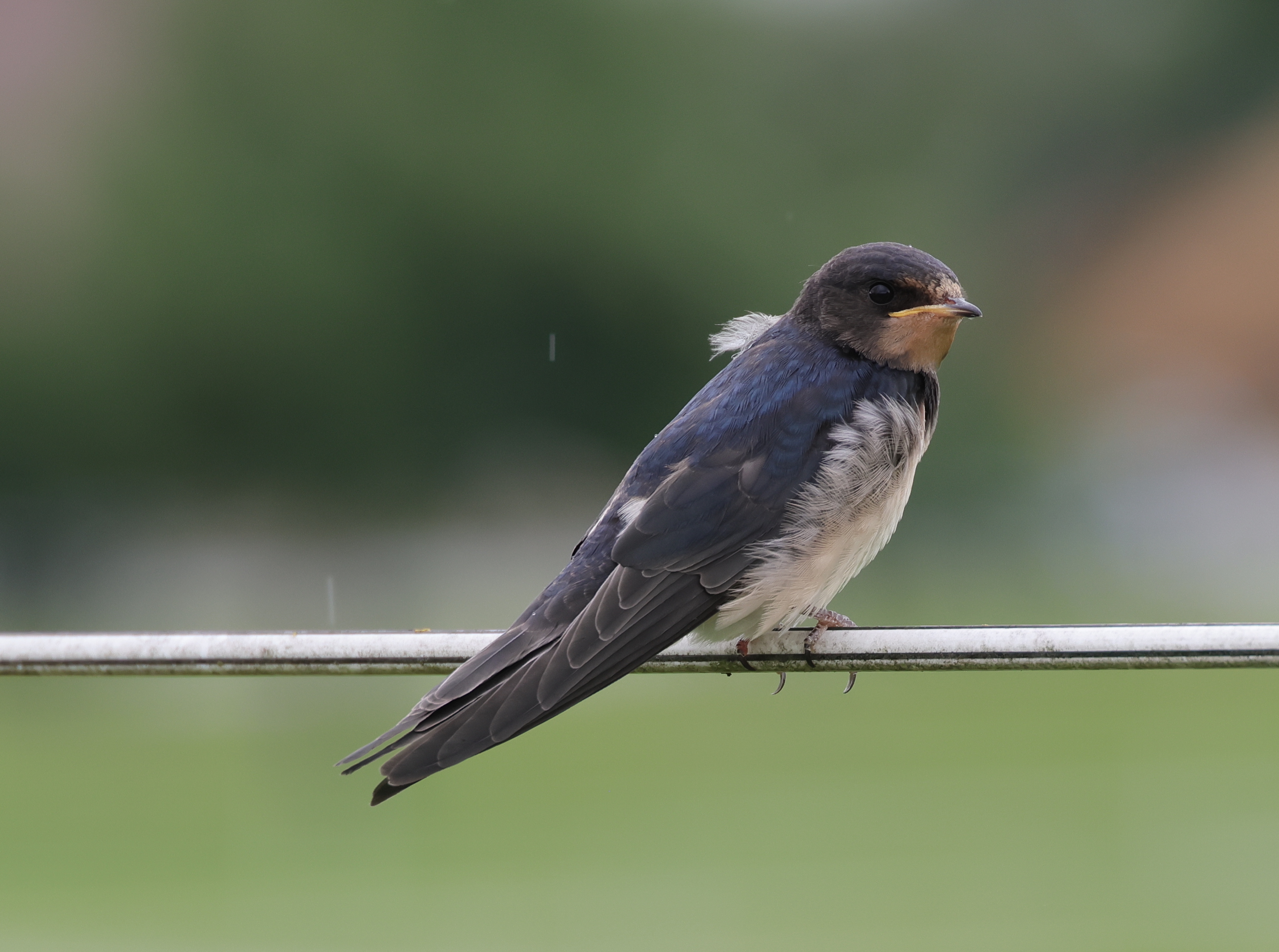
Rauchschwalbe braucht eine Coiffeuse. 2025-08-03 16:54:17 Fehraltorf
First observed in 🇨🇭 on 2020-04-16.
Description
Geography: This bird appears across the great seas in the following continents: Europe, North America, South America, Africa, Asia.General: Deutschland: Brut-, Zugvogel RL V
Good to know: Die langen Schwanzfedern vom Rauchschwalbe und anderen geben auch dem Schmetterling Schwalbenschwanz seine deutschen Namen.
Etymology:
In früheren Jahrhunderten flogen sie vielfach durch die Öffnungen im Giebel ein und aus, durch die auch der Rauch des Herdfeuers abzog. So erhielten sie den Namen Rauchschwalben. [Link]
Appearance and identification:
 Rauchschwalbes Bauch ist etwas braun rot, nicht weiss wie der von der Mehlschwalbe - was wahrscheinlich Quelle der zwei Namen ist. [Link]
Seasonal behavior
Presence: 03-01 - 10-27 Breeding: 04-20 - 09-17 Migration in: 03-01 - 05-31 Migration out: 08-18 - 10-27More details at Vogelwarte.ch
Other Details
Physical details
Physical details: length=17-19 cm, wingspan=32-34 cm, weight=16-22 gHabitats: Settlement
Similar species
Looks similar to: Common house martin.Vocalisation
Song: General: Squeaky with occasional buzzes, usually heard in flock.Song:
Kann melodisch sein wenn einzeln gehört statt viele zusammen. [Link]
Song: Characteristic calls and song. Song a sparkling, squeaky energetic improvisation with interspersed contact calls, often with diagnostic ending; an electric and drawn-out "su-eerrrrrrrrrrrrrrr". [Link]
Song attributes:
Melody: stereotype melodic, fast, Frequency: 2-6 KHz
Calls:
Contact call a short and sharp "weet" or "kee-weet". [Link]
XC898815 - Barn Swallow - Hirundo rustica - flight call.
♫ Source: XENOCANTO XC898815 - Barn Swallow - Hirundo rustica - flight call.mp3 (flight call)

Call attributes: flight call Call melody: one note, slow, Frequency: medium (1-5 KHz),
Details

MerlinBirdID meint Mehlschwalbe. 2022-05-21 10:11:56 Leuk
First observed in 🇨🇭 on 2020-08-10.
Description
General: This one is a swallow in German but a martin in English.General: Deutschland: Brut-, Zugvogel RL V
Etymology:
Der Kontaktlaut ist ein hartes trieer, gelegentlich lautmalerisch auch als chirrp umschrieben. [Link]
Seasonal behavior
Presence: 03-23 - 10-27 Breeding: 05-21 - 09-28 Migration in: 03-23 - 06-09 Migration out: 08-18 - 10-27More details at Vogelwarte.ch
Other Details
Physical details
Physical details: length=12 cm, wingspan=26-29 cm, weight=15-23 gHabitats: Settlement
Similar species
Looks similar to: Barn swallow.Vocalisation
Song: Song:Mehlschwalbe klingt weniger melodisch als der Rauchschwalbe [Link]Merry improv of chirping, contact call [Link]
Song: Song a merry improvisation of chirping, contact call-like sounds (sometimes recalling a budgerigar). [Link]
Song attributes:
Melody: stereotype melodic, fast, Frequency: 2-7 KHz
♫ Source: XENOCANTO XC730813 - Common House Martin - Delichon urbicum - song and call according to recordist Fernando Aranguren Jiménez, recorded in Spain.mp3 Spain (song)

Calls:
Contact call a rolling "krreet". Similar to Sand Martin but noticeably dryer, more rolling and less raucous. Typically varies the pitch of the call more. Warning call a sharp and plaintive "tsreee". [Link]
1:
Heard from in the air, loud, with lots of chirps!
2:
XC742347 - Common House Martin - Delichon urbicum - flight call, recorded in Spain.
♫ Source: XENOCANTO XC742347 - Common House Martin - Delichon urbicum - flight call, recorded in Spain.mp3 Spain (flight call)
 Birdnet 864 flight call - Common house martin.
♫ 2020-08-10 14:45:28 Source: BirdNet 20200810_144528 birdnet 864 flight call - Common house martin.mp3 Luppmen (flight call)
Call attributes: Call melody: simple rhythmic, fast, Frequency: 4-7 KHz,
Details
Profile Wikipedia Xeno-Canto BirdID NABU YouTube

Steinsperling, Ponta de Sao Lourenco, Madeira. 2023-03-10 15:29:04 Madeira
First observed in Madeira on 2023-03-10.
Description
General:Der Steinsperling (Petronia petronia) ist eine Vogelart aus der Familie der Sperlinge. Er kommt im Süden Eurasiens sowie im Norden Afrikas vor.
[more]
Other Details
Physical details
Physical details: length=14 cm, wingspan=28-32 cm, weight=26-35 gDetails
Profile Wikipedia Vogelwarte BirdLife ZH ornitho.ch bird-song.ch Xeno-Canto BirdID NABU YouTube

Buchfink, sieht für mich gut ernährt aus! 2025-01-04 15:58:56 Greater Fehraltorf
First observed in 🇨🇭 on 2019-06-04.
Description
Heard everywhere locally but less often seen. In winter 2020-2021 it often accompanied tits to our feeder (2021-2022 less often). While they grabbed sunflower seeds, the chaffinch would hunt for food on the ground or in bushes.General: On Dec 8 2021, was surprised to see flocks of collared doves, chaffinches and a few sparrows in a harvested corn field as it was snowing. I wasn't aware that chaffinches formed flocks, but the Merlin BirdID app told me 'forms flocks in winter'.
General: I've caught it on stubby branches of an evergreen, in a lone tree in a farmyard, and in Brittany even on a lightpost. And I seem to see one every time I go to Zurich, so they're happy in an urban setting.
General: Deutschland: Brut-, Jahres-, Zugvogel, Wintergast
Etymology:
Als Kontakt- und Alarmruf dient «pink», von dem wahrscheinlich die deutsche Bezeichnung «Fink» herkommt. [Von BirdLifes Schweizer 'bird song' Website]
Anderen Quellen zufolge wird dieser Ruf nur als „Regenruf“ bezeichnet, weil er lautmalerisch als „trief“ gedeutet wird. [Link]
Appearance and identification:
 Interesting tidbit: the chaffinch is one bird
that can change colors without molting. Its new feathers in autumn are grayish, but by late spring
the edges of the feathers have worn away, revealing the chaffinch's brightest colors of the year. [Lovette and Fitzpatrick's Handbook of Bird Biology]
Interesting tidbit: the chaffinch is one bird
that can change colors without molting. Its new feathers in autumn are grayish, but by late spring
the edges of the feathers have worn away, revealing the chaffinch's brightest colors of the year. [Lovette and Fitzpatrick's Handbook of Bird Biology]
Seasonal behavior
Year-round bird Breeding: 04-01 - 07-31 Migration in: 02-20 - 04-15 Migration out: 09-10 - 11-15More details at Vogelwarte.ch
Other Details
Physical details
Physical details: length=14 cm, wingspan=24-28 cm, weight=18-29 gHabitats: Forest Social groups can include up to 10 members.
Vocalisation
Song: General: A medium long phrase that slowly descends (I think of it bouncing down a staircase), then usually takes a jump up before a final descent.Song:
In Bavaria the mnemonic for the typical chaffinch song is: „Ich hätte gerne ein Weizenbier“,
i.e. "I'd like another Weizenbier". [DasHaus]
Song: Song a falling 5 sec. phrase "zitt-zitt-chep-chepp-chu-chu-churrurrwitt". Structurally similar to Willow Warbler, but with a conclusive, ascending and accented ending, and with a much harder, finch-like, timbre. [Link]
Song attributes:
Melody: stereotype melodic (mmmmmmmmLlhH), slow, Frequency: medium (1-5 KHz) Singing season: 02-01 - 07-31 Dawn chorus start: 10 minutes before dawn.
♫ 2024-04-30 12:55:00 Fehraltorf (song)
♫ 2024-06-25 08:29:58
Source: Zoom H6/H2n Mettmenalp, GL (call)
♫ 2021-04-19 14:29:22 Source: BirdNet 20210419_142922 birdnet 1449 - Common Chaffinch but who is the hhll behind him - Common Chaffinch - Fehraltorf.mp3 Fehraltorf (song)
1: General: Repeated ascending note, faster than the long starling whoops, about 2/seconds - compare with the black redstart. There are many different calls, the Marler book describes the 'chink' call as functioning as a mobbing and separation call. At XenoCanto I find calls described as "ping", "pik" (same thing?), "pchew", "duit", "huit", "ti-huit".
Call:
Der sogenannte Regenruf der Männchen, „schrrüt“, der selbst in benachbarten Ortsteilen deutlich variieren kann, erklingt nur während der Brutzeit. Als Regenruf wird er bezeichnet, weil er kurz vor oder sogar während des Regens zu hören ist, wenn die anderen Vögel verstummen. [DasHaus]
Rain call from XenoCanto
♫ Recorded by Paul Driver in Mundford, Norfolk, UK Source: XENOCANTO XC71019 common chaffinch rain call.mp3 (rain call)

2: Call:
Als Alarmsignal dient ein mehrsilbiges „pink“. [DasHaus]
Ping call from XenoCanto
♫ Source: XENOCANTO XC460303 common chaffinch ping call.mp3 (alarm call)

Call attributes: rain call Call melody: one note, slow, Frequency: 3-5 KHz, Special sounds: whoop.
Details

Kanarengirlitz, Ponta de Sao Laurenco. 2023-03-10 15:20:00 Madeira
First observed in La Palma on 2022-03-08.
Description
Geography: This bird appears across the great seas in the following continents: Europe, North America, Africa.General: It's unusual that the name of a bird refers to dogs. Wikipedia writes: The name Islas Canarias is likely derived from the Latin name Canariae Insulae, meaning "Islands of the Dogs", a name that was evidently generalized from the ancient name of one of these islands, Canaria – presumably Gran Canaria. According to the historian Pliny the Elder, the island Canaria contained "vast multitudes of dogs of very large size".
General: The common canary kept as a pet is subspecies Serinus canaria forma domestica.
Vocalisation
Song: No details but a Xeno-Canto recording. Song attributes: Frequency:♫ 2023-03-11 11:58:22
Source: Zoom H6/H2n Madeira (song)Details

Stieglitz. 2024-05-16 10:55:11 Kaltbrunner-Riet
First observed in 🇨🇭 on 2019-09-22.
Description
General: One of the more colorful birds in our area, but fairly shy and skittish, so you don't see them much. Supposedly a bit smaller than a sparrow or a great tit, but to me they look bigger and heavier?General: Well hidden in the tree branches; at thistles or sunflowers.
General: Deutschland: Brut-, Jahres-, Zugvogel, Wintergast
Etymology: Name stammt angeblich vom Gesang: ein steigernder sti-ge-litt. Google AI sagt 'der Name "Stieglitz" stammt aus dem Slawischer (z.B. Polnisch szczvaieł, Tschechisch stehlik).'
Etymology: Google AI sagt, Distelfink 'bezeichnet einen Vogel, der sich von Distelsamen ernährt. ...was auch den lateinischen Namen Cardülis (von Carduus, Distel) begründet
Etymology:
Das slawische Wort stellt wohl ursprünglich eine lautmalerische Wiedergabe des Lockrufes des Vogels dar. [Link]
Seasonal behavior
Year-round bird Breeding: 04-20 - 09-07 Migration in: 03-12 - 05-10 Migration out: 08-29 - 11-15More details at Vogelwarte.ch
Other Details
Physical details
Physical details: length=12 cm, wingspan=21-25 cm, weight=14-19 gHabitats: Settlement
Vocalisation
Song: General: Hectic sing-song, quite chaotic in feeding groups. But kept as songbird, so I guess more melodic when singing solo. A bit like a black cap warbler (Mönchsgrasmücke).Gesang hat eine Struktur (und ist langsamer als der Girlitz): Zuerst eine kleine Melodie hoch und runter; dann vielleicht ein Grünfink-Triller, dann 4 wiederholte Noten oder ein neues Melodiechen. (Oder kommen diese Elemente eher zufällig?)
Song:
Melodie geht meistens 2-3 Sekunden hoch und runter, meistens mit einer wiederholten 1-Noter mit ~6x die gleiche Note. [Link]
Song: My first (multilingual) notes: Stieglitz like Grünfink, fast, high, occasional trills. Occasionally ends a bit with falling note like buchfink
Song: Mir wurde erst in St. Moritz in Juli 2021 bewusst wie ähnlich der Stieglitz wie ein Grünfink klingt - beide können lange Gesang mit Trillern und rauhen sinkenden Toenen singen, und ich habe Stieglitz v.a. durch dieses Stöhnen für Grünfink gehalten.
Song:
Contact-call distinct, and also constitutes a major part of the song. A sharp and explosive "witt", or "tzee-witt". Sometimes given as a single syllable, di- or trisyllabic, or as continuous series. The song is comprised of rapid series of the contact call, interrupted by drawn-out melodic notes and trills. [Link]
Song attributes:
Melody: stereotype melodic (Llmh), fast, Frequency: 2-7 KHz Special sounds: rattle, fluting Singing season: year round Only pauses singing while molting and thus endangered. Dawn chorus start: 20 minutes before dawn.
♫ Source: XENOCANTO XC638230 - European Goldfinch - Carduelis carduelis.mp3 (song)

Calls:
Other calls: A harsh budgerigar or house martin-like "trrrtt-trrrrt". [Link]
Wild melody (remember these birds are also kept as songbirds in cages.
the German name Stieglitz imitates its call (sti-ge-lit) - though I don't hear that! [Link]
Xeno-Canto recording
♫ Adult call recorded in the UK. Source: XENOCANTO XC468566 European Goldfinch call in UK.mp3 (call)
 Xeno-Canto recording
♫ Record in Lège-Cap-Ferret, France byStanislas Wroza and described by him as a 'tik' call and a flight call. Source: XENOCANTO XC526383 European Goldfinch flight call.mp3 (flight call)
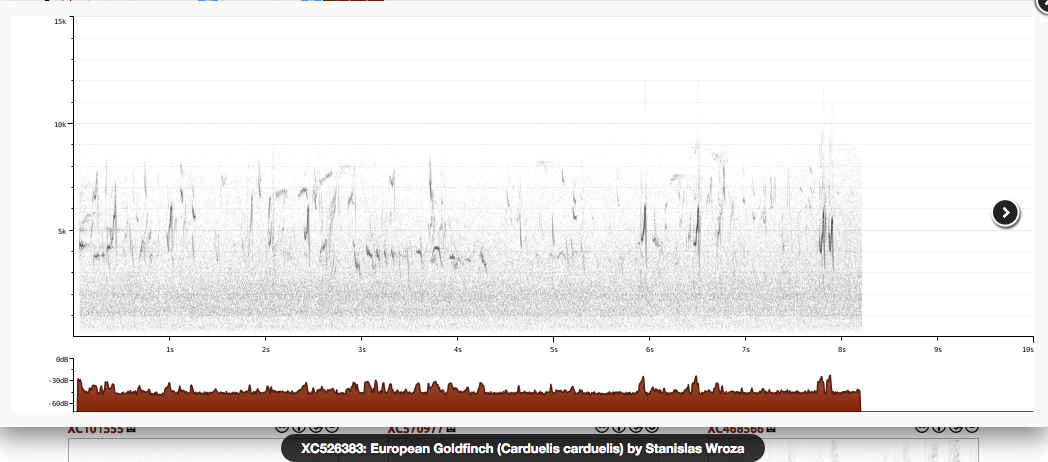
Call attributes: Call melody: stereotype melodic, fast, Frequency: 2-8 KHz,
Details
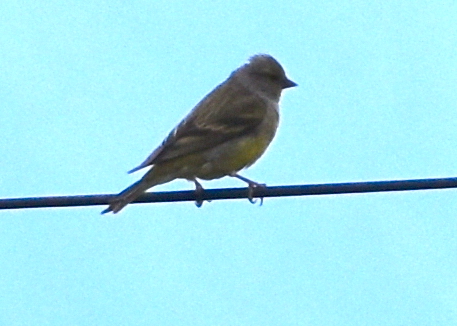
Erlenzeisig beim Ortstockhaus nahe Braunwald. 2022-07-15 11:38:28 Gumen
First observed in 🇨🇭 on 2021-02-12.
Description
General: Also lives in North America!General: Deutschland: Brut-, Jahres-, Zugvogel, Wintergast
Etymology:
[A siskin giving the 'siskin' calls from which its name derives, The name siskin is derived from an adaptation of the German dialect words sisschen, zeischen, which are diminutive forms of Middle High German (zîsec) and Middle Low German (ziseke, sisek) words, with cognates in Slavic languages, such as Czech čížek; these names are all of onomatopoeic origin, derived from the bird's calls. [Link]
[This bird has two calls, both powerful but conflicting, one is descending and the other is ascending, their onomatopoeic sounds can be represented as "tilu" and "tluih". [Link]
Appearance and identification: Gelb aber schwarz/weiss auf dem Kopf, bauch/flügel wie weiss mit schwarzen Streifen, mehr braun bei weibchen?
Seasonal behavior
Year-round bird Breeding: 02-20 - 07-20 Migration in: 02-20 - 05-01 Migration out: 09-07 - 12-07More details at Vogelwarte.ch
Other Details
Physical details
Physical details: length=12 cm, wingspan=20-23 cm, weight=11-18 gHabitats: Mountain
Vocalisation
Song:bird-song.ch sagt Gesang zwitschernd und trillernd und ähnlich wie Girlitz - ich finde auch, es hat das hohe chaotische von den mit ab und zu was rohem. [Link]
Song: Distinct calls and song. The contact call is also prominent in the improvised song. Other typical sounds in the song includes a peculiar wheeze, like someone sucking their teeth, and lots of expert mimicry. [Link]
Song attributes:
Melody: sings 30 seconds or longer, fast, Frequency: high (3-9 KHz) Special sounds: mimicry
♫ Source: XENOCANTO XC714393 - Eurasian Siskin - Spinus spinus.mp3 (song)

Calls:
Most often heard is the sharp and disyllabic contact call: "doo-lee", with both notes descending. Sometimes given a in monosyllabic manner "dlyy". [Link]
No details but a Xeno-Canto recording.
XC941264 - Eurasian Siskin - Spinus spinus - 2-note swooping call.
♫ Source: XENOCANTO XC941264 - Eurasian Siskin - Spinus spinus - 2-note swooping call.mp3 (call)

Call attributes: song Frequency: ,
Details

Grünfink im Profil vom Esstisch aus fotografiert in Fehraltorf. 2023-01-16 10:54:12 Fehraltorf
First observed in 🇨🇭 on 2019-08-01.
Description
General: Vogelewarte.ch: Neben Haussperling und Amsel ist er einer der zahlreichsten Vögel der Städte und Dörfer. Ich habe Monate lang nur eins in Pfäffikon gehört, dann ein Schwarm im Fehraltorfer Industriegebiet. Endlich in Juli 2020 ist eine Gruppe zu uns gezogen und entweder im Birkenbaum oder hinter der Kinderkrippe zu hören gewesen. Im Birkenbaum habe ich endlich eins fotografieren können.General: In Laubbäumen
General: Deutschland: Brut-, Jahres-, Zugvogel, Wintergast
Seasonal behavior
Year-round bird Breeding: 04-01 - 08-09 Migration in: 02-20 - 04-20 Migration out: 09-28 - 11-15More details at Vogelwarte.ch
Other Details
Physical details
Physical details: length=15 cm, wingspan=24-27 cm, weight=17-34 gHabitats: Settlement
Similar species
Song or calls similar to: Tree pipit.Vocalisation
Song: General: Sequence of 4-6 rhythmic elements at different pitches. A sort of trill is often start or end of the sequence (can also be a call!), and there are slides. Song:Song composed of various sequences of linked sounds, repeated in a vibrating manner; "trrrrrrrrr", "chechechecheche". Sometimes resembles Brambling when making the wheezy "rrrrrrrrr" sound, but differs in being harsher and by "pulling" the pitch downwards (or sometimes upwards) at the end. [Link]
Song attributes:
Melody: stereotype melodic (h m m), fast, Frequency: 2-7 KHz Special sounds: trill, rasp Singing season: 01-01 - 07-31 Dawn chorus start: 15 minutes before dawn.
♫ 2021-07-31 10:22:32 Source: BirdNet 20210731_102232 birdnet 1877 - European Greenfinch, h trill, m trill, 4x m swoop - European Greenfinch - Fehraltorf.mp3 Fehraltorf (song)
♫ 2024-09-09 07:03:00 Greater Fehraltorf (call)
Calls:
Contact call a fairly resonant "chep-chep", resembling Redpoll, but less nasal and with a fuller tone. Also a sharp, drawn, ascending "kooeee", (perhaps not obviously recognized as a finch). [Link]
1:
Raspy descending note. XenoCanto submitter of Bavaria called this an alarm call, but it's also called a 'wheeze' and it's part of the song as well.
XC919412 - European Greenfinch - Chloris chloris - alarm call, aka wheeze.
♫ Source: XENOCANTO XC919412 - European Greenfinch - Chloris chloris - alarm call, aka wheeze.mp3 (alarm call)

2: Birdid.no says 'Also a sharp, drawn, ascending "kooeee", (perhaps not obviously recognized as a finch).' You can say that again, listen to zilpzalp-like recording of 31.08.2024
Evtl grünfink whoop call.
♫ 2024-08-31 08:35:00 Wildert Weiher (call)
3: .
XC195946 - Eurasian Wren call - Troglodytes troglodytes.
♫ Source: XENOCANTO XC195946 - Eurasian Wren call - Troglodytes troglodytes.mp3 (call)
 XC871583 - European Greenfinch - Chloris chloris - one-note call from a Kelly of Ireland.
♫ Source: XENOCANTO XC871583 - European Greenfinch - Chloris chloris - one-note call from a Kelly of Ireland.mp3 (call)
4: No details but a Xeno-Canto recording.
XC900345 - European Greenfinch - Chloris chloris - described as flight call.
♫ Source: XENOCANTO XC900345 - European Greenfinch - Chloris chloris - described as flight call.mp3 (flight call)

Call attributes: alarm call Call melody: one note, slow, Frequency: medium (1-5 KHz), Special sounds: swoop, rasp.
Details

Paar bei Colonia de Sant Pere, Mallorca - MerlinBirdID suggests eurasian linnet or less likely cirl bunting. 2022-04-15 15:36:36
First observed in Mallorca on 2022-04-15.
Description
General: Deutschland: Brut-, Jahres-, Zugvogel, Wintergast RL VEtymology:
 Herkunft: von der Hanf-Pflanze (Cánnabis), deren Samen zu seiner Nahrung gehören [Link]
Appearance and identification: Rote Stirn, Bauch; Kopf grau, Kinn weiss.
Appearance and identification:
The summer male has a grey nape, red head-patch and red breast. Females and young birds lack the red and have white underparts, the breast streaked buff. [Link]
Seasonal behavior
Year-round bird Breeding: 04-20 - 08-18 Migration in: 03-01 - 05-10 Migration out: 09-17 - 11-15More details at Vogelwarte.ch
Other Details
Physical details
Physical details: length=13 cm, wingspan=21-25 cm, weight=15-22 gHabitats: Agricultural
Vocalisation
Song: General: Ähnlich wie ein Rohrsänger aber nur kurze Segmente mit klaren Pausen.Song: Nabu: Sein Gesang umfasst trillernde, kurze und musikalische pfeifende Laute, unter anderem „piUU“, „trrüh“ und „tu-ki-jüüh“. [Link]
Song:
Gesang ist fast Rohrsänger-artig, relativ hoch und zirpend. Manchmal mit kleinen Pausen. bird-song Aufnahme where kurz, llll mhllll [Link]
Song: Gesang für mich ähnlich wie Grünfink.
Song:
Song a varied, sweet stream of contact calls, mimicry and trills with a staccato feel. [Link]
Song attributes:
Melody: stereotype melodic, fast, Frequency: 2-7 KHz Special sounds: mimicry
♫ Source: XENOCANTO XC705526 - Common Linnet - Linaria cannabina cannabina - song, recorded in England.mp3 (song)

Calls:
Flight-call a quick and "bouncing" "gig-gig" or "tchett-tchett". Most often disyllabic utterances, while Twite seems to vary more the number of syllables. Tone harder and more bouncing. Most easily recognized by the frequently interwoven, disyllabic contact calls. [Link]
No details but a Xeno-Canto recording.
XC910816 - Common Linnet call - Linaria cannabina.
♫ Source: XENOCANTO XC910816 - Common Linnet call - Linaria cannabina.mp3 (call)

Call attributes: song Frequency: ,
Details
Profile Wikipedia Xeno-Canto BirdID NABU YouTube
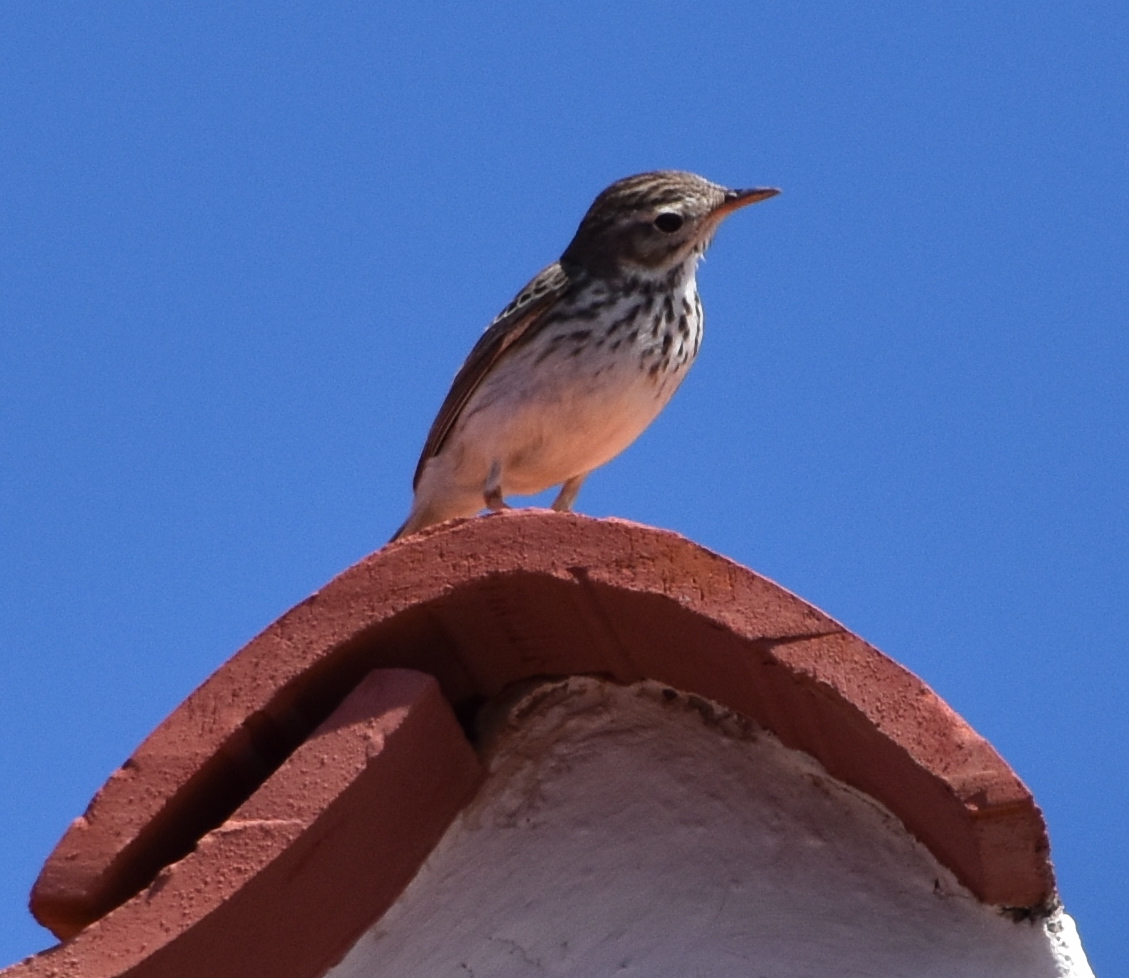
Berthelot's pipit, Playa Santiago, La Gomera. 2022-03-16 11:25:18
First observed in La Gomera on 2022-03-16.
Description
General:Der Kanarenpieper (Anthus berthelotii) ist eine Singvogelart aus der Familie der Stelzen und Pieper. Er kommt auf den Kanarischen Inseln, den Ilhas Selvagens und auf Madeira vor, wo er trockene, gras- und buschbestandene Habitate bewohnt und die einzige dort brütende Pieperart ist. Er ist ein Standvogel, von dem es bislang keinerlei Nachweise als Irrgast außerhalb seines Verbreitungsgebiets gab. Der Bestand wird grob auf 20.000–100.000 Brutpaare geschätzt und die Art ist laut IUCN nicht bedroht (“least concern”). Das Artepitheton ehrt den französischen Naturforscher Sabin Berthelot.
[more]
Details
Profile Wikipedia Vogelwarte BirdLife ZH ornitho.ch bird-song.ch Audubon AllAboutBirds Xeno-Canto BirdID NABU YouTube

Bachstelze. 2024-05-16 11:54:46 Kaltbrunner-Riet
First observed in Iceland on 2015-06-05.
Description
Geography: This bird appears across the great seas in the following continents: Europe, North America, Africa, Asia.General:
The white wagtail (Motacilla alba) is a small passerine bird in the family Motacillidae, which also includes pipits and longclaws. The species breeds in much of Europe and the Asian Palearctic and parts of North Africa. It has a toehold in Alaska as a scarce breeder. It is resident in the mildest parts of its range, but otherwise migrates to Africa. In Ireland and Great Britain, the darker subspecies, the pied wagtail or water wagtail[2] (M. a. yarrellii) predominates. In total, there are between 9 and 11 subspecies.
[more]
Deutschland: Brut-, Zugvogel
Seasonal behavior
Other Details
Physical details
Physical details: length=18 cm, wingspan=25-30 cm, weight=17-25 gHabitats: Settlement Interesting behavior: Wags its tail when calling.
Vocalisation
Song: General: Usually just calls. This song is just a few chirpy slurs, sometimes rising-rising-falling.Song:
Zirpt wie ein Sperling aber weniger Noten. Lh lh lh [Link]
Song: Song either slow and primitive, consisting of sharp falling notes given by perched birds, or longer fast and energic bursts in excited song-flight. [Link]
Song attributes:
Mnemnoic: Plaetschert wie ein Bach Melody: stereotype melodic, slow, Frequency: 2-7 KHz
♫ Source: XENOCANTO XC694995 - White Wagtail - Motacilla alba - song recorded in Spain.mp3 Spain (song)

Calls:
Contact calls short and sharp. Usually with disyllabic, "bouncing" quality, and with each syllable only accented, not clearly separated from the other (see Grey Wagtail). [Link]
bird-song.ch: zweisilbig «zilipp» oder einsilbig «zipp»
XC644775 - White Wagtail - Motacilla alba alba - call, recorded in Estonia.
♫ Source: XENOCANTO XC644775 - White Wagtail - Motacilla alba alba - call, recorded in Estonia.mp3 (call)

Call attributes: Call melody: one note, slow, Frequency: 3-7 KHz,
Details

Gebirgsstelze am Bach beim Klingnauer Stausee. 2022-02-05 14:16:30 Klingnauer Stausee (man-made lake)
First observed in 🇨🇭 on 2022-02-05.
Description
General: Yellow breast and butt end, white belly, light grey head and back, white eye stripe and stripe above black beard, dark wings with 3 white V's, long tail.General: Deutschland: Brut-, Jahres-, Zugvogel, Wintergast
Seasonal behavior
Year-round bird Breeding: 03-23 - 08-29 Migration in: 02-20 - 04-01 Migration out: 08-18 - 10-27More details at Vogelwarte.ch
Other Details
Physical details
Physical details: length=18-19 cm, wingspan=25-27 cm, weight=14-22 gHabitats: Wetland
Vocalisation
Song:BirdID says Song simple but variable. I hear trills up to 2 seconds long and chirps. Another description says a series of calls, not very melodic. I noted zwitx3, sometimes hhhhhll. [Link]
Song: Song simple but variable. Sometimes with more elaborate song-flight like White Wagtail. [Link]
Song attributes:
Melody: stereotype melodic, fast, Frequency: high (3-9 KHz) Special sounds: trill
♫ Source: XENOCANTO XC767550 - Grey Wagtail - Motacilla cinerea - song with trills and a cheek-cheek.mp3 (song)

♫ Source: XENOCANTO XC757193 - Grey Wagtail - Motacilla cinerea - one-note song recorded in Germany.mp3 (song)

Calls:
Contact call short, metallic and with a clipped ending. Often disyllabic, "tzeet-tzeet", with each syllable more separated than in White Wagtail, and timbre more "dirty". Often starts with the contact call, followed by short melodic phrases. [Link]
1:
Birdweather hat ein-Noter aufgenommen.
XC854585 - Grey Wagtail - Motacilla cinerea - 2-note call.
♫ Source: XENOCANTO XC854585 - Grey Wagtail - Motacilla cinerea - 2-note call.mp3 (call)

2: Ich habe zwei-noter lh lhhh notiert, wahrscheinlich von Birdweather?
3: No details but a Xeno-Canto recording. - but really OWN
Gebirgsstelze bei 5 minuten durch geflogen, evtl Flugruf.
♫ 2024-09-09 08:24:00 Greater Fehraltorf (flight call)
Gebirgsstelze bei letzen 30 Sekunden durch geflogen, evtl Flugruf.
♫ 2024-09-09 08:24:00 Greater Fehraltorf (flight call)
Call attributes: Call melody: one note, slow, Frequency: medium (1-5 KHz),
Details
Common starling / Star (Sturnus vulgaris)

Junger Star sitzt auf einem Highland Cattle bei Speck, Fehraltorf. 2022-08-17 14:44:56 Fehraltorf
First observed in 🇨🇭 on 2020-04-11.
Description
Geography: This bird appears across the great seas in the following continents: Europe, North America (introduced), Africa, Asia.General: Learned on BBC's Winterwatch: the movement of a swarm of starlings is called a murmuration! Check out this this video or even an entire half hour
General: In trees or in the fields by the cows.
General: Deutschland: Brut-, Jahres-, Zugvogel RL 3[8]
Personal notes: Frequently seen here, for instance by their nests under the eaves of one of the Toblerone houses. Introduced to North America from Europe by Eugene Schieffelin.
Vocalization: Eine der Vogelarten, die gleichzeitig zwei Töne singen kann!
Vocalization:
Among the best of imitators. Mimics birds, animals and mechanical noises. Often makes several sounds at the same time. [Link]
Seasonal behavior
Year-round bird Breeding: 04-01 - 07-20 Migration in: 01-21 - 04-11 Migration out: 09-07 - 11-26More details at Vogelwarte.ch
Other Details
Physical details
Physical details: length=21 cm, wingspan=37-42 cm, weight=60-90 gHabitats: Agricultural
Vocalisation
Song: I find their individual song amusing, with its (long) whoops and weird noises. As a group, they're just noisy! Song:Song a highly varied mix of falling whistles, bill-clappering and various masterful mimicry. [Link]
Song attributes:
Melody: improvised melodic, slow, Frequency: medium (1-5 KHz) Special sounds: whoop, mimicry, weird Singing season: 01-01 - 09-30 Dawn chorus start: 15 minutes before dawn.
Calls:
Other calls; a harsh "chaee" and a short sharp "tink". [Link]
I hear this occasionally and really enjoy it - a long rising 'whoop', as I call it', starting low at 1 1/2 KHz and rising to 6 1/2 KHz!
Birdnet 1968 - European Starling long whoop call - 2021-08-23 17-26-09 - European Starling - Fehraltorf.
♫ 2021-08-23 17:26:09 Source: BirdNet 20210823_172609 birdnet 1968 - European Starling long whoop call - 2021-08-23 17-26-09 - European Starling - Fehraltorf.mp3 Fehraltorf (call)
Call attributes: Call melody: one note, slow, Frequency: 1-6 KHz, Special sounds: whoop.
Details
Common blackbird / Amsel (Turdus merula)

Wunderschöner junge Amsel. 2024-05-29 07:27:36 Levanto
First observed in Australia on 2008-01-01.
Description
General: The first bird I loved listening toGeneral: It earned its own song on my album i.e.: Blackbird on a Palm Tree.
General: Deutschland: Brut-, Jahres-, Zugvogel, Wintergast
Seasonal behavior
Year-round birdOther Details
Physical details
Physical details: length=24-25 cm, wingspan=34-38 cm, weight=80-125 gHabitats: Settlement Interesting behavior: Flaps its wings when calling.
Vocalisation
Song: Other: Gut zu erkennen ist die Amsel. Sie singt melodiös, erklärt Heller, «zuerst flötend und dann gegen Schluss so schnirpslig». Die Amsel singe gerne dort, wo sie gut gehört werde, etwa vor Hauswänden, die den Schall nicht schlucken. Ich wollte schauen was schnirpslig heisst, aber diese ist diese einzige Verwendung, die Google kennt! Der flötende Teil ist relativ tief, 1.5-3 KHz, der schnirpslige aber 2.5-7 KHz. (Schnirpslig ist ein schones Wort das der Redner erfunden hat - Google findet nur diese eine Webseite mit dem Wort!) [Von der SRF Webseite:] Song:Melodisch flötend dazwischen auch zerquetschte Töne. Die Elemente werden nicht wiederholt. Singt von Singwarte aus. Ca. 100 verschiedene Strophentypen.
[Link]
One of the most appreciated song birds. Very melodious and resonant, with long mellow notes and a large register. Less high pitched sounds than Song Thrush, and seldom repeats a phrase. Timbre fuller than both Song Thrush and Mistle Thrush. Well defined pauses between phrases, giving the song a relaxed pace. [Link]
Song attributes:
Melody: improvised melodic (lmh), slow, Frequency: 1-7 KHz Special sounds: flourish Singing season: 02-01 - 07-31 Dawn chorus start: 45 minutes before dawn.
♫ 2023-02-23 17:40:48
Source: Zoom H6/H2n (song)♫ 2024-05-15 05:27:28
Source: Zoom H6/H2n Luppmen (song)Calls:
Je nach Situation, „duck duck duck“, „tix-tix-tix“ in rascher Folge, „srieh“ (auch als Flugwarnruf)
[Link]
Large repertoire of calls. Most characteristic is a hysterical rattle often given when flushed. Sometimes preceded by a hard "tok tok", which then accelerates into a panicky arpeggio-like crescendo. Contact call a thin redwing-like "srrreee". Alarm calls: a sharp "tink, tink" or a very high pitch falling whistle. [Link]
1:
Sharp-edged call, mostly one note.
XC919083 - Common Blackbird - Turdus merula - 1-note alarm call in Estonia.
♫ Source: XENOCANTO XC919083 - Common Blackbird - Turdus merula - 1-note alarm call in Estonia.mp3 (alarm call)
 Alarm rattle
♫ Had never heard something like this, but I saw a black bird land in a tree by the Luppmen and shortly thereafter a blackbird started singing, so I check xeno-canto for something similar. Sometimes called an alarm rattle. Source: XENOCANTO XC557335 common blackbird alarm call.mp3 (alarm call)
 XC931182 - Common Blackbird - Turdus merula - alarm call swoop from Sweden.
♫ Source: XENOCANTO XC931182 - Common Blackbird - Turdus merula - alarm call swoop from Sweden.mp3 (alarm call)
2: Loud falling series of notes, unlike anything else you hear from a blackbird, sometimes called an alarm rattle
Call attributes: alarm call Call melody: one note, slow, Frequency: medium (1-5 KHz),
Details
European robin / Rotkehlchen (Erithacus rubecula)
Profile Wikipedia Vogelwarte BirdLife ZH ornitho.ch bird-song.ch Xeno-Canto NABU YouTube

Rotkehlchen - sie singen endlich wieder. 2021-10-24 09:57:40 Neeracherried
First observed in 🇨🇭 on 2020-04-02.
Description
General: Red face and breast, light colored belly, brown and gray back and wings.General: Singing in a tree, searching for food on the ground.
General: Deutschland: Brut-, Jahres-, Zugvogel, Wintergast
Seasonal behavior
Year-round bird Breeding: 04-11 - 08-18 Migration in: 02-20 - 05-01 Migration out: 08-18 - 11-15More details at Vogelwarte.ch
Other Details
Physical details
Physical details: length=14 cm, wingspan=20-22 cm, weight=14-21 gHabitats: Forest
Vocalisation
Song: General: High pitched but also going low, e.g. 2.9-7.7 KHz.Song:
Only for a short period in late summer while they are moulting and inconspicuous do robins stop singing. Both sexes sing. [RSPB article]
Song: Song medium to very high pitched, with mostly clear tones with a liquid quality. Timbre reminiscent of Wren or Dunnock, but with a much more varied structure and tempo. Pitch ranges from very high to low, almost thrush-like, notes. No recognizable motifs. Often ends on a rising or falling pitch, giving it a "Chinese" accent. [Link]
Song attributes:
Melody: improvised melodic, fast, Frequency: high (3-9 KHz) Special sounds: fluting Singing season: 02-01 - 07-31 Only pauses singing while molting and thus endangered. Dawn chorus start: 50 minutes before dawn.
Calls:
Alarm call a thin, electric "tick", often in series with decelerating tempo. [Link]
1:
"ticking call", "tik", "tek", .
Personal: A single note usually repeated twice. Somewhat sputtery. BirdID refers to 'a thin, electric "tick". In one source said to be used as alarm call. Call:
A variety of calls is also made at any time of year, including a ticking note indicating anxiety or mild alarm. [Link]
I heard 3 or 4 scattered birds calling it in woods with underbrush but saw no birds. BirdNet told me they were robins, which I found hard to believe, but on comparing it with recordings at XenoCanto, I was convinced! Maybe they were telling each other "Don't show yourself to that alarming guy!".
♫ 2021-07-03 08:05:14 (call)

2: "srii". Low chirpy to sputtery monotone
Xeno-Canto recording by Stanislas Wroza noted as 'srii' call
♫ Source: XENOCANTO XC496627 European robin srii call.mp3 (call)
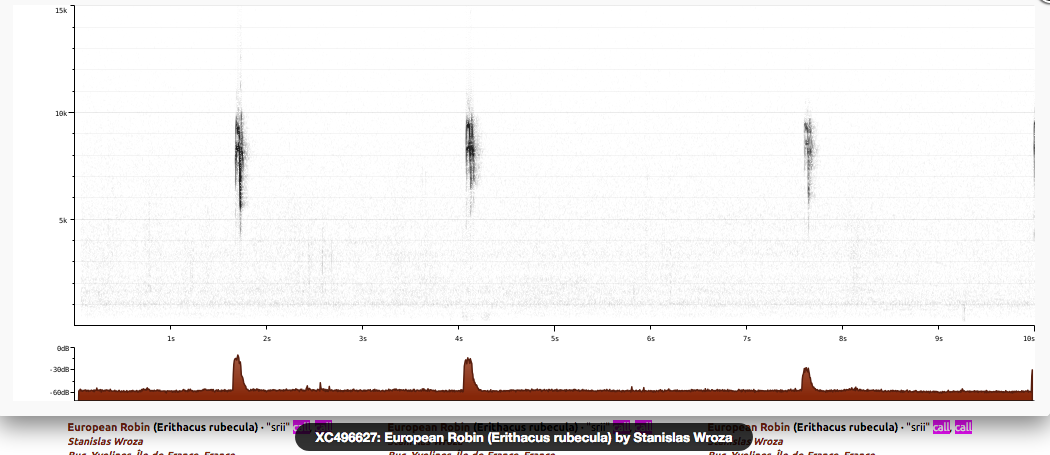
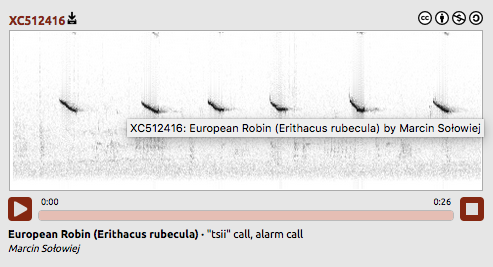
3: "tsii". General: A longer falling note (9Khz-7Khz) called a tsii by the recordist.
Call:
Sound Approach: If you listen carefully you may notice that in the daytime, apart from the ubiquitous tik call, Robins also give a shrill tsi rather frequently. It is this tsi that they adapt for use as a nocturnal flight call. Nfc=night flight call. [Link]
In the sonogram it's a longer, falling note.
♫ Source: XENOCANTO XC512416 - European Robin - Erithacus rubecula - named tsii or alarm call by recordist Marcin Solowiej in Poland.mp3 (alarm call)
4: Here is an audio of a high-pitched hawk call (7.5-8.5 KHz). See also a YouTube video comparing ground threats from aerial threats.
XC139085 - European Robin - Erithacus rubecula - hawk alarm call from Paul Driver.
♫ Source: XENOCANTO XC139085 - European Robin - Erithacus rubecula - hawk alarm call from Paul Driver.mp3 (alarm call)
5: No details but a Xeno-Canto recording. - but really OWN_VIA_ZOOM
Volles Konzert - Rotkehlchen, Trommeln eine Buntspechts, Buchfink.
♫ 2025-03-09 10:34:24
Source: Zoom H2n Switzerland (drumming)Call attributes: Call melody: one note, slow, Frequency: 4-9 KHz, Special sounds: sputter/pebble-clatter.
Details

Mittelmeermöwe, Tenero. 2024-09-04 18:20:23 Locarno
First observed in 🇨🇭 on 2021-03-07.
Description
General:The yellow-legged gull is a large gull found in Europe, the Middle East and North Africa, which has only recently achieved wide recognition as a distinct species. It was formerly treated as a subspecies of either the Caspian gull L. cachinnans, or more broadly as a subspecies of the herring gull L. argentatus.
The genus name is from Latin Larus which appears to have referred to a gull or other large seabird, and the species name honours the German zoologist Karl Michahelles.[2]
[more]
Deutschland: Brut-, Zugvogel, Wintergast
Vocalization:
Voice more nasal than Herring Gull, but ID by sound difficult. [Link]
Seasonal behavior
Year-round birdOther Details
Physical details
Physical details: length=59-67 cm, wingspan=140-158 cm, weight=750-1500 gnot sexually dimporphic. No breeding plumage Identifying characteristics: general: head = gray (sprinkled), beak = yellow (yellow orange with a red tip esp. on the lower half), legs = yellow (yellow orange), wings = gray, tail = black (with white stripes) Habitats: River and lake
Vocalisation
Song: No details but a Xeno-Canto recording. Song attributes: Frequency:♫ 2025-09-26 16:12:00 Chioggia (song)
Details
Profile Wikipedia Vogelwarte BirdLife ZH ornitho.ch Audubon AllAboutBirds Xeno-Canto BirdID NABU YouTube

Either a lesser black-backed gull because of the orange legs, short neck, flat-topped head or yellow-legged gull because the bill is more yellow than orange. 2022-01-16 13:20:46
🔍
Never observed (yet!)
Description
Geography: This bird appears across the great seas in the following continents: Europe, North America, Africa, Asia.General: Deutschland: Brut-, Zugvogel, Wintergast
Vocalization:
Very similar to Herring Gull, but tone more nasal. [Link]
Other Details
Physical details
Physical details: length=52-64 cm, wingspan=117-134 cm, weight=620-1000 gHabitats: River and lake Details
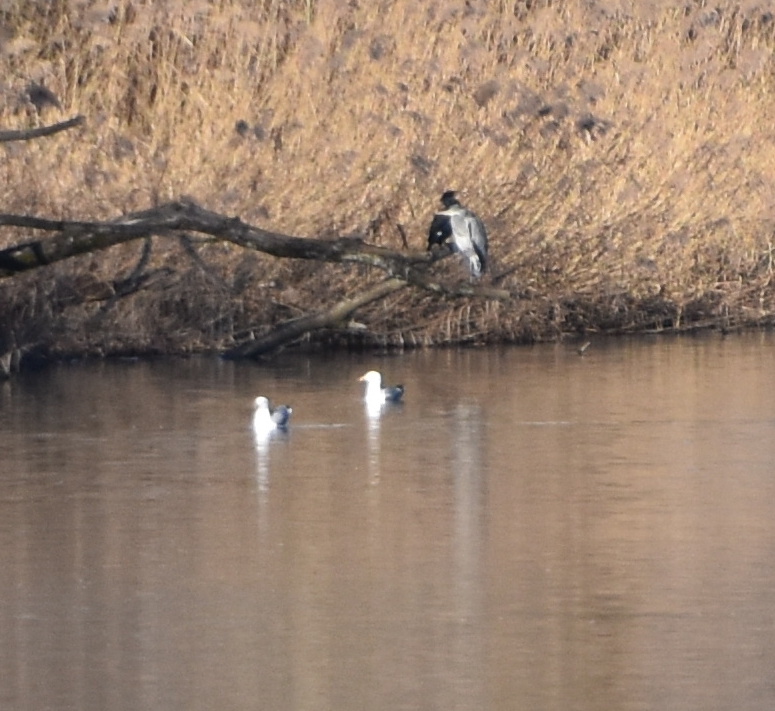
Cormorant, Graureiher, zwei Lachmöwen am Klingnauerstausee. 2022-02-05 10:35:32 Klingnauer Stausee (man-made lake)
First observed in 🇨🇭 on 2020-05-20.
Description
Geography: This bird appears across the great seas in the following continents: Europe, North America, Africa, Asia.General: Common waterbird at Pfäffikersee, that doesn't necessarily have the eponymous black head.
General: Deutschland: Brut-, Jahres-, Zugvogel, Wintergast
Etymology:
[40], In Richard Adams' 1972 novel Watership Down, a black-headed gull named Kehaar (who claims his name is the onomatopoeia of waves breaking against the shore) plays a major part in the story. [Link]
Vocalization:
Quite vocal, especially at breeding ground. [Link]
Seasonal behavior
Year-round birdOther Details
Physical details
Physical details: length=34-37 cm, wingspan=86-99 cm, weight=200-400 gnot sexually dimporphic. No breeding plumage Identifying characteristics: Summer: head = black, , , , , tail = black Winter: head = white (With Charlie Brown-style half circle behind the eye), , , , general: beak = red, legs = red, wings = gray, Habitats: River and lake
Vocalisation
Song: No details but a Xeno-Canto recording. Song attributes: Frequency:♫ 2021-04-27 16:51:23 Source: BirdNet 20210427_165123 birdnet 1485 - Black-headed Gull racket at Chlisee - No confident detection - Wetzikon.mp3 Wetzikon (song)
Details
Mediterranean gull / Schwarzkopfmöwe (Ichthyaetus melanocephalus)

Schwarzkopfmöwe, Tom meint der meist fotografierte Vogel in Rappi, weil nur ein paar dort auftachen, diese aber jeden Winter. 2022-12-03 10:29:14 Rapperswil
First observed in 🇨🇭 on 2022-12-03.
Description
General:The Mediterranean gull (Ichthyaetus melanocephalus) is a small gull. The scientific name is from Ancient Greek. The genus Ichthyaetus is from ikhthus, "fish", and aetos, "eagle", and the specific melanocephalus is from melas, "black", and -kephalos "-headed".[2]
[more]
Deutschland: Brut-, Zugvogel, seltener Wintergast RL R
Other Details
Physical details
Physical details: length=36-38 cm, wingspan=92-100 cm, weight=232-280 gnot sexually dimporphic. No breeding plumage Identifying characteristics: Adult: head = black, , , , , tail = white, Youth: head = white (sprinkled with gray around the eyes), , , , , tail = black (tip of tail black-brown by young birds) general: wings = gray (very pale grey mantle and wings with white primary feathers without black tips.), beak = red (Dark red beak [in Levanto I said orange], usually with yellow to orange tip but can also be red. Between the tip and the shaft is a dark band.), legs = red (Their feet are dark red [legs presumably too].), , Habitats: River and lake Details
Little ringed plover / Flussregenpfeifer (Charadrius dubius)
Profile Wikipedia Vogelwarte BirdLife ZH ornitho.ch Xeno-Canto NABU YouTube

Stelzenläufer mit kleinem Flussregenpfeifer. 2022-04-12 14:25:34
First observed in Mallorca on 2022-04-10.
Description
General: Deutschland: Brut-, ZugvogelVocalization:
Quite different from Ringed Plover. Sharper sounding, lacking Ringed's soft tone. Often starts with a rolling "r". [Link]
Seasonal behavior
Presence: 03-01 - 10-18 Breeding: 04-20 - 07-20 Migration in: 03-01 - 05-31 Migration out: 06-29 - 10-18More details at Vogelwarte.ch
Other Details
Physical details
Physical details: length=14-15 cm, wingspan=42-48 cm, weight=32-48 gHabitats: Wetland
Vocalisation
Song: No details but a Xeno-Canto recording. Song attributes: Frequency:♫ 2022-04-10 11:10:23 Source: BirdNet 20220410_111023 birdnet - Flussregenpfeifer - Flussregenpfeifer - Felanitx.mp3 (song)
Details
Kentish plover / Seeregenpfeifer (Charadrius alexandrinus)
Profile Wikipedia Vogelwarte BirdLife ZH ornitho.ch Audubon AllAboutBirds Xeno-Canto NABU YouTube

Der kleinste Watvögel bei Ses Salines, Mallorcal, ein Seeregenpfeifer. 2022-04-08 17:00:16
First observed in Mallorca on 2022-04-08.
Description
Geography: This bird appears across the great seas in the following continents: Europe, North America, Africa, Asia.General: Deutschland: Brut-, Zugvogel RL 1
Seasonal behavior
Presence: 04-01 - 10-27 Migration in: 05-01 - 06-08 Migration out: 06-29 - 10-27More details at Vogelwarte.ch
Other Details
Physical details
Physical details: length=15-17 cm, wingspan=42-45 cm, weight=39-56 gHabitats: Wetland Details
Red knot / Knutt (Calidris canutus)
Profile Wikipedia Vogelwarte BirdLife ZH ornitho.ch Audubon AllAboutBirds Xeno-Canto BirdID NABU YouTube

Red knots, according to MerlinBirdID - underway to somewhere better at Las Coloradas. 2023-04-15 09:34:08 Yucatan
First observed in Yucatan on 2023-04-15.
Description
Geography: This bird appears across the great seas in the following continents: Europe, North America, South America, Africa, Asia.General: Deutschland: Zugvogel, Wintergast
Other Details
Physical details
Physical details: length=23-25 cm, wingspan=57-61 cm, weight=110-160 gHabitats: Wetland Details
Dunlin / Alpenstrandläufer (Calidris alpina)
Profile Wikipedia Vogelwarte BirdLife ZH ornitho.ch Audubon AllAboutBirds Xeno-Canto BirdID NABU YouTube
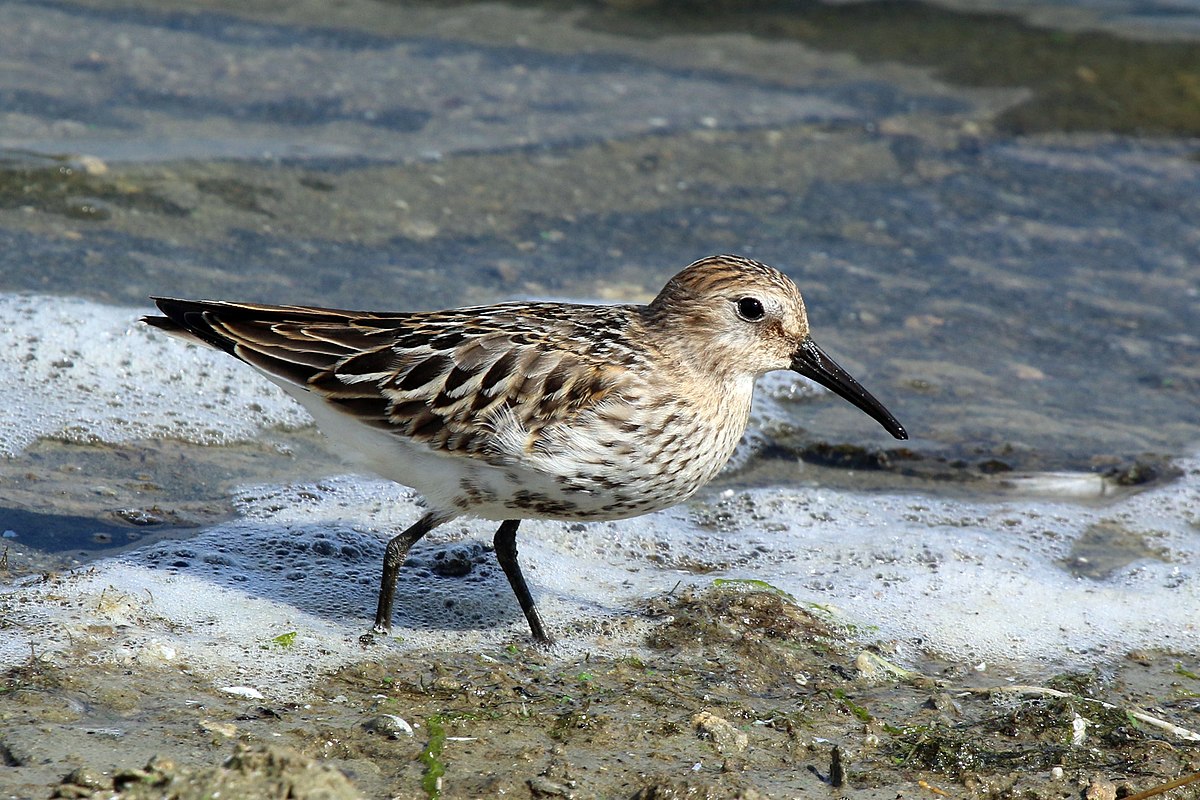
Wikipedia: Dunlin Source: WIKIPEDIA
1200px-Dunlin_%28Calidris_alpina%29_juvenile.jpg
🔍
Never observed (yet!)
Description
Geography: This bird appears across the great seas in the following continents: Europe, North America, South America, Africa, Asia.General: Deutschland: Brut-, Zugvogel, Wintergast RL 1
Seasonal behavior
Year-round bird Migration in: 03-01 - 03-23 Migration out: 03-15 - 03-23More details at Vogelwarte.ch
Other Details
Physical details
Physical details: length=16-20 cm, wingspan=38-43 cm, weight=35-60 gHabitats: Wetland Details
Sanderling / Sanderling (Calidris alba)
Profile Wikipedia Vogelwarte BirdLife ZH ornitho.ch Audubon AllAboutBirds Xeno-Canto BirdID NABU YouTube

Wahrscheinlich Sanderling - there must be a better photo. 2024-09-14 15:34:48 Fanel/Chablais de Cudrefin und La Sauge
First observed in Yucatan on 2023-03-27.
Description
Geography: This bird appears across the great seas in the following continents: Europe, North America, South America, Africa, Asia.General: Deutschland: Zugvogel, Wintergast
Seasonal behavior
Presence: 04-11 - 10-27 Migration in: 10-07 - 10-15 Migration out: 04-20 - 05-31More details at Vogelwarte.ch
Other Details
Physical details
Physical details: length=20-21 cm, wingspan=40-45 cm, weight=44-70 gHabitats: Wetland Details
Ruddy turnstone / Steinwälzer (Arenaria interpres)

Ruddy turnstone, San Christiana, Tenerife. 2022-03-19 10:26:30
First observed in Tenerife on 2022-03-19.
Description
Geography: This bird appears across the great seas in the following continents: Europe, North America, South America, Africa, Asia.General: Deutschland: Brut-, Zugvogel, Wintergast RL 2
Seasonal behavior
Presence: 04-11 - 10-18 Migration in: 05-01 - 06-20 Migration out: 05-01 - 06-08More details at Vogelwarte.ch
Other Details
Physical details
Physical details: length=22-24 cm, wingspan=50-57 cm, weight=85-150 gHabitats: Wetland Details
Eurasian woodcock / Waldschnepfe (Scolopax rusticola)
Profile Wikipedia Vogelwarte BirdLife ZH ornitho.ch bird-song.ch Xeno-Canto BirdID NABU YouTube

Wikipedia: Eurasian woodcock Source: WIKIPEDIA
Woodcock_earthworm.jpg
🔍
Never observed (yet!)
Description
General: Deutschland: Brut-, Jahres-, Zugvogel, Wintergast RL VVocalization:
Sometimes give a snipe-like hoarse "raaat" when flushed. Male display flight at night distinctive. [Link]
Seasonal behavior
Year-round bird Breeding: 03-23 - 08-09 Migration in: 02-20 - 05-01 Migration out: 09-07 - 12-16More details at Vogelwarte.ch
Other Details
Physical details
Physical details: length=33-35 cm, wingspan=56-60 cm, weight=131-420 gHabitats: Forest Details
Common snipe / Bekassine (Gallinago gallinago)

Wahrscheinlich Bekassine mit dem langen Schnabel, Klingnauerstausee. 2022-02-05 11:54:14 Klingnauer Stausee (man-made lake)
First observed in 🇨🇭 on 2021-10-24.
Description
Geography: This bird appears across the great seas in the following continents: Europe, North America, Africa, Asia.General:
The common snipe (Gallinago gallinago) is a small, stocky wader native to the Old World.
[more]
Deutschland: Brut-, Zugvogel, Wintergast RL 1
Vocalization:
Quite vocal, especially at breeding ground. [Link]
Seasonal behavior
Year-round bird Migration in: 01-01 - 05-21 Migration out: 07-20 - 12-31More details at Vogelwarte.ch
Other Details
Physical details
Physical details: length=25-27 cm, wingspan=44-47 cm, weight=80-140 gHabitats: Wetland
Vocalisation
Song: No details but a Xeno-Canto recording. Song:Song an unmistakable bleating, drumming sound produced by vibrating tail feathers in sky-dives. [Link]
Song attributes:
Frequency:
♫ Source: XENOCANTO XC812599 - Common Snipe song, one note, 4x per sec - Gallinago gallinago.mp3 (song)

Calls:
Almost always give diagnostic hoarse and nasal "kaaat" call when flushed. Another territorial call is a rhythmic, mechanical and sharp "tika-tika-tka", or "ika-ka-ka". [Link]
XC947581 - Common Snipe flight call - Gallinago gallinago.
♫ Source: XENOCANTO XC947581 - Common Snipe flight call - Gallinago gallinago.mp3 (flight call)

Call attributes: flight call Call melody: one note, slow, Frequency: medium (1-5 KHz), Special sounds: quack.
Details
Common sandpiper / Flussuferläufer (Actitis hypoleucos)
_probing_mud_banks_in_Kolkata_I_IMG_4169, by J.M.Garg - Own work.jpg)
Common Sandpiper (Actitis hypoleucos) probing mud banks in Kolkata I IMG 4169, by J.M.Garg - Own work. Source: OTHER
Common_Sandpiper_(Actitis_hypoleucos)_probing_mud_banks_in_Kolkata_I_IMG_4169, by J.M.Garg - Own work.jpg
First observed in 🇨🇭 on 2022-09-04.
Description
Geography: This bird appears across the great seas in the following continents: Europe, North America, Africa, Asia.General: Deutschland: Brut-, Zugvogel RL 2
Etymology: Birdweather: Mein Birdweather Gerät hat öfter das Gefühl dass es einen Flussuferläufer hört; Merlin hat es auch einmal gemeldet. [Link]
Other Details
Physical details
Physical details: length=19-21 cm, wingspan=38-41 cm, weight=40-60 gHabitats: Wetland
Vocalisation
Song: No details but a Xeno-Canto recording. Song attributes: Frequency:♫ 2024-08-08 07:22:45 Source: BIRDWEATHER 20240808_072245-Birdweather-Common_Sandpiper call.mp3 (call)
Calls:
Very vocal with characteristic repertoire of very high-pitched calls. Often heard is a disyllabic call, drawn out and slightly rising in pitch in the second part. This is often repeated in a series of rising tones in a cyclic manner, with approx 5 tones in each cycle. [Link]
1:
High-pitched, at least in Birdweather detection
XC927032 - Common Sandpiper 2-note call - Actitis hypoleucos.
♫ Source: XENOCANTO XC927032 - Common Sandpiper 2-note call - Actitis hypoleucos.mp3 (call)

2: No details but a Xeno-Canto recording.
XC924773 - Common Sandpiper flight call, swoop, 2 to 8 notes - Actitis hypoleucos.
♫ Source: XENOCANTO XC924773 - Common Sandpiper flight call, swoop, 2 to 8 notes - Actitis hypoleucos.mp3 (flight call)

Call attributes: Call melody: simple rhythmic, slow, Frequency: medium (1-5 KHz),
Details
Common tern / Flussseeschwalbe (Sterna hirundo)
Profile Wikipedia Vogelwarte BirdLife ZH ornitho.ch bird-song.ch Audubon AllAboutBirds Xeno-Canto BirdID NABU YouTube

Flussseeschwalbe. 2023-07-08 19:00:12 Neeracherried
First observed in 🇨🇭 on 2020-04-27.
Description
Geography: This bird appears across the great seas in the following continents: Europe, North America, South America, Africa, Asia.General: Deutschland: Brut-, Zugvogel RL 2
Etymology:
[9] The Scots names picktarnie,[11] tarrock[12] and their many variants are also believed to be onomatopoeic, derived from the distinctive call. [Link]
Seasonal Behavior:
Die Flussseeschwalbe (Sterna hirundo) ist eine Vogelart aus der Familie der Seeschwalben (Sternidae).
Sie ist in Mitteleuropa ein verbreiteter, aber nicht sehr häufiger Brut- und Sommervogel.
Während der Zugzeiten können im mitteleuropäischen Raum außerdem viele Durchzügler beobachtet werden. [Link]
Vocalization:
Similar to Arctic Tern but deeper. [Link]
Seasonal behavior
Presence: 03-23 - 10-07 Breeding: 05-01 - 07-29 Migration in: 03-23 - 06-09 Migration out: 06-29 - 10-07More details at Vogelwarte.ch
Other Details
Physical details
Physical details: length=31-35 cm, wingspan=77-98 cm, weight=110-150 gHabitats: River and lake
Vocalisation
Song: No details but a Xeno-Canto recording. Song attributes: Frequency:♫ 2020-04-27 14:08:13 Source: BirdNet 20200427_140813 birdnet 430 - Common tern.mp3 Luppmen (song)
Details
Roseate tern / Rosenseeschwalbe (Sterna dougallii)
Profile Wikipedia Audubon AllAboutBirds Xeno-Canto BirdID NABU YouTube

Wikipedia: Roseate tern Source: WIKIPEDIA
1200px-Roseate_terns_Palometas.jpg
🔍
Never observed (yet!)
Description
Geography: This bird appears across the great seas in the following continents: Europe, North America, Africa, Asia.Other Details
Physical details
Physical details: length=33-38 cm, wingspan=72-80 cm, weight=92-133 gDetails
Arctic tern / Kü̈stenseeschwalbe (Sterna paradisaea)

Küstenseeschwalbe. 2026-05-26 13:09:32 Switzerland
First observed in 🇨🇭 on 2026-05-25.
Description
Geography: This bird appears across the great seas in the following continents: Europe, North America, South America, Africa, Asia.General: Deutschland: Brut-, Zugvogel RL 2
Vocalization:
Similar to Common Tern but higher pitched. [Link]
Seasonal behavior
Seldom seen hereMore details at Vogelwarte.ch
Other Details
Physical details
Physical details: length=33-35 cm, wingspan=75-85 cm, weight=95-120 gDetails
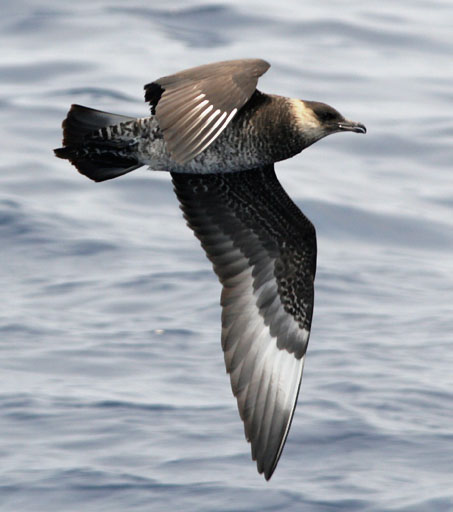
Parasitic jaeger / Schmarotzerraubmöwe (Stercorarius parasiticus)

Arctic Skua, defending its nest. 2015-06-10 14:32:52
First observed in Iceland on 2015-06-10.
Description
Geography: This bird appears across the great seas in the following continents: Europe, North America, South America, Africa, Asia.General: Deutschland: Zugvogel
Vocalization:
Mostly heard at breeding ground. [Link]
Seasonal behavior
Seldom seen hereMore details at Vogelwarte.ch
Other Details
Physical details
Physical details: length=41-46 cm, wingspan=110-125 cm, weight=330-570 gDetails
Long-tailed jaeger / Falkenraubmöwe (Stercorarius longicaudus)

Wikipedia: Long-tailed jäger Source: WIKIPEDIA
1200px-Long-tailed_Skua_%28js%29_26.jpg
🔍
Never observed (yet!)
Description
Geography: This bird appears across the great seas in the following continents: Europe, North America, South America, Africa, Asia.General: Deutschland: seltener Zugvogel
Seasonal behavior
Seldom seen hereMore details at Vogelwarte.ch
Other Details
Physical details
Physical details: length=48-53 cm, wingspan=105-117 cm, weight=240-350 gDetails
Great skua / Skua (Stercorarius skua)
Description
Geography: This bird appears across the great seas in the following continents: Europe, North America, Africa.General: Deutschland: seltener Zugvogel, seltener Wintergast
Vocalization:
Heard mostly at breeding ground. Short, and dry "kek", when agitated. Also a nasal, slightly mewing "kew". [Link]
Seasonal behavior
Presence: 04-01 - 10-27 Migration in: 10-18 - 10-27 Migration out: 10-18 - 10-25More details at Vogelwarte.ch
Other Details
Physical details
Physical details: length=53-58 cm, wingspan=132-140 cm, weight=1210-1630 gDetails
Pomarine jaeger / Spatelraubmöwe (Stercorarius pomarinus)
Wikipedia: Pomarine jäger Source: WIKIPEDIA
Stercorarius_pomarinusPCCA20070623-3985B.jpg
🔍
Never observed (yet!)
Description
Geography: This bird appears across the great seas in the following continents: Europe, North America, South America, Africa, Asia.General: Deutschland: seltener Zugvogel
Seasonal behavior
Seldom seen hereMore details at Vogelwarte.ch
Other Details
Physical details
Physical details: length=46-51 cm, wingspan=125-138 cm, weight=600-900 gDetails
Family Burhinidae (Triele, Haematopodidae – Austernfischer und Recurvirostridae – Säbelschnäblerverwandte):
Eurasian coot / Blässhuhn (Fulica atra)

Eurasian coot in the rain. 2025-04-21 09:29:12 Fanel/Chablais de Cudrefin und La Sauge
First observed in 🇨🇭 on 2020-04-14.
Description
General:The Eurasian coot (Fulica atra), also known as the common coot, or Australian coot, is a member of the rail and crake bird family, the Rallidae. It is found in Europe, Asia, Australia, New Zealand and parts of North Africa. It has a slaty-black body, a glossy black head and a white bill with a white frontal shield. The sexes are similar.
[more]
Deutschland: Brut-, Jahres-, Zugvogel, Wintergast
Vocalization:
Varied. Usually short, metallic and explosive. [Link]
Seasonal behavior
Year-round birdOther Details
Physical details
Physical details: length=36-38 cm, wingspan=70-80 cm, weight=600-1000 gHabitats: River and lake
Vocalisation
Song: No details but a Xeno-Canto recording. Song attributes: Frequency:♫ Source: XENOCANTO XC841364 - Eurasian Coot song - Fulica atra.mp3 (song)

Calls:
Most diagnostic call a very short, sharp and explosive "tsk". Sometimes a longer, less sharp but nasal "caw", with varying harshness. [Link]
XC902440 - Eurasian Coot squeaky call - Fulica atra.
♫ Source: XENOCANTO XC902440 - Eurasian Coot squeaky call - Fulica atra.mp3 (call)

Call attributes: Call melody: one note, slow, Frequency: medium (1-5 KHz), Special sounds: weird.
Details
Common moorhen / Teichhuhn (Gallinula chloropus)

Teichhuhn am Greifensee. 2022-01-27 14:06:40 Greifensee
First observed in 🇨🇭 on 2021-02-12.
Description
Geography: This bird appears across the great seas in the following continents: Europe, North America, Africa, Asia.General: Seen at the Pfäffikersee walking across the path from one set of reeds to another. An apprentice at the nature center gave us the identification, presuming it was a juvenile because of the lack of color. I'd have said its legs were shorter, but the moorhen definitely has the main trait we saw, that it holds its short tail in the air.
General: Deutschland: Brut-, Jahres-, Zugvogel, Wintergast RL V
Habitat:
Common Moorhens prefer to nest in the thicket on the edge of ponds, lakes or rivers and mostly only give themselves away through their guttural calls. They are easier to observe in winter because then they leave their well-vegetated habitat and are seen in meadows, parks and on open waters. [Link]
Seasonal behavior
Year-round bird Breeding: 04-20 - 08-09 Migration in: 03-01 - 05-01 Migration out: 09-07 - 12-16More details at Vogelwarte.ch
Other Details
Physical details
Physical details: length=32-35 cm, wingspan=50-55 cm, weight=240-420 gHabitats: Wetland
Vocalisation
Song: No details but a Xeno-Canto recording. Song:Most typical is the territorial call (song); a sharp, loud and resonant "krrrr-ook" or "krrrk". [Link]
Song attributes:
Frequency:
♫ Source: XENOCANTO XC946631 - Common Moorhen call, like a quack - Gallinula chloropus.mp3 (call)

Calls:
Rich repertoire of loud calls and softer sounds. Other calls; a sharp, three or four-syllable "kekeke", and a soft "wep" sometimes drawn-out in a more mewing version. [Link]
Call attributes: Call melody: one note, slow, Frequency: medium (1-5 KHz), Special sounds: quack.
Details

Mäusebussard nah bei Gutenswil. 2024-06-04 10:29:56 Fehraltorf
First observed in 🇨🇭 on 2020-04-17.
Description
Geography: This bird appears across the great seas in the following continents: Europe, North America, Africa, Asia.General:
The common buzzard (Buteo buteo) is a medium-to-large bird of prey which has a large range. A member of the genus Buteo, it is a member of the family Accipitridae. The species lives in most of Europe and extends its breeding range across much of the Palearctic as far as the northwestern China (Tien Shan), far western Siberia and northwestern Mongolia.[1][2] Over much of its range, it is a year-round resident. However, buzzards from the colder parts of the Northern Hemisphere as well as those that breed in the eastern part of their range typically migrate south for the northern winter, many journeying as far as South Africa.[3] The common buzzard is an opportunistic predator that can take a wide variety of prey, but it feeds mostly on small mammals, especially rodents such as voles. It typically hunts from a perch.[4] Like most accipitrid birds of prey, it builds a nest, typically in trees in this species, and is a devoted parent to a relatively small brood of young.[2] The common buzzard appears to be the most common diurnal raptor in Europe, as estimates of its total global population run well into the millions.[2][5]
[more]
Deutschland: Brut-, Jahres-, Zugvogel, Wintergast
Vocalization:
Quite vocal. [Link]
Seasonal behavior
Year-round birdOther Details
Physical details
Physical details: length=51-57 cm, wingspan=113-128 cm, weight=550-1300 gHabitats: Agricultural
Vocalisation
Song: No details but a Xeno-Canto recording. Song attributes: Frequency:♫ 2026-02-24 16:08:50
Source: Zoom H2n Fehraltorf (call)Calls:
Most typical call a wailing, mewing "peeoooo". Quite similar to Rough-legged Buzzard, but the pitch falls more rapidly and is then sustained for the last part of the call. [Link]
Klingt ähnlich wie Rotmilan aber kürzer
XC917665 - Common Buzzard - Buteo buteo - call.
♫ Source: XENOCANTO XC917665 - Common Buzzard - Buteo buteo - call.mp3 (call)

Call attributes: Call melody: simple rhythmic, slow, Frequency: medium (1-5 KHz), Special sounds: swoop.
Details

Sperber Paar im Naturschutzgebiet im Staldenweiher-Wald. 2024-08-04 18:33:32 Staldenweiher
First observed in 🇨🇭 on 2021-02-06.
Description
General:The Eurasian sparrowhawk (Accipiter nisus), also known as the northern sparrowhawk or simply the sparrowhawk, is a small bird of prey in the family Accipitridae. Adult male Eurasian sparrowhawks have bluish grey upperparts and orange-barred underparts; females and juveniles are brown above with brown barring below. The female is up to 25% larger than the male – one of the greatest size differences between the sexes in any bird species. Though it is a predator which specialises in catching woodland birds, the Eurasian sparrowhawk can be found in any habitat and often hunts garden birds in towns and cities. Males tend to take smaller birds, including tits, finches, and sparrows; females catch primarily thrushes and starlings, but are capable of killing birds weighing 500 g (18 oz) or more.
[more]
Deutschland: Brut-, Jahres-, Zugvogel, Wintergast
Vocalization:
Series of short "ke-ke-ke-ke-ke", with rising pitch. [Link]
Seasonal behavior
Year-round bird Breeding: 05-01 - 08-09 Migration in: 02-20 - 05-10 Migration out: 08-18 - 11-06More details at Vogelwarte.ch
Other Details
Physical details
Physical details: length=28-38 cm, wingspan=55-70 cm, weight=110-342 gHabitats: Agricultural
Vocalisation
Song: No details but a Xeno-Canto recording. Song:Meist in Horstnähe zu hören. Eine Reihe von kurzen Einzellauten,
[Link]
Song attributes:
Frequency:
♫ Source: XENOCANTO XC818384 - Eurasian Sparrowhawk - Accipiter nisus - call, Brandenburg, Germany.mp3 (call)

Calls:
wie „gigigi“. Ähnlichkeit mit Wendehals, aber klarer und schneller. Schneller auch als Grünspecht und tiefer als Turmfalke. [Link]
Less resonant and less full than similar call of Goshawk, and much faster. Also a short "peeaaaa", shorter and more squeaky than Buzzard. [Link]
No details but a Xeno-Canto recording.
Call attributes: song Frequency: ,
Details

Rock dove with beautiful orange eyes. 2025-06-06 15:26:39 Stromboli
First observed in La Gomera on 2022-03-08.
Description
Geography: This bird appears across the great seas in the following continents: Europe, North America, South America, Africa, Asia.General: Deutschland: Brut-, Jahresvogel
Vocalization:
Not loud. [Link]
Seasonal behavior
Year-round bird Breeding: 01-01 - 12-31More details at Vogelwarte.ch
Other Details
Physical details
Physical details: length=31-34 cm, wingspan=63-70 cm, weight=230-370 gHabitats: Settlement
Vocalisation
Song: No details but a Xeno-Canto recording. Song:Song a two-syllable, but continuous cooing. First a rolling ascending "orrrrrr" immediately followed by a short descending "oohh". Wings produce a quite audible whistling sound. [Link]
Song attributes:
Frequency:
♫ Source: XENOCANTO XC661807 - Rock Dove call - Columba livia.mp3 (call)

No details but a Xeno-Canto recording.
Call attributes: song Frequency: ,
Details
Profile Wikipedia Xeno-Canto BirdID NABU YouTube

Wikipedia: Trocaz pigeon Source: WIKIPEDIA
1200px-Trocaz_Pigeon_Madeira.jpg
🔍
Never observed (yet!)
Description
General:The trocaz pigeon, Madeira laurel pigeon or long-toed pigeon (Columba trocaz) is a pigeon which is endemic to the island of Madeira. It is a mainly grey bird with a pinkish breast; its silvery neck patch and lack of white wing markings distinguish it from its close relative and probable ancestor, the common wood pigeon. Its call is a characteristic six-note cooing, weaker and lower-pitched than that of the wood pigeon. Despite its bulky, long-tailed appearance, this pigeon has a fast, direct flight.
[more]
Details
.jpg)
Wikipedia European Turtle Dove (Streptopelia turtur). Source: WIKIPEDIA
Wikipedia European_Turtle_Dove_(Streptopelia_turtur).jpg
First observed in 🇨🇭 on 2023-06-19.
Description
Die Turteltaube (Streptopelia turtur) ist eine Vogelart aus der Familie der Tauben. Das Verbreitungsgebiet umfasst weite Teile der westlichen und zentralen Paläarktis und reicht vom nördlichen Afrika, der iberischen Halbinsel und Großbritannien nach Osten über den Nahen und Mittleren Osten bis Nordwestchina und in die Mongolei. Im Mittelmeerraum ist die Turteltaube besonders häufig. Nach einer im Jahr 2007 veröffentlichten Studie der EU ist ihr Bestand jedoch in den letzten 25 Jahren um 62 Prozent zurückgegangen.[1] Der Bestandsrückgang wird auf veränderte landwirtschaftliche Anbaumethoden und den Rückgang der Erdraucharten zurückgeführt, die bei der Ernährung der Turteltauben eine große Rolle spielen. Zu den für den Bestandsrückgang verantwortlichen Faktoren gehört aber auch der Abschuss der Tauben insbesondere im Mittelmeerraum während der Zugzeiten.
[more]
Deutschland: Brut-, Zugvogel RL 3
Seasonal behavior
Presence: 04-11 - 10-07 Breeding: 05-10 - 07-10 Migration in: 04-11 - 06-20 Migration out: 08-09 - 10-07More details at Vogelwarte.ch
Other Details
Physical details
Physical details: length=26-28 cm, wingspan=47-53 cm, weight=100-180 gHabitats: Forest
Vocalisation
Song: Trilling coo. Song:Song: a deep, rolling, and slightly ascending cooing; "trrrrrrrrrrrrrrrrr trrr-trrrr" with variations in rhythm. Sometimes birds sticks to a phrase, but phrases varies between individuals. [Link]
Song attributes:
Melody: one note, slow, Frequency: low (1-3 KHz)
Details

Turmfalke zwischen Fehraltorf und Mesikon. 2021-10-16 15:25:46 Fehraltorf
First observed in 🇨🇭 on 2020-04-24.
Description
General: Oft seen in the fields around Fehraltorf, flapping away to stay in place.General: Deutschland: Brut-, Jahres-, Zugvogel, Wintergast
Seasonal behavior
Year-round bird Breeding: 04-20 - 08-29 Migration in: 02-10 - 05-10 Migration out: 08-18 - 11-15More details at Vogelwarte.ch
Other Details
Physical details
Physical details: length=32-35 cm, wingspan=71-80 cm, weight=156-252 gHabitats: Agricultural
Similar species
Song or calls similar to: Pallid swift.Vocalisation
Song: No details but a Xeno-Canto recording. Song attributes: Frequency:♫ 2026-04-28 15:13:38
Source: Zoom H2n Switzerland (song)Calls:
Turmfalke kann auch wie einen Specht tönen, scharf und relativ hoch [Link]
Most common call a fast series of short, high-pitched "ke-ke-ke". Much less raucous than Merlin or Peregrine. [Link]
Heard from in the air, about 6 notes per second (do I find them high??)
XC928672 - Common Kestrel - Falco tinnunculus - calls.
♫ Source: XENOCANTO XC928672 - Common Kestrel - Falco tinnunculus - calls.mp3 (call)

Call attributes: Call melody: one note, fast, Frequency: 2-7 KHz,
Details

Great northern loon, Squam Lake, New Hampshire. 2023-10-06 12:26:58 New England
First observed in New England on 2023-10-06.
Description
Geography: This bird appears across the great seas in the following continents: Europe, North America.General: Deutschland: seltener Wintergast
Seasonal behavior
Seldom seen hereMore details at Vogelwarte.ch
Other Details
Physical details
Physical details: length=69-91 cm, wingspan=69-91 cm, weight=3600-4480 gDetails
Profile Wikipedia Audubon AllAboutBirds Xeno-Canto BirdID NABU YouTube
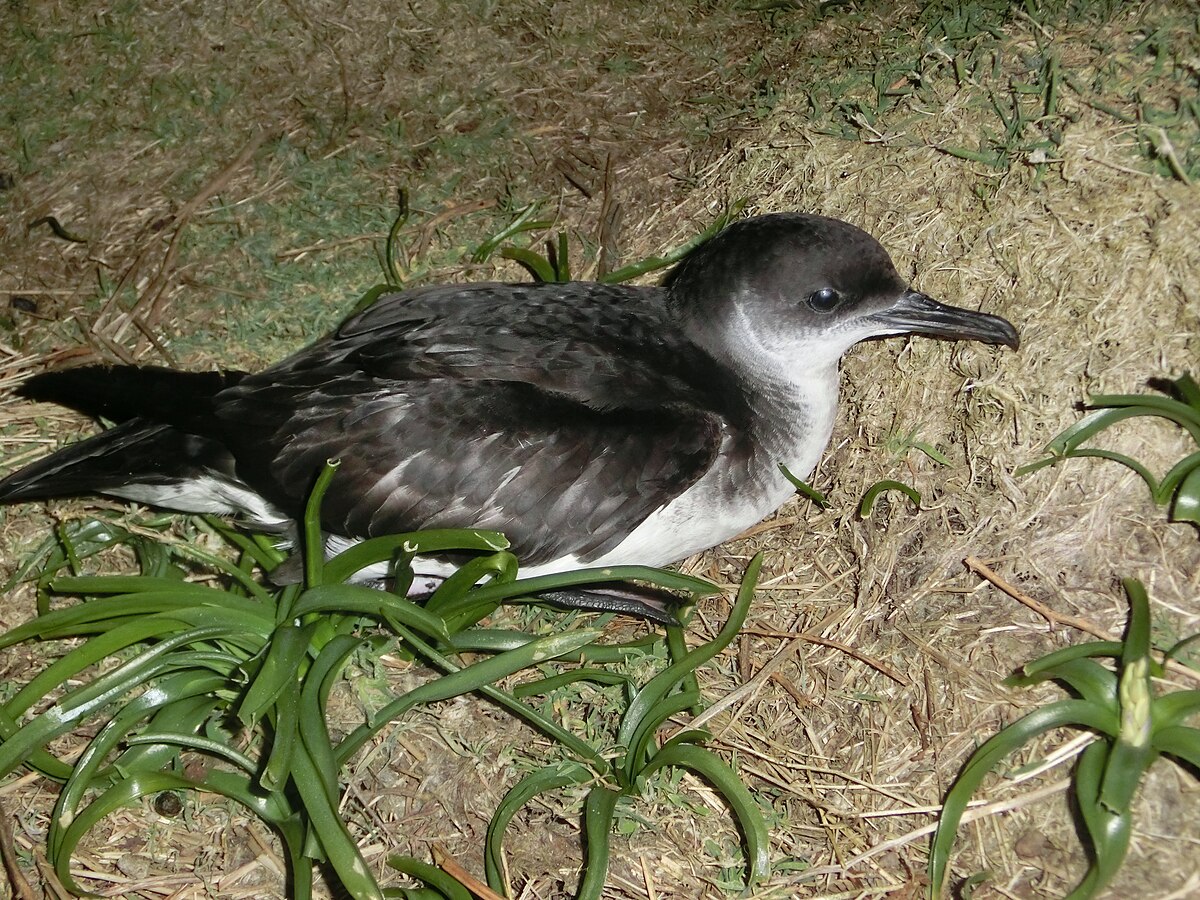
Wikipedia: Manx shearwater Source: WIKIPEDIA
1200px-Manx_Shearwater.JPG
🔍
Never observed (yet!)
Description
Geography: This bird appears across the great seas in the following continents: Europe, North America, Africa.General:
The Manx shearwater (Puffinus puffinus) is a medium-sized shearwater in the seabird family Procellariidae. The scientific name of this species records a name shift: Manx shearwaters were called Manks puffins in the 17th century. Puffin is an Anglo-Norman word (Middle English pophyn) for the cured carcasses of nestling shearwaters. The Atlantic puffin acquired the name much later, possibly because of its similar nesting habits.
[more]
Vocalization:
Vocal at breeding ground. [Link]
Other Details
Physical details
Physical details: length=31-36 cm, wingspan=76-88 cm, weight=375-459 gDetails
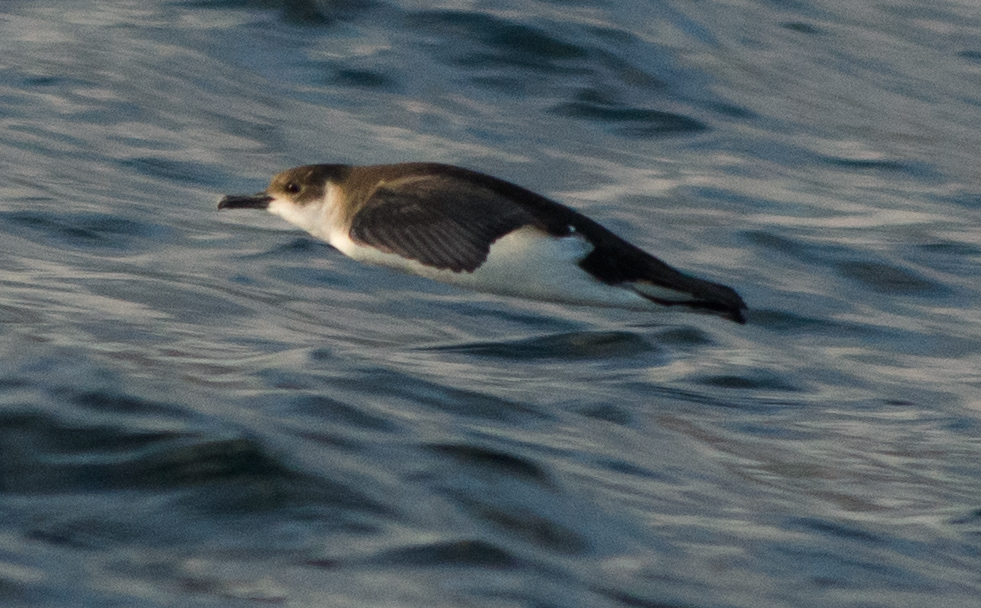
Wikipedia: Barolo shearwater Source: WIKIPEDIA
Barolo_Shearwater.jpg
🔍
Never observed (yet!)
Description
General:The Barolo shearwater (Puffinus baroli), also known as the North Atlantic little shearwater or Macaronesian shearwater, is a small shearwater which breeds in the Azores and Canaries of Macaronesia in the North Atlantic Ocean. Puffinus is a New Latin loanword based on the English "puffin" and its variants, such as poffin, pophyn and puffing,[2] that referred to the cured carcass of the fat nestling of the Manx shearwater, a former delicacy. The specific baroli refers to Carlo Tencredi Falletti, marquis of Barolo.[3]
[more]
Details
Profile Wikipedia Xeno-Canto BirdID NABU YouTube

Wikipedia: Zino's petrel Source: WIKIPEDIA
1200px-Zino%27s_petrel_sketch.png
🔍
Never observed (yet!)
Description
Zino's petrel (Pterodroma madeira) or freira is a species of small seabird in the gadfly petrel genus, endemic to the island of Madeira. This long-winged petrel has a grey back and wings, with a dark "W" marking across the wings, and a grey upper tail. The undersides of the wings are blackish apart from a triangle of white at the front edge near the body, and the belly is white with grey flanks. It is very similar in appearance to the slightly larger Fea's petrel, and separating these two Macaronesian species at sea is very challenging. It was formerly considered to be a subspecies of the soft-plumaged petrel, P. mollis, but they are not closely related, and Zino's was raised to the status of a species because of differences in morphology, calls, breeding behaviour and mitochondrial DNA. It is Europe's most endangered seabird, with breeding areas restricted to a few ledges high in the central mountains of Madeira.
[more]
Details
Profile Wikipedia Audubon AllAboutBirds Xeno-Canto BirdID NABU YouTube

Wikipedia: Fea's petrel Source: WIKIPEDIA
1200px-Feas_Petrel_From_The_Crossley_ID_Guide_Eastern_Birds.jpg
🔍
Never observed (yet!)
Description
Geography: This bird appears across the great seas in the following continents: Europe, North America, Africa.General:
The Fea's petrel (Pterodroma feae), is a small seabird in the gadfly petrel genus, Pterodroma. It was previously considered to be a subspecies of the soft-plumaged petrel (P. mollis), but they are actually not closely related at all. However, P. feae is very closely related to Zino's petrel and Desertas petrel, two other species recently split from P. mollis. The gadfly petrels are named for their speedy weaving flight, as if evading horseflies. The flight action is also reflected in the genus name Pterodroma, from Ancient Greek pteron, "wing" and dromos, " runner".[2] This species is named after the Italian zoologist Leonardo Fea (1852-1903).[3]
[more]
Details
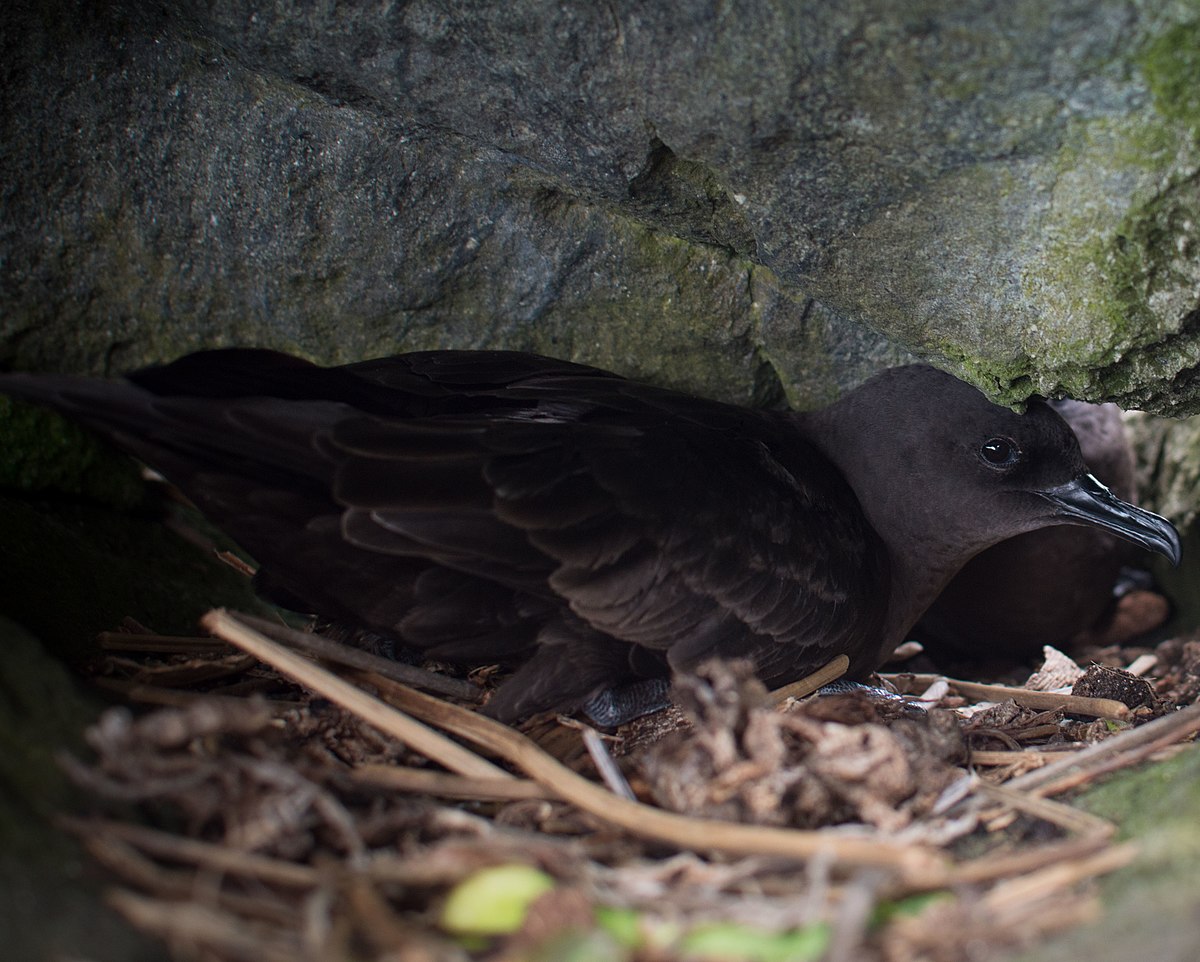
Wikipedia: Bulwer's petrel Source: WIKIPEDIA
1200px-P%C3%A9trel_de_Bulwer.jpg
🔍
Never observed (yet!)
Description
Geography: This bird appears across the great seas in the following continents: Europe, North America, Africa, Australia.General:
Bulwer's petrel (Bulweria bulwerii) is a small petrel in the family Procellariidae, and found in the genus Bulweria (Bonaparte, 1843). This bird is named after the English naturalist James Bulwer.
[more]
Details
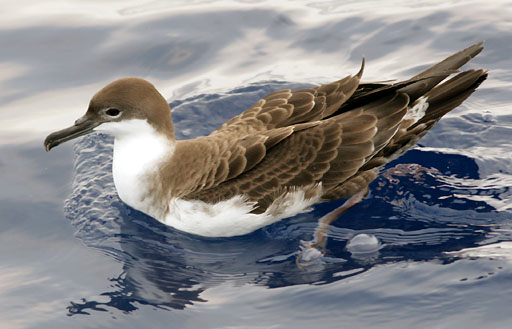
Wikipedia: Great shearwater Source: WIKIPEDIA
Puffinus_gravisPCCA20070623-3641B.jpg
🔍
Never observed (yet!)
Description
Geography: This bird appears across the great seas in the following continents: Europe, North America, Africa.General:
The great shearwater (Ardenna gravis) is a large shearwater in the seabird family Procellariidae. Ardenna was first used to refer to a seabird by Italian naturalist Ulisse Aldrovandi in 1603, and gravis is Latin for "heavy".[3]
[more]
Other Details
Physical details
Physical details: length=43-51 cm, wingspan=100-118 cm, weight=715-950 gDetails
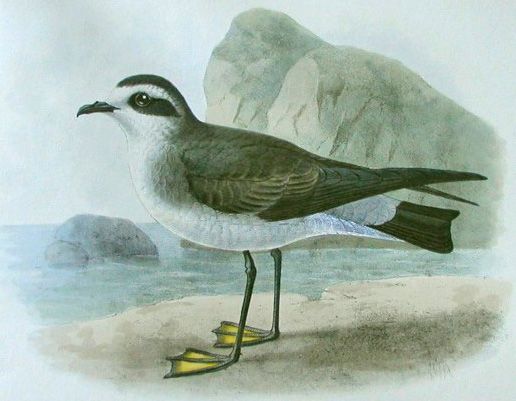
Wikipedia: White-faced storm-petrel Source: WIKIPEDIA
Godmanstormlg.jpg
🔍
Never observed (yet!)
Description
Geography: This bird appears across the great seas in the following continents: Europe, North America, South America, Africa.Details

Wikipedia: Band-rumped storm-petrel Source: WIKIPEDIA
1200px-Band_rumped_storm_petrel_Andre_Raine_KESRP_%2821789178016%29.jpg
🔍
Never observed (yet!)
Description
Geography: This bird appears across the great seas in the following continents: Europe, North America, South America, Africa.General:
The band-rumped storm petrel, Madeiran storm petrel, or Harcourt's storm petrel (Oceanodroma castro) is of the storm petrel family Hydrobatidae.
[more]
Details

Wikipedia: European storm-petrel Source: WIKIPEDIA
1200px-European_Storm_Petrel_From_The_Crossley_ID_Guide_Eastern_Birds.jpg
🔍
Never observed (yet!)
Description
Die Nördlichen Sturmschwalben (Hydrobatidae) sind eine auf allen Weltmeeren weit verbreitete Familie der Röhrennasen (Procellariiformes). Zur Familie gehören 15 Arten, die in der IOC-World Bird List zwei Gattungen zugeordnet werden[1], bei Winkler und Kollegen aber alle zur Gattung Hydrobates gehören.[2]
[more]
Vocalization:
Heard at breeding ground. Dry, cyclic, rattling and cooing, interrupted by deeper nasal moaning or a higher pitched "kee-ee-kee", with emphasis on second syllable. [Link]
Other Details
Physical details
Physical details: length=14-18 cm, wingspan=36-39 cm, weight=23-30 gDetails

Wikipedia: Wilson's storm-petrel Source: WIKIPEDIA
1200px-Oceanites_oceanicus_-_SE_Tasmania.jpg
🔍
Never observed (yet!)
Description
Geography: This bird appears across the great seas in the following continents: Europe, North America, South America, Africa, Asia.Details

Wikipedia: Barn owl Source: WIKIPEDIA
1200px-Tyto_alba_-British_Wildlife_Centre%2C_Surrey%2C_England-8a_%281%29.jpg
🔍
Never observed (yet!)
Description
Geography: This bird appears across the great seas in the following continents: Europe, North America, South America, Africa, Asia.General: Deutschland: Brut-, Jahresvogel
Vocalization:
Large repertoire of mainly hissing and screeching sounds. [Link]
Seasonal behavior
Year-round bird Breeding: 04-01 - 09-17More details at Vogelwarte.ch
Other Details
Physical details
Physical details: length=33-35 cm, wingspan=80-95 cm, weight=240-350 gHabitats: Agricultural Details
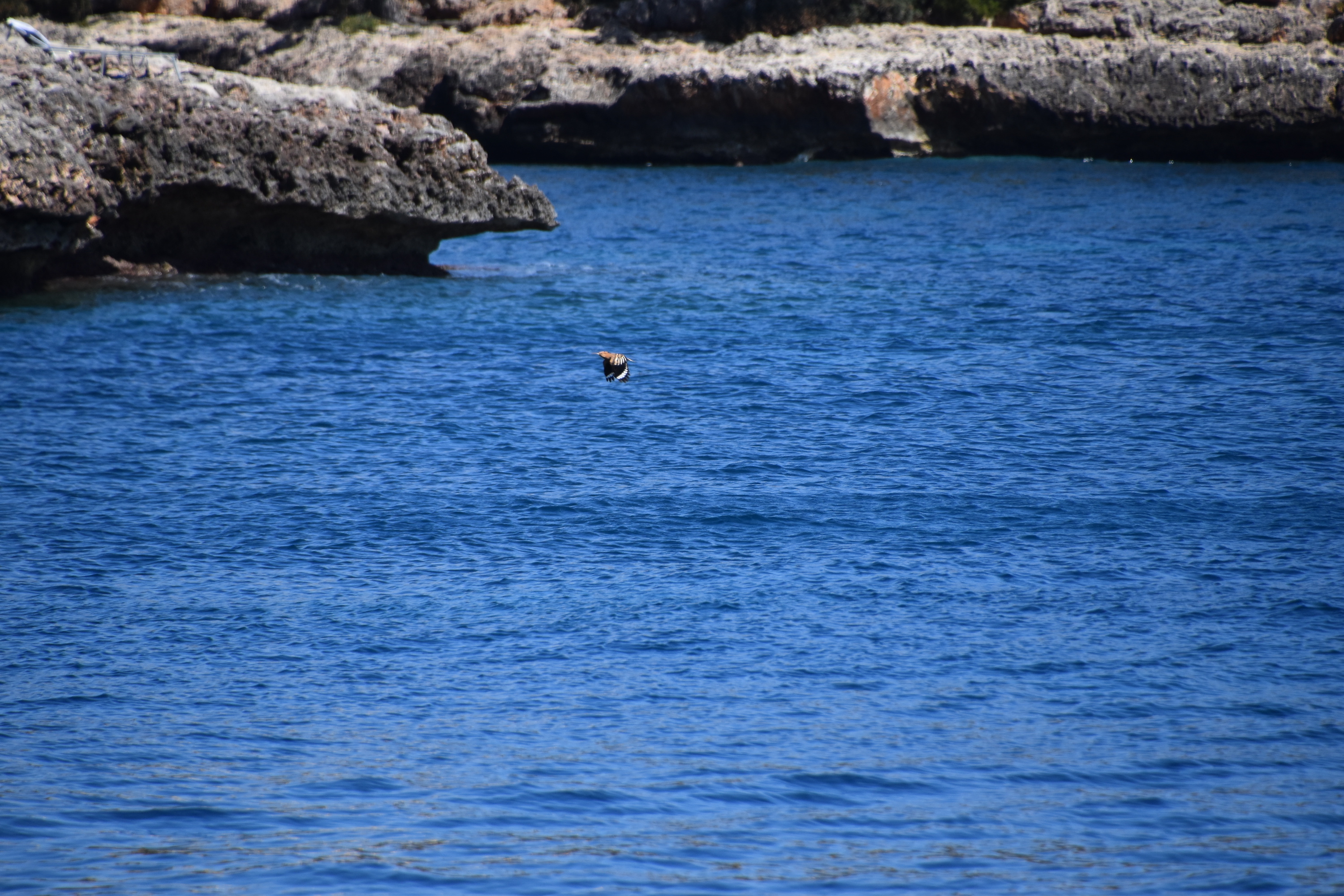
Wiedehopf in Calo dOr, Mallorca, fliegt öfter um die Bucht herum. 2022-04-07 12:33:32
First observed in Mallorca on 2022-04-07.
Description
General: Deutschland: Brut-, Zugvogel RL 2Etymology:
Am wahrscheinlichsten ist ein althochdeutsches, lautmalerisches wūthūp als Ursprung anzunehmen. [Link]
Seasonal behavior
Presence: 03-12 - 09-28 Breeding: 04-20 - 07-29 Migration in: 03-12 - 05-10 Migration out: 07-20 - 09-28More details at Vogelwarte.ch
Other Details
Physical details
Physical details: length=26-28 cm, wingspan=42-46 cm, weight=55-87 gHabitats: Agricultural Details
Profile Wikipedia Vogelwarte BirdLife ZH ornitho.ch bird-song.ch Xeno-Canto BirdID NABU YouTube

Wikipedia: Common quail Source: WIKIPEDIA
1200px-A_common_quail_in_Lebanon.jpg
🔍
Never observed (yet!)
Description
General: Deutschland: Brut-, Zugvogel RL VVocalization:
Other sounds: A nasal disyllabic mewing "mau-au", and a wader-like rolling "wreee". [Link]
Seasonal behavior
Presence: 04-20 - 10-07 Breeding: 05-10 - 08-18 Migration in: 04-20 - 07-10 Migration out: 07-29 - 10-07More details at Vogelwarte.ch
Other Details
Physical details
Physical details: length=16-18 cm, wingspan=32-35 cm, weight=75-135 gHabitats: Agricultural Details

Mindestens 20 Mauersegler beim Sportfeld in Rapperswil, wo Magnus und die Renegades gespielt haben. 2026-05-16 18:00:30 Rapperswil
First observed in 🇨🇭 on 2020-06-10.
Description
General: Vielleicht haben wir bald Mauersegler Brutkästen am Haus!General: Deutschland: Brut-, Zugvogel
Etymology:
Die Etymologie des Wortes ist unklar, vorgeschlagen werden erstens ein eigenständiges Etymon, zweitens Verwandtschaft mit norddeutsch Spier(e) „Spitze, Rundholz, Stange“ und damit Bezugnahme auf die langen spitzen Flügel der Vögel und drittens eine lautmalerische Bezugnahme auf die charakteristischen Rufe. [Link]
Vocalization:
A shrilling trill "zreeeee" of about 1 -2 seconds length, gradually rising in pitch with accentuated firs half, then falling from the middle of phrase. [Link]
Seasonal behavior
Presence: 04-20 - 09-28 Breeding: 05-01 - 08-18 Migration in: 04-20 - 05-31 Migration out: 07-20 - 09-28More details at Vogelwarte.ch
Other Details
Physical details
Physical details: length=16-17 cm, wingspan=42-48 cm, weight=31-56 gHabitats: Settlement
Vocalisation
Song: Song:Sie singen im Flug (eigentlich LEBEN sie im Flug), und wenn du sie nicht siehst, schau weiter hoch, dann noch einmal - sie können mehrere 100m hoch fliegen oft in Gruppen von 3-10. Kappe abziehen wenn nötig! [Link]A shrilling trill "zreeeee" of about 1 -2 seconds length, gradually rising in pitch with accentuated firs half, then falling from the middle of phrase. Often continued with a dry lower pitched "trrrrrr" before calling again. [Link]
Song attributes:
Melody: simple rhythmic, fast, Frequency: 5-7 KHz
Calls:
Often continued with a dry lower pitched "trrrrrr" before calling again. Very vocal at breeding area, and often a flock will call together. Despite being quite similar to Pallid Swift, the call is probably the best field character to separate the two. Pallid puts the stress on the ending of the call, followed by a quick fall in pitch (dynamics like moaning with a quick release). Plain Swift calls similar to Common Swift, but differs in slightly fluctuating pitch during the call, and a loss of resonance towards the ending (thinner sounding). [Link]
Heard from high in the air
XC564619 - Common Swift - Apus apus - calls.
♫ Source: XENOCANTO XC564619 - Common Swift - Apus apus - calls.mp3 (call)

Call attributes: Call melody: one note, fast, Frequency: 4-7 KHz,
Details

Pallid swift at xx, Lanzarota. 2025-02-25 11:41:29 Lanzarote
First observed in Lanzarote on 2025-02-25.
Description
General:The pallid swift (Apus pallidus) is a small bird, superficially similar to a barn swallow or house martin. It is, however, completely unrelated to those passerine species, since the swifts are in the order Apodiformes. The resemblances between the groups are due to convergent evolution reflecting similar life styles.
[more]
Vocalization:
Similar to Common Swift, but usually very helpful for ID. Almost di-syllabic, with marked accent on second syllable which rapidly drops in pitch, "srrrree-aah". [Link]
Seasonal behavior
Presence: 03-23 - 11-15 Breeding: 05-01 - 11-06 Migration in: 03-23 - 05-21 Migration out: 09-07 - 11-15More details at Vogelwarte.ch
Other Details
Physical details
Physical details: length=16-17 cm, wingspan=42-46 cm, weight=41 gHabitats: Settlement
Similar species
Song or calls similar to: Common kestrel.Vocalisation
Calls:Common swift has a more even call, with accents on first part, without the sudden pitch-drop. [Link]
No details but a Xeno-Canto recording.
XC897963 - Pallid Swift - Apus pallidus - flight call in Portugal.
♫ Source: XENOCANTO XC897963 - Pallid Swift - Apus pallidus - flight call in Portugal.mp3 (flight call)

Call attributes: flight call Frequency: ,
Details

Wikipedia: Plain swift Source: WIKIPEDIA
Einfarbsegler.jpg
🔍
Never observed (yet!)
Description
General:The plain swift (Apus unicolor) is a medium-sized swift. Although this bird is superficially similar to a barn swallow or house martin, it is not related to those passerine species. The resemblances between the groups are due to convergent evolution reflecting similar life styles.
[more]
Details
Classification not found:
3 species not correctly classifiedWoolesser short-toed lark / Stummellerche (Alaudala rufescens)
Description
General:Die Stummellerche (Calandrella rufescens) ist eine Vogelart aus der Familie der Lerchen (Alaudidae).
[more]
Other Details
Physical details
Physical details: length=13-14 cm, wingspan=24-32 cm, weight=21-30 gDetails
Western subalpine warbler / Westliche Weissbart-Grasmücke (Curruca iberiae)
Profile Wikipedia Vogelwarte BirdLife ZH ornitho.ch Xeno-Canto NABU YouTube

Wikipedia: Western subalpine warbler Source: WIKIPEDIA
1200px-Western_Subalpine_Warbler_Sylvia_inornata%2C_Aiguamolls_de_l%27Empord%C3%A0.jpg
First observed in 🇨🇭 on 2025-06-07.
Description
The western subalpine warbler (Curruca iberiae) is a small typical warbler which breeds in the southernmost areas of Europe and north-western Africa.
[more]
Vocalisation
Song: No details but a Xeno-Canto recording. Song attributes: Frequency:♫ 2025-06-07 11:09:00 Switzerland (song)
Details
Scopoli's shearwater / Sepiasturmtaucher (Calonectris diomedia)

Wikipedia: Scopoli's shearwater Source: WIKIPEDIA
Scopoli%27s_Shearwater.jpg
First observed in Canary Islands on 2022-03-16.
Description
Geography: This bird appears across the great seas in the following continents: Europe, North America, Africa.General:
Scopoli's shearwater (Calonectris diomedea) is a bird in the family Procellariidae currently considered conspecific with Cory's shearwater (Calonectris borealis). It has no subspecies.[2] The genus name Calonectris comes from Ancient Greek kalos, "good" and nectris, "swimmer". The specific diomedea refers to Diomedes, the mythical king. His wife was serially unfaithful while he fought at Troy, so he left to found a city in Italy. After his death, his distraught friends were turned into white seabirds.[3] The English name is for Italian naturalist Giovanni Antonio Scopoli who first described the species.
[more]
Vocalisation
Song: No details but a Xeno-Canto recording. Song attributes: Frequency:♫ 2022-03-16 22:04:37 (song)
Details