Bird call classifiers for Zürcher Oberland forests and at the Luppmen, plus quiz
Decision table for identifying calls
Übung
| Bird | Description | Audio |
| zweinotig | ||
 Kohlmeise ■■
 |
zweinotig fast low-high (1-7 KHz) .
Chuck-a-chuck-a-chuck, sometimes preceded by higher 'wheat!'
Call:  Generally more full-bodied and resonant calls than blue tit, and not so high-pitched. Characteristic Chaffinch-like "tink tink tink" often uttered by male. [Link] Generally more full-bodied and resonant calls than blue tit, and not so high-pitched. Characteristic Chaffinch-like "tink tink tink" often uttered by male. [Link] |
♫

|
| einfach rhythmisch | ||
 Blaumeise ■■
 |
einfach rhythmisch slow high (3-9 KHz) .
Low-high-high, with lightly raspy start, rather high.
Call: Scolding alarm call: "tee-tee-tee-chirruwitt" similar to Great Tit. [Link] | ♫ |
| einnotig | ||
| absteigend | ||
 Sumpfmeise ■■
 |
absteigend einnotig slow high (6-9 KHz) .
Falling note, relatively long, sometimes repeated - like the pee below without the choo?
Call: Most typical call an explosive, sneeze-like "pee-choo", starting high-pitched and ending on a lower note. . [Link] |
♫

|
 Heckenbraunelle ■■
 |
absteigend einnotig fast high (5-7 KHz) .
Swooping staccato call 0.5 seconds long heard near Lendikon. Repeated irregularly after 1-3.5 seconds.
Call:  Hohe „zi“ „tsi“. Auf dem Zug „zieht“. Etwas absinkend..
[Link]Contact call a dry, thick trill "trrr", and a short King Fisher-like, high-pitched "zeep". [Link] Hohe „zi“ „tsi“. Auf dem Zug „zieht“. Etwas absinkend..
[Link]Contact call a dry, thick trill "trrr", and a short King Fisher-like, high-pitched "zeep". [Link] |
♫

|
| stottern/kieseln | ||
 Rotkehlchen ■■
 |
stottern/kieseln einnotig slow high (4-9 KHz) .
Personal: A single note usually repeated twice. Somewhat sputtery. BirdID refers to 'a thin, electric "tick". In one source said to be used as alarm call. Call:  A variety of calls is also made at any time of year, including a ticking note indicating anxiety or mild alarm. [Link]
Call: Alarm call a thin, electric "tick", often in series with decelerating tempo. [Link] A variety of calls is also made at any time of year, including a ticking note indicating anxiety or mild alarm. [Link]
Call: Alarm call a thin, electric "tick", often in series with decelerating tempo. [Link] |
♫

|
 Zaunkönig ■■
 |
stottern/kieseln einnotig slow high (3-8 KHz) .
Sputtery/drippy/trilly repeated notes at 3-8 KHz. June 2022 heard check calls that were distinctly irregularly in their rhythm.
Call: „zerr“ (z-und rr-gleichzeitig) auch durchdringendes „tzr“(Gezetter)
[Link]Warning call a short hard "teck", like banging two rocks together. Often repeated in series when excited to form machine-gun-like "firing". [Link] |
♫

|
| aufsteigend, stottern/kieseln | ||
 Hausrotschwanz ■■
 |
aufsteigend, stottern/kieseln einnotig slow medium (4-5 KHz) .
- Alarmruf. XC560014 matches exactly what BirdID describes: 'Alarm call is a chat-like alternation between short, high-pitched "wit" sounds, and series of hard and dry "teck".' The high-pitched call I heard recently was between 5 and 6 KHz, which could help to distinguish between other birds with a deeper voice. The whooping call is sometimes listed as an alarm call.
Call: „hüid-tze“ das tze deutlich tiefer.
[Link]Alarm call is a chat-like alternation between short, high-pitched "wit" sounds, and series of hard and dry "teck". [Link] |
♫
|
 Singdrossel ■■
 |
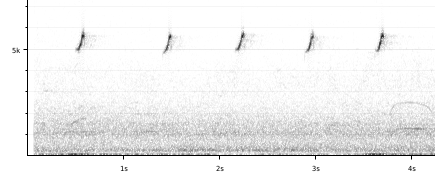
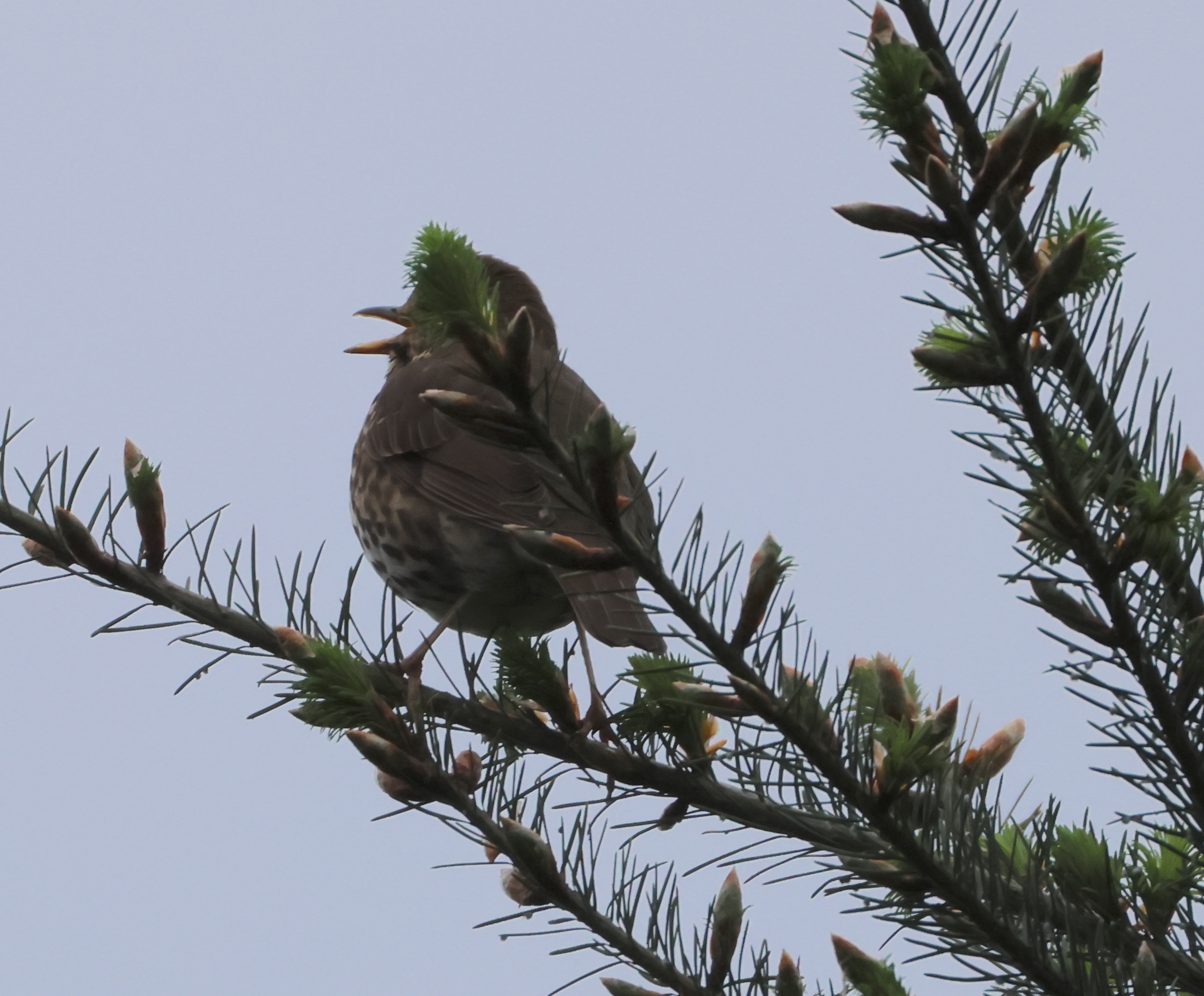
einnotig slow high (7-10 KHz) .
- Kontaktruf. One or two high chirps followed by long pause of 1-2 seconds
Call: Rufe :“zipp“, oft beim abfliegen.
[Link]Most heard (but easily overlooked) contact call is a dry and very short "zip", sometimes given as a two syllable call "zip-ip". [Link] | ♫ |
| nicht musikalisch | ||
| rasseln | ||
 Misteldrossel ■■
 |
rasseln nicht musikalisch fast low-high (2-9 KHz) .
General: I mistook this one for a woodpecker the first time I heard it,
partly because BirdNet also did!
Rattle generated in vocal tract, not with the beak!
Call: Rufe:schnarrend „kerr“, daneben „tück-tück-tück“
[Link]Other calls; a dry rattle, likened to the sound of a piece of wood drawn over a coarse comb, and a Fieldfare-like "chuck". [Link] | ♫ |
 Rotdrossel ■■
 |
- Gesang. No details but a Xeno-Canto recording.
Call: Contact call a thin, drawn and sharp "sreee". Often heard at night during migration. Alarm call harder, dryer and more raucous than other thrushes. [Link] |
♫

|
| einnotig | ||
| aufsteigend | ||
 Zilpzalp ■■
 |
aufsteigend einnotig slow medium (2-4 KHz) .
Repeated rising note, not too loud
Call: Rufe :einsilbiges „hüid“, hinaufgezogen, wandelbar. [Link]Contact/alarm call a soft, plaintive ascending "hooeet". Similar to W.Warbler, but shorter with a monosyllabic feel. [Link] |
♫

|
 XXXX Bei Wildert glaube ich dass das ein Fitis ist und kein Zilp-zalp aber MerlinBirdId war auch verwirrt und hat ZZ besser gefunden.JPG) Fitis ■■
Fitis ■■ |
aufsteigend einnotig slow medium (2-4 KHz) .
- Kontaktruf. Whoop very similar to chiffchaff, etc. but starts at an even level, then ascends.
Call: ähnlich oben, aber mehr zweisilbig [Link]Contact/alarm call a soft, plaintive ascending "hoo-eet". Similar to Chiff-chaff, but first part more drawn, giving it a disyllabic feel. [Link] |
♫

|
| stottern/kieseln | ||
 Mönchsgrasmücke ■■
 |
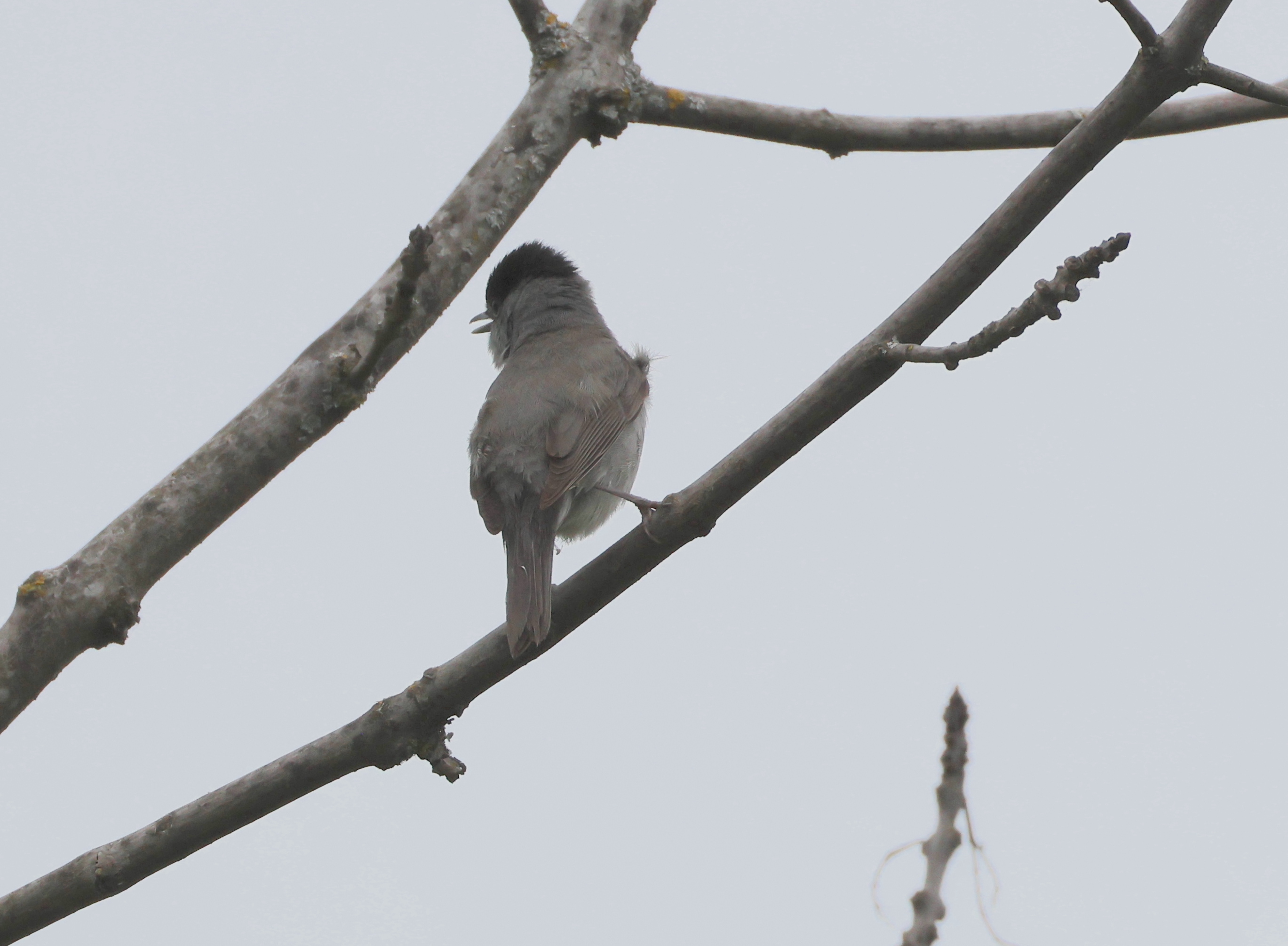
stottern/kieseln einnotig slow high (3-9 KHz) .
General: Sputtery/stoney, but may have other calls too. Call:  The Blackcap may generate a perplexing variety of territorial calls, though the typical contact call is a hard, tongue-clicking "teck teck" which has a scolding quality to it. It's not dissimilar to the 'pebble-clacking' call of the Stonechat. [Suffex Wildlife Trust]
Call: „täck“ oft wiederholt
[Link]Alarm call a hard "check", similar to Lesser White-throat. Sometimes with an additional hoarse and nasal "cherrrr". [Link] The Blackcap may generate a perplexing variety of territorial calls, though the typical contact call is a hard, tongue-clicking "teck teck" which has a scolding quality to it. It's not dissimilar to the 'pebble-clacking' call of the Stonechat. [Suffex Wildlife Trust]
Call: „täck“ oft wiederholt
[Link]Alarm call a hard "check", similar to Lesser White-throat. Sometimes with an additional hoarse and nasal "cherrrr". [Link] |
♫

|
 Wintergoldhähnchen ■■
 |
- Gesang. No details but a Xeno-Canto recording.
- but really
OWN
Call: 'sisisi' [Link]Contact call a very high pitched "zit zit zit", only similar to Firecrest and treecreepers. Treecreepers usually calls with longer "zzzziiiiit" repeated at regular intervals, while Goldcrest calls in phrases with two to four calls in series in an uneven rhythm. Firecrest contact calls lower pitched than Goldcrest, and in a softer tone (but quite similar). [Link] | ♫ |
 weiblich.jpg) Sommergoldhähnchen ■■
Sommergoldhähnchen ■■ |
- Gesang. No details but a Xeno-Canto recording.
Call: „sisisi“ [Link]Call: a thin "tsi tsi tsi" similar to Goldcrest, but not so sharp. [Link] |
♫

|
| einnotig | ||
| unregelmässig rhythmisch | ||
 Grauschnäpper ■■
 |
unregelmässig rhythmisch einnotig slow high (4-7 KHz) .
General: To me something between a one-note and an extremely simple melody, namely med-med chk-hi-med-med, with a very irregular speed, not at all like a metronome. Call: Most calls high pitched with a buzzing, "electric" timbre. [Link]
Call: The discreet calls often goes unnoticed. Most calls high pitched with a buzzing, "electric" timbre. Alarm call a sharp, drawn "tzreeeee-check", with the second syllable abruptly clipping the sound. [Link] |
♫

|
 Kleiber twit ■■
 |
einnotig fast low (2-3 KHz) .
Schnelle Sequenz - ist es der oben erwähnte 'twit'?
Call: Other: It gives loud calls when excited, an abrupt ‘twit”, only one, or in slow series, but often in phrases of 3-4 notes in rapid succession. But in great excitement, it utters phrases of about ten notes per second!
We can also hear some shrill “sirrrr”, becoming harsher in alarm call. The contact call is a thin “tsit” uttered before to take off.
[Link]The Eurasian nuthatch calls frequently, usually with a loud, sharp dwip normally repeated twice, sometimes more often if excited. It has a shrill sirrrr or tsi-si-si alarm call, and a thin tsit pre-flight call. [Link] Other: Very varied voice. Ranging from very high pitched whistles and melodic resonant calls, to chattering and nasal mocking sounds. Characteristic warning call a hard "check" or "chwit", often in rapid series, like a pebble bouncing on hollow ice. [Link] Ranging from very high pitched whistles and melodic resonant calls, to chattering and nasal mocking sounds. Characteristic warning call a hard "check" or "chwit", often in rapid series, like a pebble bouncing on hollow ice. [Link] |
♫

|
 Gartenbaumläufer ■■
 |
einnotig slow high (5-7 KHz) .
General: See the sonogram how the song may descend rapidly from 7Khz to and then climb from 5 to 5.75 KHz, a kind of reversed checkmark. However I find it hard to distinguish from a single note. I'm not a bird ;-( Call:  calls with a loud (Wikipedia says shrill) “tyt tyt” [Link]
Call: scharf „tiit, sri“ [Link]Contact call very similar to C. familiaris. A thin "sreee" often repeated in an even rhythm, perhaps with slighly shorter pauses. Flight call a short and sharp "wit" used freely when moving about. Timbre recalls wet rubber-boots on vinyl flooring. Note that "mixed singers" of C. familiaris are not uncommon in areas where both species of treecreepers occur. [Link] calls with a loud (Wikipedia says shrill) “tyt tyt” [Link]
Call: scharf „tiit, sri“ [Link]Contact call very similar to C. familiaris. A thin "sreee" often repeated in an even rhythm, perhaps with slighly shorter pauses. Flight call a short and sharp "wit" used freely when moving about. Timbre recalls wet rubber-boots on vinyl flooring. Note that "mixed singers" of C. familiaris are not uncommon in areas where both species of treecreepers occur. [Link] |
♫

|
 Waldbaumläufer ■■
 |
einnotig slow high (7-9 KHz) .
General: Wikipedia sagt: Sein Ruf klingt in etwa wie "siih" oder "tih". Fairly regularly spaced single tseep at 7-9KHz. Call: Contact call a drawn, high-pitched "tzreeee". Similar to Goldcrest in timbre, but of longer duration with a vibrating and slightly rolling tone. Generally repeated in evenly paced, slow series (unlike Goldcrest). [Link]
Call: weniger scharf, „srih,“ weniger eindringlich als oben
[Link]Contact call a drawn, high-pitched "tzreeee". Similar to Goldcrest in timbre, but of longer duration with a vibrating and slightly rolling tone. Generally repeated in evenly paced, slow series (unlike Goldcrest). Each phrase starts with a few contact call-like notes followed by a Willow Warbler-like descending part, which then jumps to a few descending high notes to form a marked conclusion. Note that "mixed singers" are not uncommon in areas where both species of treecreepers occur. [Link] |
♫

|
| einfach rhythmisch | ||
 Schwanzmeise ■■
 |
einfach rhythmisch slow high (7-9 KHz) .
- Kontaktruf. Die fast ständig geäusserten, hohen Rufe verraten die kleinen, rastlosen Turner im Gezweig meist schon, bevor sie zu sehen sind. [Link]
Call: Call: quite short, chirping, twittering "tzzirrret tzirrrret". Often starting at high pitch and rapidly falling, or just flat. Also a thin, slightly falling "zi zi ziii". [Link] |
♫

|
| einnotig | ||
| Raspel | ||
 XXXX Eichelhaeher close-up.JPG) Eichelhäher ■■
Eichelhäher ■■ |
Raspel einnotig slow medium (1-5 KHz) .
Typically harsh jay call. I would say a contact call usually means 'Here I am', answered by 'Good, here I am.' Listening to two jays in the Swiss mountains of Toggenburg, it sounded like 'HEY IDIOT, HERE I AM...WHERE THE HECK ARE YOU?' 'WHAT? YOU HAVEN'T FIGURED IT OUT? OF COURSE I'M OVER HERE. PEABRAIN.' On the other hand, anthropomorphism is always dangerous, usually completely wrong approach.
Call: Most heard call a short, drawn and very hoarse, raspy sound, often given in quick successions. Also a Buzzard-like, mewing "peeeaaa" (more drawn and less full tone than Siberian Jay). [Link] | ♫ |
| aufsteigend | ||
 Buchfink ■■
 |
aufsteigend einnotig slow medium (3-5 KHz) .
- Regenruf. General: Repeated ascending note, faster than the long starling whoops, about 2/seconds - compare with the black redstart.
There are many different calls, the Marler book describes the 'chink' call as functioning as a mobbing and separation call.
At XenoCanto I find calls described as "ping", "pik" (same thing?), "pchew", "duit", "huit", "ti-huit". Call: Der sogenannte Regenruf der Männchen, „schrrüt“, der selbst in benachbarten Ortsteilen deutlich variieren kann, erklingt nur während der Brutzeit. Als Regenruf wird er bezeichnet, weil er kurz vor oder sogar während des Regens zu hören ist, wenn die anderen Vögel verstummen. [DasHaus] |
♫

|
 Star ■■
 |
aufsteigend einnotig slow medium (1-6 KHz) .
Das höre ich ab und zu (und gern), der lange aufsteigende Pfeif von tief (1 1/2 KHz) bis hoch (6.5 KHz).
Call: Other calls; a harsh "chaee" and a short sharp "tink". [Link] | ♫ |
Übung
♫
Lösung
Grauschnäpper KLingt für mich bisher wie alle 1-notige Rufe.
♫
Lösung
Gartenbaumläufer A recording from Jorge Leitão in the Netherlands that I assume is the tyt tyt call.
♫
Lösung
Star Birdnet 1968 - European Starling long whoop call - 2021-08-23 17-26-09 - European Starling - Fehraltorf.
♫
Lösung
Buchfink Rain call from XenoCanto Recorded by Paul Driver in Mundford, Norfolk, UK
♫
Lösung
Sommergoldhähnchen XC933773 - Common Firecrest call - Regulus ignicapilla.
♫
Lösung
Mönchsgrasmücke XC546030 black cap warbler so-called tac and djii call.
♫
Lösung
Hausrotschwanz XC657510 - Black Redstart - Phönicurus ochruros - call.
♫
Lösung
Waldbaumläufer XC206282 Eurasian treecreeper call.
♫
Lösung
Blaumeise XC574294 blaumeise call.
♫
Lösung
Rotkehlchen I heard 3 or 4 scattered birds calling it in woods with underbrush but saw no birds. BirdNet told me they were robins, which I found hard to believe, but on comparing it with recordings at XenoCanto, I was convinced! Maybe they were telling each other "Don't show yourself to that alarming guy!".
♫
Lösung
Wintergoldhähnchen Wintergoldhähnchen whoop Ruf im Biotop.
♫
Lösung
Sumpfmeise Call from Xeno-Canto
♫
Lösung
Schwanzmeise Flight call from XenoCanto
♫
Lösung
Rotdrossel XC678455 - Redwing - Turdus iliacus - single call.
♫
Lösung
Heckenbraunelle XC594397 - Dunnock - Prunella modularis modularis - call recorded in Poland.
♫
Lösung
Fitis Call recorded in UK, sounds typical to me, and spiced up by a yellowhammer in the background and several other birds
♫
Lösung
Kleiber Long fast sequence of identical whoops, possibly 'twit' call.
♫
Lösung
Zaunkönig XC195946 - Eurasian Wren call - Troglodytes troglodytes.
♫
Lösung
Misteldrossel XC945811 - Mistle Thrush - Turdus viscivorus - call, sounds like drumming, mistook it for a woodpecker first time I heard this.
♫
Lösung
Zilpzalp XC656913 - Common Chiffchaff - Phylloscopus collybita - call recorded in Belgium.
♫
Lösung
Singdrossel XC389294 song thrush contact call.
♫
Lösung
Kohlmeise Call from Xeno-Canto Illustrates higher 'wheat' before the 'chuck-a-chuck'
♫
Lösung
Eichelhäher XC536051 Eurasian Jay harsh call 20s.